


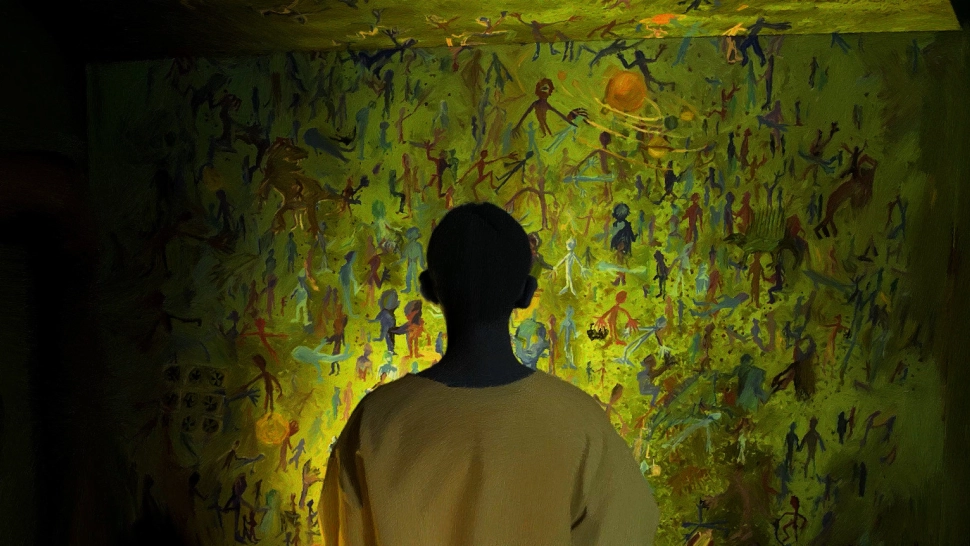
Can Humanity Survive When Evolution Becomes an Experiment?
In Last Mankind, South Korean filmmaker HUH Gun presents a bleak vision of the future where environmental collapse has pushed humanity to the edge of extinction. Toxic air pollution has rendered Earth’s surface almost uninhabitable, forcing the remaining population to retreat into underground bunkers where survival depends on science rather than nature. Within this isolated world, scientist Dae-seung devotes his life to a radical experiment: transforming his own daughter, Sin-a, into a new kind of human capable of surviving the poisoned world outside.
Rather than focusing on action or post-apocalyptic spectacle, Last Mankind explores the ethical consequences of scientific ambition, parental sacrifice, and humanity’s desperate struggle to adapt to an environment it has irreversibly destroyed. Blending dystopian science fiction with psychological drama, the film asks whether saving the human species is worth sacrificing the humanity of the individual. Through its intimate father-daughter story, Last Mankind examines evolution not as a natural process but as a moral choice shaped by environmental catastrophe and technological intervention.
Quick Facts: A Korean Dystopian Sci-Fi About Environmental Collapse and Human Evolution
|
Science Fiction, Dystopian Drama |
|
|
Environmental Collapse, Human Evolution, Artificial Survival, Ethics of Science |
|
|
Experimental Science, Human Rights, Environmental Crisis, Dystopia |
➡️ Key Takeaway: Last Mankind combines dystopian science fiction with intimate family drama to explore the ethical limits of scientific experimentation in a world devastated by environmental collapse. Its thought-provoking premise reflects growing global concerns about climate change, biotechnology, and humanity’s future survival.
Should You Watch It?: A Thoughtful Dystopian Drama That Prioritizes Ideas Over Action
Unlike many post-apocalyptic science-fiction films that emphasize survival battles or large-scale disaster, Last Mankind focuses on the emotional and ethical consequences of living in a world where science has become humanity’s last hope. The film uses its dystopian setting to explore difficult questions about parental responsibility, scientific ethics, and the price of survival, making it particularly appealing to viewers who enjoy philosophical science fiction.
Its minimalist approach and intimate narrative reflect its independent origins, placing character development and moral dilemmas ahead of visual spectacle. Rather than asking how humanity will survive environmental collapse, the film asks what humanity may be forced to sacrifice in order to continue existing. That thoughtful perspective gives the story emotional depth beyond its speculative premise.
➡️ Key Takeaway: Last Mankind is an intimate, idea-driven science-fiction drama that explores environmental catastrophe through the lens of family, ethics, and human evolution. It is best suited for audiences who appreciate reflective dystopian cinema that values philosophical questions over blockbuster action.
Why Everyone Is Talking About It?: Climate Anxiety Is Inspiring a New Wave of Intimate Science Fiction
As climate change becomes one of the defining concerns of the twenty-first century, science-fiction cinema is increasingly shifting away from alien invasions and futuristic warfare toward stories that examine humanity’s relationship with the environment. Last Mankind reflects this evolution by imagining a future where ecological collapse has permanently altered everyday life, forcing humanity to confront not only survival but also the ethical consequences of technological adaptation. Its premise taps directly into contemporary anxieties surrounding pollution, environmental degradation, and the uncertain future of human civilization.
The film is also attracting attention because it approaches these global issues through an intensely personal father-daughter relationship. Rather than presenting environmental catastrophe as a distant spectacle, Last Mankind explores how ordinary people might respond when scientific experimentation becomes the only remaining path toward survival. This emotionally grounded approach makes its dystopian world feel both believable and disturbingly relevant.
➡️ Key Takeaway: Last Mankind resonates because it transforms today’s environmental fears into an intimate story about family, sacrifice, and the difficult choices humanity may face in an increasingly hostile world.
Movie Trend: Climate Survival Cinema Is Replacing Traditional Post-Apocalyptic Stories
Last Mankind reflects the growing trend of Climate Survival Cinema, where environmental collapse serves as the foundation for deeply personal stories about adaptation rather than conventional disaster narratives. Instead of focusing on the destruction itself, these films examine how human identity, morality, and society evolve after ecological catastrophe has already reshaped the world. Survival is no longer simply about finding resources—it becomes a question of whether humanity can evolve without losing its humanity.
The film also belongs to the emerging movement of philosophical eco-science fiction, where scientific innovation is portrayed as both humanity’s greatest hope and its greatest ethical challenge. As biotechnology, genetic engineering, and artificial evolution become increasingly realistic scientific discussions, filmmakers are using speculative fiction to explore the moral boundaries of altering human life in response to environmental crises. Last Mankind places itself firmly within this conversation by asking whether creating a “better” human ultimately changes what it means to be human.
➡️ Key Takeaway: Last Mankind exemplifies the rise of climate-focused science fiction that prioritizes ethical questions, environmental responsibility, and human evolution over traditional dystopian action and spectacle.
Who Should Watch It?: The Thoughtful Sci-Fi Futurist
Audience Profile: Viewers Fascinated by Humanity’s Future
The ideal audience for Last Mankind consists of viewers who enjoy intellectually challenging science fiction that explores philosophical and ethical dilemmas alongside speculative world-building. Rather than seeking high-energy action, these audiences are drawn to stories that question humanity’s future through environmental, scientific, and emotional perspectives.
Core Audience: Fans of philosophical science fiction and dystopian cinema.
Secondary Audience: Environmental advocates, students of science and ethics, festival audiences, and independent film enthusiasts.
Lifestyle: Interested in environmental issues, emerging technologies, speculative storytelling, independent cinema, and thought-provoking discussions.
Cinema Habits: Regular viewers of international science-fiction films, festival selections, and character-driven speculative dramas that emphasize ideas over spectacle.
➡️ Key Takeaway: Last Mankind is designed for audiences who appreciate intelligent speculative cinema that examines climate change, biotechnology, and the future of humanity through emotionally grounded storytelling.
What This Movie Means for the Industry: Environmental Science Fiction Is Becoming More Human
Last Mankind reflects one of the most significant shifts in contemporary science-fiction filmmaking: environmental collapse is no longer treated primarily as a backdrop for spectacle but as a catalyst for deeply personal human stories. Rather than focusing on global destruction, the film examines how climate catastrophe reshapes family relationships, ethics, and identity. This character-first approach mirrors the growing demand for intelligent science fiction that encourages reflection rather than simply delivering visual effects.
The film also demonstrates the continuing rise of South Korea as one of the world’s most innovative producers of speculative cinema. Following internationally acclaimed Korean works that blend genre storytelling with social commentary, Last Mankind contributes to a new generation of filmmakers using science fiction to explore pressing global issues such as pollution, biotechnology, and human rights. Its status as a first feature also highlights how emerging directors are increasingly using speculative narratives to address complex environmental and philosophical questions.
➡️ Key Takeaway: Last Mankind illustrates how modern science fiction is becoming more intimate, ethical, and emotionally driven. Its focus on climate anxiety and human evolution reflects the growing influence of environmentally conscious storytelling in international cinema.
Creative Analysis: A Dystopian Vision of Evolution, Ethics, and Survival
Storytelling: A Father’s Love Becomes Humanity’s Greatest Experiment
Rather than presenting a conventional survival story, Last Mankind centers its narrative on the relationship between scientist Dae-seung and his daughter, Sin-a. Their bond becomes the emotional foundation of a dystopian world where environmental collapse has made ordinary life impossible. As Dae-seung conducts increasingly radical experiments in the hope of creating a human capable of surviving outside the bunker, the story raises difficult questions about love, sacrifice, and the moral boundaries of scientific progress.
The narrative deliberately keeps its scope intimate, allowing the emotional consequences of each scientific decision to carry greater weight than large-scale world-building. This restrained storytelling transforms a global environmental crisis into a personal tragedy, making the ethical dilemmas feel immediate and emotionally compelling.
➡️ Key Takeaway: Last Mankind uses a deeply personal father-daughter relationship to explore universal questions about survival, responsibility, and the cost of scientific ambition.
Direction: Minimalist Science Fiction That Prioritizes Ideas
Director HUH Gun adopts a restrained, minimalist approach that emphasizes atmosphere, emotion, and philosophical reflection over visual spectacle. The confined bunker setting reinforces the sense of isolation while allowing viewers to focus on the evolving relationship between the central characters rather than external action. This intimate direction reflects the traditions of independent and festival science fiction, where psychological tension often replaces large-scale action sequences.
The film also uses silence, limited environments, and carefully controlled pacing to build suspense. Rather than overwhelming audiences with explanations about its dystopian world, the direction gradually reveals the reality of environmental collapse through character interactions and visual storytelling, encouraging viewers to actively engage with the film’s ethical questions.
➡️ Key Takeaway: HUH Gun’s understated direction creates an immersive and thought-provoking science-fiction experience where emotional tension and philosophical inquiry become the primary dramatic forces.
Performances: Emotional Authenticity Drives the Film’s Ethical Questions
At the center of Last Mankind is the relationship between Dae-seung and his daughter Sin-a, making the performances crucial to the film’s emotional impact. Rather than relying on grand dramatic moments, the story depends on subtle expressions of fear, hope, determination, and moral conflict. As Dae-seung becomes increasingly consumed by his scientific mission, his role evolves from loving father to conflicted researcher, forcing viewers to question where parental devotion ends and scientific obsession begins.
Sin-a represents both humanity’s greatest hope and its greatest ethical dilemma. Her character embodies innocence caught within an experiment she never chose, giving emotional weight to the film’s broader questions about evolution and survival. The restrained performances support the film’s contemplative tone, allowing viewers to focus on the characters’ internal struggles rather than overt melodrama.
➡️ Key Takeaway: The performances emphasize emotional realism over spectacle, making the film’s scientific and ethical questions feel deeply personal through the evolving relationship between father and daughter.
Cinematography & Visual Style: A Claustrophobic Future Defined by Environmental Collapse
The visual design of Last Mankind reinforces its central themes through minimalist production design and confined spaces. Underground bunkers replace the natural world, creating an atmosphere of isolation that reflects humanity’s separation from the environment it once depended upon. The limited setting becomes a constant reminder that civilization has retreated underground, transforming survival into a carefully controlled scientific process.
The contrast between the sterile bunker interiors and the unseen toxic world outside creates an enduring sense of unease. Rather than showing large-scale environmental destruction, the film allows absence itself to become its most powerful visual statement. This restrained aesthetic reflects the traditions of independent science fiction, where atmosphere and symbolism often communicate more effectively than expensive visual effects.
➡️ Key Takeaway: The film’s minimalist visual style reinforces its themes of environmental collapse and human isolation, proving that atmosphere can be more powerful than large-scale dystopian spectacle.
Themes & Messages: Can Humanity Evolve Without Losing Its Humanity?
At its heart, Last Mankind explores the moral consequences of attempting to engineer humanity’s future. Faced with an environment that can no longer sustain human life, Dae-seung believes science offers the only path forward. Yet every experiment raises uncomfortable questions about consent, parental responsibility, and whether survival alone justifies altering the fundamental nature of human existence.
The film also serves as a warning about humanity’s relationship with the environment. Rather than presenting climate change as an abstract global crisis, it imagines its most intimate consequence: parents forced to redesign their own children simply so they can breathe. In doing so, Last Mankind transforms environmental catastrophe into a deeply human ethical dilemma, suggesting that today’s ecological decisions may ultimately redefine what it means to be human tomorrow.
➡️ Key Takeaway: Last Mankind argues that environmental collapse is not only an ecological crisis but also a moral one, asking whether humanity can preserve its values while adapting to an increasingly uninhabitable world.
What Makes This Movie Different?: A Climate Dystopia Built Around Family Rather Than Survival
Many dystopian science-fiction films focus on escaping disaster, defeating oppressive systems, or rebuilding civilization. Last Mankind takes a far more intimate approach by centering its story on one father and one daughter inside a confined bunker. Instead of asking how humanity survives, it asks what humanity becomes when survival itself depends on scientific transformation.
The film also distinguishes itself by combining environmental anxiety, biotechnology, and human rights into a single narrative. Rather than treating these subjects independently, it presents them as interconnected challenges facing future generations. This thoughtful fusion of climate fiction and ethical science fiction gives Last Mankind a distinctive voice within contemporary international genre cinema and demonstrates how independent filmmakers continue to expand the possibilities of speculative storytelling.
➡️ Key Takeaway: Last Mankind stands out by replacing large-scale dystopian action with an intimate ethical drama that examines climate change, biotechnology, and family through one emotionally compelling scientific experiment.
If You Liked Last Mankind: More Recent Films About Climate Collapse, Human Evolution, and Dystopian Survival
The Assessment (2026)
Directed by Fleur Fortuné, The Assessment is set in a future where dwindling resources and environmental collapse have transformed reproduction into a tightly controlled government process. Like Last Mankind, it explores how scientific intervention and survival reshape family relationships, asking profound ethical questions about what society is willing to sacrifice to ensure humanity’s future. Both films replace blockbuster spectacle with intimate psychological science fiction.
The Fix (2025)
Set in a polluted future where biotechnology offers humanity its only chance of survival, The Fix follows a young woman whose experimental treatment begins to transform her into something beyond human. Like Last Mankind, it examines environmental catastrophe through the lens of human evolution, scientific experimentation, and the unintended consequences of attempting to adapt to a dying planet. Both films question whether evolution engineered by science ultimately preserves or destroys humanity.
Mickey 17 (2025)
Directed by Bong Joon Ho, Mickey 17 follows an expendable worker repeatedly cloned during a dangerous space colonization mission. Although more satirical in tone, it shares Last Mankind‘s fascination with biotechnology, human identity, and the ethical implications of treating people as scientific resources. Both films challenge audiences to reconsider the value of individual human life in futures dominated by technological necessity.
➡️ Key Takeaway: These recent science-fiction films reflect a growing shift toward stories where climate change, biotechnology, and human evolution become deeply personal ethical dilemmas. Like Last Mankind, they prioritize philosophical questions and emotional storytelling over conventional dystopian action.
Viewing Recommendation: A Thought-Provoking Science Fiction Drama About Humanity’s Future
Best Suited For: Viewers Who Enjoy Philosophical and Character-Driven Science Fiction
Last Mankind is ideal for audiences who appreciate speculative cinema that explores ethical questions through intimate human relationships. Rather than emphasizing action or visual spectacle, the film invites viewers to reflect on environmental collapse, scientific responsibility, and the meaning of human evolution.
Highly Recommended For: Fans of Intelligent Dystopian Cinema and Festival Science Fiction
If you enjoyed The Assessment, The Fix, Mickey 17, After Yang, or Never Let Me Go, Last Mankind offers a similarly reflective approach to science fiction. Its combination of climate anxiety, biotechnology, and emotional family drama makes it particularly rewarding for viewers seeking thoughtful international genre cinema.
You May Want to Skip It If: You Prefer Fast-Paced Blockbuster Science Fiction
The film adopts a restrained, minimalist style with limited locations, deliberate pacing, and philosophical dialogue. Viewers expecting large-scale action sequences, elaborate visual effects, or conventional post-apocalyptic adventures may find its introspective storytelling slower than mainstream science-fiction productions.
➡️ Viewing Recommendation: Last Mankind is an intelligent and emotionally resonant science-fiction drama that uses a dystopian future to examine some of today’s most urgent ethical and environmental questions. It is highly recommended for audiences who value speculative storytelling that inspires reflection as much as entertainment.
Final Verdict: An Intimate Climate Dystopia That Asks What Humanity Is Willing to Become
Last Mankind transforms the familiar premise of environmental collapse into a deeply personal exploration of love, sacrifice, and scientific responsibility. By centering its story on a father determined to save his daughter through radical experimentation, HUH Gun crafts a science-fiction film that feels both emotionally intimate and intellectually ambitious.
More than a dystopian survival story, the film explores the difficult balance between technological progress and human dignity. Its thoughtful examination of climate anxiety, biotechnology, and ethical evolution positions Last Mankind within the growing wave of contemporary science fiction that values philosophical inquiry over spectacle. For viewers seeking reflective international cinema, it offers a compelling vision of a future where humanity’s greatest challenge is not simply surviving—but deciding what kind of species it wishes to become.
➡️ Final Verdict: Last Mankind is a haunting and thought-provoking debut that combines environmental science fiction with intimate family drama, offering a powerful meditation on survival, ethics, and the future of humanity in an increasingly fragile world.

