


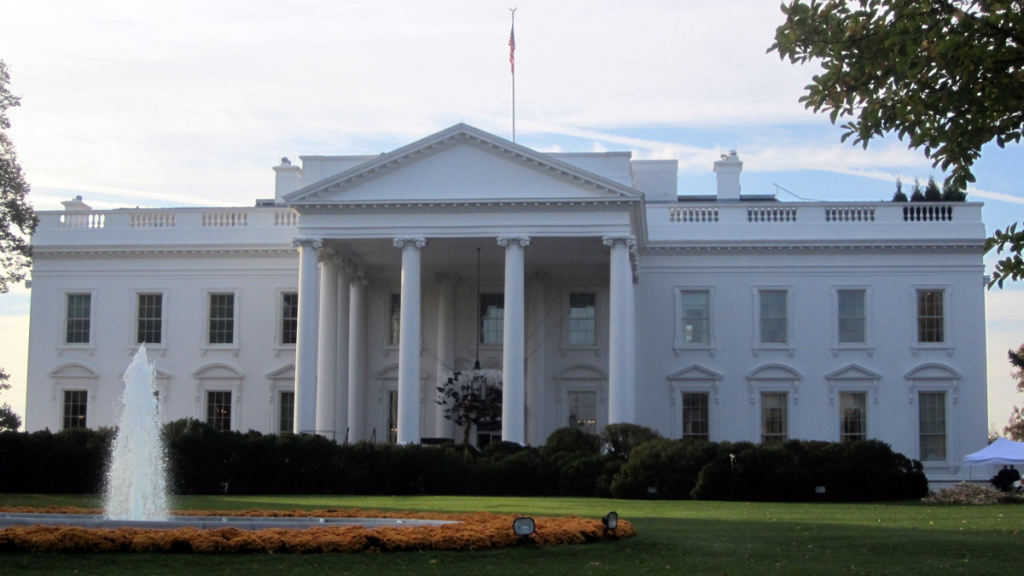
Photo Credit: The White House by Wally Gobetz / Public Domain
Live Nation has amended its court disclosure about negotiations with the DOJ, confirming a brief appearance by President Trump at the March 5 meeting in which the two parties finalized the terms of their antitrust settlement.
On Wednesday, October 21, Live Nation revised its account of a February conversation between CEO Michael Rapino and President Trump, as detailed in its amended court disclosure regarding negotiations with the Department of Justice. Negotiations took place during a meeting on March 5, when the two parties finalized the terms of their antitrust settlement. The filing now confirms that Trump briefly appeared at this meeting.
The revised disclosure now includes an account of the February conversation between Trump and Rapino involving details about the Kennedy Center and clarifies that Trump asked about the status of the federal antitrust lawsuit.
Live Nation’s new filing arrives amid U.S. District Judge Arun Subramanian’s ongoing review of the proposed settlement under the Tunny Act, which requires judicial approval of federal antitrust consent judgments.
The company’s original disclosure on June 22 acknowledged negotiations involving senior DOJ officials and the Office of the White House Counsel, including the meeting on March 5 where the settlement agreement was finalized. But it did not identify that Trump himself had attended that meeting.
Now, the amended filing formally acknowledges Trump’s presence during a meeting that was core to the government’s decision to settle its antitrust case against Live Nation without requiring divestiture of Ticketmaaster.
“President Trump briefly appeared at this meeting but did not participate in any substantive settlement discussions,” the amended filing reads.
The statement explicitly denies that Trump participated in any “substantive” negotiations during the meeting—an important distinction, as questions remain over the extent of direct White House involvement in the settlement.
Live Nation’s original filing stated that Rapino met with Trump in February to discuss “a variety of topics related to Live Nation’s business” with the president. It said the lawsuit with the DOJ was mentioned, but no settlement terms were discussed. However, the revised filing is more specific.
“In February 2026, President Donald J. Trump called Mr. Rapino to discuss issues related to the Kennedy Center; the President inquired about the status of the DOJ’s lawsuit against Defendants, but no substantive terms regarding any potential settlement were discussed,” reads the amended filing.
The revision aligns with a report from The Wall Street Journal about a meeting between Trump and Rapino in the Oval Office on February 27, which was primarily focused on the Kennedy Center. Notably, WSJ also reported that Trump had instructed a senior DOJ official to settle the Live Nation case shortly before the antitrust trial began, but the new filing does not mention that reported direction. Live Nation’s revision also does not specify an exact date for the February meeting.
Live Nation’s account of Trump’s brief appearance during the March 5 meeting is also consistent with WSJ’s reporting. The revision provides additional information about those present at that meeting and involved in the negotiations. The company specifically identifies the offices of the Associate Attorney General, Attorney General, Deputy Attorney General, Antitrust Division, and White House Counsel as participating in the settlement negotiations.
Furthermore, the amendment adds that representatives of some plaintiff states attended settlement meetings in March, but it does not specify the meetings they attended or identify the states that participated.
The amended filing also clarifies that Live Nation submitted an initial settlement proposal in September 2025 and a formal written proposal in October 2025, which the DOJ countered in January 2026.
Finally, the disclosure now explicitly cites an August 12 federal court ruling regarding Hewlett Packard Enterprise’s acquisition of Juniper Networks—another controversial antitrust settlement reached under the current administration.
The court had concluded in that case that the Tunney Act’s disclosure requirements extend beyond conversations negotiating settlement terms to any communications relevant to the proposed agreement. To that end, the judge found that the DOJ had inadequately disclosed alternative solutions it had considered before settling.
Live Nation references that decision in its amended filing and asserts that its original June disclosure was “complete and compliant” but that it submitted the amendment “out of an abundance of caution” following the August 12 ruling. The wording specifies that Live Nation denies violating the Tunney Act and is merely supplementing the record with information that was not previously included in its public accounting of settlement discussions.