


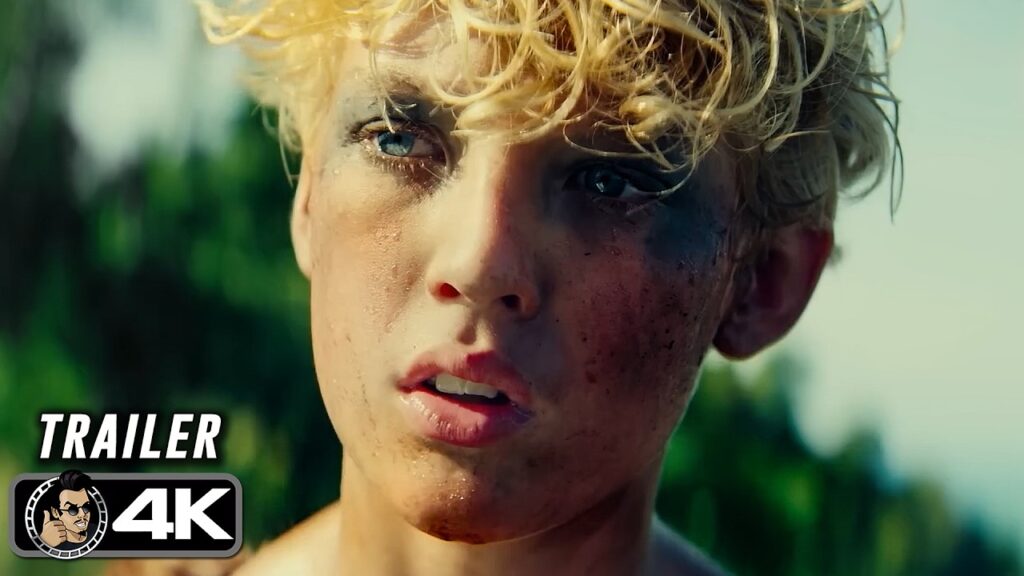
The BBC Mini-Series That Proves What Truly Great Art the Corporation Is Still Capable of When It Pulls Out All the Stops
A plane crash. An uninhabited island. Thirty boys. No adults. Within weeks, two of them are dead.: Ralph is elected leader. Piggy provides the intellect. Simon sees something the others don’t. Jack wants to hunt. Each of the four episodes is titled after one of these characters, tracking Golding’s 1954 novel through the specific psychological perspective of its most consequential figure. Written by Jack Thorne — Adolescence — directed by Marc Munden. Shot in Langkawi, Malaysia. The main theme drawn from Benjamin Britten’s Peter Grimes. Made with the support of Golding’s family. The first television adaptation of one of the most-taught English-language novels ever written.
Why It Is Trending: Jack Thorne’s First Major Project After Adolescence Arrives on Netflix — the BBC’s Most Acclaimed Mini-Series of 2026
Adolescence made Jack Thorne the most-discussed television writer in the English-speaking world in early 2025. Lord of the Flies is his next major project — and the comparison was drawn immediately, with The Independent’s Nick Hilton predicting it would “terrify parents as much as Adolescence.” The series premiered on BBC iPlayer and BBC One on February 8, 2026, all four episodes simultaneously on iPlayer and then weekly on BBC One. It launched on Stan in Australia the same day. Netflix acquired the US rights and released it May 4, 2026. Sony Pictures Television handles international distribution across Austria, Brazil, Canada, Germany, Japan, Poland, Israel, and more than 20 additional territories. Golding’s family’s involvement gives it an institutional authenticity that previous adaptations lacked.
Elements Driving the Trend: The character-per-episode structure — Ralph, Piggy, Simon, Jack — is Thorne’s most formally precise adaptation decision, giving each episode a psychological depth that the novel’s omniscient narration distributes across 200+ pages. The cinematography, universally praised and universally controversial, oscillates between the verdant green of the island’s paradise aspect and the encroaching scarlet red that signals the boys’ descent — a colour palette that is either formally brilliant or gratuitously stylised depending on the viewer. The fisheye lens in the opening episodes divided audiences sharply: half found it immerses them in the boys’ disorienting perspective; the other half found it an auteurist distraction. The Benjamin Britten Peter Grimes theme is the adaptation’s most specific and most loaded musical choice — Britten’s opera, itself about an outsider destroyed by a hostile community, speaks directly to what happens to Simon and Piggy.
Virality: The Adolescence connection drove massive pre-premiere attention. The Telegraph’s five-star review and The Spectator calling it “mesmerically brilliant” generated UK critical consensus immediately. Gold Derby identified it as a potential Emmy race disruptor. The fisheye lens controversy generated sustained social media discourse around whether formal ambition serves or undermines classic material.
Critics Reception: The Telegraph (Anita Singh) — five stars, first-class adaptation done right, stunningly directed, tour de force. The Spectator — mesmerically brilliant, quite a shock to be reminded what truly great art the BBC can produce. The Independent (Nick Hilton) — four stars, bold and brilliant, will terrify parents as much as Adolescence. The Standard (Claudia Cockerell) — four stars, slick, visually rich, Thorne manages the cultural monolith with aplomb. User reviews divided: enthusiasts call it a masterpiece and an immersive experience; critics find the cinematography invasive and the pacing too slow. IMDb 6.6 from 3,500 viewers.
Awards and Recognitions: Gold Derby Emmy consideration. BBC iPlayer premiere February 8, 2026. Netflix US premiere May 4, 2026. Four episodes. BBC / Stan / Sony Pictures Television co-production.
Lord of the Flies arrives as one of the most critically praised BBC prestige productions of 2026 — and the most anticipated Thorne project since Adolescence made him the defining voice of British prestige television.
What Movie Trend Is Followed: The Prestige Literary Adaptation Finds Its Most Formally Ambitious Operator
Lord of the Flies joins Adolescence, The Tattooist of Auschwitz, and Wolf Hall in BBC prestige literary adaptation tradition — but Thorne’s character-centred episode structure and Munden’s formally aggressive direction position this adaptation closer to psychological horror than heritage drama. The choice to give each episode a single character’s perspective is the adaptation’s most significant departure from previous versions (the 1963 Peter Brook film and 1990 Harry Hook film both maintained closer narrative fidelity) — it is simultaneously a structural conceit that gives the series its psychological depth and the source of its most contested formal choices, since individual perspective requires visual techniques that general readers of the novel didn’t expect.
Trend Drivers: Thorne’s Character-Per-Episode Architecture and the Adolescence Momentum Thorne’s structural innovation — four episodes, four perspectives, four psychologies — gives the series its most compelling argument for existing alongside the two previous film adaptations. Ralph’s perspective gives the series its moral centre; Piggy’s gives it its tragic intellectual weight; Simon’s gives it its most formally experimental episode; Jack’s gives it its most viscerally uncomfortable. The Adolescence connection draws audiences who followed Thorne into dark territory about children and violence — and Lord of the Flies, set seventy years earlier, occupies exactly the same thematic space: what happens when children are removed from the structures that contain their capacity for harm.
The Golding family’s involvement signals a fidelity of intent that pure commercial adaptations lack — and gives the production a moral authority that the subject matter demands.
What Is Influencing Trend: BBC iPlayer’s simultaneous full-series release model — all four episodes available immediately — has established a new prestige streaming standard for British public broadcasting. Netflix’s US acquisition confirms the series’ international commercial viability alongside its critical prestige. The prestige literary adaptation tradition — from Wolf Hall to Normal People to Adolescence — has trained an audience that responds to formally ambitious, psychologically serious British television with sustained critical engagement. Golding’s novel remains on almost every English Literature curriculum in the UK — the adaptation’s potential audience includes every adult who studied the book at school, which is effectively the entire English-speaking educated population.
Macro Trends Influencing: The Adolescence cultural moment — a television series about children and violence becoming a national conversation — created the exact audience appetite for Lord of the Flies that this adaptation needed. The political resonance of Golding’s argument about human nature and institutional collapse is as acute in 2026 as it was in 1954, and multiple reviews explicitly drew contemporary political parallels. The Benjamin Britten connection positions the series within British cultural heritage at the most prestigious possible level — Peter Grimes is one of the defining works of British 20th-century music.
Consumer Trends Influencing: Thorne’s Adolescence audience followed him to Lord of the Flies — multiple reviewers mentioned the connection explicitly. The BBC iPlayer binge model allowed UK viewers to consume all four episodes simultaneously. Netflix’s US platform gives the series the same prestige positioning globally that HBO Max gives comparable American productions. The novel’s curriculum presence means the adaptation arrives with a pre-literate audience already emotionally invested in the material.
Audience Analysis: Adolescence Viewers, Golding Novel Readers, and BBC Prestige Drama Audiences The core audience is 25–65 — UK viewers who studied the novel and followed the BBC iPlayer release, Adolescence fans who followed Thorne, international arthouse television audiences who respond to formally ambitious literary adaptation, and the Netflix prestige drama demographic. The series divides viewers who came with strict book expectations from those who meet the formal choices on their own terms — a consistent pattern for formally ambitious prestige adaptation. Those who surrender to Munden’s visual register call it a masterpiece; those who resist it call it style over substance.
Final Verdict: Lord of the Flies (2026) Is the Most Formally Ambitious BBC Prestige Adaptation in Years — a Jack Thorne Achievement That Merits the Telegraph’s Five Stars and the Adolescence Comparison
Thorne and Munden deliver a four-episode series that earns its visual ambition — the scarlet/green colour contrast, the Britten theme, the character-per-episode architecture all serve the novel’s argument rather than competing with it. The fisheye lens division is the series’ most honest critical indicator: viewers who accept the formal choices as immersive find the series extraordinary; those who experience them as ostentatious find it frustrating. The young cast — almost entirely professional debuts — is the production’s greatest surprise and its most secure foundation. David McKenna’s Piggy (Northern Irish accent) and Ike Talbut’s Simon are the performances the series will be remembered for.
Audience Relevance: For Anyone Who Read the Novel in School and Never Expected Television to Do It Justice The Telegraph called it “a first-class example of an adaptation done right” — the most precise available statement about what Lord of the Flies 2026 achieves. Readers who know the novel’s argument will find Thorne’s architecture gives each character the depth the novel distributes across chapters. Viewers new to the story will find an atmospheric, slow-burn psychological thriller about children that is more disturbing for its restraint than any action-driven version could be.
What Is the Message: The Beast Is Not External — It Is What Emerges When the Rules Stop Applying Thorne’s adaptation makes Simon’s thematic statement — the beast is within them, not on the mountain — the series’ most formally specific episode. Episode 3, dedicated to Simon, is the most experimental and the most psychologically precise. The series understands that Golding’s argument is not about what children do when adults leave — it is about what humans do when institutional authority collapses. In 2026, that argument requires no contemporary footnote.
Relevance to Audience: A Novel Taught to Every Generation of British Schoolchildren Given Its First Television Adaptation Seventy Years After Publication The novel’s curriculum status means the series arrives with an audience already emotionally invested in its characters and already aware of its outcome. Thorne’s character-per-episode structure offers those readers something the previous film adaptations couldn’t: sustained psychological interiority for each of the four principals. For viewers discovering the story for the first time, the series functions as an immersive, slow-horror experience that builds to one of British literature’s most devastating conclusions.
Social Relevance: Golding’s Argument About Human Nature Has Never Been More Timely Multiple UK critics drew explicit contemporary political parallels without needing to specify them. A story about a democratic system collapsing into authoritarian violence when a charismatic leader weaponises fear — set on an island, involving children, ending with the arbitrary rescue that condemns the survivors to the adult world they replicated — requires no editorial assistance in 2026.
Performance: McKenna’s Piggy Is the Series’ Most Emotionally Devastating Turn; Pratt’s Jack the Most Frightening David McKenna’s Piggy — Northern Irish accent intact, physical vulnerability rendered without condescension — is the performance the series will be remembered for. His trajectory from the first episode’s playground dynamics to the fourth’s violence is the series’ emotional architecture. Lox Pratt’s Jack, whose next role is Draco Malfoy in HBO’s Harry Potter series, is frighteningly convincing in his transformation. Ike Talbut’s Simon — the series’ most formally experimental episode — earns the character’s status as the novel’s moral and spiritual centre. Winston Sawyers’ Ralph carries the weight of the series’ moral consciousness with an authority extraordinary for a debut performer.
Legacy: The Definitive Television Lord of the Flies — and a Series That Confirms Thorne as the Pre-Eminent Adapter of Difficult Material for British Television Lord of the Flies 2026 will be remembered as the adaptation that finally gave Golding’s novel the formal and psychological ambition it deserved — and as the project that confirmed the post-Adolescence Thorne as British television’s most trusted steward of dark material about children and society. The Emmy consideration is deserved. The Netflix global release will sustain its discovery for years.
Success: Five-Star Telegraph, Four-Star Independent, Gold Derby Emmy Consideration BBC iPlayer and BBC One February 8, 2026. Stan (Australia) February 8, 2026. Netflix US May 4, 2026. Sony Pictures Television international distribution. 14 critic reviews. IMDb 6.6 from 3,500 viewers.
Lord of the Flies 2026 gives Golding’s argument its most formally serious television realisation — and arrives in precisely the political moment that makes the beast’s existence inside the boys impossible to dismiss as fiction.
Insights: Jack Thorne’s Adolescence-to-Lord-of-the-Flies trajectory confirms the post-Adolescence BBC commissioning logic: give Thorne the darkest available material about children in society, attach a formally ambitious director, and trust the prestige adaptation model to generate critical consensus that travels from BBC iPlayer to Netflix globally. Audience Insights: The Adolescence fanbase followed Thorne to Lord of the Flies with exactly the appetite the production required — an audience primed for dark, psychologically serious television about children and institutional collapse, already comfortable with the formally ambitious BBC prestige register, and ready to defend the series against the fisheye-lens critics. Social Insights: A novel about democratic institutions collapsing into authoritarian violence when a charismatic leader weaponises the community’s fear — given its first television adaptation in 2026 — requires no additional political contextualisation, and the critical consensus universally acknowledged its contemporary resonance without specifying what that resonance referred to. Cultural Insights: Lord of the Flies 2026 positions the BBC as the institution still capable of producing the definitive adaptation of Britain’s most canonical post-war novel — and confirms that British prestige television’s most important creative relationship right now is between Jack Thorne and the darkest available material about what children reveal about the adults they will become.
Lord of the Flies proves that the beast was never on the mountain — and that seventy years after Golding wrote it, the island is still recognisably wherever we are right now.
Summary: Four Boys, Four Episodes, One Island, and the End of Everything They Were Taught to Be
-
Series themes: The collapse of democratic institutions under authoritarian pressure, the beast within as the defining human truth, childhood as the site where adult violence is first practised, the specific cost of being right in a world that has decided to be wrong, and the arbitrary nature of rescue from the conditions we create for ourselves.
-
Series creator/director: Jack Thorne — Adolescence, This Is England, Harry Potter and the Cursed Child stage adaptation — writes with a character-per-episode structure that gives each of the four principals unprecedented psychological interiority. Marc Munden directs with formal ambition that has divided audiences and convinced critics.
-
Top casting: McKenna’s Piggy is the series’ emotional architecture. Pratt’s Jack (soon to be Draco Malfoy in HBO’s Harry Potter) is its most frightening performance. Talbut’s Simon its most formally experimental. Sawyers’ Ralph its moral weight. Entirely debut or near-debut cast.
-
Awards and recognition: Gold Derby Emmy consideration. Five stars The Telegraph. Four stars The Independent and The Standard. BBC iPlayer February 8, 2026. Netflix US May 4, 2026.
-
Why to watch: The first television adaptation of Golding’s Nobel Prize-winning novel — written by the creator of Adolescence, shot in Langkawi Malaysia, scored with Benjamin Britten’s Peter Grimes theme, built around four character-per-episode perspectives, and arriving in precisely the political moment that makes its argument impossible to dismiss.
-
Key success factors: Thorne’s Adolescence momentum plus Munden’s formal ambition plus Golding family endorsement plus Britten’s Peter Grimes as thematic anchor plus Netflix’s global distribution plus an entirely debut cast that universally exceeds expectations — a combination that makes the adaptation worthy of the novel’s 70-year canonical status.
-
Where to watch: Netflix — US streaming from May 4, 2026. BBC iPlayer (UK) — all four episodes from February 8, 2026. Stan (Australia). TVNZ+ (New Zealand).