


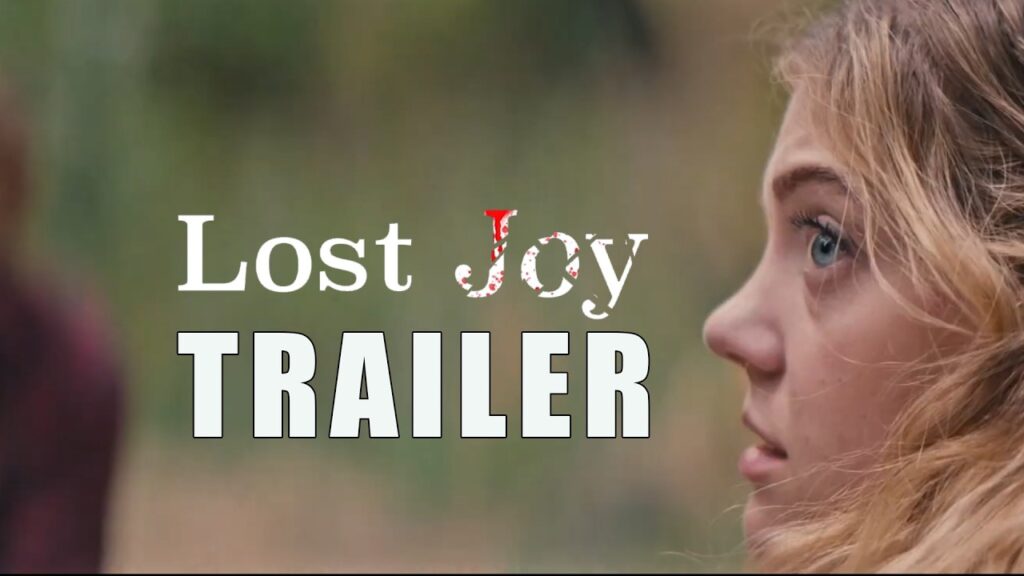
A Psychological Thriller Turns An Isolated Woodland Retreat Into A Reality-Bending Mystery
What begins as a peaceful getaway quickly unravels into an unsettling psychological nightmare when a mysterious stranger appears and begins questioning the foundation of a couple’s relationship. As certainty gives way to paranoia, Lost Joy explores the fragile line between memory, perception, and reality, creating an intimate thriller where every conversation may conceal a deeper truth.
Why This Film Is Worth Discovering: An Independent Thriller Uses Psychological Uncertainty Instead Of Conventional Horror
Writer-director Jordan Laemmlen delivers a contained psychological thriller that builds suspense through emotional ambiguity rather than violence. Set almost entirely within a remote woodland cabin, the film relies on atmosphere, shifting relationships, and unreliable perception to keep audiences questioning what is real until the final moments.
-
A Psychological Mystery Rather Than A Traditional Horror Film: Instead of supernatural creatures or graphic violence, the story creates fear through uncertainty, emotional manipulation, and fractured perception. The suspense comes from questioning reality itself.
-
A Single Location Becomes Increasingly Unsettling: The quiet forest cabin gradually transforms from a peaceful retreat into a place where isolation amplifies paranoia and emotional instability. The confined setting strengthens every moment of tension.
-
Reality Constantly Shifts: As Jane’s confidence in her own memories begins to erode, audiences experience the mystery through her increasingly uncertain perspective. The film encourages viewers to actively question every revelation.
-
Independent Filmmaking Driven By Atmosphere: Working with a minimalist production, Jordan Laemmlen prioritizes cinematography, mood, and psychological storytelling over expensive spectacle. Its creative restraint demonstrates the strengths of contemporary independent genre cinema.
Lost Joy offers movie audiences an intimate psychological mystery while introducing filmmakers and independent cinema fans to an emerging creative voice working within the thriller genre.
What Is The Film About?: A Romantic Escape Descends Into Psychological Uncertainty
Jane escapes to a remote woodland cabin with her partner, hoping for a peaceful retreat away from everyday life. Their isolation is shattered when an unexpected stranger arrives and begins questioning the authenticity of their relationship. As strange encounters accumulate and memories become increasingly unreliable, Jane struggles to determine whether she is confronting manipulation, hidden truths, or the collapse of her own perception of reality.
Starring Winter Bassett, Jordan Laemmlen, and Vincent Catalina, the film combines psychological thriller, relationship drama, and mystery while exploring trust, identity, memory, perception, and emotional isolation.
Should You Watch It?: A Slow-Burning Psychological Thriller Rewards Patient Viewers
Recommended For: Movie Audiences Who Enjoy Mind-Bending Psychological Mysteries
-
Fans Of Psychological Thrillers: The film builds suspense through uncertainty rather than physical danger. Its emotional tension grows steadily from beginning to end.
-
Viewers Who Enjoy Reality-Bending Mysteries: The narrative continually challenges audience assumptions about what is happening. Every revelation opens new questions rather than easy answers.
-
Fans Of Independent Genre Cinema: The film demonstrates how limited resources can produce compelling suspense through creative storytelling. Its minimalist approach highlights strong direction and atmosphere.
-
Movie Audiences Interested In Character-Driven Suspense: Relationships and emotional conflict drive the mystery more than external action. The psychological dynamics remain the story’s greatest strength.
-
Filmmakers And Emerging Creators: Lost Joy offers an effective example of contained filmmaking where location, performance, and cinematography become the primary storytelling tools. It illustrates how independent thrillers continue innovating through concept rather than scale.
May Not Appeal To: Viewers Seeking Conventional Horror Or Fast-Paced Thrillers
-
Fans Of Jump-Scare Horror: The film emphasizes mood, psychological unease, and emotional ambiguity instead of traditional horror techniques. Its suspense develops gradually through atmosphere.
-
Viewers Expecting Clear Narrative Answers: Much of the film’s appeal comes from uncertainty and interpretation. Its open-ended psychological approach invites discussion after the credits.
Overall, Lost Joy is recommended for movie audiences who appreciate atmospheric psychological thrillers that prioritize mystery, emotional tension, and unsettling ambiguity over conventional genre formulas.
Why Everyone Is Talking About It: Independent Thrillers Continue Finding Power In Simplicity
Lost Joy reflects one of independent cinema’s strongest recent trends: contained psychological thrillers built around a single location, a small ensemble cast, and an emotionally complex mystery. Rather than relying on large budgets or visual spectacle, the film demonstrates how carefully constructed atmosphere and character-driven suspense can create an immersive viewing experience.
Its production approach also reflects the collaborative spirit of independent filmmaking. Much of the cast and crew lived together in the same remote cabin during production, allowing the isolated environment to naturally shape both performances and the film’s increasingly claustrophobic atmosphere.
Audience & Critical Reception: Early Viewers Praise Its Atmosphere And Psychological Twists
While still a relatively small independent release, Lost Joy has begun attracting attention among genre audiences for its atmospheric direction, strong cinematography, and unpredictable psychological storytelling. Early viewers have highlighted the film’s ability to sustain suspense through uncertainty rather than spectacle, with particular praise for its visual style and gradually unfolding narrative.
Its strongest appeal is likely to be among audiences who enjoy independent psychological mysteries where mood, ambiguity, and emotional tension take precedence over traditional horror conventions.
Recognition Highlights: Independent Filmmaking Turns Creative Limitations Into Strengths
-
An Emerging Independent Feature: Lost Joy showcases Jordan Laemmlen’s ability to build sustained suspense using a contained setting, a small ensemble cast, and a psychologically driven narrative. The film demonstrates how focused storytelling can compensate for limited production scale.
-
A Creative Independent Production: The cast and crew lived together in the same remote cabin during filming, creating an immersive production environment that naturally strengthened the performances and the film’s atmosphere. The production process itself became part of the storytelling.
-
Visual Storytelling On A Modest Budget: Despite its independent scale, early viewers have praised the film’s cinematography, careful framing, and confident visual style. Its atmosphere relies on composition, lighting, and pacing rather than expensive effects.
-
An Emerging Genre Filmmaker: Jordan Laemmlen establishes himself as a filmmaker interested in psychological ambiguity, emotional tension, and contained suspense. The film positions him as a promising new voice within independent psychological thrillers.
Standout Element: The Cabin Becomes A Prison Of Uncertainty
Rather than presenting the forest as a place of escape, Lost Joy gradually transforms its peaceful surroundings into an environment where nothing feels trustworthy.
-
Isolation Creates Psychological Pressure: Removed from the outside world, every interaction carries increasing emotional weight. The setting intensifies uncertainty rather than providing comfort.
-
Reality Becomes The Central Mystery: The greatest question is not who threatens Jane, but whether her own perception can still be trusted. The psychological uncertainty becomes the film’s true antagonist.
-
Relationships Drive The Suspense: Every conversation subtly changes the audience’s understanding of the characters. Emotional conflict replaces conventional action as the source of tension.
-
Atmosphere Over Spectacle: Silence, restrained performances, and careful pacing create a lingering sense of unease. The film proves that suggestion can be more unsettling than explicit horror.
Why This Film Matters: Independent Cinema Continues Reinventing Psychological Suspense
Lost Joy reflects the continued evolution of psychological thrillers toward intimate, emotionally driven storytelling. Rather than relying on elaborate mythology or large-scale action, the film demonstrates that uncertainty, unreliable perception, and fractured relationships can generate equally compelling suspense. It represents a broader shift within independent cinema, where filmmakers increasingly prioritize atmosphere and character over spectacle.
The film also highlights how accessible filmmaking has become. With a focused concept, a limited location, and a committed creative team, independent directors can create distinctive psychological experiences that stand apart from mainstream studio productions.
Entertainment Signal: Contained Thrillers Are Becoming One Of Independent Cinema’s Strongest Genres
Lost Joy reflects one of today’s most consistent independent film trends: contained psychological thrillers that maximize suspense through minimalist storytelling. These films often feature small casts, isolated locations, and emotionally complex narratives that encourage audiences to actively interpret events rather than simply observe them.
As streaming platforms continue expanding demand for distinctive genre content, psychologically layered mysteries have become increasingly attractive because they combine modest production costs with strong audience engagement and discussion.
Industry Opportunities: Small Productions Can Deliver Big Psychological Impact
For Filmmakers: Concept Continues To Outweigh Budget
Creative storytelling, disciplined direction, and atmospheric filmmaking often generate stronger audience engagement than expensive visual spectacle. Independent psychological thrillers remain one of the most accessible paths for emerging directors.
For Producers & Distributors: Contained Genre Films Offer Strong Value
Single-location thrillers remain financially efficient while appealing to audiences seeking original suspense. These films continue finding homes across streaming services, genre festivals, and digital platforms.
For Emerging Talent: Genre Films Showcase Creative Vision
Psychological thrillers allow directors, writers, cinematographers, and performers to demonstrate storytelling ability within manageable productions. The genre continues serving as an important launching point for new creative voices.
Future Outlook: Psychological Thrillers Will Continue Embracing Ambiguity
Independent suspense films are increasingly moving away from simple explanations toward emotionally and psychologically layered narratives. Rather than providing clear answers, filmmakers are encouraging audiences to interpret reality alongside their protagonists.
As audiences continue embracing slower, more atmospheric thrillers, films like Lost Joy illustrate how minimalist storytelling can produce memorable genre experiences that remain engaging long after the mystery is resolved.
Final Verdict: A Confident Independent Thriller Built On Atmosphere Rather Than Spectacle
Lost Joy turns an isolated cabin into a compelling psychological maze where trust, memory, and reality gradually dissolve. Jordan Laemmlen demonstrates that effective suspense comes from emotional uncertainty, visual atmosphere, and disciplined storytelling rather than large budgets or conventional horror techniques.
For movie audiences, it offers a thoughtful psychological mystery driven by mood and character. For filmmakers, producers, distributors, festival programmers, and entertainment professionals, it highlights a growing entertainment trend: independent psychological thrillers continue proving that originality, atmosphere, and strong concepts remain some of the genre’s greatest creative strengths.
Summary Of The Movie: A Quiet Getaway Evolves Into A Disturbing Psychological Puzzle
-
Movie Themes: Reality, identity, memory, trust, relationships, paranoia, isolation, and emotional uncertainty shape the story. Together they create an intimate thriller where perception itself becomes unreliable.
-
Top Cast: Winter Bassett, Jordan Laemmlen, Vincent Catalina, Alexander Stavrou, and the supporting ensemble deliver grounded performances that reinforce the film’s psychological realism. Their restrained approach strengthens the mystery rather than explaining it.
-
Standout Element: A secluded woodland cabin becomes the setting for an increasingly disorienting psychological mystery. Its contained environment amplifies every emotional shift and narrative revelation.
-
Entertainment Signal: Independent filmmakers continue redefining psychological suspense through minimalist productions, contained locations, and reality-bending storytelling. Atmosphere and emotional ambiguity are becoming central to modern independent thrillers.
-
Why Watch This Movie: Movie audiences who enjoy independent mysteries, psychological suspense, and slow-burning thrillers will find an intriguing genre film that rewards careful attention. Its strongest surprises emerge through psychological complexity rather than conventional twists.
-
Where To Watch: Lost Joy was released in the United States on March 18, 2025. The film is available through independent digital distribution channels and is expected to continue expanding across VOD platforms and specialty streaming services focused on independent genre cinema.