
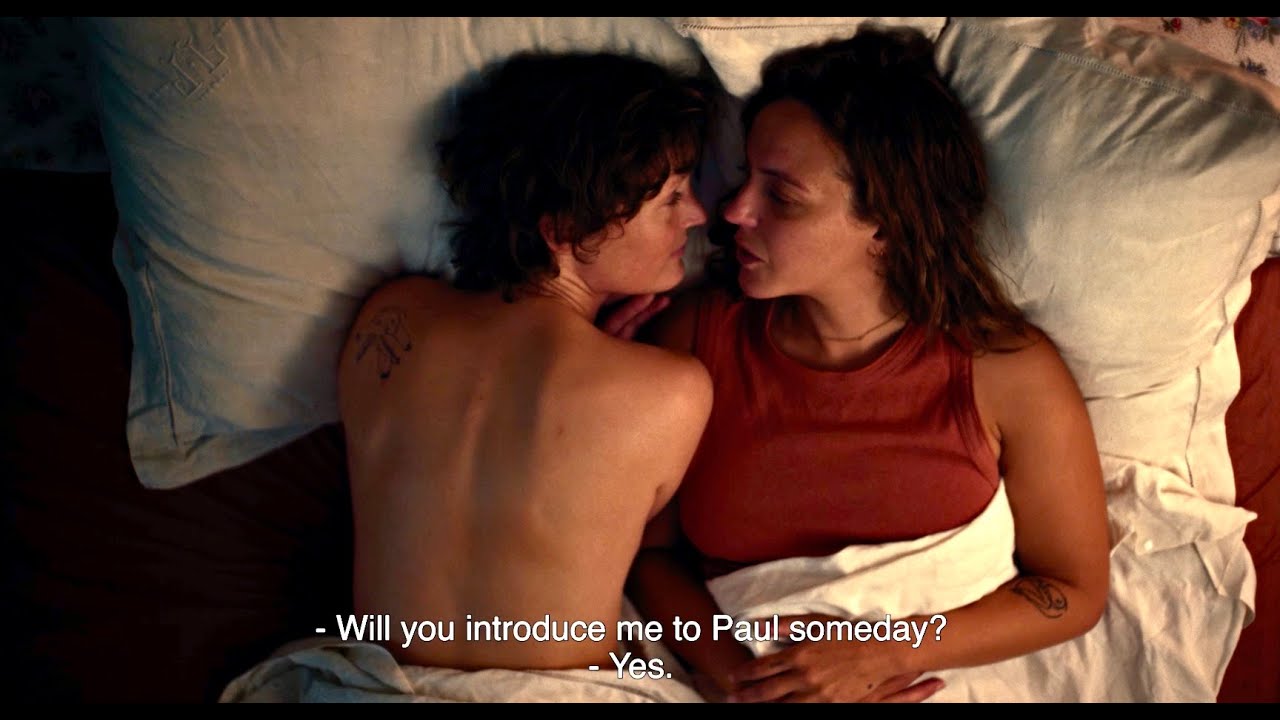
A mother comes out, a husband declares war, and the law takes sides
Clémence, a lawyer turned writer, tells her ex-husband she has been seeing women. He responds by stripping her of custody, weaponising their son Paul, and accusing her of crimes she did not commit — and what follows is a two-year fight for her child and her right to exist as both a mother and herself.
Why It Is Trending: The Queer Custody Battle Lands at Cannes
Love Me Tender premiered in Un Certain Regard at Cannes 2025 and was nominated for the Queer Palm — a double placement signalling both arthouse prestige and LGBTQ+ cultural significance. Based on Constance Debré’s award-winning 2020 autofiction novel — written by a woman from France’s most prominent political family — the film arrives with serious literary authority. Vicky Krieps’s internationally acclaimed profile gives it immediate global reach, and the Cannes platform positioned it as one of the year’s most urgent French dramas.
Elements Driving the Trend: Cineuropa called Krieps exceptional — she carries the entire film on her shoulders — in a story that begins with a single coming-out dinner on a Parisian terrace and ends two years later with something that defies easy resolution. Cinematographer Kristy Baboul’s intimate camerawork zeroes in on Krieps’ face with precision, creating a portrait of controlled anguish that never overplays. The film’s refusal to make Clémence a perfect victim — she is a queer woman living freely on her own terms — gives it a moral honesty that custody drama rarely achieves.
Virality: Cannes buzz and the Queer Palm nomination drove strong international discovery, with the film’s subject — homophobia weaponised through family courts — generating significant social media conversation beyond the festival circuit.
Critics Reception: Variety called it sweeping and moving, praising Krieps’ rivetingly radiant performance that hits its mark with painful accuracy. Screen Daily and The Hollywood Reporter acknowledged its power while noting the 134-minute runtime. Critical consensus is unanimous on Krieps as the film’s defining asset.
Awards and Recognitions: 1 win and 6 nominations. Queer Palm nomination, Cannes 2025. World premiere Un Certain Regard, May 20, 2025. French theatrical release December 10, 2025.
Love Me Tender transforms a live political and legal conversation — LGBTQ+ parental rights, judicial bias, the weaponisation of children in divorce — into intimate human drama without losing its seriousness. The Cannes placement confirms Cazenave Cambet as a significant French director, and Krieps’s sustained excellence is cementing her as one of the defining actresses of her generation.
What Movie Trend Is Followed: Queer Motherhood as Legal and Political Battleground
The French custody drama has been updated with a specifically queer dimension that makes the family court system visible as a site of homophobic power. Cambet trusts the audience to recognise the double standard — no one questions what the heterosexual father does on weekends, yet the queer parent is forced to justify every choice. The Debré source material — punk, candid, politically charged — gives the film a literary backbone that distinguishes it from conventional custody narratives. Francophone dramas following mothers in custody disputes are having a moment, and Love Me Tender is a notable addition to the trend.
Trend Drivers: Constance Debré’s Literary Sensation Reaches Cinema Debré’s autofiction was a French literary sensation — her willingness to write with total candour about her sexual life and her loss of custody gives the source material a social charge the film fully inherits. The Krieps casting transforms a French literary controversy into internationally accessible emotional drama. Be For Films’ world sales positioning gives it strong festival and arthouse distribution reach across Europe and beyond.
What Is Influencing Trend: LGBTQ+ parental rights remain a live legal debate across Europe, making custody battles between queer and heterosexual parents an urgent subject. French cinema’s autofiction adaptation tradition is producing a distinctive strand of politically engaged personal drama. The Un Certain Regard section continues to be the most reliable platform for socially significant European films with crossover potential.
Macro Trends Influencing: The cultural reckoning around LGBTQ+ parenting — intersecting with judicial bias, family structure debates, and the weaponisation of children in divorce — has created an engaged audience for films with legal and emotional precision. The queer motherhood narrative is building a genre context in European cinema that gives individual films stronger discovery pathways. The Vicky Krieps brand consistently attracts critical attention that lifts every film she appears in.
Consumer Trends Influencing: The LGBTQ+ arthouse audience is loyal, internationally distributed, and highly engaged with festival films addressing their specific legal realities. The autofiction adaptation trend bridges literary and film audiences effectively. Cannes Un Certain Regard has become a reliable launchpad from festival prestige to mainstream streaming discovery.
Audience Analysis: Queer Cinema Audiences, French Drama Devotees, and the Vicky Krieps Faithful The core audience is 25–55 — LGBTQ+-literate adults who follow European arthouse drama and Krieps’s career. The film opens boldly — Clémence meeting a woman at a swimming pool and hooking up immediately — establishing from the first frame that this is a woman fully inhabiting her desires, not apologising for them. Audiences who have navigated custody disputes will find its institutional portrait devastating and precise. Anyone who has had their identity used against them in a system designed for someone else will recognise Clémence’s fight entirely.
Love Me Tender works because it refuses to make its protagonist sympathetic through suffering alone — she is also joyful, reckless, and fully alive. That complexity is the film’s greatest achievement.
Final Verdict: Love Me Tender Is Emotionally Demanding, Politically Urgent, and Carried by One of Krieps’s Greatest Performances
Cazenave Cambet delivers a sweeping, occasionally uneven adaptation that is greater than the sum of its parts — powered by a central performance of extraordinary completeness. The film’s 134-minute runtime tests patience in its middle section, but Krieps ensures that no scene entirely wastes its time. Its political seriousness and emotional honesty make it essential viewing for the audience it was built for.
Audience Relevance: For Anyone Who Has Been Told Their Identity Makes Them Unfit Clémence is not on trial for what she has done — she is on trial for who she is. That distinction is the film’s central injustice, and the legal system’s indifference to it is its most devastating observation.
The film insists that a woman can be a good mother and a free, sexually autonomous person simultaneously — and that the refusal to accept this is a structural failure, not a personal one.
What Is the Message: Freedom and Motherhood Are Not Mutually Exclusive — The System Says Otherwise Clémence knows how this narrative pans out — she is a writer, after all — and she is aware that a woman who walks out on her child tends to be viewed as the villain. She will fight to see Paul — but not at the expense of the woman she is only now learning how to be.
That refusal to choose between identity and motherhood is the film’s most radical and most honest position.
Relevance to Audience: A Custody Drama That Doubles as a Portrait of Institutional Homophobia The courtroom and mediation scenes are the film’s most politically precise sequences — showing exactly how a legal system built for heteronormative family structures fails to accommodate queer reality. The accusations Laurent launches — incest, paedophilia — are not legally sustainable but are strategically devastating, designed to exhaust rather than convict.
For LGBTQ+ audiences who have navigated similar systems, the film’s accuracy is both validating and infuriating in equal measure.
Social Relevance: Family Court Bias Against Queer Parents, Finally on Screen The law is the law, but it doesn’t seem right — Clémence’s observation captures the film’s central social argument: that legal neutrality is a fiction when the norms embedded in the law are themselves discriminatory. The film names this without polemic.
The Debré source material carries additional social weight in France, where the author’s political family background made her public coming-out and custody loss a national cultural event.
Performance: Krieps Delivers Career-Best Work Krieps is lean and rangy in T-shirts and denim — her body language changes across the film: slinky when circling a new lover, loose-limbed with friends, tight and compressed in that horrible mediation room, her burners on low, her expression concentrated like she is willing her heart to slow its beat.
Antoine Reinartz makes Laurent coldly credible without overplaying villainy. Viggo Ferreira-Redier’s Paul is the film’s emotional wound — a child slowly taught to withdraw the love he cannot help feeling.
Legacy: A Defining Entry in French Queer Cinema and the Vicky Krieps Canon Love Me Tender will be remembered as the film that brought the Debré custody case to international attention — and as another chapter in Krieps’s extraordinary run of fearless, uncompromising performances. Its Cannes placement gives it a cultural standing that will sustain its discovery for years.
The film’s legacy is already being written in the legal and personal lives of the LGBTQ+ parents it portrays.
Success: Cannes Premiere, Queer Palm Nomination, International Arthouse Release 1 win and 6 nominations. Queer Palm nomination Cannes 2025. French theatrical release December 10, 2025. Worldwide gross of $233,701. IMDb rating of 6.9 from 348 early viewers. 18 critic reviews with positive consensus. World sales via Be For Films.
The theatrical footprint underrepresents the film’s cultural reach — its streaming life, driven by Krieps’s fanbase and the LGBTQ+ arthouse circuit, will be its primary long-term audience.
Insights Love Me Tender is the rare film that makes a legal argument and a human one simultaneously — and Vicky Krieps ensures you feel both with equal force. Industry: The Cannes Un Certain Regard placement, Debré’s literary brand, and Krieps’s international profile create an unusually strong commercial package for a socially ambitious French drama — a template other queer custody narratives should study. Audience: The LGBTQ+ arthouse audience for this film is not niche — it is every person who has had their identity used as a weapon against them in a system that was never designed to protect them. Social: By showing exactly how homophobia operates inside a nominally neutral legal system, the film performs a social function that journalism rarely achieves and polemic cannot — it makes you feel the injustice from the inside. Cultural: Constance Debré’s autofiction has found its ideal cinematic translation — and Love Me Tender positions France as one of the most honest national cinemas when it comes to documenting the lived cost of queer existence within heteronormative institutions.
Love Me Tender does not end with justice — it ends with something more honest and more enduring: a woman who has survived the worst the system could do, and chosen herself anyway.
Summary of Love Me Tender: Coming Out, Losing Custody, Fighting Back
-
Movie themes: Queer identity, maternal love, institutional homophobia, and the cost of living honestly in a world designed for someone else. A custody drama that is also a portrait of a woman becoming herself under impossible pressure.
-
Movie director: Politically confident second feature. Anna Cazenave Cambet adapts Constance Debré’s autofiction with restraint and emotional precision, trusting Krieps to carry the film’s weight while maintaining sharp institutional critique.
-
Top casting: Krieps at her finest. Vicky Krieps delivers a physically and emotionally complete performance — her body language alone tells the film’s story. Antoine Reinartz is chillingly credible; young Viggo Ferreira-Redier as Paul is the film’s emotional open wound.
-
Awards and recognition: 1 win and 6 nominations. Queer Palm nomination, Un Certain Regard, Cannes 2025. French theatrical release December 10, 2025.
-
Why to watch: A shattering portrait of what it costs to be a queer mother in a system that treats identity as evidence of unfitness — made bearable, and then transcendent, by Vicky Krieps.
-
Key success factors: Debré’s culturally charged source material plus Krieps’s international prestige plus Cannes platform — a combination that gives a politically serious film both critical credibility and audience reach.
-
Where to watch: Released December 10, 2025 in France. International distribution via Be For Films. Streaming availability expanding.






Leave a Reply