


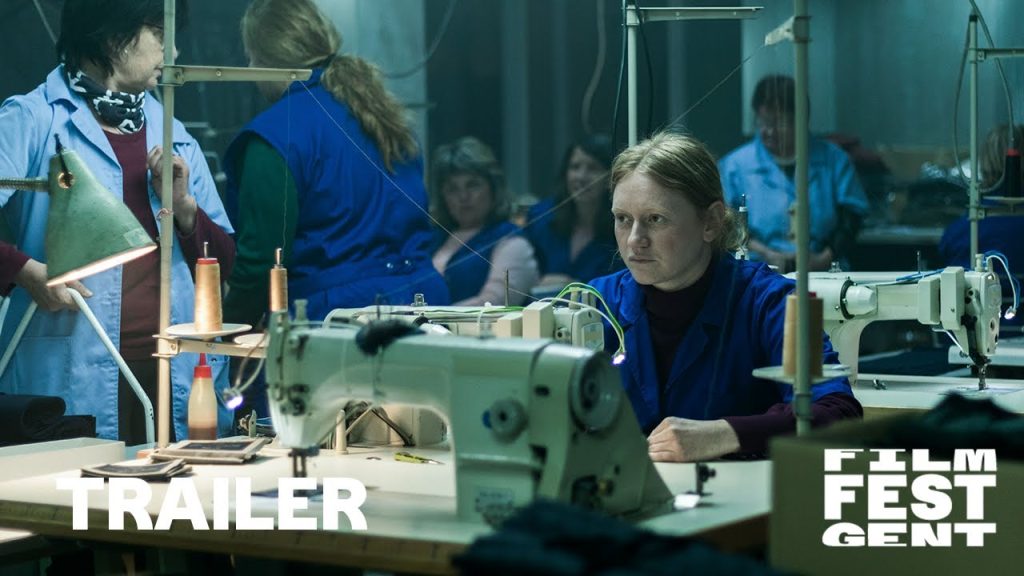
A Powerful Social Drama About Fear, Isolation, and the Human Cost of a Pandemic
In Made in EU, acclaimed Bulgarian director Stephan Komandarev delivers a deeply human drama that revisits one of the defining moments of the twenty-first century through the experience of an ordinary factory worker. Set in rural Bulgaria during the early days of the COVID-19 pandemic, the film follows a woman who becomes her town’s first confirmed coronavirus case, triggering a wave of fear, blame, and social exclusion. What begins as a public health crisis quickly evolves into a devastating examination of prejudice, collective panic, and the fragility of human solidarity.
Rather than focusing on the medical realities of the pandemic, Made in EU explores its emotional and social consequences. As suspicion spreads faster than the virus itself, the protagonist faces persecution from employers, coworkers, neighbors, and even members of her own family. Through this intimate portrait of isolation and stigma, Komandarev transforms a recent historical event into a timeless reflection on fear, compassion, and the moral choices societies make during moments of crisis.
Quick Facts: A Bulgarian Drama About Pandemic Fear and Social Exclusion
|
COVID-19, Social Stigma, Community, Human Rights, Fear |
|
|
Stephan Komandarev, Simeon Ventsislavov |
|
|
Bulgaria, Germany, Czech Republic |
|
|
November 21, 2025 (Bulgaria) |
|
|
Ivan Barnev, Francesco Frattini, Gerasim Georgiev |
|
|
5 wins & 8 nominations including Golden Rose Award – Best Feature Film (Golden Rose Bulgarian Feature Film Festival, 2025), Audience Award – Best Film (Gijón International Film Festival, 2025), Youth Jury Award (Golden Rose Bulgarian Feature Film Festival, 2025), Vasil Gendov Award – Best Leading Actress (Gergana Pletnyova, Bulgarian Film Academy Awards, 2026), Vasil Gendov Award – Best Supporting Actor (Ivaylo Hristov, Bulgarian Film Academy Awards, 2026). Additional nominations include Venice Film Festival – Audience Award (Orizzonti Extra), CineFest Miskolc – East of Europe Prize, Bulgarian Film Academy Awards for Best Director, Best Screenplay, and Best Leading Actor. |
➡️ Key Takeaway: Made in EU earned significant recognition on the international festival circuit, winning major audience and best film awards while receiving multiple Bulgarian Film Academy nominations. Its success highlights the film’s powerful portrayal of the social and psychological impact of the COVID-19 pandemic.
Should You Watch It?: A Timely Drama That Explores the Human Side of the Pandemic
While many films about COVID-19 focus on hospitals, lockdowns, or political responses, Made in EU takes a far more intimate approach by examining how fear transforms ordinary communities. Stephan Komandarev places a single factory worker at the center of the story, revealing how quickly suspicion, prejudice, and misinformation can fracture relationships. The result is a deeply personal drama that explores the emotional consequences of isolation rather than the medical realities of the pandemic itself.
The film also stands out for its social realism. Set in rural Bulgaria, it presents a nuanced portrait of working-class life, economic insecurity, and the pressures placed on individuals during times of crisis. Rather than offering simple heroes or villains, Made in EU asks viewers to consider how fear can influence even well-intentioned people. Its restrained storytelling and authentic performances make it a compelling reflection on one of the most significant global events of recent history.
➡️ Key Takeaway: Made in EU is a thoughtful and emotionally resonant social drama that explores how fear, stigma, and collective anxiety can become as destructive as the crisis itself. It is highly recommended for viewers who appreciate realistic, character-driven European cinema.
Why Everyone Is Talking About It?: Cinema Is Beginning to Reflect on the Social Legacy of COVID-19
As filmmakers move beyond immediate pandemic stories, a new wave of cinema is examining the long-term emotional and social consequences of COVID-19. Made in EU contributes to this emerging conversation by focusing not on the virus itself but on the breakdown of trust, community, and empathy that often accompanied it. Instead of presenting the pandemic as a historical event, the film investigates how fear reshaped everyday relationships and exposed existing social divisions.
The film has also attracted international attention through its successful festival run. Premiering at the Venice Film Festival in the Orizzonti Extra section before winning the Audience Award for Best Film at the Gijón International Film Festival and the Golden Rose Award for Best Feature Film in Bulgaria, Made in EU has been recognized for combining topical relevance with deeply human storytelling. Its critical success demonstrates the continuing importance of socially conscious European cinema that transforms recent history into universal human drama.
➡️ Key Takeaway: Made in EU is generating attention because it shifts the conversation about COVID-19 away from healthcare and politics toward compassion, social responsibility, and the lasting psychological impact of collective fear.
Movie Trend: Pandemic Reflection Cinema Is Replacing Crisis Narratives
Made in EU reflects the growing trend of Pandemic Reflection Cinema, where filmmakers are moving beyond documenting COVID-19 itself to exploring its lasting emotional, psychological, and social consequences. Rather than depicting overwhelmed hospitals or lockdowns, these films examine how fear, misinformation, and isolation reshaped communities and permanently altered human relationships. The pandemic becomes less a medical emergency and more a catalyst for revealing existing social tensions, prejudice, and inequality.
The film also belongs to the broader movement of Social Realist European Cinema, where ordinary individuals become the lens through which larger political and societal issues are explored. Instead of presenting heroes or villains, Made in EU focuses on everyday people confronted by extraordinary circumstances, demonstrating how collective fear can quickly transform neighbors into outsiders. This grounded approach continues the tradition of European cinema that prioritizes empathy, moral complexity, and authentic human experiences over sensationalized storytelling.
➡️ Key Takeaway: Made in EU exemplifies the rise of socially conscious cinema that examines the long-term human consequences of COVID-19, showing how contemporary filmmakers are using recent history to explore universal questions about fear, compassion, and community.
Who Should Watch It?: The Social Realism Observer
Audience Profile: Viewers Interested in Contemporary Human Drama
The ideal audience for Made in EU consists of viewers who appreciate socially conscious dramas inspired by real-world events. Rather than focusing on suspense or medical crises, these audiences seek films that examine how ordinary people respond to extraordinary circumstances through nuanced character development and realistic storytelling.
Core Audience: Fans of European social dramas, festival cinema, and contemporary human stories.
Secondary Audience: Viewers interested in COVID-19’s social impact, human rights, sociology, public health, and independent international cinema.
Lifestyle: Interested in current affairs, social issues, European cinema, documentaries, independent filmmaking, and contemporary history.
Cinema Habits: Regular viewers of international festival films, realistic dramas, and award-winning European productions that explore social and political issues through intimate personal stories.
➡️ Key Takeaway: Made in EU is best suited for audiences who value thoughtful, character-driven cinema that examines society through authentic human experiences rather than conventional dramatic spectacle.
What This Movie Means for the Industry: European Cinema Is Turning Recent History into Lasting Social Reflection
Made in EU demonstrates how European filmmakers are beginning to reinterpret the COVID-19 pandemic through the lens of long-term social consequences rather than immediate crisis. Instead of documenting hospitals, lockdowns, or political decision-making, Stephan Komandarev examines how fear and uncertainty transformed communities, workplaces, and personal relationships. This shift reflects a broader movement within international cinema to explore the emotional legacy of global events once enough time has passed for deeper reflection.
The film also reinforces Eastern Europe’s reputation for socially conscious filmmaking that blends realism with moral complexity. Bulgarian cinema has increasingly gained international recognition for stories rooted in everyday life while addressing universal issues such as inequality, corruption, migration, and social justice. With its strong festival presence—including recognition at Venice, Gijón, and the Bulgarian Film Academy—Made in EU continues this tradition by demonstrating how local stories can resonate with audiences worldwide through their exploration of empathy, fear, and human resilience.
➡️ Key Takeaway: Made in EU illustrates how European cinema is moving beyond documenting historic events to examining their lasting emotional and social impact, reaffirming the power of realistic storytelling to spark dialogue about community, compassion, and collective responsibility.
Creative Analysis: A Human Drama About Fear, Compassion, and Social Isolation
Storytelling: One Woman’s Experience Reflects an Entire Society
Rather than attempting to capture the full scope of the COVID-19 pandemic, Made in EU narrows its focus to a single factory worker whose diagnosis becomes the catalyst for widespread fear and social exclusion. This intimate perspective allows the film to explore how extraordinary historical events are experienced by ordinary individuals, transforming a global crisis into a deeply personal story about dignity, isolation, and survival.
The narrative unfolds through escalating acts of rejection from employers, coworkers, neighbors, and family members, revealing how fear can rapidly erode trust and solidarity. Instead of presenting dramatic confrontations, the screenplay builds emotional tension through realistic interactions that expose the subtle ways communities can marginalize those perceived as different or dangerous.
➡️ Key Takeaway: By telling the pandemic through the experience of one ordinary woman, Made in EU transforms a global crisis into an intimate exploration of fear, prejudice, and human resilience.
Direction: Stephan Komandarev Finds Humanity Within Crisis
Stephan Komandarev approaches the subject with remarkable restraint, avoiding sensationalism in favor of emotional authenticity. His direction emphasizes observation rather than judgment, allowing viewers to understand both the suffering of the protagonist and the fear driving those around her. This balanced perspective gives the film moral complexity while encouraging empathy instead of easy condemnation.
Komandarev also maintains a documentary-like realism throughout the film. Everyday locations, natural performances, and understated visual storytelling reinforce the authenticity of the narrative, making the emotional impact feel immediate and believable. The result is a drama that quietly invites reflection rather than manipulating audiences through melodrama.
➡️ Key Takeaway: Stephan Komandarev’s restrained direction allows Made in EU to become a compassionate examination of human behavior under extraordinary social pressure rather than a conventional pandemic drama.
Performances: Authentic Ensemble Acting Brings Everyday Lives Into Focus
Made in EU relies on understated, naturalistic performances that reinforce its commitment to realism. Rather than featuring larger-than-life characters, the cast portrays ordinary working people whose reactions are shaped by uncertainty, fear, and social pressure. This restrained approach allows the emotional weight of the story to emerge through subtle interactions rather than dramatic confrontations, making the characters feel genuine and deeply relatable.
Gergana Pletnyova delivers the film’s emotional centerpiece with a performance recognized by the Bulgarian Film Academy, earning the Vasil Gendov Award for Best Leading Actress. Her portrayal captures the loneliness, resilience, and quiet dignity of a woman suddenly treated as an outsider within her own community. The supporting cast—including Ivan Barnev, Francesco Frattini, Gerasim Georgiev, Ivaylo Hristov, Ovanes Torosian, and Todor Kotzev—creates a believable social environment where compassion and prejudice exist side by side. Ivaylo Hristov’s performance was also honored with the Vasil Gendov Award for Best Supporting Actor, further highlighting the strength of the ensemble.
➡️ Key Takeaway: The film’s authentic ensemble performances make Made in EU feel emotionally truthful, allowing ordinary people to embody the complex social realities of fear, isolation, and resilience.
Cinematography & Visual Style: Realism That Reflects Everyday Life
Stephan Komandarev adopts a visual style rooted in realism, using natural lighting, authentic locations, and unobtrusive camerawork to immerse viewers in the routines of small-town Bulgaria. The camera often remains close to the characters, emphasizing their emotional isolation while allowing everyday environments—factories, homes, and neighborhood streets—to become powerful symbols of belonging and exclusion.
Rather than employing stylized imagery or dramatic visual flourishes, the cinematography reflects the quiet rhythm of ordinary life disrupted by extraordinary circumstances. This documentary-like approach reinforces the film’s authenticity, encouraging audiences to observe events as though they were unfolding in real time. The understated visuals allow the emotional consequences of the story to take precedence over cinematic spectacle.
➡️ Key Takeaway: Made in EU uses restrained, realistic cinematography to create an immersive portrait of community life, demonstrating how ordinary spaces can become emotionally charged during moments of collective crisis.
Themes & Messages: Fear Can Be More Contagious Than Disease
At its heart, Made in EU examines how fear alters human behavior. While the COVID-19 virus initiates the story, the film is ultimately about the social contagion of suspicion, blame, and exclusion. As panic spreads through the community, long-standing relationships begin to fracture, revealing how quickly empathy can be replaced by self-preservation when uncertainty dominates everyday life.
The film also explores themes of dignity, human rights, and social responsibility. It asks whether communities define themselves by how they protect the vulnerable or by how quickly they isolate those perceived as threats. Through its deeply personal narrative, Made in EU reminds viewers that compassion is often tested most severely during times of crisis and that fear can expose both the strengths and weaknesses of society.
➡️ Key Takeaway: More than a film about COVID-19, Made in EU is a timeless exploration of empathy, prejudice, and the moral choices communities make when confronted with fear.
What Makes This Movie Different?: A Pandemic Story About Society Rather Than the Virus
Many films inspired by COVID-19 focus on healthcare workers, political decision-making, or the immediate challenges of the pandemic itself. Made in EU takes a distinctly different approach by examining the social and psychological aftermath through the experience of one ordinary woman. The virus becomes the catalyst, but the true subject is the way communities respond when fear begins to outweigh compassion.
The film also distinguishes itself through its quiet realism and refusal to offer simplistic moral judgments. Instead of dividing characters into heroes and villains, Stephan Komandarev portrays a society struggling with uncertainty, allowing audiences to understand the complex motivations behind both kindness and exclusion. This nuanced perspective transforms Made in EU from a topical drama into a universal study of human behavior under pressure.
➡️ Key Takeaway: Made in EU stands apart by using the pandemic to explore universal questions about fear, dignity, and social responsibility, proving that its story is ultimately about humanity rather than disease.
If You Liked Made in EU: More Recent Films About Social Crisis, Community, and Human Resilience
Young Mothers (2025) by Jean-Pierre Dardenne & Luc Dardenne
The Dardenne brothers’ acclaimed drama follows several young women navigating motherhood, poverty, and social responsibility. Like Made in EU, it uses intimate realism to explore how vulnerable individuals struggle for dignity within systems that often fail them. Both films focus on ordinary people facing extraordinary social pressures while emphasizing empathy over judgment.
Love Me Tender (2025) by Anna Cazenave Cambet
Based on Constance Debré’s novel, Love Me Tender follows a mother whose personal choices place her at odds with family expectations and legal institutions. Like Made in EU, it explores social exclusion, prejudice, and the emotional consequences of being marginalized by one’s own community. Both films examine how society often judges individuals during moments of personal vulnerability.
The Penguin Lessons (2025) by Peter Cattaneo
Inspired by a true story, The Penguin Lessons follows an English teacher in 1970s Argentina whose unexpected bond with a penguin unfolds against a backdrop of political instability and social unrest. Although warmer in tone, it shares Made in EU‘s belief that compassion and human connection remain essential during times of fear and uncertainty. Both films show how empathy can survive even when society becomes increasingly divided.
➡️ Key Takeaway: These recent dramas examine how ordinary people navigate social upheaval, prejudice, and personal hardship through empathy and resilience. Like Made in EU, they demonstrate that the most powerful stories often emerge from everyday lives shaped by extraordinary circumstances.
Viewing Recommendation: A Compassionate Drama That Examines the Human Side of Crisis
Best Suited For: Viewers Who Appreciate Socially Conscious European Cinema
Made in EU is an excellent choice for audiences who enjoy realistic dramas inspired by contemporary social issues. Rather than focusing on sensational events, the film examines the emotional consequences of fear, exclusion, and community breakdown through nuanced characters and authentic storytelling.
Highly Recommended For: Fans of Festival-Winning Human Dramas
If you enjoyed Young Mothers, Love Me Tender, The Penguin Lessons, I’m Still Here, or Blaga’s Lessons, Made in EU offers a similarly thoughtful exploration of human dignity, social responsibility, and moral complexity. Its restrained direction and emotionally honest performances make it one of the strongest recent European social dramas.
You May Want to Skip It If: You Prefer Escapist Entertainment or Fast-Paced Stories
The film unfolds deliberately, emphasizing emotional realism, subtle performances, and everyday interactions over dramatic plot twists. Viewers seeking action, suspense, or lighthearted entertainment may find its reflective style and contemporary social themes emotionally demanding.
➡️ Viewing Recommendation: Made in EU is a deeply moving and socially relevant drama that transforms one woman’s experience into a universal reflection on fear, compassion, and community. It is highly recommended for viewers seeking intelligent European cinema that continues to resonate long after the credits roll.
Final Verdict: A Quiet but Powerful Reflection on Society During Its Most Vulnerable Moment
With Made in EU, Stephan Komandarev delivers far more than a film about the COVID-19 pandemic. He creates a timeless examination of how fear influences ordinary people, revealing both the fragility of social trust and the enduring importance of empathy. By focusing on one factory worker’s experience, the film transforms a global historical event into an intimate portrait of dignity, resilience, and the human need for belonging.
Supported by award-winning performances, understated direction, and an impressive international festival run, Made in EU stands among the most thoughtful cinematic reflections on the pandemic era. Rather than revisiting the medical crisis itself, it explores the emotional scars left behind, ensuring its themes remain relevant well beyond the events that inspired it.
➡️ Final Verdict: Made in EU is a compassionate, beautifully observed social drama that reminds us the greatest challenge during times of crisis is not only surviving together—but choosing to treat one another with humanity.:::