


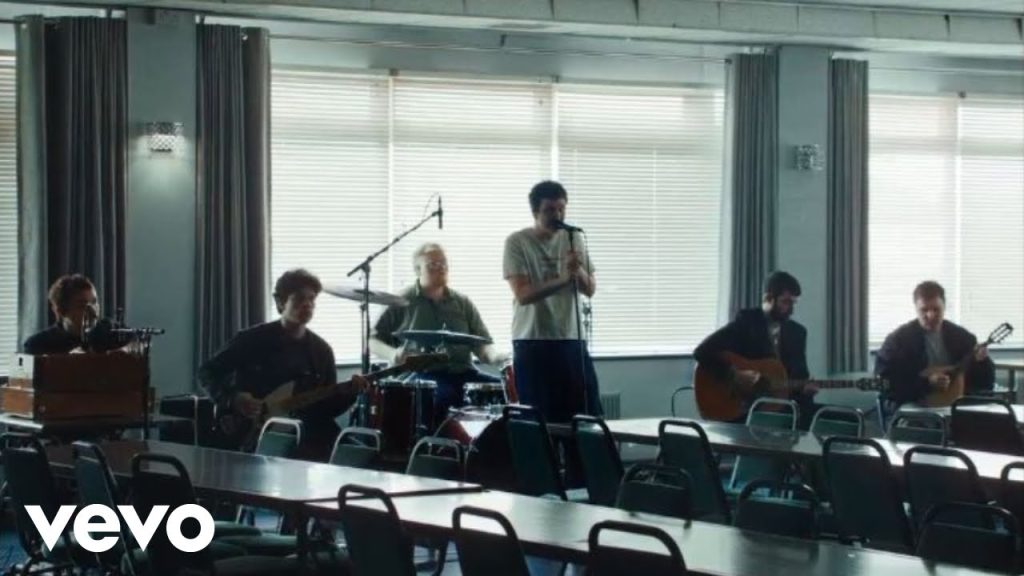
New Single • Searrach — released November 20, 2026, via Island Records; from the forthcoming debut album Gorta (January 15, 2027). Dublin, Ireland.
Madra Salach Reinvent Irish Folk Through Post-Punk and Experimental Rock
Madra Salach are a Dublin-based six-piece featuring Paul Banks, Jack Lawlor, Adam Cullen, Jack Martin, Maxime Arnold and Dara Duffy. Their name translates from Irish as “dirty dog,” reflecting an unconventional approach to traditional music. Emerging from traditional pub sessions and experiments with synthesizers and tape loops, the band combine Irish folk, brooding post-punk, distortion and atmospheric drones. Their debut EP, It’s A Hell Of An Age, established their growing reputation, followed by festival appearances, a BBC Maida Vale session and performances supporting Kneecap. Their forthcoming debut album, Gorta, explores personal longing, cultural inheritance and the enduring legacy of Irish history.
Searrach: Dark Irish Folk Explores Change and Self-Betrayal
Following “Ribbon Factory,” “Searrach” is the second single from Gorta, produced by Loren Humphrey in New York. The track combines hypnotic percussion, atmospheric instrumentation and Paul Banks’ increasingly intense vocal delivery. Its gradual escalation culminates in a cathartic finale, where anguished vocals and powerful instrumentation transform quiet introspection into emotional confrontation.
Banks describes the song as an exploration of change, betrayal and particularly self-betrayal. Written relatively late in the album’s development, “Searrach” examines the internal conflicts that accompany personal transformation. Its dark atmosphere captures the tension between accepting change and confronting the compromises individuals make along the way.
Why It Matters: Irish Folk Becomes a Vehicle for Contemporary Emotional Expression
“Searrach” reflects the growing creative intersection between traditional Irish music and contemporary alternative rock. Rather than romanticising cultural heritage, Madra Salach use inherited musical traditions to explore identity, psychological conflict and unresolved historical experiences. Their approach gives traditional folk a contemporary emotional intensity without compromising its cultural distinctiveness.
With Gorta, the band connect individual experiences of longing with Ireland’s collective memory, including displacement, inheritance and the Great Famine. Their expanding international touring schedule demonstrates the wider appeal of music rooted in a specific cultural identity.
“Searrach” demonstrates how traditional folk can evolve into a powerful form of alternative music, transforming inherited pain and personal conflict into collective emotional release.