


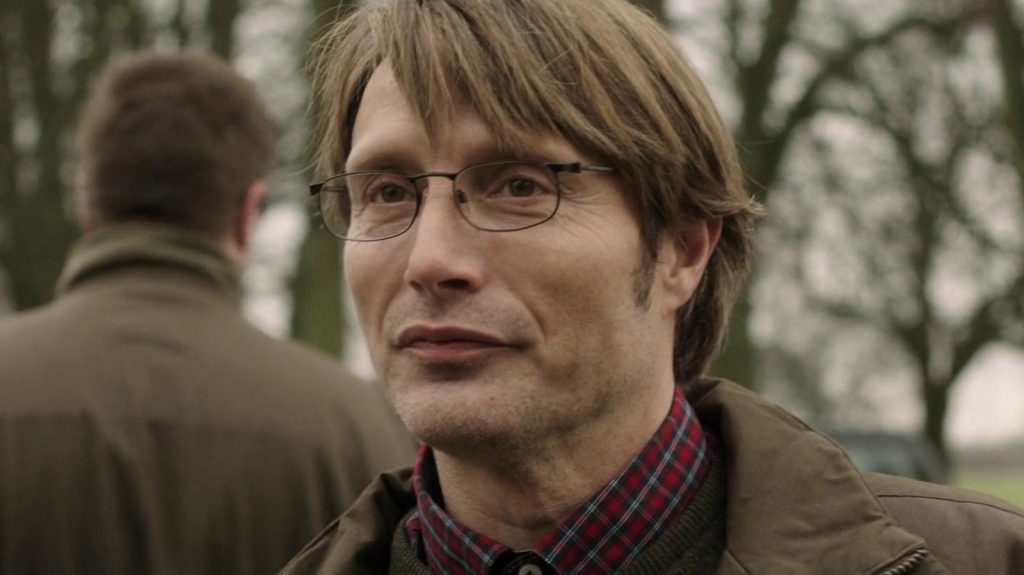

Few European actors have found the blend of native and international success that Mads Mikkelsen has. Born in Denmark, he became a star in his home country during the 1990s and 2000s, his career kicking off with Nicolas Winding Refn’s 1996 crime thriller “Pusher.” He’s since become a favorite of Hollywood productions, too, starting with his role as the Bond villain Le Chiffre in “Casino Royale.”
Since then, Mikkelsen has remained a go-to Hollywood bad guy, appearing in blockbusters like Marvel Studios’ “Doctor Strange.” He’s also one of the privileged few to have played arguably the most famous screen villain ever, Hannibal Lecter. More than a few would argue Mikkelsen’s Lecter in the 2013 TV series “Hannibal” is even better than Anthony Hopkins in “The Silence of the Lambs.”
Mikkelsen’s razor-sharp cheekbones, intense stare, and European accent instantly code him as “villain” in Hollywood language. When “Rogue One: A Star Wars Story” cast him as Galen Erso, a sympathetic scientist conscripted into building the Death Star, it read as casting against type to American audiences. But look at Mikkelsen’s Danish resume and you’ll find he’s a much more diverse actor than the box that Hollywood has stuck him inside. Amusingly, one of those movies — Thomas Vinterberg’s “The Hunt” — stars Mikkelsen as a good man mistakenly persecuted as a villain.
Lucas (Mikkelsen) is a Danish kindergarten teacher. One of his students, his best friend Theo’s (Thomas Bo Larsen) daughter Klara (Annika Wedderkopp), has a puppy love crush on him. Obviously, he gently turns her down. Klara then vengefully suggests to the school principal that Lucas exposed himself to or molested her. (In reality, as the movie shows, her crude older brother shoved an iPad displaying porn in her face.) The ugly rumor grows out of control, and Lucas’ reputation pays the price.
The Hunt is a difficult but essential watch
In “The Hunt,” the town rushes to the worst possible conclusion about Lucas. All but a few loved ones like his son, Marcus (Lasse Fogelstrøm), believe the worst from hearsay. But they don’t actually know it for a fact (indeed, what ultimately helps clear Lucas is the facts pointing in his favor). The movie is never ambiguous, though; we know from the very beginning that Lucas is innocent and this is all just a terrible tragedy of miscommunication. “The Hunt” also avoids reactionary narratives about scorned women peddling false rape allegations because Klara is a young child. She simply doesn’t grasp the consequences of what she did, as is the case with the other preschoolers who echo her claims.
Compare a similar recent film, “Fjord,” inspired by a real-life story about a Norwegian evangelical couple whose children were taken from them after suspicions of abuse. Like in “The Hunt,” the allegations are implied to stem from leading questions and miscommunication from the kids. But “Fjord” counterintuitively stacks the deck in the parents’ favor while trying to present objectivity, perhaps because it knows many left-leaning audiences are inclined to side against the conservative couple and takes perverse enjoyment in testing those sympathies.
A film like “The Hunt” could choose not to reveal Lucas’ innocence either way or cast doubt, inviting you to sympathize with a possible monster as an endurance test. But the reality of “The Hunt,” seeing an innocent man be branded with a scarlet letter, is also agonizing to watch in its own way. It’s a modern iteration on the parable of the feathers in the wind, and how once spoken, even untruthful gossip can’t be erased.
Mads Mikkelsen’s best performance isn’t as a villain
As Lucas, Mikkelsen sheds any of the power or menace he projects as a villain in those aforementioned Hollywood movies. “The Hunt” is also a Danish-language film, and Mikkelsen’s comfort with his native tongue also makes for an even more seamless performance.
To this day, I’ve never forgotten the catharsis of a scene where Lucas stands up for himself. After being assaulted in a grocery store, he walks in again, headbutts the hostile clerk, and demands his groceries back. The first time I watched “The Hunt,” I rewound the movie to see the scene a second time.
That relatively late-in-the-movie scene is a well-earned respite from Lucas’ victimhood. Even in a story like this, too much passivity from a protagonist turns into a chore. Lucas similarly takes matters into his own hands at the movie’s emotional climax. Again, Klara’s father Theo is Lucas’ best friend; while Theo takes Klara’s side, he claims to know Lucas so well he can tell when he’s lying or truthful by just looking into his eyes. Lucas goes to Christmas Mass, putting himself dead center in the community that has exiled him, and looks at Theo across the pews.
The power of this lynchpin scene is in Mikkelsen’s silent, icy stare (Lucas pointedly ditches his glasses during this scene). But it’s not the aloof stare of Le Chiffre or the predatory one of Hannibal Lecter. In his sad eyes and slight frown, Lucas is begging Theo to read the truth on his face. When that’s not enough, he storms over to Theo, sobbing, and refuses to let him look away from his eyes.
Mads Mikkelsen is an extraordinary actor, and yet the greatest proof of that is him playing a normal man in “The Hunt.”