


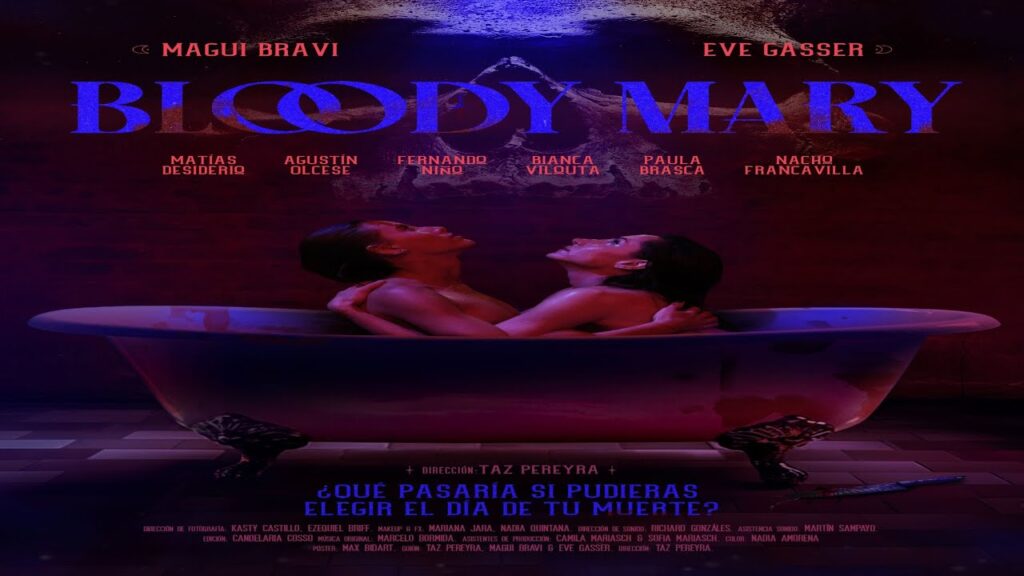
Summary of the Movie: Power fractures when ritual meets emotion
Bloody Mary compresses fantasy horror into a single volatile night, where ritual, desire, and control collide under the Blood Moon. What begins as a rehearsed act of domination slowly unravels as emotion disrupts certainty, forcing power to renegotiate itself.
The film moves fast, but its tension is emotional rather than procedural.
-
Movie plot: Ritual control meets human disruption. Moira and Letizia, two modern witches bound by a recurring Blood Moon ritual, prepare to sacrifice a chosen man as part of their magic. When the intended victim resists expectation, the night spirals into unpredictability, exposing cracks in their power and planning.
-
Movie themes: Female power, sacrifice, and chosen bonds. The story reframes witchcraft less as evil and more as survival strategy shaped by intimacy and fear. The true threat emerges not from magic, but from emotional exposure and shifting trust.
-
Movie trend: Pop-occult feminist horror. Bloody Mary aligns with a wave of genre films that blend neon aesthetics, sexuality, and folklore to explore autonomy and control. Horror functions as metaphor rather than mythology.
-
Social trend: Reclaiming taboo femininity. The film reflects cultural interest in witches as symbols of agency rather than monsters. Power is portrayed as learned, negotiated, and relational.
-
Movie director: Stylized urgency over mythology. For Taz Pereyra, the focus stays on momentum and mood rather than lore-building. The direction privileges immediacy, color, and confrontation over explanation.
-
Top casting: Chemistry as narrative engine. Magui Bravi and Evelyn Gasser anchor the film through volatile intimacy rather than spectacle. Their dynamic carries the story more than the ritual itself.
-
Awards and recognition: Niche genre visibility. With festival nominations rather than mainstream traction, the film’s recognition sits within cult and genre circuits. Its appeal skews toward horror audiences drawn to tone and concept.
-
Release and availability: Compact, late-night positioning. Released theatrically and digitally in mid-2025, the film’s short runtime and heightened energy favor genre slots and streaming discovery. Accessibility reinforces its pop-horror identity.
-
Why to watch movie: When witches refuse the script. Bloody Mary stands out by letting its central relationship overpower the ritual premise, turning sacrifice into a question rather than a conclusion. The film is less about magic working than about control failing.
Insights: The film suggests that power collapses fastest when it stops being shared.
Industry Insight: Genre films gain relevance when horror is driven by relational tension rather than mythology. Chemistry outperforms lore.Consumer Insight: Audiences respond to horror that frames female bonds as the true source of strength and conflict. Emotion heightens fear.Brand Insight: Feminine-coded power narratives resonate when they resist simplification. Ambiguity builds cult appeal.
Bloody Mary doesn’t ask whether the ritual succeeds—it asks whether it still matters. By letting intimacy destabilize control, the film turns a familiar horror setup into a sharp, modern confrontation. Its strength lies not in spells, but in what happens when power stops obeying the plan.
Why It Is Trending: Witchcraft becomes a language for female negotiation
Bloody Mary is trending because it treats witchcraft less as supernatural spectacle and more as a coded language for power, intimacy, and control between women. In a genre space increasingly shaped by feminist reinterpretation, the film’s emphasis on relationship over ritual feels current rather than derivative.
Its relevance comes from reframing familiar horror symbols.
-
Concept → consequence: Ritual breaks under emotion. The film sets up sacrifice as mechanical and inevitable, then destabilizes it through human unpredictability. This shift reframes horror from inevitability to negotiation.
-
Culture → visibility: Witches as agents, not allegories. Contemporary audiences increasingly read witches as figures of autonomy rather than punishment. The film aligns with this by centering choice, desire, and emotional conflict.
-
Distribution → discovery: Genre-first visibility. The film circulates primarily through horror festivals, streaming algorithms, and late-night viewing slots. Its momentum grows through mood, concept, and shareability rather than prestige.
-
Timing → perception: Fatigue with moral binaries. Viewers show growing interest in horror that refuses clear heroes or villains. The film’s moral ambiguity matches this appetite.
Insights: The film trends because it frames magic as emotional leverage rather than myth.
Industry Insight: Horror gains freshness when supernatural elements are treated as metaphors for relational power. Subtext sustains interest.Consumer Insight: Audiences engage more deeply with genre stories that prioritize emotional tension over jump scares. Intimacy amplifies fear.Brand Insight: Cult appeal grows around films that rework familiar tropes without explaining them away. Suggestion builds identity.
Bloody Mary gains traction by stripping witchcraft of mystique and turning it into negotiation. By focusing on how power shifts between people rather than forces, the film speaks directly to a moment where control feels fluid, contested, and deeply personal.
What Movie Trend Is Followed: Occult horror pivots toward relational power
Bloody Mary follows a contemporary genre trend that relocates horror from external threat to interpersonal imbalance. Instead of building dread through mythology or rules, the film lets intimacy, desire, and control generate tension, treating the occult as a pressure amplifier rather than a system.
This trend turns spells into social dynamics.
-
Format lifecycle: One-night containment horror. The film operates within a compressed, single-night structure that accelerates emotional exposure. Time pressure replaces lore depth, keeping attention on relationships rather than mechanics.
-
Aesthetic logic: Neon ritualism over gothic weight. Stylized lighting, modern settings, and sensual framing detach witchcraft from historical heaviness. The visual language prioritizes immediacy and attitude over tradition.
-
Psychological effect: Fear born from unpredictability. Viewers are unsettled not by what the ritual demands, but by how characters respond when it stops working as planned. Uncertainty replaces inevitability as the core emotion.
-
Genre inheritance: From folklore horror to feminist pop-occult. While borrowing symbols from classic witch narratives, the film aligns with a newer wave that centers female agency and ambiguity. Horror evolves from punishment to negotiation.
Insights: The film aligns with horror that treats magic as a relational stress test.
Industry Insight: Genre films sustain relevance by updating symbols to reflect contemporary power dynamics. Relational horror broadens appeal.Consumer Insight: Audiences gravitate toward occult stories that feel modern, sensual, and emotionally charged. Familiar tropes gain freshness through intimacy.Brand Insight: Distinct identity emerges when horror embraces pop aesthetics without abandoning thematic weight. Style becomes signal.
Bloody Mary fits this trend by letting ritual fail under emotional strain. By shifting horror’s engine from spellcraft to relationship dynamics, the film positions itself within a modern lineage where fear comes from people renegotiating power in real time.
Key Success Factors: Momentum favors emotion over mythology
Bloody Mary succeeds by refusing to overexplain its world, instead letting urgency and interpersonal tension drive engagement. Its effectiveness comes from prioritizing emotional volatility and pace over elaborate lore or gradual world-building.
The film works because it stays close and unstable.
-
Concept–culture alignment: Witchcraft as modern shorthand. The film uses occult ritual as a compressed symbol for power, control, and intimacy rather than as a belief system. This alignment makes the story immediately legible to contemporary audiences.
-
Execution discipline: Energy sustained through brevity. At just over an hour, the film maintains pressure without narrative drift. Scenes escalate through confrontation and reaction rather than exposition.
-
Distribution logic: Genre-specific discoverability. The film’s compact runtime, bold visuals, and clear hook favor streaming and festival circulation. Accessibility reinforces its cult-horror positioning.
-
Coherence over ambition: One relationship carries everything. The narrative resists expanding its scope beyond Moira and Letizia’s bond. This focus preserves emotional clarity and prevents dilution.
Insights: The film succeeds by letting feeling overpower structure.
Industry Insight: Short-form genre films gain traction when they emphasize tone and chemistry over mythology. Immediacy builds impact.Consumer Insight: Audiences respond to horror that prioritizes emotional stakes and momentum. Brevity intensifies engagement.Brand Insight: Cult identity forms around films that commit fully to mood and relationship. Consistency builds recognition.
Bloody Mary never pauses to justify itself. Its success lies in trusting that emotion, pace, and connection are enough to carry horror forward. By choosing instability over explanation, the film turns limitation into propulsion.
Trends 2026: Female bonds replace ritual as the source of power
In 2026, horror increasingly shifts away from rules-based mythology toward stories where power is negotiated through relationships, not inherited through lore. Magic becomes symbolic rather than procedural, and emotional bonds determine outcomes more than spells or sacrifice. Bloody Mary resonates because it treats connection as the most volatile force in the room.
Implications
Audiences gravitate toward genre stories where authority is unstable and intimacy rewrites hierarchy. Fear emerges from emotional exposure rather than supernatural certainty. Prestige within genre culture moves toward films that prioritize relational tension over world-building.
Where it is visible (industry)
This trend appears in pop-occult horror, feminist genre cinema, and short-form features designed for streaming discovery. Visual boldness, tight runtimes, and character-driven premises dominate. Marketing highlights tone, mood, and chemistry rather than mythology.
Related consumer trends
-
Relational power fantasies: Strength is defined through connection, not domination.
-
Anti-ritual storytelling: Viewers resist rigid rules and inevitability in horror.
-
Modern witch symbolism: Witchcraft functions as cultural shorthand for autonomy.
-
Emotion-first fear: Intimacy generates more tension than threat.
Table: Connection Is the New Spell — Summary of Consumer Trends
|
Core Movie Trend: Relational occult |
Horror driven by emotional power shifts. |
|
|
Core Consumer Trend: Bond-first strength |
Connection defines authority and survival. |
Relationships drive engagement. |
|
Core Social Trend: Feminine agency |
Power is negotiated, not inherited. |
Narratives resist hierarchy. |
|
Core Strategy: Minimal mythology |
Rules are implied, not explained. |
Ambiguity fuels cult appeal. |
|
Core Motivation: Emotional control |
Desire to influence outcomes through intimacy. |
Bloody Mary captures a moment where spells no longer guarantee control. As horror reorients around relational power, stories that let emotion override ritual gain lasting relevance.
Final Verdict: Power survives only when it is shared
Bloody Mary concludes by rejecting ritual certainty in favor of emotional truth, framing connection—not sacrifice—as the film’s ultimate force. What endures is not magic working as intended, but the bond that refuses to be reduced to a spell.
Its final note is relational, not supernatural.
-
Meaning: Intimacy destabilizes domination. The film reveals that power collapses when it demands obedience instead of consent. Emotional bonds become the only sustainable source of strength.
-
Relevance: A mirror of modern power anxiety. In a culture suspicious of rigid systems and inherited authority, the film reflects how control is constantly renegotiated. Its ambiguity feels contemporary.
-
Endurance: Built on mood and chemistry. The film lingers through feeling rather than plot. Its impact survives through tone, energy, and relational tension.
-
Legacy: A cult reference for pop-occult horror. Bloody Mary positions itself as a touchstone for horror that privileges intimacy over mythology. Its influence lies in showing how little explanation is needed when emotion carries the weight.
Insights: The film endures because it treats power as something fragile and shared.
Industry Insight: Horror films gain longevity when they center relational tension over supernatural rules. Chemistry outlasts concept.Consumer Insight: Audiences connect with genre stories where emotion, not destiny, determines outcomes. Intimacy heightens fear.Brand Insight: Cultural resonance grows around narratives that embrace ambiguity and emotional agency. Feeling becomes identity.
Bloody Mary doesn’t end with a completed ritual—it ends with a recalibrated bond. In doing so, it captures a defining genre shift: in modern horror, power doesn’t come from spells, but from who stands with you when they fail.