


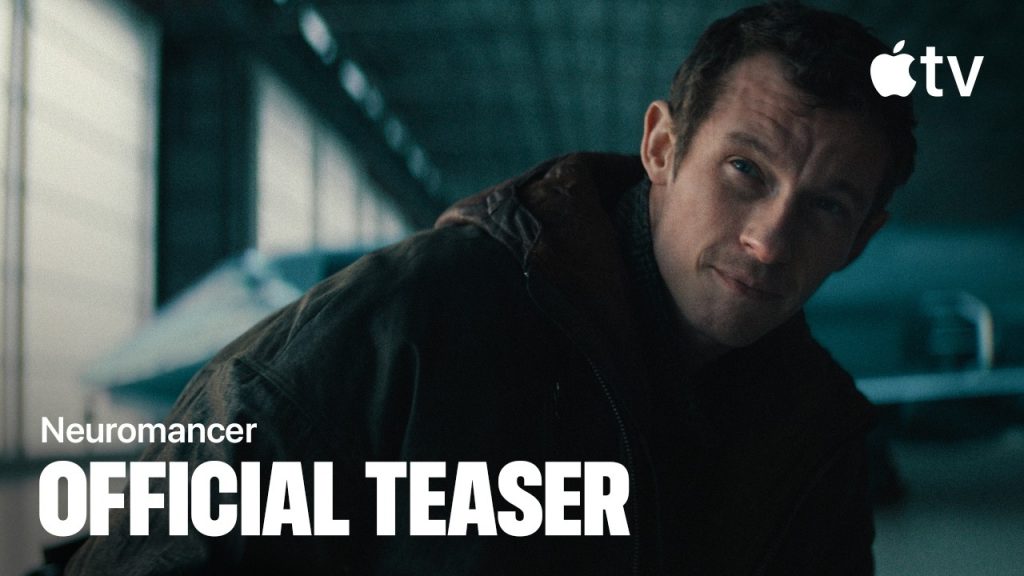
The Cyberpunk Classic That Finally Enters a New Digital Age
More than four decades after William Gibson’s groundbreaking novel redefined science fiction, Neuromancer finally arrives as a television series, bringing one of the genre’s most influential stories to the screen. Created by J.D. Dillard and Graham Roland for Apple TV+, the ten-episode adaptation follows damaged hacker Henry Case and cybernetic mercenary Molly as they are recruited for a dangerous mission involving artificial intelligence, digital espionage, and one of the world’s most powerful corporate dynasties. Long considered one of the most difficult novels to adapt, the series promises to introduce Gibson’s visionary cyberpunk universe to an entirely new generation.
The significance of Neuromancer extends far beyond its story. Gibson’s novel popularized concepts—including the word “cyberspace”—that fundamentally shaped modern science fiction, video games, and even the language of the internet. Arriving at a time when artificial intelligence, virtual reality, cybersecurity, and corporate technology dominate global conversations, the series feels remarkably contemporary despite its literary origins dating back to 1984. With Callum Turner leading an impressive cast alongside Briana Middleton, Peter Sarsgaard, and Max Irons, Neuromancer has the potential to become one of Apple’s most ambitious prestige science-fiction series.
Quick Facts: A Landmark Cyberpunk Story Finally Comes to Television
|
Science Fiction, Cyberpunk, Thriller, Drama |
|
|
Artificial Intelligence, Cyberspace, Hacking, Corporate Power, Identity |
|
|
J.D. Dillard, Graham Roland |
|
|
Neuromancer by William Gibson |
|
|
Callum Turner, Briana Middleton, Peter Sarsgaard, Max Irons, William Franklyn-Miller, André De Shields |
|
|
Apple Original Films, Anonymous Content, DreamCrew Entertainment |
|
|
William Gibson’s Neuromancer introduced the term “cyberspace”, helping define the cyberpunk genre decades before the modern internet became mainstream. |
➡️ Where to Watch: Neuromancer premieres on January 22, 2027, with a ten-episode first season on Apple TV+.
➡️ Key Takeaway: One of science fiction’s most influential novels is finally receiving the large-scale television adaptation fans have anticipated for decades, arriving at a moment when its themes of AI, digital identity, and corporate power feel more relevant than ever.
Should You Watch It?: Essential Viewing for Science Fiction and Cyberpunk Fans
If you’ve enjoyed Blade Runner, The Matrix, Ghost in the Shell, Mr. Robot, Severance, or Blade Runner 2099, Neuromancer should immediately be on your watchlist. Rather than presenting a traditional action series, it explores hacking, artificial intelligence, surveillance, and digital consciousness through an immersive cyberpunk world that has influenced countless films, television series, novels, and video games over the past forty years.
The series also offers a rare opportunity to experience one of modern science fiction’s foundational works in long-form television. With ten episodes available to explore Gibson’s complex mythology, the adaptation has far more room than a feature film to develop its characters, world-building, and philosophical questions surrounding technology and humanity.
➡️ Key Takeaway: Neuromancer looks poised to become one of 2027’s defining science-fiction events, combining cyberpunk action with thoughtful ideas about artificial intelligence, digital identity, and the future of human civilization.
Why Everyone Is Talking About It?: The Cyberpunk Story That Predicted Our Digital World
Few science-fiction novels have shaped popular culture as profoundly as William Gibson’s Neuromancer. Published in 1984, the novel introduced ideas that would later become central to modern technology, including the concept of cyberspace, long before the internet became part of everyday life. The television adaptation arrives at a remarkable moment when artificial intelligence, virtual reality, cybersecurity, digital surveillance, and corporate technology dominate public conversation, making Gibson’s once-futuristic vision feel strikingly contemporary.
The series is also attracting attention because it represents one of the most ambitious literary adaptations Apple TV+ has undertaken. For decades, Neuromancer was widely considered “unfilmable” due to its dense mythology, philosophical themes, and groundbreaking visual imagination. A ten-episode television format finally provides enough room to explore its complex world, giving audiences the opportunity to experience one of science fiction’s most influential stories in a way that a feature film never could.
Why audiences are talking about Neuromancer:
-
It’s adapting one of the most influential science-fiction novels ever written. William Gibson’s work helped define the cyberpunk genre and inspired generations of filmmakers, writers, game designers, and technology innovators.
-
Its ideas have become reality. Artificial intelligence, cybercrime, corporate monopolies, virtual identities, digital surveillance, and online worlds are no longer speculative concepts but everyday realities, making the series feel more relevant today than when the novel was first published.
-
It finally brings cyberpunk back to prestige television. Following renewed interest in the genre through projects like Cyberpunk: Edgerunners, Blade Runner 2099, and The Matrix revival, Neuromancer arrives as perhaps the definitive cyberpunk adaptation.
-
Apple is investing heavily in premium science fiction. Following series such as Foundation, Silo, Dark Matter, and Severance, Neuromancer further establishes Apple TV+ as a leading destination for ambitious, high-concept speculative storytelling.
-
The creative team brings cinematic ambition. With J.D. Dillard and Graham Roland leading the adaptation and an international cast headed by Callum Turner and Briana Middleton, expectations are high that the series will faithfully translate Gibson’s visionary world while introducing it to new audiences.
➡️ Why It Matters: Neuromancer is more than another science-fiction adaptation—it represents the return of cyberpunk as a cultural conversation. As AI and digital technology continue reshaping society, Gibson’s vision feels less like fiction and more like a blueprint for understanding the connected world we now inhabit.
Series Trend: Cyberpunk Is Evolving from Dystopian Fiction into Contemporary Reality
Neuromancer reflects the resurgence of Neo-Cyberpunk, where stories once considered futuristic increasingly mirror present-day technological and social realities. Earlier cyberpunk imagined worlds dominated by hackers, artificial intelligence, digital corporations, and virtual identities. Today, those themes resonate more deeply than ever as AI systems, biometric surveillance, digital economies, and global technology companies reshape how people work, communicate, and define personal identity.
The series also illustrates the broader rise of Prestige Tech Fiction, a new generation of television that blends blockbuster production values with philosophical exploration. Rather than focusing solely on futuristic gadgets or action sequences, these series examine the ethical consequences of technological progress, asking how humanity can preserve freedom, creativity, and individuality in increasingly connected societies. Like Severance, Foundation, and Black Mirror, Neuromancer positions technology as both an extraordinary opportunity and a profound existential challenge.
➡️ Key Takeaway: Neuromancer demonstrates how cyberpunk has evolved from speculative fiction into one of the most relevant storytelling genres of the AI era, offering audiences a framework for understanding the rapidly changing relationship between humans and technology.
Who Should Watch It?: The Digital Futurist
Audience Profile: Viewers Fascinated by Technology, Artificial Intelligence, and Cyberpunk Worlds
Neuromancer is designed for audiences who enjoy intelligent science fiction that explores the intersection of technology and humanity. These viewers appreciate immersive world-building, philosophical questions, and stories that challenge conventional ideas about identity, consciousness, and the future rather than simply delivering action spectacle.
Core Audience: Fans of cyberpunk, artificial intelligence, speculative fiction, dystopian television, and sophisticated science-fiction dramas.
Secondary Audience: Technology professionals, gamers, cybersecurity enthusiasts, futurists, programmers, designers, and readers of classic science fiction.
Lifestyle: Interested in emerging technologies, gaming culture, digital innovation, science-fiction literature, virtual worlds, and discussions about the future of society.
Viewing Habits: Regular viewers of prestige streaming series, international science fiction, technologically driven thrillers, and visually ambitious television that rewards close attention.
➡️ Key Takeaway: Neuromancer is ideal for viewers who want science fiction that explores the future of humanity through technology, philosophy, and immersive cyberpunk storytelling rather than conventional blockbuster action.
What This Series Means for the Industry: Cyberpunk Is Returning as Prestige Television
Neuromancer signals a major milestone in the evolution of television science fiction. For decades, William Gibson’s novel was regarded as one of the most influential yet seemingly impossible works to adapt because of its fragmented storytelling, philosophical depth, and groundbreaking digital world-building. By developing the story as a ten-episode series rather than a feature film, Apple TV+ acknowledges that today’s prestige television has become the ideal format for adapting complex literary science fiction. Long-form storytelling provides the space needed to explore Gibson’s layered characters, corporate conspiracies, artificial intelligence, and virtual realities without sacrificing the novel’s intellectual ambition.
The series also reflects the growing competition among streaming platforms to establish themselves as leaders in premium science-fiction programming. Apple TV+ has steadily built a reputation with visually ambitious productions such as Foundation, Severance, Silo, and Dark Matter. Neuromancer expands that strategy by bringing one of the genre’s most influential literary properties into its portfolio, positioning the platform at the center of conversations about AI, digital futures, and speculative storytelling. At a time when audiences are increasingly interested in technology-driven narratives, the series demonstrates how classic cyberpunk can evolve into prestige entertainment for a modern audience.
➡️ Key Takeaway: Neuromancer represents the convergence of literary science fiction, prestige television, and contemporary technology debates, showing how streaming platforms are using ambitious adaptations to redefine the future of genre storytelling.
Creative Analysis: A Cyberpunk Odyssey About Humanity’s Digital Future
Storytelling: A High-Stakes Heist Inside the Digital Frontier
At the heart of Neuromancer is the story of Case, a brilliant but damaged hacker whose talents draw him back into the dangerous world of cybercrime. Teaming with the formidable cybernetically enhanced mercenary Molly, he becomes part of an elaborate mission targeting the powerful Tessier-Ashpool corporate dynasty. While the series incorporates the structure of a futuristic espionage thriller, its deeper narrative explores questions of identity, free will, artificial intelligence, and the increasingly blurred boundary between physical and digital existence.
Rather than presenting cyberspace simply as a technological setting, the story treats it as a living environment where information, consciousness, and power intersect. Every mission carries both physical and psychological consequences, allowing the narrative to balance action with philosophical reflection. This combination of cybercrime, corporate intrigue, and existential inquiry has made Neuromancer one of the defining works of modern science fiction and continues to distinguish it from more conventional futuristic thrillers.
➡️ Key Takeaway: Neuromancer transforms the familiar heist narrative into an exploration of consciousness, technology, and identity, creating a story where the greatest battles take place inside the digital world.
Direction & World-Building: Bringing the Blueprint of Cyberpunk to Life
One of the adaptation’s greatest challenges is translating William Gibson’s richly imagined world into a believable visual experience. Under creators J.D. Dillard and Graham Roland, the series aims to preserve the novel’s dense atmosphere while making its concepts accessible for contemporary television audiences. Rather than simply updating Gibson’s futuristic vision, the production embraces the novel’s timeless themes, presenting sprawling megacities, corporate empires, and immersive virtual environments that remain remarkably relevant in today’s AI-driven world.
Filming in Tokyo further reinforces the global identity of cyberpunk. Gibson’s original work drew heavily from Japanese urban culture, neon cityscapes, and technological innovation, influences that have become iconic elements of the genre. By returning to these visual inspirations while employing modern production techniques, Neuromancer has the opportunity to establish one of television’s most authentic and immersive cyberpunk worlds.
➡️ Key Takeaway: The series’ success will depend not only on adapting Gibson’s story but on capturing the immersive atmosphere that made Neuromancer the blueprint for generations of cyberpunk storytelling.
Performances: A New Generation Brings Cyberpunk Icons to Life
One of the most anticipated aspects of Neuromancer is its cast, led by Callum Turner as Henry Case, the brilliant but broken hacker whose journey through cyberspace forms the emotional core of the series. Case is far more than a traditional action hero; he is a deeply flawed protagonist struggling with addiction, betrayal, and the loss of his connection to the digital world he once mastered. Turner’s ability to balance vulnerability with determination will be central to translating one of science fiction’s most iconic literary characters to television.
Alongside him, Briana Middleton takes on the role of Molly, the razor-equipped cybernetic mercenary who has become one of cyberpunk’s defining heroines. Peter Sarsgaard portrays John Ashpool, with Max Irons playing Jean Tessier-Ashpool, while André De Shields appears as Julius Deane. William Franklyn-Miller portrays the younger John Ashpool, adding another layer to the influential Tessier-Ashpool dynasty. Together, the ensemble represents multiple generations within Gibson’s complex world of hackers, artificial intelligences, and powerful corporate families, creating a cast capable of supporting both intimate character drama and large-scale futuristic storytelling.
➡️ Key Takeaway: Neuromancer assembles a talented ensemble led by Callum Turner and Briana Middleton, bringing some of cyberpunk literature’s most influential characters to life for a new generation of viewers.
Visual Style & Production Design: Defining the Next Generation of Cyberpunk Television
One of the greatest creative opportunities for Neuromancer lies in its visual identity. William Gibson’s novel inspired decades of cyberpunk imagery—from towering megacities and endless neon lights to immersive virtual realities and sprawling corporate architecture. The television adaptation now has the opportunity to reinterpret these familiar aesthetics using contemporary filmmaking technology, creating a cyberpunk world that feels both faithful to the source material and strikingly original.
Filming in Tokyo, one of the real-world cities that influenced Gibson’s imagination, adds another layer of authenticity to the production. Combined with Apple’s reputation for cinematic production values, the series is expected to deliver expansive futuristic environments where physical cities and digital landscapes seamlessly merge. Rather than treating cyberspace as simple computer graphics, the production has the opportunity to visualize virtual reality as a living environment that is every bit as tangible and emotionally significant as the physical world.
➡️ Key Takeaway: Neuromancer has the potential to redefine cyberpunk aesthetics for modern television, blending practical locations, futuristic production design, and immersive digital environments into one of the genre’s most ambitious visual experiences.
Themes & Messages: Technology Expands Human Potential—But Also Human Control
Although Neuromancer is remembered for its groundbreaking cyberpunk setting, its enduring power comes from the questions it asks about technology and humanity. The series explores how artificial intelligence, corporate monopolies, cybernetic enhancement, and digital networks reshape identity, freedom, and personal autonomy. As Case navigates increasingly dangerous virtual environments, he must confront a future where information has become the world’s most valuable resource and control over data often determines control over people.
The story also examines the relationship between humans and artificial intelligence without reducing it to simple conflict. Instead, Gibson presents AI as an evolving form of consciousness capable of challenging traditional ideas about intelligence, creativity, and free will. These themes feel particularly timely in an era increasingly defined by generative AI, automation, and debates surrounding digital ethics. More than forty years after the novel’s publication, Neuromancer remains remarkably prescient because it focuses less on predicting specific technologies than on understanding how innovation changes human behavior.
➡️ Key Takeaway: Neuromancer explores timeless questions about identity, artificial intelligence, corporate power, and digital freedom, making its themes more relevant today than ever before.
What Makes This Series Different?: The Blueprint That Invented Modern Cyberpunk
Unlike many contemporary cyberpunk stories, Neuromancer is not inspired by earlier classics—it is the classic that inspired almost everything that followed. William Gibson’s novel introduced concepts that have become fundamental to science fiction, including cyberspace, digital hacking culture, virtual realities, AI consciousness, and the fusion of technology with everyday life. Its influence can be seen across films such as The Matrix, Ghost in the Shell, Blade Runner 2049, television series like Altered Carbon, and countless video games, including Cyberpunk 2077.
What also distinguishes the series is its combination of literary ambition and blockbuster scope. Rather than relying solely on futuristic action, Neuromancer blends espionage, philosophy, psychological drama, noir storytelling, and speculative technology into a richly layered narrative. The result is a series that promises not only to entertain but also to explore the cultural and ethical questions surrounding humanity’s increasingly digital future.
➡️ Key Takeaway: Neuromancer is more than another science-fiction adaptation—it is the long-awaited screen version of the novel that defined cyberpunk and forever changed how popular culture imagines the digital age.
If You Liked Neuromancer: More Recent Series That Explore AI, Cyberpunk, and Digital Futures
Blade Runner 2099 (2026) by Silka Luisa
Set within the legendary Blade Runner universe, this long-awaited series expands the franchise’s exploration of artificial intelligence, corporate power, and what it means to be human. Like Neuromancer, it combines futuristic noir with philosophical questions about identity and consciousness while presenting a visually stunning cyberpunk world dominated by technology and powerful corporations.
Murderbot (2025) by Chris Weitz & Paul Weitz
Based on Martha Wells’ award-winning novels, Murderbot follows a self-aware security android struggling with autonomy, emotion, and its complicated relationship with humanity. While lighter in tone than Neuromancer, both series examine artificial intelligence, personal freedom, and the blurred boundaries between humans and machines through intelligent, character-driven science fiction.
Alien: Earth (2025) by Noah Hawley
Noah Hawley’s ambitious expansion of the Alien universe explores corporate greed, synthetic intelligence, and humanity’s dangerous relationship with advanced technology. Like Neuromancer, it presents powerful corporations as forces capable of shaping civilization itself while combining philosophical ideas with suspenseful futuristic storytelling.
➡️ Key Takeaway: These recent series demonstrate how modern science fiction is increasingly using artificial intelligence, cyberpunk aesthetics, and corporate futures to explore timeless questions about identity, freedom, and what it means to remain human in a technologically connected world.
Viewing Recommendation: One of the Most Anticipated Science-Fiction Series of the Decade
Best Suited For: Fans of Intelligent Cyberpunk and Prestige Science Fiction
Neuromancer is essential viewing for audiences who enjoy sophisticated science fiction built around ideas rather than spectacle alone. If you’re fascinated by artificial intelligence, virtual reality, hacking culture, and futuristic world-building, the series promises one of television’s richest explorations of the digital future.
Highly Recommended For: Viewers Who Love Visionary World-Building
If you enjoyed Blade Runner, The Matrix, Ghost in the Shell, Severance, Silo, Foundation, Mr. Robot, or Cyberpunk: Edgerunners, Neuromancer should be at the very top of your watchlist. It also offers longtime William Gibson readers the opportunity to finally experience one of science fiction’s most influential novels as a large-scale prestige television production.
You May Want to Skip It If: You Prefer Straightforward Action Stories
Neuromancer is expected to prioritize atmosphere, philosophical ideas, technological concepts, and complex world-building alongside its action sequences. Viewers looking for simple, fast-paced adventures without deeper thematic exploration may find its layered storytelling more demanding than conventional science-fiction series.
➡️ Viewing Recommendation: Neuromancer has all the ingredients to become one of the defining science-fiction series of the streaming era, combining the literary legacy of William Gibson with Apple’s cinematic production values and the contemporary relevance of artificial intelligence, cyberspace, and digital identity.
Final Verdict: The Cyberpunk Masterpiece the Streaming Era Has Been Waiting For
Few works of science fiction have had a greater influence on modern popular culture than William Gibson’s Neuromancer. Decades before the internet transformed everyday life, Gibson imagined cyberspace, digital identities, artificial intelligence, and corporate-controlled futures that continue to shape science fiction across film, television, gaming, and technology itself. Bringing this landmark novel to television has long been considered one of the industry’s greatest creative challenges.
If the adaptation captures the imagination, philosophical depth, and visual innovation of its source material, Neuromancer could become the definitive cyberpunk television series for a new generation. More importantly, it arrives at a moment when its questions about AI, digital freedom, surveillance, and human identity are no longer speculative—they are becoming everyday reality.
➡️ Final Verdict: Neuromancer isn’t simply another science-fiction series—it is the long-awaited adaptation of the novel that invented modern cyberpunk. With its visionary world-building, timeless ideas, and extraordinary cultural legacy, it has the potential to become one of the most important television events of 2027.