


Canada | 2026 | 118 min | Existential Drama
When Living Beside Death Makes Life More Visible
A solitary woman travelling between people who want to die begins questioning the dark agreements that structure her existence, turning assisted death into an existential journey about autonomy, connection, love and what ultimately keeps us attached to life.
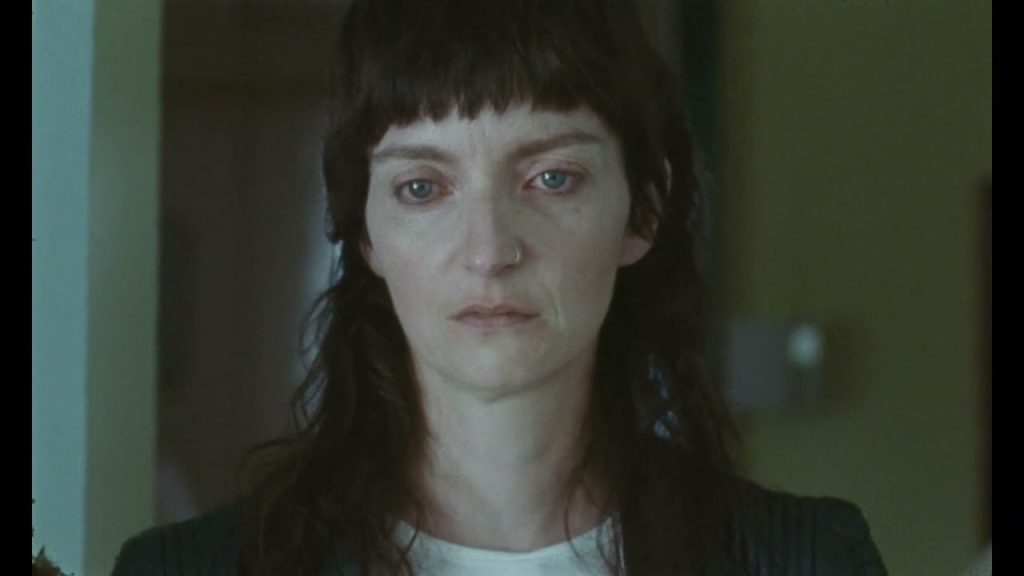
Mira is a woman of few words who travels from place to place meeting desperate people with whom she appears to have made mysterious death pacts. With no permanent home, she temporarily stops with Madeleine and Ludo, two pleasure-seeking free spirits living in the forest, where an unexpected encounter with an intense young man begins disrupting the emotional detachment that has defined her wandering existence.
Written and directed by Canadian filmmaker Denis Côté, the film comes from unusually personal territory. Côté has explained that the screenplay emerged from the final and most difficult year of his illness before receiving a kidney transplant in August 2023. By partially hiding himself inside Mira, he transforms that experience into a meditation on living alongside death while rediscovering hope, love, freedom and personal agency.
➡️ Movie Insight: Violence du corps de l’autre approaches death not as its final destination, but as a way of discovering what still makes life worth choosing.
Should You Watch It?: A Quiet Journey Into Life, Death & Freedom
Violence du corps de l’autre is best suited to audiences drawn to existential drama, slow cinema, morally ambiguous characters and unconventional Canadian auteur filmmaking. The apparent assisted-death premise gives the film darkness and mystery, but Côté is more interested in Mira’s changing relationship with existence than in building a conventional thriller around her unusual work.
Its deliberate ambiguity is therefore essential to the viewing experience. Côté describes his approach as “supernaturalism”: cinema that remains connected to reality without being required to reproduce reality literally, allowing implausibility and traces of the supernatural to enter an otherwise recognizable world. Viewers expecting explicit explanations may find that frustrating; audiences comfortable with interpretation and subtle emotional shifts are much more likely to connect.
➡️ Viewing Takeaway: Watch it for an enigmatic existential drama where proximity to death gradually reveals the emotional forces that keep people connected to life.
Why Everyone Is Talking About It?: Denis Côté Returned to Locarno With One of His Most Personal Films
Violence du corps de l’autre, internationally titled Nobody’s Violence, premiered in the International Competition at the 79th Locarno Film Festival, placing Côté’s latest feature inside one of Europe’s major showcases for auteur cinema. The film was one of 17 titles selected for the main international competition.
The premiere also carried particular significance because of Côté’s long relationship with Locarno. His first feature, Les états nordiques, won there in 2005, while Curling received directing and acting honors in 2010. The new film brought him back to the festival with a story directly shaped by his own confrontation with serious illness and mortality.
Awards
The film has 1 win in the awards information supplied for this analysis.
➡️ Awards Insight: The Locarno recognition reinforces Côté’s position as an auteur whose highly personal, unconventional filmmaking continues to find international relevance more than two decades into his career.
Why Violence du corps de l’autre Stands Out: A Film About Death That Keeps Looking Toward Life
The premise could easily have produced a provocative euthanasia thriller. Instead, Côté uses Mira’s mysterious missions as an entry point into something more philosophical. The narrative becomes increasingly interested in what happens when someone accustomed to being close to death encounters people whose pleasure, freedom and emotional unpredictability begin challenging her detachment.
That reversal gives the movie its strongest identity. Death remains present, but the emotional movement goes in the opposite direction. Mira’s encounters gradually introduce the possibility that autonomy is not only the freedom to determine how life ends; it is also the freedom to reconsider how life might continue.
➡️ Standout Insight: The closer Mira lives to other people’s deaths, the more the film asks what might unexpectedly persuade someone to choose life again.
Movie Trend: Existential Drama — Mortality Is Becoming a Story About Choosing Life
Contemporary existential drama increasingly uses mortality as a way of examining personal agency, loneliness and human connection. Instead of treating death simply as tragedy, these films ask what awareness of mortality reveals about how people want to live and what relationships, freedoms or experiences make existence meaningful.
Violence du corps de l’autre fits naturally within that movement. Côté begins with assisted death but gradually expands the subject toward hope, love and freedom—the same forces he identifies as central to the film in his director’s statement. Mortality becomes a narrative device for examining attachment rather than simply disappearance.
➡️ Movie Trend Insight: Existential dramas are increasingly using mortality to explore personal agency and the fragile human connections that make continuing to live meaningful.
Viewer Profile: The Existential Explorer — Cinema as a Space for Difficult Questions
The Existential Explorer is drawn to films that leave moral questions open, using ambiguous characters and unconventional situations to examine mortality, freedom, loneliness and human connection.
|
Arthouse and existential-drama viewers |
|
|
Canadian, Québécois and international festival audiences |
|
|
Broad culturally engaged audience |
|
|
Introspective, culturally curious and comfortable with morally complex subjects |
|
|
Auteur cinema, slow cinema, festival discoveries and unconventional character dramas |
The strongest audience will be comfortable with Côté’s minimalist and interpretive filmmaking language. Viewers looking for direct explanations about Mira, her clients or the morality of her actions may struggle with its openness, while audiences who enjoy reading meaning through behavior, atmosphere and small emotional changes should find that ambiguity central to its appeal.
➡️ Audience Insight: Best suited to viewers who want cinema to open difficult questions about mortality and freedom rather than resolve them.
What This Movie Means for the Industry: Auteur Identity Still Travels Internationally
Violence du corps de l’autre demonstrates the continuing value of the festival-auteur model. The film is Côté’s 17th feature, extending a career built around distinctive formal choices, alienated characters and unconventional narratives rather than mainstream genre formulas. International sales company Heretic acquired world sales rights ahead of its Locarno competition premiere, giving the film an international pathway built around festival visibility and directorial reputation.
That model remains important for independent cinema. A filmmaker does not necessarily need to make each new work more commercial or accessible to maintain international relevance; a recognizable creative identity can itself become the value proposition connecting festivals, sales companies, critics and specialized audiences.
➡️ Industry Insight: Festival cinema continues to reward recognizable creative identity, allowing distinctive filmmakers to build international value through consistency and originality rather than commercial scale.
Creative Analysis: Reality Is Allowed to Become Slightly Impossible
Côté describes the film through his idea of “supernaturalism”—remaining engaged with recognizable reality while allowing implausibility and subtle traces of the supernatural to coexist with it. That philosophy places Violence du corps de l’autre somewhere between existential road movie, psychological drama and quietly uncanny fiction.
Storytelling — Encounters Replace Conventional Plot. Mira’s journey develops through meetings with desperate strangers before her stay with Madeleine and Ludo interrupts that rhythm. The narrative becomes less about completing missions than observing how individual encounters gradually change the person moving between them.
Direction — Small Tremors Create Change. Côté explicitly favors subtle movements over dramatic transformations. That makes Mira’s evolution cumulative: people, places, desire and temporary disruptions gradually disturb an existence organized around emotional distance.
Performances — Larissa Corriveau Carries the Mystery. Corriveau plays Mira in her fifth collaboration with Côté, joined by Philippe Rebbot, Xavier Bergeron, Gabrielle Lazure, Pierrette Robitaille and Ève Pressault. Their recurring collaboration gives Côté a performer already familiar with his understated cinematic language.
Visual Style — Wandering Becomes Emotional Geography. Cinematographer Vincent Biron works in a 1.66 frame, while roads, temporary destinations and forest spaces reinforce Mira’s absence of a stable home. Physical movement becomes an expression of emotional impermanence until stopping creates the possibility of reconsideration.
Themes — Death, Freedom, Love & Agency. Assisted death opens the film toward larger questions: who controls a life, whether autonomy can ever be absolute and what unexpected attachments can do to decisions that previously appeared settled.
What Makes It Different — The Director Is Hidden Inside Mira. Côté has explicitly connected the screenplay to his own period of severe illness, describing Mira as a character behind whom he conceals himself. The film therefore transforms autobiography into indirect fiction rather than presenting illness through conventional confession.
➡️ Creative Insight: By hiding autobiography inside an enigmatic wanderer, Côté transforms his own proximity to mortality into a subtle exploration of what keeps people attached to the world.
If You Liked Violence du corps de l’autre (2026): Mortality, Freedom & the Choice to Keep Living
These films explore mortality, personal autonomy and fragile human connection, following people whose encounters with aging, illness or death force them to reconsider freedom, identity and what still makes life meaningful.
Familiar Touch (2025) by Sarah Friedland: Aging Becomes a New Relationship With the Self
An older woman entering assisted living experiences changing memory and identity while maintaining desire, personality and independence, transforming aging into an intimate exploration of autonomy rather than disappearance.
➡️ Why It Connects: Like Violence du corps de l’autre, it explores bodily change, autonomy and human connection, asking how identity survives when control over everyday life begins shifting.
The Room Next Door (2024) by Pedro Almodóvar: Friendship Faces the Freedom to Choose Death
Two former friends reconnect when one confronts terminal illness, turning companionship into a deeply personal negotiation around mortality, dignity and the right to determine how life ends.
➡️ Why It Connects: This is the closest thematic companion: both films approach assisted death through autonomy and human connection, asking what freedom means when someone wants control over the end of their life.
The Life of Chuck (2025) by Mike Flanagan: Mortality Becomes a Celebration of Being Alive
One man’s existence unfolds through an unconventional structure connecting death, memory, love and ordinary moments, gradually turning an apparent story about endings into a celebration of experiencing life.
➡️ Why It Connects: Like Côté’s film, mortality becomes a way of seeing life more clearly, shifting attention from inevitable death toward the relationships and experiences that give existence meaning.
Tuesday (2024) by Daina O. Pusić: Death Arrives to Teach a Family How to Let Go
A mother and her terminally ill daughter encounter Death in the form of a talking bird, transforming an impossible premise into an intimate exploration of grief, acceptance and the limits of control.
➡️ Why It Connects: Both films place mortality inside slightly unreal worlds, using unconventional storytelling to explore autonomy, attachment and what happens when death can no longer remain an abstraction.
Final Verdict: Death Becomes an Argument for Staying Connected to Life
Violence du corps de l’autre finds its strength in concept, atmosphere and personal conviction rather than conventional narrative momentum. Côté’s decision to filter his own experience with serious illness through Mira gives the film an emotional foundation without turning it into direct autobiography, while Larissa Corriveau’s opaque central performance suits a story built around emotional distance and gradual reconsideration.
Its deliberate ambiguity and subtle pacing will inevitably narrow its audience. Viewers wanting a strongly plotted assisted-death drama may find its evasiveness frustrating, but those receptive to Côté’s understated cinema should find considerable resonance in the way mortality, freedom and human connection gradually begin speaking to one another.
➡️ Final Verdict: 4.1/5 — A quiet, enigmatic and deeply personal existential drama that turns living beside death into a meditation on everything that still makes life worth choosing.
Quick Facts: When Death Makes the Reasons for Living Clearer
|
Mortality, assisted death, autonomy, freedom, love, human connection |
|
|
Larissa Corriveau, Philippe Rebbot, Xavier Bergeron, Gabrielle Lazure, Pierrette Robitaille, Ève Pressault |
|
|
Locarno International Competition — Special Mention |
|
The film is a Canadian French-language production running 118 minutes, photographed by Vincent Biron, edited by Terence Chotard and produced by Gabrielle Tougas-Fréchette and Guillaume Vasseur.
Final Insight: Living Alongside Death Can Make Life More Visible
Violence du corps de l’autre begins with a woman apparently comfortable accompanying strangers toward death, but its deeper movement is toward everything capable of interrupting that certainty. Human encounters, attraction, freedom and the possibility of change gradually challenge an existence organized around endings.
That perspective becomes more resonant through Côté’s personal connection to the material. A screenplay originating during serious illness ultimately emerges not simply as a meditation on mortality, but as an exploration of rediscovering attachment to the world—and of recognizing love and freedom as reasons to remain within it.
➡️ Final Insight: Sometimes confronting the freedom to die makes the reasons for choosing to live unexpectedly clearer.