


North Macedonia | 2026 | 98 min
A Coming-of-Age Drama Where Gaming Becomes a Shot at a Different Life
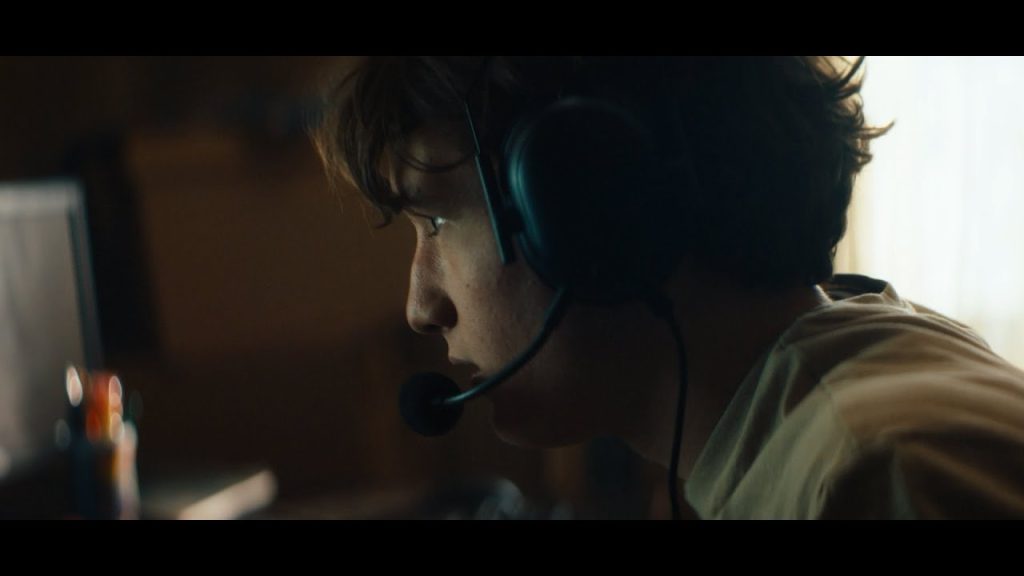
Sixteen-year-old Martin lives in Čučer-Sandevo, North Macedonia, but his ambitions stretch far beyond the expectations surrounding him. He dreams of becoming a professional gamer, even as his mother pushes him toward the security of a traditional education. When his best friend Dimitar receives an opportunity to try out for Dynasty, one of Europe’s leading fictional eSports teams, Martin sees competitive gaming as his chance to prove that what others dismiss as playing could become a real future.
Nick Janssen uses that ambition to turn eSports into the backdrop for a more universal coming-of-age conflict: what happens when a teenager’s idea of success looks nothing like the future adults have imagined for him? Petar Manić leads as Martin alongside Vedran Chesharek as Dimitar and Toni Mihajlovski as Alex/Surge, grounding the emerging world of professional gaming in friendship, family expectations and the pressure to turn talent into opportunity.
➡️ Key Takeaway: One More Game turns the dream of becoming a professional gamer into a contemporary coming-of-age story about ambition, friendship and fighting for a future other people may not yet understand.
Should You Watch It?: An eSports Drama About Chasing a Dream Before the Opportunity Disappears
One More Game should appeal to viewers interested in gaming without requiring them to understand competitive eSports. The gaming world gives the film its contemporary identity, but Martin’s dilemma is much broader: he believes he has discovered the thing that could define his future while the adults around him see education and conventional stability as the safer path. That tension makes professional gaming a modern version of the familiar coming-of-age dream of escaping the limits of where you grew up.
The North Macedonian setting makes that ambition more distinctive. Instead of approaching eSports through established gaming capitals or celebrity players, the film starts with a teenager from Čučer-Sandevo imagining a route into European competition. That distance between where Martin is and where he wants to be gives the gaming story emotional stakes beyond winning matches.
➡️ Key Takeaway: Watch One More Game for a youth drama that treats gaming seriously as aspiration—not an escape from real life, but one possible route toward building a different one.
Why Everyone Is Talking About It?: eSports Is Becoming a Coming-of-Age Story for the Gaming Generation
One More Game reflects how gaming has moved from bedroom entertainment into a legitimate aspiration for younger audiences. Professional teams, competitive ecosystems and online visibility have created career possibilities that can appear completely natural to teenagers while remaining difficult for parents to understand. By putting that generational tension at the center of Martin’s story, the film uses eSports to explore a recognizable contemporary divide over what counts as a realistic future.
The production story strengthens its independent identity. The feature was filmed in Macedonia with an American crew and made with very limited resources, according to a 2026 discussion with Janssen about the project. The film received its North Macedonian theatrical release on March 12, 2026, giving a locally grounded gaming story a feature-film platform rarely afforded to eSports narratives from the region.
➡️ Key Takeaway: One More Game matters because it recognizes professional gaming as part of modern youth ambition, using eSports to tell a much bigger story about how a new generation is redefining what a viable dream can look like.
Movie Trend: Coming of Age & Technology — Gaming Is Becoming a New Route to Ambition
One More Game fits naturally within Coming of Age, with Technology, Friendship and Competition shaping its contemporary identity. Martin’s ambition is not simply to become better at a game; professional eSports represents a possible route beyond the future already mapped out for him. The familiar coming-of-age conflict between parental expectations and teenage independence is therefore rebuilt around a distinctly modern question: can gaming be treated as a serious life ambition?
That makes the film part of a broader evolution in youth storytelling. Earlier generations of coming-of-age movies frequently built dreams around music, professional sport or leaving a small hometown; One More Game gives competitive gaming the same narrative importance. Martin and Dimitar see access to an elite European eSports team as something capable of changing their lives, turning the gaming screen into a gateway toward opportunity rather than a symbol of adolescent withdrawal.
➡️ Key Takeaway: One More Game modernizes the traditional coming-of-age dream by treating professional gaming as a genuine pathway toward independence, recognition and a different future.
➡️ Movie Trend: Coming of Age & Technology
Who Should Watch It? (Audience Profile): For Young Viewers Who See Gaming as More Than Entertainment
|
Teen and young-adult viewers, gamers and coming-of-age drama audiences |
|
|
eSports followers, families, educators and viewers interested in emerging European cinema |
|
|
Broad youth appeal, with particularly strong relevance for gaming audiences |
|
|
Broad mainstream and digitally connected audience |
|
|
Gaming-oriented, online, ambitious, socially connected and comfortable with digital-first culture |
|
|
Streaming, YouTube, Twitch-style gaming content, eSports competitions, youth dramas and sports stories |
The most obvious audience is the generation for whom gaming is already an ordinary part of social and cultural life. These viewers do not need convincing that competitive gaming can demand skill, discipline and ambition; they are more likely to recognize Martin’s dream as another version of wanting to become a footballer, musician or professional athlete.
But the film can also work for viewers with little interest in gaming because its underlying conflict is universal. Martin wants an opportunity that the adults around him may struggle to understand, while friendship and competition complicate what initially appears to be a shared dream. The emotional entry point is therefore ambition rather than gaming expertise.
➡️ Key Takeaway: One More Game can reach beyond eSports fans because Martin’s real struggle is universally recognizable: convincing other people that the future he wants deserves to be taken seriously.
What This Movie Means for the Industry: eSports Is Becoming a Storytelling World, Not Just a Gaming Subculture
One More Game demonstrates how cinema can begin treating eSports as a narrative environment comparable to traditional sport. Competitive gaming already contains many of the elements filmmakers need: talented outsiders, elite teams, rivalry, qualification, pressure, friendship, sacrifice and the possibility that one decisive opportunity can transform someone’s future. The difference is that these ambitions belong specifically to a generation raised inside digital culture.
The North Macedonian perspective makes that development more interesting. Instead of positioning professional gaming exclusively within major global cities or established eSports markets, the film starts with a teenager from Čučer-Sandevo dreaming about entering European competition. That gives the genre an important new dimension: digital culture can allow ambition to become global even when the person pursuing it comes from somewhere geographically small.
➡️ Key Takeaway: One More Game suggests that gaming could become to Gen Z and Gen Alpha cinema what football, basketball and music were to earlier coming-of-age stories—a recognizable arena for ambition, identity, friendship and social mobility.
Creative Analysis: An eSports Dream Turns a Small-Town Coming-of-Age Story Global
One More Game builds its creative identity around the contrast between Martin’s immediate surroundings and the much larger digital world he wants to enter. At sixteen, his physical location in Čučer-Sandevo may feel limiting, but gaming gives him access to a competitive culture without obvious geographic boundaries. That tension gives Nick Janssen a contemporary version of a classic coming-of-age structure: a teenager looking beyond where he comes from toward the life he believes he could have.
The eSports setting also prevents the film from becoming simply another story about teenage rebellion. Martin has a tangible ambition with competition, skill and consequences attached to it. His challenge is not merely convincing adults that gaming matters; he must discover whether wanting something intensely is enough when friendship, competition and the realities of pursuing a professional career begin testing the fantasy.
➡️ Key Takeaway: One More Game makes its gaming world meaningful by connecting digital ambition to a universal coming-of-age desire—the belief that somewhere beyond your immediate surroundings is the life you are supposed to have.
Storytelling: A Friendship Becomes Complicated When a Shared Dream Turns Competitive
The story begins with an effective emotional relationship: Martin and Dimitar are friends connected by gaming, but an opportunity to enter Europe’s competitive eSports world changes what that friendship represents. Once advancement becomes possible, gaming is no longer simply something they share—it becomes something capable of determining who moves forward.
That gives the narrative a natural source of tension beyond whether someone wins or loses a match. Competitive environments can transform collaboration into rivalry almost instantly, particularly when young people believe they may be facing a once-in-a-lifetime opportunity. The stronger dramatic question therefore becomes what Martin is prepared to risk when friendship and ambition stop pointing in the same direction.
➡️ Key Takeaway: The film makes eSports emotionally accessible by placing friendship at the center of the competition—winning matters more when success could change the relationship that helped make the dream possible.
Direction: Nick Janssen Treats Gaming Ambition Like a Real Sporting Dream
Janssen’s most important directorial choice is taking Martin’s ambition seriously. The film does not need to convince gaming audiences that professional eSports exists, but it does need to communicate why qualifying for an elite team can carry the same emotional weight for Martin that a football academy, music audition or university acceptance might carry for another teenager.
That perspective helps bridge the gap between gaming audiences and viewers unfamiliar with eSports. Rather than building the film around technical gaming knowledge, Janssen can emphasize recognizable experiences—pressure, competition, family expectations, friendship and the fear that a major opportunity might disappear before you have proved yourself.
➡️ Key Takeaway: Janssen makes the gaming premise accessible by treating eSports as the setting for ambition rather than the entire subject of the movie.
Performances: Petar Manić Gives the Gaming Dream a Human Center
As Martin, Petar Manić carries the essential challenge of making a highly specific ambition emotionally universal. Martin may want to become a professional gamer, but the feelings surrounding that ambition are familiar: excitement at finally seeing an opportunity, frustration when others fail to understand its importance and anxiety about whether talent can actually become a future.
Vedran Chesharek’s Dimitar is equally important because friendship gives Martin’s ambition consequences beyond personal success. Toni Mihajlovski’s Alex, known as Surge, brings the professional gaming world closer to the teenagers, helping establish the distance between playing because you love gaming and entering an environment where performance carries real expectations.
➡️ Key Takeaway: The performances work when the audience stops thinking primarily about gaming and starts recognizing two teenagers confronting the pressure that arrives when a dream suddenly becomes achievable.
Cinematography & Visual Style: Two Worlds Collide Between Macedonian Life and Digital Competition
One More Game has an inherently useful visual contrast between Martin’s everyday environment in North Macedonia and the borderless digital spaces in which his ambition develops. Gaming can make a teenager sitting in one location feel connected to competitors and opportunities across Europe, allowing physical geography and digital possibility to exist side by side.
That contrast is particularly important because the film’s aspiration depends on scale. Martin’s world does not necessarily need to look inadequate; it simply needs to feel smaller than the future he imagines. The screen therefore becomes more than gaming equipment—it represents access to a world that previously seemed geographically unreachable.
➡️ Key Takeaway: The film’s visual tension comes from contrasting local reality with digital possibility—the gaming screen becomes Martin’s window from a Macedonian community into an international future.
Themes & Messages: The New Generation Is Redefining What Counts as a Real Career
The central generational tension in One More Game comes from different definitions of security and opportunity. Traditional education offers a recognizable pathway, while professional gaming represents something newer, riskier and potentially difficult for adults to evaluate. Martin’s struggle therefore reflects a much larger conversation about careers emerging from digital culture.
The film does not need to argue that every teenager who loves gaming should become a professional player. Its more interesting idea is that new forms of ambition deserve to be evaluated seriously rather than dismissed simply because previous generations did not grow up with them. Martin still has to demonstrate talent, discipline and resilience—the definition of the dream has changed, but the difficulty of achieving it has not.
➡️ Key Takeaway: One More Game asks adults to reconsider what legitimate ambition looks like when digital culture is creating careers that barely existed during their own adolescence.
What Makes This Movie Different?: A Macedonian Teenager Makes eSports Feel Like a Global Dream
The combination of North Macedonia and professional eSports gives One More Game its clearest point of difference. Gaming stories often gravitate toward established technology hubs, professional organizations or already successful competitors. Janssen instead begins with a sixteen-year-old from Čučer-Sandevo whose ambition dramatically exceeds the geographic scale of his immediate environment.
That perspective captures something fundamental about contemporary digital culture. A teenager no longer needs to live in London, Berlin or another major entertainment center to imagine participating in an international competitive community. Gaming collapses distance, allowing talent and ambition to emerge from places mainstream entertainment rarely associates with global opportunity.
➡️ Key Takeaway: What makes One More Game distinctive is not simply that it is about eSports—it is that a teenager from a small Macedonian community can look at competitive gaming and realistically imagine the entire world opening in front of him.
If You Liked One More Game (2026): Recent Films About Young People Chasing Unconventional Dreams
Eephus (2025) by Carson Lund
Eephus is a strong companion for viewers interested in the way One More Game uses competition to explore identity, friendship and what happens when something you love may not last forever. Carson Lund’s film follows amateur baseball players gathering for one final game before their longtime field is demolished, turning sport into a reflection on belonging, community and the emotional meaning attached to play.
The generational perspective is different, but the connection is revealing. One More Game looks toward the beginning of a competitive dream, while Eephus examines what happens near its end. Together, they show how games become meaningful not simply because someone wins, but because they create communities and identities that extend far beyond competition.
Young Hearts (2024) by Anthony Schatteman
Young Hearts moves away from competitive gaming but offers another intimate European coming-of-age story about a teenager discovering that the future he wants may not conform to the expectations surrounding him. Anthony Schatteman centers the film on fourteen-year-old Elias as new emotions force him to understand himself differently.
Like Martin in One More Game, Elias occupies the difficult territory between adolescence and self-definition. Both films take young people’s experiences seriously rather than treating them as temporary teenage concerns, making Young Hearts a natural recommendation for viewers more attracted to Martin’s coming-of-age journey than specifically to eSports.
➡️ Where to Watch: 🇺🇸
The Long Game (2024) by Julio Quintana
The Long Game is the closest recommendation for viewers attracted to the outsider competition story within One More Game. Based on a true story, the film follows Mexican-American teenagers who form a golf team in 1950s Texas and attempt to compete in a sporting environment where they are not expected to belong.
Golf and eSports could hardly look more different, yet the underlying dramatic engine is remarkably similar. Both stories ask what happens when young outsiders discover a competitive arena that could provide recognition and opportunity. The dream becomes meaningful precisely because other people underestimate its legitimacy.
➡️ Key Takeaway: Start with The Long Game for another underdog competition story, choose Young Hearts for intimate European coming-of-age, and Eephus for a more reflective film about why the games people play can become inseparable from identity.
Final Verdict: Gaming Gives the Classic Coming-of-Age Dream a New Arena
One More Game works because its central ambition feels unmistakably contemporary while its emotional foundations remain familiar. Martin wants an opportunity to prove himself, escape limitations and build a future around something he loves. Professional gaming simply provides a new arena for a coming-of-age struggle cinema has explored through sport, music and other competitive dreams for generations.
The North Macedonian setting gives that familiar structure considerably more personality. Beginning with a sixteen-year-old from Čučer-Sandevo emphasizes one of the most significant changes created by digital culture: ambition can become international before a young person has ever physically left home. Martin can look toward Europe’s eSports world from a place rarely represented in mainstream gaming stories.
The film’s greatest limitation may also be part of its appeal. Its relatively modest independent scale means viewers expecting the spectacle and intensity of a major sports movie may find the experience smaller than anticipated. But One More Game is ultimately more interesting as a youth drama than as an eSports showcase. Gaming provides the opportunity; friendship, family pressure and the uncertainty of adolescence provide the emotional stakes.
➡️ Final Verdict: 3.9/5 — A sincere and timely coming-of-age drama that treats professional gaming as a legitimate modern dream while keeping friendship and teenage ambition at the center of the story.
Quick Facts: A Gaming Drama That Makes a Digital Dream Feel Personal
|
eSports, gaming, ambition, friendship and youth |
|
|
Petar Manić, Vedran Chesharek, Toni Mihajlovski |
|
|
Coming of Age & Technology |
➡️ Key Takeaway: One More Game is worth discovering because it takes professional gaming seriously as a new form of youth ambition, turning an eSports opportunity into a universal story about friendship, independence and the courage to pursue a future other people may not yet understand.