


FR / BE / IT | 2026 | 2h 19m | Drama, Mystery, Thriller
➡️ Where to Watch: FR
When Watching Other People Becomes a Dangerous Form of Storytelling
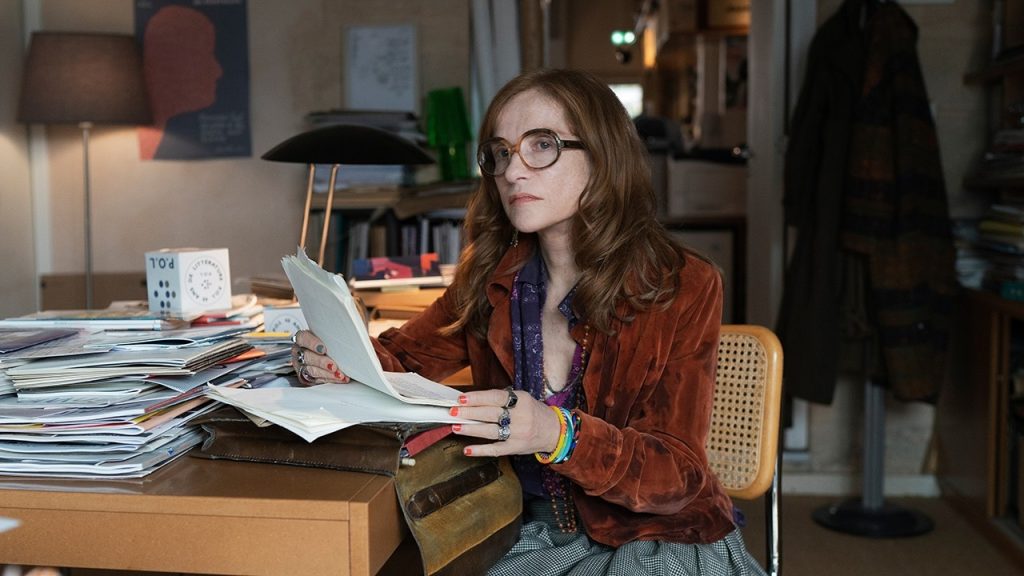
Sylvie, a novelist searching for inspiration, begins spying on the people living and working opposite her Paris apartment. She turns what she observes into fiction, inventing relationships and desires for people she does not actually know. Then Adam, the young man she hires to help with her daily life, becomes fascinated by what she is writing, allowing the imagined story to begin interfering with the lives that inspired it.
Asghar Farhadi uses this premise to complicate one of his favorite subjects: the instability of truth. But Parallel Tales adds another layer. The question is no longer simply whether people are lying to one another; it is whether observation itself becomes a kind of fiction once an outsider decides what another person’s behavior means.
➡️ Movie Insight: Parallel Tales transforms voyeurism into a story about the ethical danger of interpretation. Sylvie believes she is observing reality, yet imagination gradually becomes capable of altering that reality. Farhadi turns storytelling itself into the film’s most unpredictable character.
Why This Movie Matters Right Now: Reality Becomes Vulnerable to the Stories Others Create About It
Parallel Tales arrives at a moment when people increasingly encounter one another through fragments — images, posts, recordings, surveillance and incomplete information — and then construct narratives around what they have seen. Farhadi translates that contemporary tension into an intimate psychological drama where the distance between witnessing something and understanding it becomes dangerously small.
That idea is reinforced by the film’s relationship with Krzysztof Kieślowski. IMDb identifies it as connected to the sixth episode of Dekalog, while Farhadi transforms the earlier work’s voyeuristic foundation into a broader examination of authorship, imagination and manipulation.
➡️ Why It Matters: Modern life produces enormous quantities of information without guaranteeing understanding. Parallel Tales explores what happens when observation is mistaken for knowledge. Its deeper anxiety is that a convincing story can become more powerful than the reality from which it originated.
Should You Watch It?: A Psychological Puzzle for Viewers Who Enjoy Unstable Truths
Parallel Tales is strongest for audiences comfortable with narrative uncertainty, shifting perspectives and stories that deliberately complicate the distinction between what happened and what someone imagines happened. Farhadi builds an elaborate meta-fiction around Sylvie, Adam and the people she observes rather than delivering a conventional mystery with clearly separated layers. Cannes reviews reflected that ambition but also its divisiveness: critics repeatedly praised the concept while questioning whether its increasingly complicated construction remained coherent.
The attraction is therefore less about plot efficiency than intellectual participation. Isabelle Huppert anchors the film as a novelist whose creative instincts become increasingly inseparable from intrusion, while Virginie Efira, Vincent Cassel, Pierre Niney and Adam Bessa populate both the reality she observes and the narrative possibilities she constructs.
➡️ Viewing Recommendation: Watch it for the collision between psychological drama, mystery and meta-fiction rather than for a straightforward thriller. The deliberately layered structure demands attention and may frustrate viewers looking for clean narrative resolution. For audiences fascinated by unreliable perception and stories about storytelling, that instability is precisely the attraction.
Why Everyone Is Talking About It: Farhadi Turns a Prestige French Cast Into a Cannes Meta-Mystery
Parallel Tales entered the 2026 conversation through one of cinema’s most visible platforms: the Cannes Competition. The film competed for the Palme d’Or, while its cast brings together Isabelle Huppert, Virginie Efira, Vincent Cassel, Pierre Niney and Adam Bessa, with Catherine Deneuve also appearing. The supplied IMDb awards material additionally records a Sydney Film Prize nomination for Best Film.
The critical conversation has been unusually polarized. Some responses admired the performances and Farhadi’s games with reality and invention, while others considered the construction overextended or opaque; the film currently carries a 19% Tomatometer from 31 reviews. That disagreement itself gives Parallel Tales cultural momentum: it is a prestige auteur film that invites argument about whether formal complexity produces deeper meaning or simply more narrative machinery.
➡️ Viral Potential: Cannes visibility and an unusually concentrated French star ensemble immediately position the film inside international cinephile conversation. Its reality-versus-fiction puzzle encourages interpretation and disagreement rather than passive consumption. Polarized reception may actually extend that conversation by turning the film into something audiences want to decode and debate.
Why Parallel Tales Stands Out: Fiction Does Not Mirror Reality — It Starts Rewriting It
The cleverest idea in Parallel Tales is that Sylvie is not simply a voyeur. She is an author, which means observation immediately becomes transformation: people become characters, behavior becomes motivation and incomplete information becomes narrative. Adam then disrupts the safe distance between author and subject by allowing the fictional construction to migrate back toward the people who inspired it.
Farhadi makes that distinction formal as well as narrative. According to the supplied IMDb material, scenes representing reality were photographed with a documentary-like handheld approach, while fictional sequences used more controlled lighting and Steadicam movement. The viewer is therefore not merely told that two realities exist; the film asks the camera itself to participate in distinguishing them.
➡️ Cinema Insight: Parallel Tales makes filmmaking language part of its argument about truth. Reality appears less controlled while fiction becomes more aesthetically composed. The paradox is that the invented world can therefore appear more seductive and coherent than life itself.
Movie Trend: Psychological Meta-Thriller — When Observing Other Lives Turns Fiction Into Reality
Parallel Tales belongs to a strand of contemporary psychological cinema increasingly fascinated by unstable authorship: characters observe, reconstruct or fictionalize other people’s lives until representation begins influencing reality. Farhadi combines this with voyeurism and the moral uncertainty already central to his cinema, while explicitly drawing from Kieślowski’s Dekalog.
Trend Formula: creative block → voyeuristic observation → strangers become characters → reality is rewritten as fiction → outsider discovers the story → imagined relationships influence real behavior → truth and invention converge → authorship becomes intervention
The innovation is the movement from unreliable narrator to consequential narrator. Sylvie’s imagination does not merely distort what the audience sees; storytelling begins producing consequences outside the manuscript.
➡️ Movie Trend: Psychological thrillers are increasingly treating perception itself as an unstable narrative force. Parallel Tales pushes that idea toward authorship, asking what happens when somebody else’s life becomes creative material. Fiction stops being an escape from reality and becomes capable of contaminating it.
Viewer Profile: Psychological Mystery Audience (Reality Decoders) – Audiences Drawn to Voyeurism, Unreliable Perception and Narrative Puzzles
Parallel Tales targets viewers who enjoy sophisticated adult dramas where discovering how a story is being told matters almost as much as discovering what happened. Its combination of literary authorship, voyeurism, shifting realities and moral ambiguity makes it particularly suited to festival and international arthouse audiences.
|
Arthouse psychological drama and mystery-thriller viewers |
|
|
Fans of Farhadi, Kieślowski, Huppert and contemporary French prestige cinema |
|
|
30–60, reflecting the film’s adult relationships, literary themes and demanding narrative construction |
|
|
Broad adult appeal with no strongly gender-specific positioning |
|
|
Middle to upper-middle income, culturally engaged audiences |
|
|
Film-festival followers, readers, cultural consumers and international-cinema audiences |
|
|
Arthouse theaters, festivals, curated streaming, director-led discovery and awards-season cinema |
➡️ Audience Insight: Reality Decoders want movies that make interpretation part of the entertainment. They respond to ambiguity when every new perspective has the potential to change what came before. Parallel Tales rewards audiences willing to question both its characters and the storytelling machinery surrounding them.
What This Movie Means for the Industry: Prestige Cinema Is Turning Narrative Form Into the Mystery
The conventional mystery asks who committed an act or what really happened. Parallel Tales demonstrates another direction for adult thrillers: the mystery can instead concern the reliability of representation itself. Who is observing? Who is inventing? Which version of another person’s life becomes accepted as truth?
Its Cannes Competition positioning also demonstrates the continuing commercial and cultural value of combining auteur filmmaking with recognizable international performers. Farhadi’s French-language project packages philosophical questions about authorship inside a cast-led psychological mystery rather than separating formal experimentation from accessible genre elements.
➡️ Industry Insight: Prestige filmmakers can use thriller mechanics to make formally ambitious cinema more accessible. Stars provide an entry point while narrative puzzles create conversation beyond the festival premiere. Parallel Tales suggests that meta-cinema can function not simply as experimentation but as psychological suspense.
Creative Analysis: The Camera Separates Reality From the Fiction Trying to Replace It
Parallel Tales is built around duplication: observed people and invented characters, authentic behavior and imagined motivation, reality and representation. Even several performers occupy parallel identities across the film’s narrative construction, making casting itself part of the central concept.
Its creative gamble is that the audience must continually reconsider the status of what it is watching. The resulting complexity has divided critics, but the formal design is inseparable from what Farhadi wants to examine: the dangerous human desire to turn incomplete evidence into complete stories.
Storytelling: One Observed Life Generates Another Imagined Life
Sylvie watches people across the street and transforms fragments of their existence into a novel. Adam then becomes fascinated by that invented narrative, creating a bridge through which fiction begins producing consequences in the world outside the manuscript.
Direction: Farhadi Turns Uncertainty Back on the Storyteller
Farhadi’s familiar interest in incomplete truths changes direction here. Rather than focusing primarily on characters concealing information from one another, Parallel Tales asks whether the person constructing the narrative may be the greatest source of distortion.
Performances: Familiar Faces Become Unstable Identities
Isabelle Huppert plays Sylvie, while Virginie Efira, Vincent Cassel, Pierre Niney and Adam Bessa occupy the interconnected world around her. Cannes’ official credits notably identify Efira as Anna/Nita, Cassel as Pierre/Nicolas and Niney as Christophe/Théo, reinforcing the film’s deliberate doubling of reality and fiction.
Visual Style: Handheld Reality Meets Controlled Fiction
The film establishes a concrete visual grammar for its central divide. Reality uses a documentary-like handheld approach, while fictional passages employ stronger lighting and Steadicam photography, creating an aesthetic distinction between uncontrolled life and authored imagination.
Themes: Looking at Someone Is Not the Same as Knowing Them
Voyeurism provides the mechanism, but interpretation is the deeper theme. Sylvie can see her neighbors without possessing their interior lives, yet authorship gives her the power to fill those gaps — exposing how quickly observation can become assumption.
What Makes It Different: The Unreliable Narrator Becomes an Unreliable Creator
Many psychological mysteries ask whether the protagonist understands reality correctly. Parallel Tales goes further by asking what happens when that protagonist creates an alternative reality persuasive enough to influence other people.
➡️ Creative Insight: The film’s strongest formal idea is that fiction looks more controlled precisely because somebody has designed it. Reality remains messier, incomplete and resistant to narrative order. Parallel Tales turns that difference into a warning about how seductive invented explanations can become.
If You Liked Parallel Tales (2026): More Films Where Observation and Interpretation Destabilize Reality
Black Bag (2025) by Steven Soderbergh: Intimacy Becomes a Puzzle of Truth and Deception
Steven Soderbergh’s compact psychological spy thriller turns a marriage into an investigation when an intelligence officer must determine whether his wife is betraying their country. Like Parallel Tales, information never arrives neutrally: every gesture becomes something to interpret.
➡️ Why It Connects: Both films make intimate knowledge unreliable. Observation produces suspicion rather than certainty, while relationships become puzzles assembled from incomplete evidence. The suspense comes from deciding whether interpretation reveals truth or manufactures it.
The Assessment (2025) by Fleur Fortuné: Observation Becomes Psychological Control
A couple hoping to become parents must submit to seven days of invasive evaluation by an assessor who moves into their home. What initially resembles observation gradually changes the couple’s behavior and destabilizes their relationship.
➡️ Why It Connects: Observation in both films refuses to remain passive. Once another person begins interpreting private behavior, the subjects themselves start changing. The connection lies in the disturbing possibility that being watched can eventually rewrite reality.
A Different Man (2024) by Aaron Schimberg: When Another Person’s Version of a Life Takes Control
Aaron Schimberg’s dark psychological comedy follows Edward after a radical transformation, only for his previous identity to return through a theatrical production based upon his life. Representation becomes increasingly uncomfortable as somebody else’s interpretation of identity begins competing with Edward’s own understanding of himself.
➡️ Why It Connects: Both films explore the strange violence of turning another person’s existence into creative material. Art does not simply represent life; it changes how characters perceive themselves and one another. Identity becomes unstable once somebody else acquires the power to tell the story.
➡️ If You Liked Insight: These films share an interest in the power created by watching, interpreting and representing another person. Observation repeatedly changes from a passive act into a mechanism capable of transforming relationships and identities. The broader connection is cinema’s growing fascination with the dangerous distance between who people are and the stories constructed about them.
Final Verdict: An Ambitious Puzzle About the Danger of Inventing Other People’s Lives
Parallel Tales is an intellectually ambitious extension of Farhadi’s cinema of uncertainty. Instead of allowing lies and secrets alone to destabilize reality, he introduces fiction itself as an active force: Sylvie observes, imagines and writes, while Adam helps collapse the protective distance between artistic invention and the human beings transformed into material.
The result has clearly divided critics, and its elaborate structure will be its biggest barrier for some viewers. Yet the film’s central proposition remains compelling: stories are never completely harmless once they begin defining people who did not choose to become characters.
➡️ Final Verdict: Parallel Tales is most rewarding as a psychological meta-mystery rather than a conventional thriller. Its complexity occasionally risks overwhelming the emotional clarity underneath it. But its collision of voyeurism, authorship and unstable reality gives Farhadi a provocative new variation on his enduring obsession with truth.
Quick Facts: Reality and Fiction Compete for Control of the Same Lives
|
Asghar Farhadi, Saeed Farhadi |
|
|
Inspired by / connected to Krzysztof Kieślowski’s sixth Dekalog story |
|
|
Isabelle Huppert, Virginie Efira, Vincent Cassel, Pierre Niney, Adam Bessa |
|
|
Catherine Deneuve, India Hair |
|
|
France, Belgium, Italy; IMDb additionally lists Saudi Arabia and United States among countries of origin |
|
|
2h 19m IMDb / 140 min Cannes |
|
|
Memento Production, with international co-production partners |
|
|
Memento Distribution — France |
|
|
Cannes 2026 Official Competition; Sydney Film Festival Official Competition |
|
|
2026 Palme d’Or nominee; 2026 Sydney Film Prize / Best Film nominee |
|
|
Psychological Meta-Thriller — When Observing Other Lives Turns Fiction Into Reality |
|
|
A novelist’s imagined version of strangers’ lives begins interfering with their reality |
|
|
Reality and fiction are differentiated through contrasting visual languages |
|
|
Voyeurism, authorship, truth, imagination, identity, interpretation, artistic responsibility |
|
|
A star-driven Farhadi mystery that turns storytelling itself into the source of psychological suspense |
Core IMDb information identifies the 2026 film, its 139-minute runtime, Farhadi as director, and Huppert, Efira and Cassel among its principal stars. Cannes provides the principal creative credits, including cinematographer Guillaume Deffontaines, production designer Emmanuelle Duplay, composer Zbigniew Preisner and editor Haydeh Safiyari. The supplied awards record confirms both festival nominations.
Final Insights: Cinema Is Becoming More Suspicious of Who Gets to Control a Story
Parallel Tales belongs to a broader cinematic movement questioning whether representation can ever be neutral. Cameras, novels, recordings and observations promise access to reality, yet contemporary filmmakers increasingly use them to demonstrate the opposite: every act of representation selects, interprets and potentially distorts. Farhadi makes the storyteller rather than the liar the unstable element.
That creates an especially fertile direction for psychological cinema. The mystery no longer needs to be simply “What happened?” It can become “Who created the version of events we believe?” — transforming authorship, perspective and interpretation into mechanisms of suspense.
➡️ Final Insight: Parallel Tales suggests that the next evolution of the unreliable narrator may be the unreliable creator. Stories become dangerous when they stop describing reality and begin determining how reality is understood. In that shift, storytelling itself becomes both the mystery and the threat.