


United States | 2025 | 81 min | Drama
One Bar. One Long Night. And Too Many Truths That Were Never Supposed to Be Said.
A filmmaker, a confession and a long night of drinking turn an ordinary bar into a pressure cooker for buried grievances and uncomfortable truths.
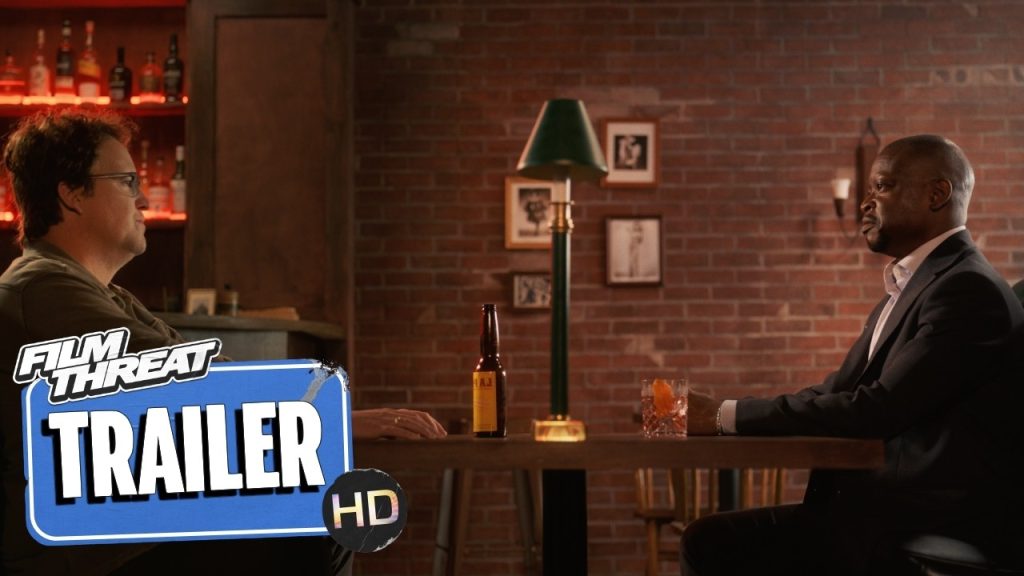
A man walks into a bar to talk about a film. Another man is waiting to get him to confess, while a woman watches to make sure he does not. Over the course of one booze-filled night, conversations become confrontations and people begin saying precisely what someone else does not want to hear. It is a deliberately compact premise that makes dialogue, secrets and shifting relationships the film’s principal sources of suspense.
Written and directed by Noah Millman, Resentment stars Mitzi Akaha as Holly, Sedly Bloomfield as Vinson and Patch Darragh as David, with Lawrence Gilliard Jr. and Jen Ponton among the ensemble. Millman describes the movie as a taut chamber drama inspired by Mike Nichols’ Who’s Afraid of Virginia Woolf?, positioning it within a tradition where alcohol, intimacy and accumulated grievances transform conversation into emotional warfare. It is also Millman’s first feature as writer-director.
➡️ Movie Insight: Resentment makes conversation its action and buried resentment its suspense, transforming a seemingly ordinary night at a bar into an escalating battle over who controls the truth.
Should You Watch It?: A Dialogue-Driven Pressure Cooker Where Words Become the Weapons
Resentment should appeal most to viewers who enjoy films in which psychological conflict matters more than conventional action. The tension comes from listening closely: who knows what, who wants something concealed, who is blaming whom and which revelation could destabilize the relationships around the table.
The theatrical intimacy is central to the experience. Rather than continually expanding the story through locations and incidents, Millman compresses it around people forced to remain in one another’s emotional orbit. As the drinking continues, artistic frustrations, relationship problems and accumulated grudges become increasingly difficult to contain. Festival coverage describes the story as involving marriage, filmmaking, adultery and artistic failure, with the evening developing into an increasingly uncontrolled blame game.
That approach is reinforced by Millman’s explicit Who’s Afraid of Virginia Woolf? inspiration. Resentment similarly uses alcohol, intimacy, wit and hostility to strip away social restraint, but relocates that emotional combat into its own contemporary world of filmmaking, compromised ambitions and damaged relationships.
➡️ Viewing Takeaway: Watch Resentment if you enjoy intimate, actor-driven dramas where every conversation can alter the balance of power and the biggest threat is what someone might finally say aloud.
Why Everyone Is Talking About It?: A Festival Discovery Is Getting Its Wider Digital Moment
Resentment is moving from the festival circuit to wider digital discovery. The film had its world premiere at the Lighthouse International Film Festival in June 2025, where it was presented as a U.S. chamber drama centered on the provocative question of whether people can finally relinquish their resentments and live with an ugly truth.
The film reached another important milestone in 2026 when Buffalo 8 acquired it for distribution. Millman announced that Resentment would become available to rent across multiple platforms beginning August 14, 2026, while Rotten Tomatoes also lists August 14 as its streaming release date. That gives a small, dialogue-heavy independent film an opportunity to move beyond its festival audience and find viewers through digital distribution.
Awards
The nomination is particularly relevant because Resentment depends on precisely the elements that festival audiences can help elevate: writing, performances, directorial control and a distinctive dramatic premise. Rather than competing through scale, the film builds its identity around how effectively it can sustain tension between people sitting around a bar.
➡️ Awards Insight: The Best Narrative Feature nomination gave Resentment meaningful early recognition, highlighting how a tightly constructed independent drama can attract attention through storytelling and performance rather than production scale.
Why Resentment Stands Out: The Bar Becomes a Confessional Instead of Simply a Setting
Many contained dramas create tension by physically trapping characters through crime, danger or another external threat. Resentment makes conversation itself the trap. Its characters are bound together by information, relationships, disappointments and competing interests in what should—or should not—be admitted.
The film also gives the chamber-drama structure a contemporary creative context. Festival coverage describes Patch Darragh’s character as a filmmaker confronting artistic failure and painful compromises, while the increasingly drunken evening draws friends and lovers into an escalating exchange of accusations and unwanted truths. Resentment therefore extends beyond straightforward relationship conflict into creativity, ambition, disappointment and the narratives people construct to explain their own failures.
What makes the approach distinctive is its weaponization of ordinary social behavior. Drinking, joking, storytelling and talking about movies gradually become mechanisms for accusation and disclosure. The title therefore describes more than an emotional state: resentment becomes the fuel pushing the evening toward truths that can no longer remain contained.
➡️ Standout Insight: Resentment turns disclosure into suspense, making the central question not whether its characters can escape the bar, but whether their relationships can survive everything finally being said.
Movie Trend: Contained Psychological Drama — Smaller Spaces Are Creating Bigger Emotional Conflicts
Resentment belongs to the chamber-drama tradition in which restricted space intensifies interpersonal conflict. Instead of relying on numerous locations or spectacle, the film concentrates attention on dialogue, performance, shifting alliances and the gradual release of information.
Millman uses that structure to explore resentment, artistic disappointment, relationships and the consequences of uncomfortable honesty. His acknowledged Who’s Afraid of Virginia Woolf? inspiration is particularly revealing because it places the movie within a dramatic tradition where volatile personalities, alcohol and unresolved grievances can generate as much tension as conventional action.
For independent cinema, this approach also demonstrates how production limitation can become creative identity. A restricted environment places greater demands on writing, acting, pacing and direction, but it can simultaneously give a film an intimacy and intensity that a larger production might struggle to reproduce.
➡️ Movie Trend Insight: Resentment shows why contained psychological dramas remain powerful: shrinking the physical world can enlarge the emotional conflict until every silence, accusation and confession carries greater weight.
➡️ Movie Trend: Contained Psychological Drama
Who Should Watch It? (Audience Profile): For Viewers Who Find Conversation as Suspenseful as Action
|
Independent-film and character-driven drama viewers |
|
|
Fans of psychological dramas, chamber pieces and dialogue-heavy films |
|
|
Broad middle-income and professional audience |
|
|
Film-literate, culturally engaged, interested in theatre, festivals and independent cinema |
|
|
Arthouse cinema, festival discoveries, curated streaming and performance-led dramas |
The strongest audience is likely to be viewers who do not need constant plot movement to remain engaged. Resentment rewards attention to language, reactions and changing power relationships, with much of its appeal coming from recognizing what characters reveal deliberately and what slips out as the night progresses.
It should particularly interest fans of theatrical chamber pieces and performance-led independent cinema. The combination of a confined environment, alcohol, creative frustration and interpersonal history makes the experience less about discovering what happens next than anticipating who will finally say the thing that cannot be taken back.
➡️ Audience Insight: Resentment is designed for viewers who find a devastating conversation as gripping as an action sequence and enjoy watching actors turn dialogue into psychological combat.
What This Movie Means for the Industry: Independent Cinema Can Turn Production Limits Into Creative Identity
Resentment demonstrates the continuing strategic value of the contained feature for independent filmmakers. When resources are concentrated around a strong dramatic situation, limited physical scale does not have to mean limited cinematic ambition. Screenplay, casting, performance and directorial control can instead become the production’s primary assets.
Its trajectory also illustrates the usefulness of the festival-to-digital pathway. Resentment premiered at Lighthouse in June 2025, competed for Best Narrative Feature and was subsequently acquired by Buffalo 8, with its wider rental release beginning August 14, 2026. For an independent feature without blockbuster marketing resources, festival recognition can provide validation and an initial discovery platform before broader distribution.
There is a useful strategic lesson here for emerging filmmakers. Independent movies do not always need to imitate the scale of studio productions. A strong hook, recognizable dramatic lineage, compelling roles for actors and a tightly controlled environment can provide a clear identity precisely because the film embraces its limitations rather than disguising them.
➡️ Industry Insight: Resentment demonstrates how a performance-led independent film can transform containment into a competitive creative advantage, allowing writing, acting and psychological tension to become the spectacle.
Creative Analysis: Resentment Turns Conversation Into a Slow-Burning Form of Psychological Violence
Resentment is built around a deceptively simple creative mechanism: keep people together long enough for conversation to destroy the defenses they have constructed around themselves. Noah Millman uses the contained bar setting to concentrate attention on language, performance and reaction, allowing relatively ordinary exchanges to accumulate into something increasingly confrontational.
The film’s creative identity comes from the collision between resentment and confession. Characters enter the night with different objectives and different versions of events, creating tension not simply around what happened but around who gets to define what happened. Alcohol steadily weakens their ability to maintain those boundaries, turning the bar into a space where personal, romantic and creative frustrations begin overlapping.
➡️ Creative Insight: Resentment transforms accumulated grievance into dramatic momentum, showing how a conversation can become increasingly dangerous when everyone enters it carrying a different version of the truth.
Storytelling: A Confession Provides the Hook, but Accumulated Grievances Drive the Drama
The screenplay begins with an unusually economical dramatic proposition: one man wants another man to confess, while a woman wants to prevent that confession. That immediately creates competing objectives and gives an otherwise conversational story an underlying suspense mechanism.
From there, the narrative expands emotionally rather than physically. The long night allows grievances to surface incrementally, while drinking provides a believable mechanism for characters to become less guarded. Instead of depending on constant external incidents, the screenplay can generate movement through revelations, accusations and changes in who appears to hold emotional control.
This structure also makes the title important. Resentment is not simply a theme layered onto the story; it is effectively the narrative engine. Past disappointments remain active in the present because the characters have not resolved them, meaning every new conversation carries the possibility of reopening something older.
➡️ Storytelling Insight: The screenplay makes withheld information and unresolved emotion function like plot twists, allowing each disclosure to alter the relationships without requiring the story to leave its contained environment.
Direction: Noah Millman Makes Emotional Escalation the Film’s Primary Spectacle
As writer-director, Noah Millman embraces the limitations of chamber drama rather than attempting to disguise them. His approach places considerable responsibility on performance, conversational rhythm and the gradual escalation of tension, making small changes in behavior more important than large changes in location.
Millman’s acknowledged inspiration from Who’s Afraid of Virginia Woolf? provides a useful creative reference point. The influence is less about reproducing another film than adopting a dramatic principle: alcohol, intimacy and unresolved hostility can turn an apparently social gathering into an arena for emotional combat.
That requires restraint. If every confrontation begins at maximum intensity, there is nowhere for the drama to go. Resentment instead depends on the sense that ordinary conversation is progressively becoming less ordinary as grievances move closer to the surface.
➡️ Direction Insight: Millman directs the film around escalation rather than spectacle, allowing conversation to move gradually from social interaction to psychological confrontation.
Performances: An Ensemble Must Make Every Shift in Power Visible
Mitzi Akaha, Sedly Bloomfield and Patch Darragh occupy the central triangle as Holly, Vinson and David, while Lawrence Gilliard Jr. as Coleman adds another recognizable presence to the ensemble. In a dialogue-heavy film, these performances carry unusual responsibility because the audience must be able to detect changes in motivation and power even when the physical circumstances remain largely unchanged.
Patch Darragh’s David is particularly important to the film’s creative framework because the story connects interpersonal resentment with filmmaking, artistic disappointment and compromise. That allows professional frustration to become entangled with personal relationships rather than existing as an isolated subplot.
The ensemble format is equally important. Resentment is not simply about one person revealing a secret; it is about the consequences that disclosure can have across a network of people who possess their own grievances and competing interests.
➡️ Performance Insight: The cast provides the film with its real sense of movement, turning pauses, accusations, reactions and changing alliances into the equivalent of action within the contained setting.
Cinematography & Visual Style: Containment Keeps Attention on Faces, Reactions and Emotional Distance
The bar is more than a convenient production location. Its enclosed social environment reinforces the movie’s central dramatic idea: these are people sharing physical space while carrying radically different emotional realities.
For a chamber drama, visual storytelling depends heavily on how proximity is used. Faces, reactions and the distance between characters can communicate information that dialogue deliberately withholds. As conversations become more uncomfortable, the same environment can consequently feel increasingly claustrophobic without physically changing.
The contained visual framework also complements the movie’s emphasis on observation. What matters is not merely who is speaking but who is watching, who reacts and who understands the implications of what has just been said.
➡️ Visual Insight: Resentment uses physical containment to amplify emotional observation, making faces and reactions as important as the dialogue being spoken.
Themes & Messages: Resentment Is Really About the Stories People Tell to Live With Their Disappointments
The title identifies the movie’s central emotional condition, but its implications extend beyond simple anger. Resentment develops when disappointment is preserved rather than resolved, particularly when people believe someone else is responsible for the life, relationship or career they failed to achieve.
That makes the film’s filmmaking context especially relevant. Artistic ambition introduces questions of failure, compromise, blame and self-perception, while relationships introduce another arena in which characters can rewrite the past to protect themselves from responsibility.
Confession therefore becomes complicated. Telling the truth might expose wrongdoing, but it can also destroy the narratives other people have constructed around themselves. Resentment asks whether honesty actually liberates people—or whether some truths simply provide new material for old grievances.
➡️ Theme Insight: Resentment suggests that the most corrosive grievances survive because people need someone else to blame, making truth threatening precisely because it can dismantle the stories they tell about their own disappointments.
What Makes This Movie Different?: The Mystery Is Emotional Rather Than Procedural
Many films built around confession treat the hidden truth as a conventional mystery: audiences wait to discover what happened. Resentment shifts more of the dramatic weight toward what happens after people begin saying what they really think.
That distinction allows the film to combine elements of psychological drama, relationship conflict and artistic frustration without becoming a conventional thriller. The confession provides narrative tension, but the deeper attraction is watching previously controlled relationships become increasingly unstable.
The result is a movie where revelation does not necessarily resolve conflict. Every truth can create another grievance, every accusation can expose another insecurity and every attempt at honesty can alter another relationship.
➡️ Difference Insight: Resentment stands apart by making the consequences of truth more important than the secret itself, turning confession from a destination into the beginning of the real emotional conflict.
If You Liked Resentment (2025): Recent Films Where Secrets, Resentment and Conversation Become Psychological Battlegrounds
The Assessment (2025) by Fleur Fortuné
The Assessment transforms controlled conversation into psychological pressure as a couple undergoes an invasive evaluation to determine whether they should be permitted to have a child. Like Resentment, the film begins with people attempting to maintain emotional control before prolonged scrutiny exposes vulnerabilities, insecurities and fractures within their relationship.
Its speculative setting is very different from Resentment’s bar-room realism, but the dramatic mechanism is strikingly similar: keep people together, apply sustained psychological pressure and watch carefully constructed defenses begin to collapse. Both films understand how apparently civilized interaction can become deeply unsettling once uncomfortable truths start surfacing.
➡️ Similarity Insight: Watch The Assessment for a more speculative psychological pressure cooker where questioning, observation and sustained interpersonal tension progressively destabilize a relationship.
Black Bag (2025) by Steven Soderbergh
Black Bag takes secrets, suspicion and relationship tension into the world of espionage, following intelligence agents George and Kathryn Woodhouse as professional betrayal begins threatening the trust underpinning their marriage. Its genre canvas is larger than Resentment, but its strongest confrontations similarly depend on intelligent adults strategically revealing, withholding and manipulating information.
The connection becomes particularly strong when conversation turns into interrogation. Both films recognize that drinks, carefully selected words and concealed agendas can generate enormous suspense when everyone knows something but nobody knows exactly how much everyone else knows. Black Bag transforms that conversational warfare into sleek espionage cinema.
➡️ Similarity Insight: Watch Black Bag if you want Resentment’s conversational power games expanded into an elegant thriller where secrets threaten intimate relationships and professional loyalties.
A Different Man (2024) by Aaron Schimberg
A Different Man follows Edward, an aspiring actor whose dramatic physical transformation appears to offer him an opportunity to reinvent his life, only for his growing obsession with another man to expose how little his underlying dissatisfaction has changed. Like Resentment, the film is fascinated by frustration, self-perception and the stories people construct to explain why their lives have failed to become what they expected.
Aaron Schimberg pushes those ideas toward dark comedy and psychological unease rather than chamber drama, but resentment remains a powerful connecting force. Both films examine what happens when disappointment stops being a temporary emotion and becomes a worldview through which characters interpret relationships, other people’s successes and their own perceived failures.
➡️ Similarity Insight: Watch A Different Man for another psychologically sharp exploration of resentment, identity and the uncomfortable realization that changing external circumstances may not resolve internal dissatisfaction.
➡️ Recommendation Insight: Start with The Assessment for the closest psychological pressure-cooker experience, Black Bag for conversational warfare transformed into sophisticated espionage suspense, and A Different Man for the strongest exploration of resentment as a force shaping identity and self-perception.
Final Verdict: A Small-Scale Drama That Makes Unspoken Grievances Feel Dangerously Large
Resentment succeeds by understanding exactly what kind of film it wants to be. Noah Millman does not attempt to compensate for the story’s contained scale with unnecessary narrative expansion; instead, he makes containment the point, concentrating attention on dialogue, performances and the emotional consequences of people remaining together long enough to lose control of what they say.
Its greatest strength is the relationship between premise and form. A story about buried grievances benefits from confinement because the characters cannot simply disappear into a larger narrative world. Every accusation remains present, every disclosure changes the atmosphere and every new drink threatens to remove another layer of restraint.
The deliberately theatrical construction may be less appealing to viewers who prefer visually expansive or fast-moving storytelling. But for audiences receptive to chamber drama, its limitations become part of its identity rather than weaknesses.
Most importantly, Resentment recognizes that confession does not necessarily end conflict. Sometimes saying what everyone has avoided saying simply reveals how much resentment was waiting underneath the silence.
➡️ Final Verdict: 4.1/5 — A tightly conceived, performance-driven independent drama that turns a bar, a confession and years of accumulated frustration into an intimate psychological pressure cooker.
Quick Facts: Resentment at a Glance
|
Drama / Contained Psychological Drama |
|
|
Resentment, confession, relationships, artistic failure, truth and blame |
|
|
Mitzi Akaha, Sedly Bloomfield, Patch Darragh, Lawrence Gilliard Jr., Jen Ponton |
|
|
2025 Lighthouse International Film Festival — Best Narrative Feature nominee |
|
|
Contained Psychological Drama |
➡️ Final Insight: Resentment proves that a movie does not need a large world to create substantial drama—sometimes one bar, unresolved disappointment and the wrong truth spoken at the right moment are enough.