


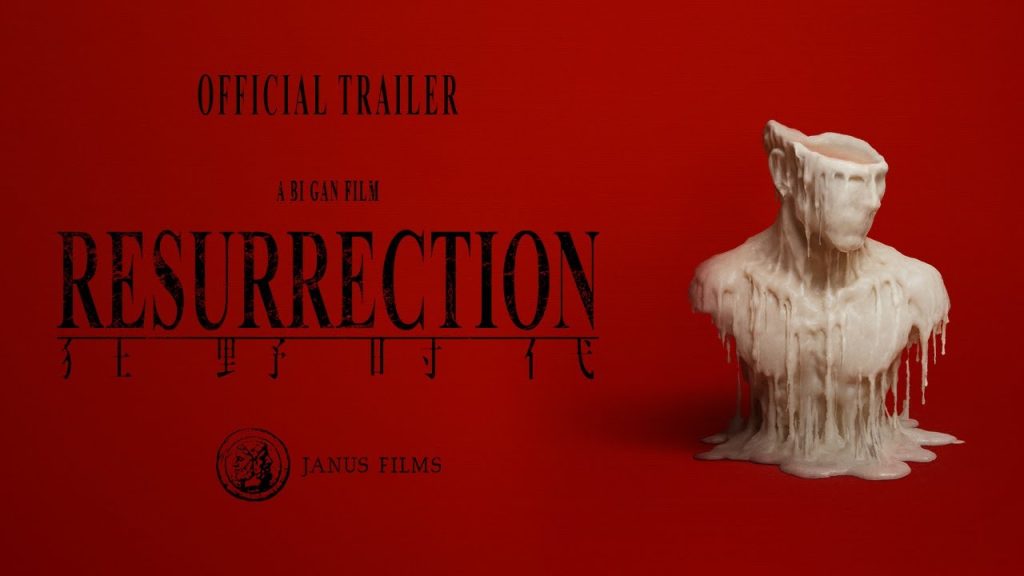
A Dreamlike Sci-Fi Epic That Celebrates the History of Cinema
With Resurrection, visionary Chinese filmmaker Bi Gan delivers his most ambitious work to date—a visually breathtaking science-fiction odyssey that explores dreams, memory, immortality, and the very nature of cinema itself. Set in a future where humanity has abandoned dreaming in exchange for longer life, the film follows mysterious individuals known as “Deliriants” whose ability to dream threatens the established social order. Through five interconnected dream sequences, each inspired by a different era of film history and one of the human senses, Resurrection becomes both a philosophical meditation on existence and a tribute to the evolution of cinematic art.
Rather than following a conventional narrative, Resurrection unfolds as an immersive audiovisual experience where time, identity, and reality constantly transform. Led by Jackson Yee in multiple roles and supported by Shu Qi and Mark Chao, the film combines speculative science fiction with surreal fantasy, creating an emotionally rich exploration of creativity, mortality, and imagination. Winner of the Jury Special Prize at the 2025 Cannes Film Festival, Resurrection stands as one of the most celebrated arthouse films of 2025 and a landmark achievement in contemporary world cinema.
Quick Facts: A Visionary Sci-Fi Fantasy About Dreams, Cinema, and Human Consciousness
|
Science Fiction, Fantasy, Drama |
|
|
Dreams, Immortality, Memory, Cinema, Human Consciousness |
|
|
November 22, 2025 (China) |
|
|
Jackson Yee, Shu Qi, Mark Chao |
|
|
16 wins & 44 nominations, including the Jury Special Prize (Cannes Film Festival, 2025), Audience Award (Asian Film Festival Barcelona, 2025), Special Prize of the Jury (Istanbul Film Festival, 2026), Outstanding Film (Youth Film Manual Awards, 2026), Best Cinematography (Florida Film Critics Circle Awards, 2025), and a Palme d’Or nomination at Cannes. |
➡️ Key Takeaway: Resurrection is one of 2025’s most acclaimed international films, blending philosophical science fiction with extraordinary visual artistry. Its major recognition at Cannes and numerous international critics’ awards confirms Bi Gan’s reputation as one of contemporary cinema’s most innovative auteurs.
Should You Watch It?: A Mesmerizing Cinematic Experience for Adventurous Viewers
Resurrection is unlike traditional science-fiction films. Rather than relying on action, exposition, or conventional storytelling, Bi Gan creates a dreamlike journey where every sequence explores different ideas about memory, imagination, love, and mortality through constantly evolving cinematic styles. The film invites audiences to experience cinema emotionally and visually, rewarding patience with extraordinary imagery and philosophical depth.
Its ambitious structure makes Resurrection especially appealing to viewers who appreciate challenging arthouse cinema, surreal storytelling, and visually innovative filmmaking. While its nonlinear narrative demands active engagement, the film offers one of the year’s most unforgettable cinematic experiences, demonstrating how science fiction can become a meditation on art, history, and human consciousness itself.
➡️ Key Takeaway: Resurrection is an ambitious, visually stunning work of auteur cinema that rewards adventurous viewers seeking philosophical science fiction and one of the most artistically daring films of the decade.
Why Everyone Is Talking About It?: Bi Gan Reinvents Science Fiction as a Celebration of Cinema
Resurrection became one of the defining arthouse films of 2025 because it transforms science fiction into an exploration of dreams, creativity, and the history of filmmaking itself. Instead of presenting a futuristic spectacle built around technology or conflict, Bi Gan imagines a society where humanity has traded the ability to dream for immortality. This provocative premise becomes the foundation for a visually astonishing meditation on why imagination remains essential to what makes us human.
The film also generated widespread discussion following its premiere at the 2025 Cannes Film Festival, where it won the Jury Special Prize while competing for the Palme d’Or. Critics praised its breathtaking cinematography, ambitious production design, and daring narrative structure, with many describing it as one of the most visually inventive films of the decade. While its unconventional storytelling divided audiences, few questioned its extraordinary artistic achievement or Bi Gan’s growing reputation as one of contemporary cinema’s most visionary directors.
Why audiences are talking about Resurrection:
-
It turns dreams into an act of rebellion. In the film’s future society, dreaming is forbidden because it threatens a system built on immortality, transforming imagination into the ultimate symbol of freedom.
-
Every chapter pays tribute to cinema itself. The five dream sequences reference different eras and visual languages of filmmaking, creating a cinematic journey that celebrates the evolution of the medium while constantly reinventing its possibilities.
-
Its visual craftsmanship is extraordinary. From elaborate production design to award-winning cinematography, every frame is carefully composed, making the film as much an artistic exhibition as a narrative experience.
-
Jackson Yee delivers one of the year’s most ambitious performances. Playing multiple incarnations of the mysterious Deliriant across different realities, he anchors the film’s constantly shifting narrative with emotional depth and remarkable versatility.
-
It confirms Bi Gan as one of world cinema’s leading auteurs. Following Kaili Blues and Long Day’s Journey into Night, Resurrection expands his fascination with time, memory, dreams, and cinematic language into his most ambitious and internationally celebrated work to date.
➡️ Why It Matters: Resurrection demonstrates that science fiction can be both intellectually challenging and emotionally poetic, using speculative storytelling to celebrate creativity itself. Its international acclaim also reflects the growing global appetite for ambitious auteur cinema that pushes the boundaries of what film can achieve.
Movie Trend: Dream Cinema Is Replacing Traditional Science Fiction
Resurrection represents the emergence of Dream Cinema, a growing movement in contemporary filmmaking where speculative worlds become vehicles for exploring memory, consciousness, identity, and artistic expression rather than technological progress alone. Instead of asking how humanity will survive the future, these films ask how imagination shapes reality, using surreal storytelling and nonlinear narratives to explore experiences that conventional science fiction often cannot express.
The film also reflects the broader evolution of Auteur Science Fiction, where visionary directors increasingly use the genre as a canvas for deeply personal artistic statements. Rather than emphasizing spectacle or franchise-building, filmmakers like Bi Gan create immersive cinematic experiences that blend philosophy, visual experimentation, and emotional reflection. In Resurrection, science fiction becomes inseparable from cinema itself, turning the history of film into both the narrative and the subject of the story.
➡️ Key Takeaway: Resurrection exemplifies the rise of auteur-driven science fiction that values dreams, artistic expression, and philosophical exploration over traditional genre conventions, expanding the possibilities of what modern speculative cinema can become.
Who Should Watch It?: The Visionary Cinema Explorer
Audience Profile: Viewers Who Embrace Challenging and Visually Inventive Cinema
Resurrection is designed for audiences who appreciate films that reward interpretation rather than providing straightforward answers. These viewers are drawn to ambitious visual storytelling, philosophical themes, and directors who use cinema as an artistic medium rather than purely commercial entertainment. For them, the emotional and sensory experience is just as important as the narrative itself.
Core Audience: Fans of arthouse cinema, international film festivals, auteur filmmakers, philosophical science fiction, and visually experimental storytelling.
Secondary Audience: Film students, cinematographers, artists, cinephiles, and viewers interested in surrealism, dream narratives, and the history of cinema.
Lifestyle: Regular festival attendees, lovers of world cinema, readers of film criticism, and audiences who enjoy intellectually challenging creative works.
Cinema Habits: Frequently watch independent films, international releases, experimental cinema, and director-driven projects that prioritize artistic innovation over mainstream conventions.
➡️ Key Takeaway: Resurrection is ideal for viewers seeking one of the year’s most visually ambitious and philosophically rewarding cinematic experiences rather than a conventional science-fiction adventure.
What This Movie Means for the Industry: Auteur Cinema Is Becoming the Future of Prestige Science Fiction
Resurrection demonstrates that some of the most ambitious science-fiction films are now emerging outside Hollywood, with international auteurs redefining what the genre can accomplish. Rather than emphasizing franchises, visual spectacle, or world-building alone, Bi Gan uses speculative fiction to examine memory, dreams, artistic creation, and the evolution of cinema itself. The film reflects a growing movement in which science fiction serves as a philosophical and artistic medium capable of addressing humanity’s deepest existential questions.
The film also reinforces China’s growing influence within global auteur cinema. While Chinese filmmaking has long been associated internationally with martial arts epics or commercial blockbusters, directors like Bi Gan are earning worldwide recognition through highly personal works that combine technical innovation with profound artistic vision. Resurrection‘s success at Cannes, followed by numerous international critics’ awards and festival honors, illustrates that visually adventurous, intellectually demanding films continue to find enthusiastic audiences and critical acclaim across the world.
➡️ Key Takeaway: Resurrection proves that the future of prestige science fiction increasingly belongs to visionary filmmakers who use the genre to push the artistic boundaries of cinema while exploring universal questions about imagination, memory, and human existence.
Creative Analysis: A Cinematic Dream That Explores Memory, Time, and the Purpose of Imagination
Storytelling: Five Dreams Become a Journey Through the History of Cinema
Rather than following a traditional three-act structure, Resurrection unfolds as five interconnected dream narratives experienced by a mysterious “Deliriant” who continues to dream in a society that has abandoned imagination in exchange for immortality. Each chapter functions almost like a self-contained film while simultaneously contributing to a larger meditation on creativity, memory, identity, and the passage of time. This fragmented structure deliberately encourages viewers to interpret emotional connections instead of searching for conventional narrative explanations.
Bi Gan uses these dream sequences to travel across multiple cinematic styles, genres, and historical periods. Silent cinema, noir, fantasy, horror, romance, and science fiction blend together into a constantly evolving visual language that celebrates filmmaking itself. Rather than presenting dreams as confusing puzzles, the film treats them as emotional experiences that reveal deeper truths about humanity’s relationship with art, mortality, and imagination.
➡️ Key Takeaway: Resurrection transforms storytelling into an immersive dream experience where every narrative shift expands both the emotional meaning of the film and the possibilities of cinematic expression.
Direction: Bi Gan Continues to Redefine Contemporary Auteur Filmmaking
Bi Gan directs Resurrection with extraordinary confidence, combining meticulous visual composition with remarkable technical ambition. Every sequence introduces its own aesthetic identity, allowing the film to move effortlessly between different cinematic traditions while maintaining a unified emotional and philosophical vision. His direction emphasizes atmosphere, rhythm, and visual poetry rather than exposition, trusting audiences to experience the film intuitively rather than intellectually.
The result is a work that feels both deeply personal and universally resonant. Bi Gan demonstrates complete command of cinematic language, using camera movement, color, editing, sound, and production design as storytelling tools equal to dialogue or plot. Few contemporary filmmakers embrace cinema’s expressive potential as fully as he does, making Resurrection not simply another science-fiction film but a profound reflection on the power of the medium itself.
➡️ Key Takeaway: Bi Gan’s visionary direction transforms Resurrection into one of the defining works of contemporary auteur cinema, demonstrating how filmmaking itself can become the central subject of a cinematic masterpiece.
Performances: Jackson Yee Anchors an Extraordinary Cinematic Transformation
One of Resurrection‘s greatest achievements is Jackson Yee’s remarkable performance across multiple incarnations of the mysterious Deliriant. Rather than portraying a single conventional protagonist, Yee embodies different identities that exist across the film’s interconnected dream worlds, requiring him to shift continuously between emotional registers, personalities, and cinematic styles. His performance provides the emotional continuity that binds together Bi Gan’s ambitious narrative structure, allowing audiences to connect with the film’s philosophical ideas through a deeply human presence.
Shu Qi brings elegance and quiet authority to The Big Other, serving as both observer and catalyst within the story’s metaphysical framework. Mark Chao complements the ensemble with a commanding supporting performance, while the wider cast—including Gengxi Li, Jue Huang, Yongzhong Chen, Chloe Maayan, and others—helps create a richly textured world that constantly shifts between reality, fantasy, memory, and dream. Rather than dominating scenes through dialogue, the performances rely on expression, movement, and atmosphere, reinforcing the film’s visual storytelling approach.
➡️ Key Takeaway: Jackson Yee delivers one of the most ambitious performances of 2025, anchoring Bi Gan’s dreamlike vision with emotional depth while supporting an ensemble that allows visual storytelling to take center stage.
Cinematography & Visual Style: Every Frame Becomes a Work of Art
If Resurrection has a defining strength, it is its astonishing visual language. Cinematographer Jingsong Dong, whose work earned widespread international recognition—including the Florida Film Critics Circle Award for Best Cinematography—creates images that constantly evolve alongside the film’s changing dream worlds. Long, fluid camera movements, painterly compositions, dramatic lighting, and shifting aspect ratios transform each chapter into its own cinematic universe while maintaining a coherent artistic identity.
The production design by Qiang Liu and Nan Tu, recognized with multiple international awards, is equally extraordinary. Every environment feels meticulously handcrafted, ranging from surreal futuristic landscapes to dreamlike historical settings inspired by different periods of cinema. Rather than using visual spectacle simply to impress audiences, every artistic choice reinforces the film’s exploration of memory, imagination, and the history of filmmaking. Together, cinematography and production design elevate Resurrection into one of the most visually accomplished films of the decade.
➡️ Key Takeaway: Award-winning cinematography and breathtaking production design transform Resurrection into a visual masterpiece where every frame celebrates cinema as an art form.
Themes & Messages: Dreaming Is What Makes Humanity Worth Preserving
At its philosophical core, Resurrection argues that imagination is inseparable from human identity. In a future where people have sacrificed dreams in exchange for immortality, Bi Gan suggests that survival without creativity, memory, emotion, and artistic expression becomes spiritually empty. The Deliriants represent those who refuse to abandon imagination, making dreaming an act of resistance against a society that values longevity over genuine living.
The film also explores cinema itself as humanity’s collective dream. By moving through different eras of filmmaking, Resurrection becomes both a tribute to film history and a meditation on why stories matter. Memory, love, mortality, identity, and artistic creation are presented as interconnected experiences, reminding audiences that culture survives because people continue imagining new worlds while preserving old ones. Rather than offering clear answers, the film encourages viewers to embrace mystery, interpretation, and emotional discovery.
➡️ Key Takeaway: Resurrection ultimately suggests that dreaming, storytelling, and artistic imagination are not luxuries but essential parts of what it means to be human.
What Makes This Movie Different?: A Science-Fiction Film That Is Also a Love Letter to Cinema
Most science-fiction films imagine the future through technological innovation, political conflict, or survival against external threats. Resurrection takes a radically different approach by using speculative fiction to explore the emotional and philosophical importance of dreams, creativity, and cinematic history. Rather than building a conventional futuristic world, Bi Gan creates an ever-changing landscape where each sequence reflects a different chapter in the evolution of film itself.
The movie is equally distinctive because it refuses to separate visual experimentation from emotional storytelling. Every technical decision—from shifting aspect ratios and elaborate tracking shots to surreal production design and immersive soundscapes—serves the central idea that cinema remains humanity’s greatest dreaming machine. The result is not simply an arthouse science-fiction film but a profound celebration of filmmaking as one of civilization’s most enduring forms of artistic expression.
➡️ Key Takeaway: Resurrection stands apart by transforming science fiction into a cinematic meditation on dreams, memory, and the history of film, creating one of the most artistically ambitious works of contemporary world cinema.
If You Liked Resurrection: More Visionary Films That Redefine Science Fiction and Cinematic Storytelling
The End (2025) by Joshua Oppenheimer
Joshua Oppenheimer’s genre-defying post-apocalyptic musical shares Resurrection‘s fascination with memory, humanity, and the stories people create to survive unimaginable futures. Both films reject conventional science-fiction formulas in favor of deeply philosophical explorations of civilization, identity, and the emotional consequences of immortality and catastrophe. Like Bi Gan’s masterpiece, The End challenges audiences through bold visual language and ambitious artistic vision.
The Assessment (2026) by Fleur Fortuné
Set in a tightly controlled future where parenthood must be approved by the state, The Assessment explores questions of human identity, emotional authenticity, and the cost of building a perfect society. While more narratively accessible than Resurrection, both films examine how institutional control threatens the qualities that make people truly human. Each combines striking visual design with philosophical science fiction that prioritizes ideas over spectacle.
Mickey 17 (2025) by Bong Joon Ho
Bong Joon Ho’s existential science-fiction satire follows a disposable worker repeatedly regenerated after death, using cloning to question identity, memory, and the value of individual life. Although more humorous and accessible, Mickey 17 shares Resurrection‘s interest in consciousness, mortality, and what remains uniquely human in technologically advanced societies. Both films demonstrate how contemporary science fiction is increasingly becoming a vehicle for profound philosophical inquiry.
➡️ Key Takeaway: These recent films show how modern science fiction is evolving beyond action and spectacle to explore memory, consciousness, identity, and the human condition through bold artistic vision. Like Resurrection, they challenge audiences while expanding the creative possibilities of the genre.
Viewing Recommendation: An Extraordinary Cinematic Experience for Adventurous Movie Lovers
Best Suited For: Viewers Who Embrace Ambitious Auteur Cinema
Resurrection is an exceptional choice for audiences who appreciate visually daring, intellectually challenging films that reward reflection and multiple viewings. Rather than offering straightforward entertainment, it invites viewers into a richly imaginative world where dreams, memory, and cinematic history merge into a singular artistic experience.
Highly Recommended For: Fans of Visionary Science Fiction and International Film
If you admire the work of directors such as Andrei Tarkovsky, Wong Kar-wai, Apichatpong Weerasethakul, David Lynch, or previous Bi Gan films like Kaili Blues and Long Day’s Journey into Night, Resurrection is essential viewing. It will also resonate with cinephiles interested in festival cinema, experimental storytelling, philosophical science fiction, and visually groundbreaking filmmaking.
You May Want to Skip It If: You Prefer Conventional Narratives
The film deliberately avoids traditional plot structure, clear exposition, and fast-paced storytelling. Viewers looking for straightforward science-fiction adventures, action-driven narratives, or neatly explained endings may find its dream logic and symbolic storytelling challenging.
➡️ Viewing Recommendation: Resurrection is one of the most artistically ambitious films of 2025—a visually mesmerizing work that celebrates imagination, dreams, and the history of cinema itself. It is highly recommended for audiences willing to surrender to its poetic rhythm and experience filmmaking as a form of pure artistic expression.
Final Verdict: One of the Most Visionary Films of the Decade
With Resurrection, Bi Gan confirms his place among the world’s most important contemporary filmmakers. Combining breathtaking cinematography, philosophical depth, extraordinary production design, and fearless experimentation, he creates a film that is simultaneously science fiction, fantasy, cinematic history, and meditation on human consciousness. Rather than simply telling a story, Resurrection explores why stories—and dreams—remain essential to human existence.
Its international acclaim, highlighted by the Jury Special Prize at the 2025 Cannes Film Festival and numerous critics’ awards for cinematography and production design, reflects the film’s remarkable artistic achievement and lasting cultural significance. Whether interpreted as a tribute to cinema, a philosophical reflection on immortality, or a celebration of imagination, Resurrection rewards viewers with one of the richest and most unforgettable cinematic experiences of recent years.
➡️ Final Verdict: Resurrection is a visionary masterpiece that transforms science fiction into a breathtaking celebration of dreams, artistic imagination, and the enduring power of cinema itself.