
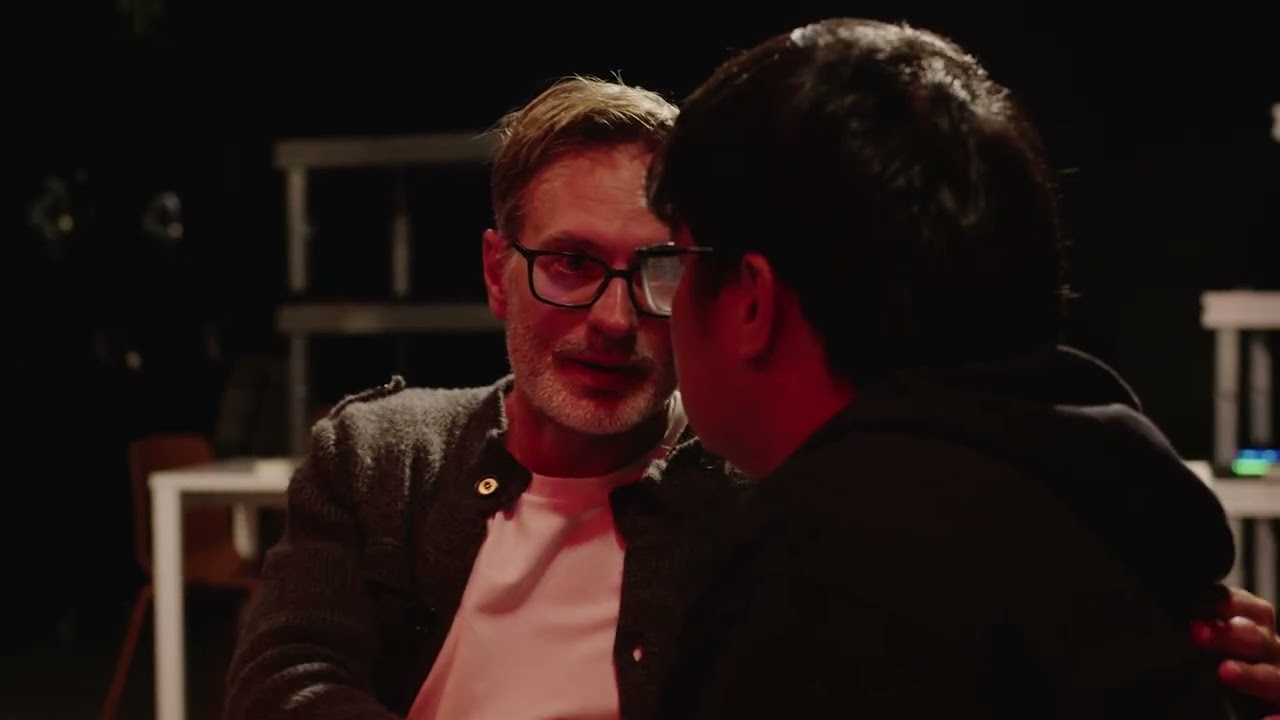
When the film you’re making starts making you
A dysfunctional team of filmmakers — a multi-personality business consultant, an AI-assisted screenwriter, a shamanic actress, and an undocumented editor — shoot a story about a writer bringing a fictional character to life, until the boundary between their film and their own fractured reality dissolves into absurd, chaotic apocalypse.
Why It Is Trending: Meta-Cinema Meets Identity Crisis in a Post-AI World
Ruinas Artificiales arrives at a cultural moment obsessed with the question of authorship — who creates, who is created, and whether the line between the two still exists. Its central premise — a writer engineering a human from the ruins of her own existence, in a world where humanity itself is artificially written — is one of the most urgent philosophical questions of 2025, dressed in genre thriller clothing. Director Sebastian C. Santisteban brings a rare combination of academic rigour (PhD in social studies, postdoctoral critical theory, PhD candidate in comparative literature) and genre instinct to a project that could only exist now. The film’s multinational Barcelona-based cast and production signal an emerging model of micro-budget international filmmaking built for festival discovery.
Elements Driving the Trend: The film-within-a-film structure — a crew whose fiction begins destroying their reality — gives Ruinas Artificiales a self-aware, layered architecture that rewards close attention and generates strong word-of-mouth among cinephile communities. The ensemble of deliberately dysfunctional characters — each a contemporary archetype: the AI screenwriter, the shamanic actress, the undocumented immigrant editor — functions as a social portrait as much as a thriller cast. Santisteban’s stated influences — Fellini, Lars von Trier, Charlie Kaufman — position the film within a recognisable lineage of formally radical, emotionally destabilising cinema. The dark humour and absurdist escalation give it commercial accessibility that pure arthouse cannot claim.
Virality: Pre-release trailer and making-of clips on IMDb have generated early cinephile interest, with the film’s AI-and-identity premise resonating strongly across film and tech communities simultaneously.
Critics Reception: No reviews published yet — film currently in post-production. Early festival positioning and director’s prior short film Bel (2024) — a critique of AI and social media manipulation — suggest strong arthouse and genre festival appeal.
Awards and Recognitions: No awards yet — pre-release. Production companies Hunyifilms, Rumbo a Peor Films, and Sway Audiovisuals. Festival circuit positioning pending post-production completion.
Ruinas Artificiales enters a cultural landscape where the question “who authors their own story?” is no longer philosophical abstraction — it is the daily anxiety of anyone who has used AI to write, create, or think. The film’s timing is precise: made during the AI creative boom, about a world where human identity is itself a kind of fiction. For the industry, it is a micro-budget Spanish-language project with international premise appeal and a director whose academic and creative profile sets him apart from conventional genre filmmakers.
What Movie Trend Is Followed: The Meta-Film Collapse as Genre Thriller
The film-within-a-film that destroys its makers is one of cinema’s oldest and most fertile premises — from 8½ to Synecdoche, New York to The House That Jack Built — and Ruinas Artificiales updates it for an era of AI authorship, influencer identity, and fractured selfhood. Where earlier meta-films used the collapse of fiction and reality to explore artistic ego, this one uses it to interrogate something more urgent: in a world of artificially constructed identities and AI-generated narratives, does authentic human authorship still exist? The absurdist thriller register — dark humour escalating into chaotic apocalypse — makes the philosophical stakes viscerally entertaining rather than academically remote.
Trend Drivers: AI Authorship Anxiety Has Found Its Cinema The global anxiety around AI-generated content — who created it, who owns it, what it means for human creativity — has reached a cultural saturation point that mainstream cinema has barely begun to process. Ruinas Artificiales positions itself at the sharp edge of that conversation, embedding an AI-assisted screenwriter as a central character and making the blurring of artificial and real its formal as well as narrative subject. The Charlie Kaufman lineage — Adaptation, Synecdoche, New York, Being John Malkovich — has proven that meta-cinematic premises can generate both critical prestige and cult commercial success. Santisteban’s academic background in critical theory and AI in creative writing gives the film intellectual credibility that pure genre cannot claim.
What Is Influencing Trend: The post-ChatGPT cultural moment has made questions of authorship, identity, and artificial construction urgent for mainstream audiences, not just academic ones. The global success of meta-narrative thrillers — from Everything Everywhere All at Once to Triangle of Sadness — has proven that formally complex, absurdist premises can find wide audiences when the emotional core is accessible. Micro-budget international filmmaking enabled by Barcelona’s production ecosystem is generating formally ambitious projects that travel on festival circuits without requiring studio infrastructure.
Macro Trends Influencing: The collapse of stable identity — personal, professional, creative — is the defining anxiety of the post-social media generation, and fiction that dramatises that collapse resonates deeply. The influencer economy, the gig economy, and the AI economy have all eroded the sense of a coherent authorial self — which is precisely what Ruinas Artificiales takes as its subject. Audiences increasingly respond to films that reflect their own fractured, multiply-performed identities back at them through genre mechanics.
Consumer Trends Influencing: The 18–40 audience for meta-cinematic and absurdist thriller content is platform-native, festival-aware, and drives discovery through Letterboxd and social film communities. The AI creativity debate has created a new crossover audience — tech-literate viewers who do not typically engage with arthouse cinema but find its questions suddenly relevant to their own lives. Dark comedy as a vehicle for existential crisis has proven commercially viable across streaming platforms seeking sophisticated alternatives to prestige drama.
Audience Analysis: Cinephiles, AI-Anxious Creatives, and Anyone Who Has Lost the Plot The core audience is 20–45 — film-literate adults drawn to Kaufman-esque meta-narrative, plus the broader community of writers, artists, and digital creatives experiencing their own authorship crisis in the AI era. The multinational cast reflects Barcelona’s cosmopolitan creative scene and gives the film natural reach across Spanish, English, and international arthouse markets. The shamanic actress, the AI screenwriter, the business consultant with multiple personalities — each character is a recognisable type from the contemporary creative economy, which makes the absurdist escalation feel grounded rather than arbitrary.
Ruinas Artificiales works because the crisis it depicts is not fictional — it is the actual condition of creative work in 2025. Every filmmaker, writer, and artist navigating AI tools, platform identity, and the question of what authentic creation means will find something of their own anxiety in this film. The trend it represents is only beginning: meta-cinema about artificial authorship will be one of the defining subgenres of the next decade.
Final Verdict: Ruinas Artificiales Is a Formally Daring, Culturally Urgent Debut — and One to Watch
Santisteban brings a rare combination to his debut: critical theorist’s framework, thriller director’s instincts, and the formal ambition of a filmmaker who has been building toward this through short films, satire, and literary work. The premise — reality and fiction collapsing around a dysfunctional crew — is executed with dark humour, absurdist escalation, and philosophical seriousness. Pre-release, it already feels like the kind of film that defines a voice — and announces a sensibility the industry should be tracking.
Audience Relevance: For Anyone Who Has Ever Wondered If Their Life Is Running Them The characters are not losing reality through madness — they are losing it through ordinary contemporary mechanisms: multiple identities, artificial tools, the pressure to perform a coherent self in a world that has stopped believing in coherence.
That recognition is immediate and universal — which is what gives a formally challenging film its widest emotional reach.
What Is the Message: Nobody Knows Who Is Holding the Pen The solitary writer confronts the ultimate creator’s dilemma — engineering a human from the ruins of her own existence. The question is not whether she succeeds, but whether the distinction between author and creation still means anything at all.
That question lands differently in 2025 than it would have five years ago — and the film knows it.
Relevance to Audience: A Film About Making a Film That Is Also About Everything Else The film-within-a-film structure gives Ruinas Artificiales a double register: simultaneously a thriller about a crew in crisis and a philosophical essay about what creation costs. Neither dimension overwhelms the other — the mark of a filmmaker who has thought through his formal choices.
For cinephile audiences, the structural self-awareness is the pleasure. For wider audiences, the chaos and dark humour are the entry point.
Social Relevance: AI, Authorship, and the Fractured Creative Self The AI-assisted screenwriter is not a gimmick — she is a portrait of how an entire generation of creative workers now operates: in uncomfortable collaboration with tools that blur the line between their voice and something else. Each character carries a specific contemporary social fracture.
Together they form a portrait of the creative economy in 2025 — precarious, fragmented, and producing something that may or may not be art.
Performance: An Ensemble Built for Controlled Chaos Lina Forero anchors the film as Betty La Fea — a role suggesting both self-aware archetype and genuine psychological complexity. Michael Strelow and Alina Razumenko provide the unstable creative poles around which the ensemble’s chaos organises itself.
The multinational cast — Spanish, Colombian, Russian, international — reflects the Barcelona production context and gives its portrait of fractured identity genuine cosmopolitan texture.
Legacy: The First Spanish-Language Meta-Thriller of the AI Era Ruinas Artificiales arrives before the wave — before AI authorship anxiety has fully entered mainstream genre cinema — which is precisely what gives it its legacy potential. Films that identify a cultural fault line before it becomes a cliché are the ones that get rediscovered.
Santisteban’s academic and creative profile positions him as a filmmaker to follow through a significant career.
Success: Pre-Release, Post-Production, Full Potential Currently in post-production — no release date, festival placement, or box office data confirmed. Production by Hunyifilms, Rumbo a Peor Films, and Sway Audiovisuals (Spain). Prior short Bel (2024) established Santisteban’s critical AI framework.
Festival circuit positioning is the critical next step — the right premiere slot will determine whether this becomes a cult discovery or a wider arthouse breakout.
Insights Ruinas Artificiales is the film the AI authorship crisis has been waiting for — a meta-cinematic thriller that makes the question of who writes your story feel genuinely dangerous. Industry: Micro-budget meta-cinema with strong philosophical premises is one of the festival circuit’s most reliable discovery categories — and Santisteban’s academic profile gives this project a promotional angle no conventional thriller debut can claim. Audience: The AI creativity audience is vast, newly formed, and looking for content that reflects its specific anxiety with intelligence and humour — and this film speaks to it directly through form, not just theme. Social: This film treats AI authorship anxiety not as a warning about technology, but as an inquiry into what was already artificial about human identity before the machines arrived. Cultural: Santisteban belongs to a generation of Colombian and Spanish filmmakers building a distinct voice at the intersection of genre, philosophy, and social critique — and this is a debut with the ambition of a director already several films into their career.
Ruinas Artificiales is not yet a film the world has seen — but it is already a film the world needs. In the space between creation and creator, between reality and its artificial double, it is asking the questions that no one else is asking loudly enough.
Summary of Ruinas Artificiales: A Film That Destroys the People Making It — and Asks Who Is Really in Charge
-
Movie themes: Authorship, artificial identity, creative collapse, and the dissolution of reality. A meta-cinematic thriller about what happens when the story you’re telling starts writing you back.
-
Movie director: Formally daring debut lens — dark humour, social critique, genre blending. Sebastian C. Santisteban brings a rare academic-creative combination: PhD in social studies, postdoctoral critical theory, Kaufman and Trier as his cinematic north stars.
-
Top casting: Ensemble of archetypes. Lina Forero leads a multinational cast of deliberately fractured characters — each a portrait of a specific contemporary identity crisis, assembled into a collective portrait of the creative economy in collapse.
-
Awards and recognition: Pre-release — currently in post-production. No festival placement or awards confirmed. Prior short Bel (2024) established director’s critical AI framework.
-
Why to watch: A formally ambitious, darkly funny meta-thriller that makes the AI authorship crisis feel visceral, chaotic, and urgently personal — the kind of debut that announces a distinctive voice before the industry knows what to do with it.
-
Key success factors: Intellectual precision plus genre chaos plus impeccable cultural timing — Ruinas Artificiales arrives exactly when the question it asks is most impossible to avoid.
-
Where to watch: In post-production. Release date and distribution TBC. Festival circuit positioning pending.






Leave a Reply