


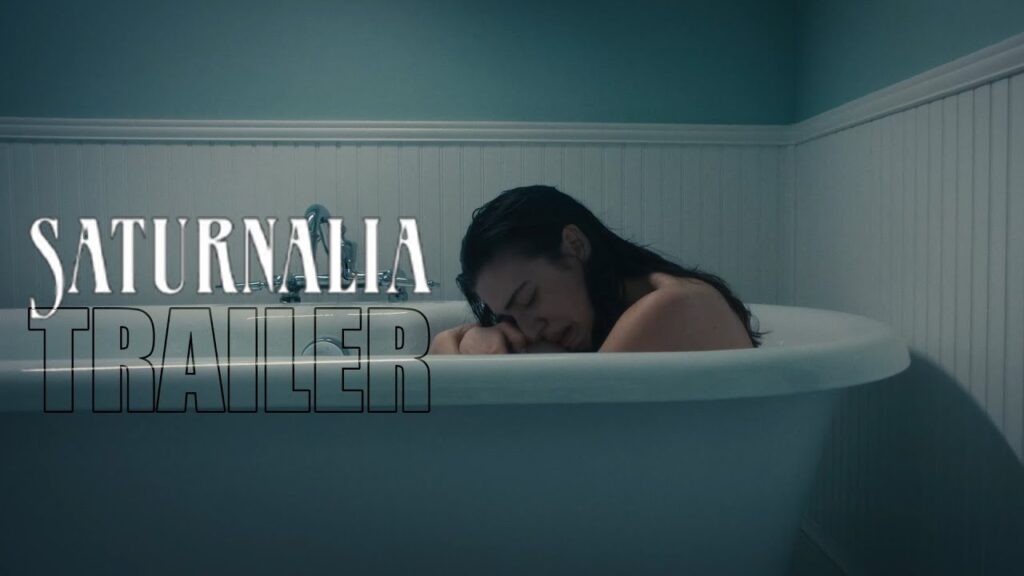
The American Giallo Boarding School Horror That Got Claudio Simonetti of Goblin to Score It — Shot in Virginia, Set in 1979, Built as a Love Letter to Dario Argento
Virginia, 1979. Miriam Basconi is recently orphaned and shipped to Alstroemerias Academy — a lavish boarding school whose inheritance clause demands her attendance until she comes of age. She is met by RA Holden Sax, who warns that the clock is king: everything begins at 7AM, and rules have consequences. The headmistress Ms. Hemlock immediately makes Miriam her target. Punishments extend to other students — when Miriam is late, her roommate Hannah is whipped. When Miriam refuses to comply, classmates starve while she is served lavish meals. Students begin disappearing. A figure in a white mask is seen in the corridors. Beneath the school’s ornate baroque architecture, something far darker is hidden. Directed and co-written by UNCSA directing graduate Daniel John Lerch — a Richmond, Virginia-based filmmaker who described the film as his love letter to 1970s Italian exploitation cinema, born from his childhood memory of VHS box art in his local video store. Co-written with Julia Nilsen and producer-cinematographer Max Fischer’s wife Darrell Szarka Workman. Scored by Claudio Simonetti — founding member of Goblin, composer of Suspiria, Deep Red, and Dawn of the Dead. Shot at Dover Hall, Manakin-Sabot, Virginia. World premiere Raindance Film Festival June 20, 2025. Available on Amazon.
Why It Is Trending: A Micro-Budget Virginia Giallo Debut That Secured Claudio Simonetti of Goblin as Composer — World Premiere at Raindance 2025
Lerch’s most audacious production achievement — and the film’s most commercially significant single fact — is that he convinced Claudio Simonetti, whose score for Suspiria is one of the most iconic in horror cinema history, to compose the soundtrack for a micro-budget American debut feature. That collaboration gives the film an institutional connection to the giallo tradition that no amount of visual referencing alone could establish. The Raindance Film Festival world premiere — where Saturnalia was part of the 2025 horror programme featuring sixteen debut features — placed the film within the UK’s most active independent horror festival discovery circuit. Horror DNA called it “a tribute to giallo done right.” Cut To The Take noted that the film has everything you could want from a boarding school mystery — a loathsome head of school, a rebel protagonist, a sidekick, deaths, masks, and a lush old building — and described it as “bold, unapologetic, and slightly deranged.”
Elements Driving the Trend: The Simonetti Score, the Virginian Baroque Setting, and the Triple Ending Structure
-
The production team deliberately avoided the conventional giallo whodunnit structure — rather than the “Scooby-Doo” mask-reveal formula, the film builds toward three surprise endings that the production team describes as designed for rewatchability.
-
DMovies identified the film’s most formally specific structural layer: the cabbie’s description of the Academy as a European folly built on American architecture mirrors the film itself — “a classic horror modelled on overt giallo influences whose very artificiality has become built in as part of the American architecture.”
-
The mythology-as-architecture is the film’s most formally original thematic contribution: Saturnalia was an ancient Roman festival honouring Saturn, who ate his children to prevent them overthrowing him — the classroom scenes teaching this myth directly mirror the headmistress’s psychological strategy of dividing students against each other.
-
Horror DNA noted that the film’s colour palette — vivid reds, greens, and blues — operates diagnostically rather than decoratively, using giallo’s primary colour tradition to highlight tension and emphasise violence.
Virality: Simonetti’s Name and the Giallo Community Discovery Circuit
-
Claudio Simonetti’s involvement is the film’s most self-sustaining discovery mechanism within the horror genre community — his name generates immediate attention from Goblin fans, Argento devotees, and the giallo revival community that treats his involvement as a quality endorsement independent of the film’s other qualities.
-
Raindance positioned the film as part of its standout horror programme, noting that over 75% of films in competition were first-time works — giving the giallo debut a specific institutional context within the UK’s most active independent horror festival circuit.
Critics Reception: Divided Along Giallo Knowledge Lines — Visual Ambition and Commitment Praised, Pacing and Atmosphere the Consistent Reservations
-
Horror DNA — “a tribute to giallo done right”; accomplished tribute utilising the same vivid colour palette, stylised visual language, baroque set designs, and body count; maintains adherence to giallo’s rules throughout its runtime.
-
Cut To The Take — bold, unapologetic, and slightly deranged; an interesting adventure to follow; the film has everything you could want from a boarding school mystery; entertaining despite not being the most impressive or intricate of mysteries.
-
DMovies — a timeless intergenerational clash; Miriam’s resistance is what distinguishes her from everyone else; Lerch has built a European folly with American architecture.
-
Letterboxd (Raving Review) — built on admiration; commits confidently to its inspiration; what makes it work is how confidently it commits to that inspiration, even when it doesn’t escape its pull.
-
The Movie Waffler — never comes close to capturing the unique mood of vintage Italian horror; tone closer to Ed Wood than Argento; unflattering digital cinematography makes the film appear shot in a laser tag facility; Simonetti’s score generic and uninspired compared to his Goblin work. IMDb 7.0 from 21 viewers. 8 critic reviews.
Awards and Recognitions: No Awards — Raindance World Premiere June 20, 2025 — Available on Amazon
-
No awards. No nominations. World premiere Raindance Film Festival June 20, 2025. UK theatrical June 20, 2025. Available on Amazon.
Director and Cast: A Richmond Filmmaker Whose Love of VHS Horror Culture Became His First Feature — With Goblin’s Founding Member Scoring the Tribute
-
Daniel John Lerch — UNCSA directing graduate, Richmond Virginia-based, works in film production developing features and commercials — makes his feature debut as director, co-writer, and creative anchor of a production he describes as built through genuine collaboration: “I’m a huge collaborator; I’m not one to call this ‘A Daniel John Lerch Film.'”
-
Sophia Anthony (Miriam) — the film’s primary screen presence, carrying the protagonist’s defiance across every confrontation with Ms. Hemlock; DMovies noted that Anthony bears more than a passing resemblance to Asia Argento, who starred in many of her father’s subsequent films — a casting echo that gives the giallo tribute its most visually specific connection to its source material.
-
Velvet (Ms. Hemlock) — the film’s most discussed single performance element; consistently cited as one of the film’s most effective elements — giving the headmistress a theatrical menace appropriate to the genre’s tradition.
-
Dante Blake (Holden Sax) — the RA torn between his privilege and his conscience — gives the film its most morally ambiguous supporting character.
-
Amariah Dionne (Hannah) — the bullied roommate whose punishment for Miriam’s infractions drives the film’s most emotionally acute sequences.
-
Claudio Simonetti (composer) — whose score, while divided in critical reception, gives the film its most culturally significant institutional credential.
-
Max Fischer (producer, cinematographer) — whose contributions to the screenplay and production design are acknowledged by Lerch as foundational to the film’s visual and structural identity.
Conclusion: A Micro-Budget American Giallo Debut That Secured the Genre’s Most Iconic Living Composer — and Delivered a Boarding School Horror With Three Surprise Endings and a Genuine Love for Its Source Material
The Simonetti collaboration is the film’s most irreplaceable institutional credential and its most commercially powerful discovery asset within the giallo community. The Raindance premiere confirmed the film’s position within the UK’s most active independent horror festival circuit. Lerch’s debut confirms a filmmaker whose formal ambitions are fully aligned with his material — the question of whether the execution always matches those ambitions is the film’s most honest critical note.
What Movie Trend Is Followed: The American Giallo Revival Deploys the Boarding School Horror as Its Most Formally Specific Vehicle — Joining the Suspiria Lineage With Deliberately American Gothic Architecture
Saturnalia belongs to the American giallo revival tradition — a small but dedicated community of filmmakers who treat the Italian thriller genre of Mario Bava and Dario Argento as a formal language rather than a reference point. Its specific contribution is the American boarding school as a giallo location: the European folly transplanted to Virginia, the ornate baroque architecture of Dover Hall giving the film its most visually distinctive production design asset, and the 1979 period setting giving the colour palette its most formally justified register. The mythology-as-architecture layer — Saturn devouring children, the school’s punitive logic mirroring that myth — is the screenplay’s most original formal contribution to the genre.
Trend Drivers: The Suspiria Structural Parallel, the Myth-as-Institutional-Logic, and the Three-Ending Departure From Giallo Convention
-
The Suspiria structural echo — taxi in the rain, orphaned protagonist, prestigious academy with evil beneath the surface — is both the film’s most obvious formal citation and its most honest structural foundation; the production team wore the influence openly rather than disguising it.
-
The Saturn mythology as the film’s thematic architecture — students divided against each other to prevent collective resistance, the institution devouring its own children to preserve its power — gives the boarding school horror its most formally specific and most original thematic layer.
-
The deliberate departure from the giallo whodunnit convention — replacing the mask-reveal structure with three surprise endings — is the film’s most formally ambitious attempt to innovate within the tradition rather than simply replicate it.
-
The Virginia Gothic setting — Dover Hall’s baroque architecture as an American giallo location — gives the film its most formally specific production design achievement and its most visually distinctive departure from European giallo’s original Italian and German locations.
What Is Influencing Trend: The Giallo Revival Community and the Raindance Horror Discovery Circuit
-
The giallo revival is one of independent horror’s most active and most specific genre communities — driven by streaming discoveries, boutique Blu-ray releases, and a critical reappraisal of Bava and Argento’s work that has built a new generation of devoted viewers and filmmakers.
-
Raindance’s horror programme positioning — over 75% debut features — gives the giallo revival community a festival discovery circuit that connects directly with the UK audience most knowledgeable about the genre’s history and most responsive to formal tribute.
-
Simonetti’s participation signals to the giallo community that the film has the blessing of one of the genre’s most living iconic practitioners — a credentialing mechanism that no marketing budget alone could manufacture.
Macro Trends Influencing: Italian Genre Cinema’s Critical Rehabilitation and the Boarding School Horror’s Contemporary Resonance
-
Argento and Bava’s work has undergone a sustained critical rehabilitation over the past decade — Criterion editions, academic studies, and mainstream horror discourse have positioned giallo as one of cinema’s most formally inventive and most underappreciated traditions, generating a new audience of formally curious horror viewers.
-
The boarding school horror — from Suspiria to Phenomena to Dario Argento’s own school-set thrillers — is one of the giallo tradition’s most specific and most consistently compelling sub-settings, connecting institutional cruelty to supernatural evil with a formal logic that the genre handles better than any other.
-
The intergenerational conflict theme — the institution devouring young people to sustain itself — gives the 1979 period horror a contemporary resonance that Saturn’s mythology makes formally explicit.
Consumer Trends Influencing: The Amazon Horror Library and the Giallo Discovery Community
-
Amazon’s horror library gives the film the streaming infrastructure that independent giallo revival productions need to reach the genre community beyond festival screenings — the same audience that sustained The Love Witch and similar formal-tribute genre films on streaming platforms.
-
The giallo community’s active social media and Letterboxd presence gives the film a specific word-of-mouth circuit that responds to Simonetti’s name and Argento’s formal citations with immediate and enthusiastic advocacy.
-
Raindance’s press screener availability for horror critics — which generated 8 critic reviews for a micro-budget debut — confirms the festival’s effectiveness as a discovery amplifier for independent horror films with specific genre community credentials.
Audience Analysis: Giallo Revival Audiences, Boarding School Horror Fans, and Argento-Bava Devotees
The core audience is 22–50 — giallo revival community members who follow Simonetti’s work and treat Argento citations as quality signals, boarding school horror audiences who respond to the Suspiria structural echo, and independent horror enthusiasts who discovered the film through Raindance’s horror programme or Amazon’s library. Viewers with strong giallo knowledge will register and appreciate the formal citations most precisely; viewers without that background will find an atmospheric boarding school horror with a satisfying camp energy and a triple-ending structure.
Conclusion: A Formally Committed American Giallo Tribute That Earned Its Genre Community’s Attention Through Simonetti’s Score and the Sincerity of Its Formal Ambition
The Simonetti score is the film’s most credentialing single element. The Suspiria structural echo is its most honest formal statement. The Saturn mythology layer is its most original thematic contribution. The Raindance premiere confirmed the UK horror community’s discovery of a debut that wears its influences with confidence and genuine affection.
Final Verdict: A Micro-Budget American Giallo Debut of Genuine Formal Commitment — Sustained by Simonetti’s Score, Dover Hall’s Baroque Setting, and a Boarding School Mythology That Is More Original Than Its Surface Comparisons Suggest
Lerch delivers a debut of complete formal sincerity — the giallo love letter is written with knowledge, the Suspiria echo is conscious rather than derivative, and the Saturn mythology gives the boarding school horror a thematic architecture that distinguishes it from pure homage. The visual commitment and the practical effects are the film’s most consistently praised technical elements. The triple-ending structure confirms that the production team had a specific formal ambition beyond genre replication.
Audience Relevance: For Giallo Revival Audiences and Independent Horror Fans Who Value Formal Tribute Over Production Polish
Works best for viewers who approach the giallo tradition as a formal language rather than a genre category — the audience that treats Suspiria and Phenomena as touchstones, and for whom Simonetti’s involvement is itself a quality signal. Also rewarding for boarding school horror audiences who enjoy the camp energy of a film that commits fully to its institutional cruelty premise.
What Is the Message of Movie: The Institution That Divides Its Children Against Each Other Cannot Be Overthrown From Within — and the Only Defence Is Resistance, Not Compliance
The Saturn mythology is the film’s most precise thematic statement — the god who devoured his children to prevent them overthrowing him, the headmistress who divides students against each other through transferred punishments and differential rewards, the classical paralleling the contemporary. Miriam’s resistance is the only available answer, and the film’s triple ending confirms that the institution’s logic was never what it appeared to be.
Relevance to Audience: A Film That Gives the Giallo Revival Community Its Most Formally Specific American Entry — Built on Virginian Gothic Architecture Rather Than European Locations
The Virginia Gothic setting — Dover Hall’s baroque architecture as an American giallo location — is the film’s most formally distinctive production decision and the one that gives it the most culturally specific departure from the European giallo tradition it honours. The American boarding school as giallo setting is this film’s most original contribution to the genre’s revival.
Social Relevance: The Institution as the Devouring Father — and the Student Body as the Children Who Must Choose Between Compliance and Resistance
The film’s most precise social argument — that institutions sustain themselves by turning their members against each other, that the punishment extended to Hannah for Miriam’s lateness is the system’s most reliable control mechanism — gives the boarding school horror its most contemporary political resonance. The Saturn mythology is the classical precedent for a dynamic that students, workers, and citizens recognise from their own institutional experience.
Performance: Velvet’s Ms. Hemlock Is the Film’s Most Discussed Single Performance — Anthony’s Miriam Carries the Resistant Centre
Velvet’s Ms. Hemlock — theatrical, menacing, specific to the genre’s tradition of operatic villainy — is the performance that every review cited as one of the film’s most effective elements. Anthony’s Miriam carries the film’s emotional and physical confrontations with the specific defiance that the protagonist’s mythological function requires. Dionne’s Hannah gives the film its most sympathetic secondary presence.
Legacy: A Debut That Secured the Giallo Tradition’s Most Living Iconic Score Composer — and Confirmed Daniel John Lerch as a Filmmaker With the Genre Knowledge and the Formal Commitment to Build on That Foundation
Saturnalia will be remembered as the debut that got Claudio Simonetti to score an American giallo tribute — and as the film that demonstrated Lerch’s genuine formal knowledge of the tradition he was honouring. The Saturn mythology layer, the triple endings, and the Virginia Gothic setting are the formal decisions that distinguish it from pure pastiche.
Success: No Awards — Raindance World Premiere June 20, 2025 — Available on Amazon
-
No awards. World premiere Raindance Film Festival June 20, 2025. UK theatrical June 20, 2025. Available on Amazon. IMDb 7.0 from 21 viewers.
The Simonetti score delivered the genre community’s attention. The Raindance premiere delivered the critical circuit. The formal commitment delivered the debut’s most reliable advocacy.
Saturnalia proves that the most honest American giallo tributes are the ones that know exactly which tradition they’re entering — and that Claudio Simonetti scoring your debut feature is the most credentialing available statement that the tradition’s living practitioners consider you worthy of it.
Insights: A micro-budget American giallo debut of genuine formal commitment — the Simonetti score, the Dover Hall baroque setting, and the Saturn mythology thematic layer collectively constitute a tribute that was built from knowledge rather than imitation, and the Raindance premiere gave the film the genre community discovery circuit that its formal ambition deserved. Industry Insight: Simonetti’s participation as composer is the most commercially efficient institutional credential available to an American giallo revival film — his name functions as a quality endorsement within the genre community that no marketing budget could replicate, and the fact that Lerch secured it for a micro-budget debut is the film’s most remarkable single production achievement. Audience Insight: The giallo revival community is one of independent horror’s most active and most specifically knowledgeable genre audiences — viewers who treat Suspiria and Phenomena as formal touchstones will register every citation in Saturnalia precisely and respond to the tribute’s sincerity with the genre advocacy that gives micro-budget horror its most reliable word-of-mouth infrastructure. Social Insight: A film that uses the Saturn mythology — the god who devoured his children to prevent being overthrown, the institution that divides its students against each other to preserve its own authority — as the boarding school horror’s thematic architecture is making one of the genre’s most formally specific and most politically resonant social arguments within the giallo tradition. Cultural Insight: Saturnalia positions Lerch as the American giallo revival filmmaker with the deepest formal knowledge and the most genuine institutional connection to the tradition he is honouring — and confirms that Virginia’s film community, built around UNCSA’s directing programme and the state’s Gothic architecture, has a specific and underutilised formal asset for genre debut filmmaking.
Conclusion: A Formally Committed Giallo Debut That Secured the Genre’s Most Iconic Living Score Composer — and Confirmed a Virginia Filmmaker With the Knowledge, the Setting, and the Formal Sincerity to Build on This Foundation
The Simonetti score is inarguable. The Dover Hall setting is irreplaceable. The Saturn mythology is original. Lerch’s debut earns its place in the American giallo revival through the completeness of its formal commitment — and positions him as the filmmaker whose next feature, with the production resources that this debut’s reputation should attract, will be one of the genre revival’s most anticipated productions.
Summary: One Orphaned Heiress, One Baroque Academy, One Devouring Headmistress, and Three Endings Nobody Saw Coming
-
Movie themes: Institutional authority as a devouring mythology, the punishment that falls on the innocent rather than the guilty as the system’s most effective control mechanism, the Saturn myth as a classical precedent for contemporary institutional logic, the American Gothic as a giallo location, and the argument that compliance only accelerates the institution’s hunger.
-
Movie director: Daniel John Lerch — UNCSA directing graduate, Richmond Virginia-based — makes a feature debut of complete formal sincerity, built from a childhood love of VHS horror and a specific knowledge of the giallo tradition that earned him the participation of the genre’s most living iconic composer. He describes the film as a collaboration, not a singular auteurist statement.
-
Top casting: Velvet’s Ms. Hemlock is the film’s most theatrically committed and most genre-appropriate performance. Anthony’s Miriam carries the resistant centre across every confrontation. Dionne’s Hannah gives the film its most sympathetic secondary presence. Simonetti’s score is the film’s most credentialing single creative contribution.
-
Awards and recognition: No awards. No nominations. World premiere Raindance Film Festival June 20, 2025. Available on Amazon.
-
Why to watch: The American giallo boarding school horror that secured Claudio Simonetti as composer, shot the Virginia Gothic at Dover Hall in a primary colour palette that honours Bava and Argento’s formal tradition, and built a Saturn mythology thematic architecture beneath the Suspiria structural echo — for the giallo revival community and the boarding school horror audience who want their genre tribute built from knowledge rather than imitation.
-
Key success factors: The Simonetti score as the genre community’s institutional endorsement plus Dover Hall’s baroque Virginia Gothic setting plus the Saturn mythology thematic layer plus the triple-ending structural departure from giallo convention plus the Raindance horror programme placement plus the Amazon streaming availability.
-
Where to watch: Available on Amazon. Raindance Film Festival 2025 premiere. Check JustWatch for full streaming availability.
Conclusion: A Debut Built From Genuine Genre Knowledge — and the Institutional Credential of Claudio Simonetti’s Score Is the Most Honest Available Confirmation That the Giallo Tradition Recognised One of Its Own
The Saturn mythology is the original contribution. The Dover Hall setting is the irreplaceable production asset. Simonetti’s participation is the institutional confirmation. Daniel John Lerch’s next feature is the one the giallo revival community should be watching for.