



Welcome to Trekspertise, a series where we break down the technology, history, details, and decisions that make the Star Trek universe so complex — and so fun.
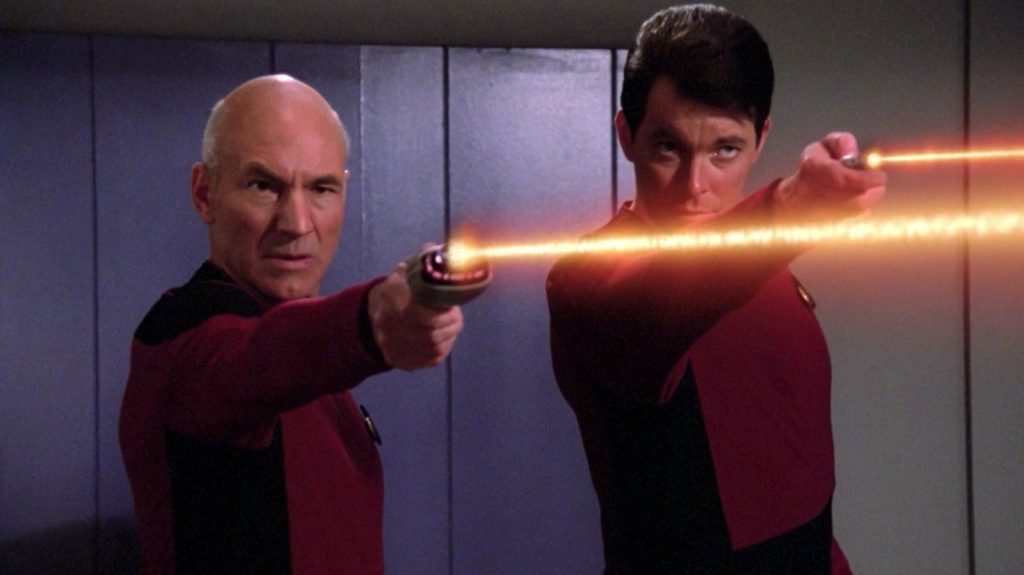
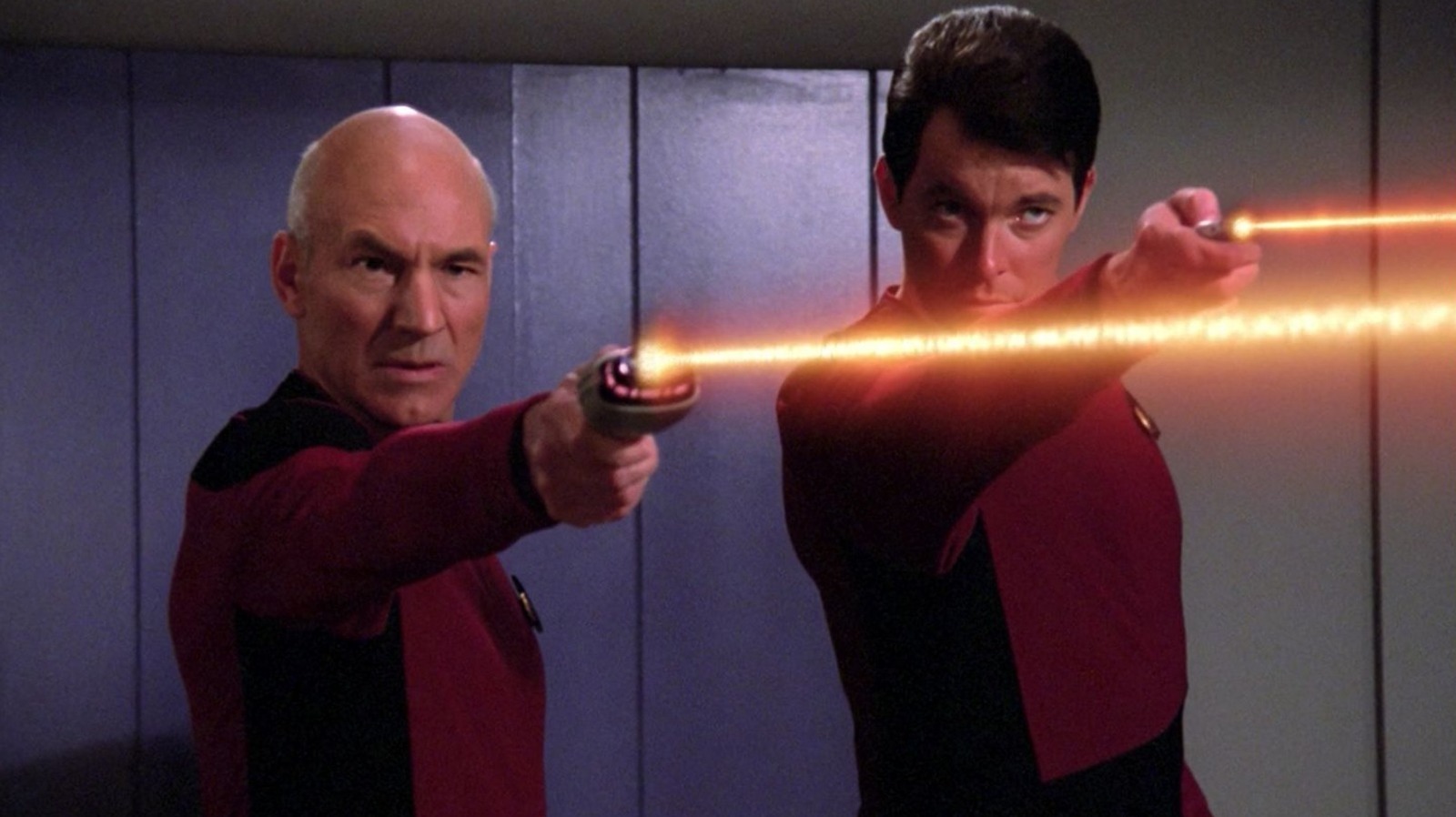
When Gene Roddenberry was first assembling “Star Trek” in the mid-1960s, the term “laser guns” was common enough sci-fi parlance that he astutely wanted to avoid using it. To make “Star Trek” seem a little more futuristic, Roddenberry invented “phasers” instead of “lasers,” and the weapon became a staple of the franchise. Starfleet vessels are equipped with powerful phaser weapons used for ship-to-ship combat, and Starfleet officers carry hand-held phasers into potentially dangerous situations.
In the pilot episode for “Star Trek: Enterprise,” a series set a century prior to the events of the original “Star Trek,” Captain Archer (Scott Bakula) was shown a hand-held phaser — then called a phase pistol — for the first time, so Starfleet has been using them since the very start. Phasers tend to fire single, confined beams, but would also eventually come to fire brief, bullet-like pulses.
“Star Trek,” however, is also meant to take place in a peaceful utopia, so the phasers were said to have a “stun” setting that could render an attacker unconscious from a distance. Only in extreme scenarios would a phaser be adjusted to the “kill” setting, which could blast the life out of someone. Indeed, throughout “Star Trek,” the powerful kill setting was seen to vaporize a person’s body entirely.
On “Enterprise,” phasers only had “stun” and “kill” settings, but later on, there were other, gentler settings. Throughout the franchise, characters have been explicit about the various settings a hand phaser was capable of using, sometimes referring to “light stun,” “heavy stun,” or a numerical system.
What do those numbers and settings mean? Let’s take a look.