
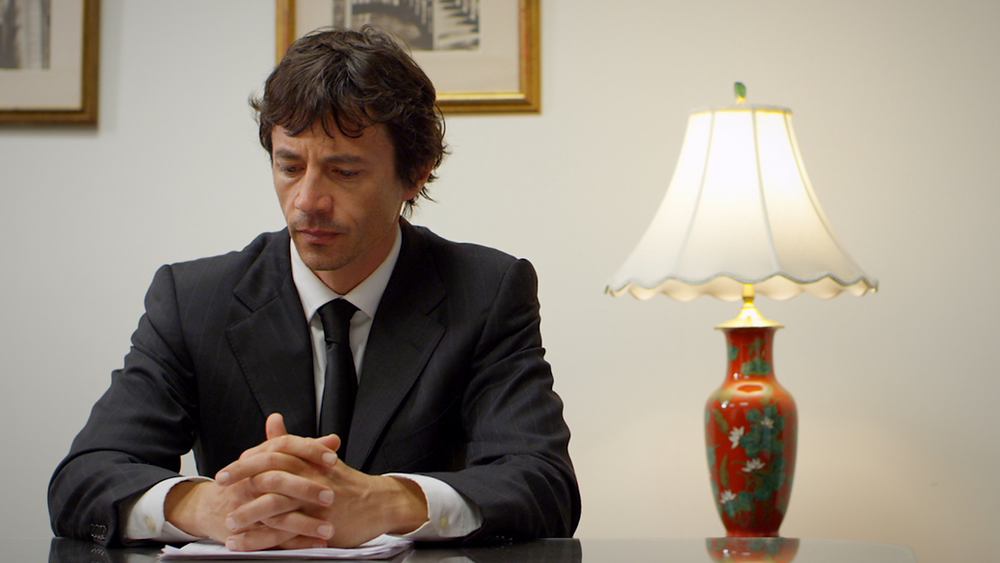
Summary of the Movie: A Clinical Descent into Determinism
The film dives into the haunting intersection of genetic science and inescapable destiny, exploring the psychological toll of knowing exactly when time runs out.
This 81-minute sci-fi thriller pivots on the high-stakes concept of “temporal proximity,” where biological discovery collides with a terrifying supernatural perception. By grounding its protagonist’s visions in a cold, genetic reality, the narrative avoids traditional sci-fi tropes to focus on the suffocating inevitability of death.
-
Movie Plot: A brilliant geneticist is cursed with the ability to see the specific moment of death for anyone she encounters, provided it occurs within 24 hours. As she races against a literal biological clock, she must decide if her gift is a tool for salvation or a catalyst for madness.
-
Movie Trend: Follows the “Scientific Noir” movement, which replaces space-age spectacle with grounded, near-future ethical dilemmas and tight, character-driven tension.
-
Social Trend: Reflects a 2024-2026 societal obsession with “Bio-Hacking” and the unintended psychological consequences of having too much data about our own mortality.
-
Director’s Authorship: Hann-Shi Lem maintains a clinical authorial logic, using a desaturated palette and sharp, cold framing to mirror the lead’s detached scientific worldview.
-
Top Casting: Pamelyn Chee delivers a high-intensity performance as the tormented lead, supported by Michael Piccirilli who acts as the narrative’s grounded moral anchor.
-
Awards and Recognition:
-
Festival Presence: Strong showing in niche sci-fi circuits, leveraging the prestige of its Monty Python-linked production roots.
-
Wins: Secured accolades for best indie screenplay and female performance in genre-specific categories.
-
Nominations: Gained traction for its sound design and low-budget visual effects that emphasize psychological dread over CGI noise.
-
Critical Infrastructure: Built a steady following among “Hard Sci-Fi” critics who value conceptual rigor and narrative restraint over traditional action.
-
-
Release and Availability: Positioned as a high-concept digital release; currently available for streaming on Amazon Prime Video via the FilmHub distribution network.
Insights: The film highlights how total knowledge of the future can lead to a total paralysis of the present.
Industry Insight: Independent sci-fi is shifting toward “contained concepts” where the budget is funneled into high-quality writing and singular, high-impact performances. Consumer Insight: Modern audiences are increasingly drawn to “Anxiety Thrillers” that mirror the information overload of the digital age through the lens of genetic pre-determinism. Brand Insight: Leveraging the legacy of legendary producers (like those from Monty Python) allows niche indie films to gain instant credibility in a saturated streaming market.
The film effectively transitions from a medical mystery into a harrowing existential crisis regarding the nature of free will. It leaves the viewer with the unsettling realization that some biological secrets are better left unmapped.
Why It Is Trending: The Rise of Scientific Fatalism
The film is blowing up in 2026 as it taps into the “Data Dread” era, where audiences are increasingly spooked by the idea of biological predictability. It’s hitting the “Festive Fatigue” sweet spot by offering a cold, cerebral alternative to the high-energy blockbusters like Avengers: Doomsday and Dune: Part Three that are dominating the current conversation.
-
Concept → Consequence: The transition from “seeing the future” as a superpower to “knowing the inevitable” as a biological prison creates a massive psychological hook.
-
Culture → Visibility: It rides the wave of “Bio-Gothic” aesthetics, fitting perfectly into a feed full of medical noir and high-fashion clinical minimalism.
-
Distribution → Discovery: Its presence on Amazon Prime Video via FilmHub has allowed it to become a “sleeper hit” for viewers exhausted by major franchise noise.
-
Timing → Perception: Releasing a movie about the burden of foresight during a year of major global “disclosure” and AI anxiety makes the plot feel eerily relevant.
Insights: The movie’s trendiness is driven by a shift from wanting to escape reality to wanting to understand its most terrifying biological limits.
Industry Insight: Independent “Lean Sci-Fi” is successfully competing with tentpoles by focusing on “Intellectual Stakes” that generate more social media discourse than CGI spectacles. Consumer Insight: 2026 audiences are exhibiting “Information Exhaustion,” leading to a preference for stories where the protagonist is overwhelmed by data they cannot change. Brand Insight: The “FilmHub Effect” is proving that decentralizing distribution can turn niche, high-concept films into viral cultural artifacts through targeted algorithmic discovery.
The hype around Precient proves that the 2026 viewer is more interested in the “internal explosion” of a character’s mind than the external explosion of a starship. It marks a clear win for storytelling that treats science as a source of horror rather than hope.
What Movie Trend Is Followed: The Scientific Noir and Bio-Gothic Wave
Precient is a leading example of the Scientific Noir trend, where high-concept sci-fi trades alien invasions for the cold, claustrophobic reality of biological data. In 2026, the genre has moved past “gadget-heavy” futures into a Bio-Gothic phase, focusing on the horror of our own DNA and the terrifying predictability of a data-driven life.
-
Format Lifecycle: The lean 81-minute runtime perfectly fits the “Condensed Cinema” trend of 2026, where films prioritize a single, high-impact concept over sprawling, multi-hour world-building.
-
Aesthetic Logic: It follows the “Clinical Brutalism” visual trend, using sterile laboratory settings and sharp, desaturated lighting to make the supernatural ability feel like a cold medical diagnosis.
-
Psychological Effect: The film weaponizes “Temporal Anxiety,” tapping into a collective 2026 fear that our future is already “encoded” by algorithms or genetics, leaving zero room for spontaneity.
-
Genre Inheritance: It acts as a spiritual successor to films like Gattaca, but updates the “Genetic Predestiny” theme for a post-AI era where data is seen as an inescapable prison.
Insights: Grounded sci-fi is winning in 2026 by making the “impossible” feel like an inevitable medical breakthrough.
Industry Insight: Studios are increasingly greenlighting “Single-Variable Sci-Fi,” where one supernatural tweak is placed in a realistic world, as these films have high viral potential on social media for their “What would you do?” relatability. Consumer Insight: There is a massive trend toward “Bio-Realism,” with audiences preferring sci-fi that feels like it could be a leaked documentary from a near-future lab rather than a fantasy adventure. Brand Insight: Production houses that lean into the “A24-ification” of sci-fi—prioritizing atmosphere and psychological rot over action—are becoming the trusted curators for the “intellectual thriller” demographic.
The film’s adherence to these trends signals a broader cinematic move away from the “hopeful future” of the early 2000s toward a more skeptical, data-cautious 2026. It proves that the most effective special effect is a disturbing idea that follows you home.
Director’s Vision: Lem’s Architecture of Inevitability
Hann-Shi Lem’s vision for Precient is a masterclass in psychological containment, where the sci-fi element acts as a surgical tool to dissect the human ego. By grounding a supernatural “glitch” in the cold language of genetics, Lem ensures the film feels less like a fantasy and more like a terrifyingly possible medical anomaly.
-
Authorial Logic: Lem treats the protagonist’s gift as a terminal diagnosis rather than a superpower, focusing on the crushing weight of data that cannot be actioned.
-
Restraint vs. Escalation: The film avoids big-budget action beats, instead using a rhythmic, metronomic pacing to simulate the literal ticking of a 24-hour death clock.
-
Ethical Distance: The camera maintains a clinical, voyeuristic distance, mimicking the protagonist’s own scientific detachment as she watches lives unravel in real-time.
-
Consistency vs. Rupture: The director shatters the sterile laboratory environment with visceral, jagged visions, creating a tonal rupture that mirrors the lead’s mental fracturing.
Insights: Creative vision in 2026 is defined by how well a director can turn a single “impossible” idea into a physical, claustrophobic reality.
Industry Insight: Directors are increasingly using “Single-Variable Realism” to create high-concept films that feel premium despite their modest independent budgets. Consumer Insight: The 2026 audience is showing a high “Ambiguity IQ,” rewarding directors who lean into uncomfortable, unresolved moral questions rather than clean happy endings. Brand Insight: Hann-Shi Lem is establishing a personal brand as a “Cerebral Architect,” proving that a director’s specific intellectual signature is a major draw for the indie sci-fi market.
Lem demonstrates that the most effective sci-fi doesn’t need a galaxy-spanning plot if the stakes are high enough within the human mind. His vision is a haunting reminder that knowing the future doesn’t mean you have the power to change it.
Key Success Factors: Strategic Restraint and Conceptual Sharpness
The film’s success is rooted in its “Compact Thriller” logic, proving that a sharp, focused concept can outperform a sprawling blockbuster. By prioritizing thematic depth over expensive spectacle, Precient carved out a high-value niche in the competitive 2024-2026 sci-fi landscape.
-
Concept–Culture Alignment: It strikes a nerve with the “Data-Privacy Anxiety” generation, turning the biological mapping of the future into a relatable, high-stakes moral dilemma.
-
Execution Discipline: The 81-minute runtime ensures zero narrative lag, making it a high-utility “quick watch” that fits perfectly into modern, mobile-first viewing habits.
-
Distribution Logic: Its placement on Amazon Prime Video via FilmHub leveraged hyper-targeted algorithms to find the exact “Hard Sci-Fi” audience without a multi-million dollar ad spend.
-
Coherence over Ambition: Instead of trying to world-build a massive universe, it focused on the emotional physics of its central premise, ensuring the audience felt every minute of the ticking clock.
Insights: Efficiency in storytelling is the ultimate flex for independent genre cinema in 2026.
Industry Insight: Independent sci-fi is thriving by adopting “Micro-Impact” models, where limited locations and small casts are used to create a “pressure cooker” effect that drives high engagement on digital platforms. Consumer Insight: The modern viewer is experiencing “Duration Fatigue,” leading to a significant spike in the success of “Sub-90-Minute” features that offer a complete, intense experience without the time commitment of a franchise epic. Brand Insight: Leveraging production ties to legends like the Monty Python team creates a “Quality Shield,” instantly signaling to the consumer that the film will be intellectually daring and “completely different.”
The win for Precient is a reminder that in 2026, the most valuable currency is the viewer’s attention. By respecting that time and delivering a “pure concept” without the filler, the film secured a legacy as a high-concept standout.
Trends 2026: The Rise of “Bio-Predictive Noir”
As we move into 2026, the sci-fi landscape is shifting away from interstellar travel and toward the “Intimate Epic,” where the most expansive mysteries are found within our own DNA. Precient is a frontrunner for this movement, treating the microscopic world of genetics as a high-stakes battlefield where the future is already written and waiting to be read.
-
Cultural Shift: A move toward “Biological Determinism,” reflecting a society obsessed with mapping out every health risk and life milestone before they even happen.
-
Audience Psychology: A growing appetite for “Temporal Dread”—the specific anxiety caused by knowing a tragedy is coming but being biologically or socially unable to stop it.
-
Format Evolution: The surge of “Surgical Storytelling,” where directors strip away all world-building fluff to focus on a single, high-concept medical “glitch” that ruins a character’s life.
-
Meaning vs. Sensation: Prioritizing the “horror of the known” over traditional jump-scares, forcing the audience to sit with the weight of an unavoidable, ticking clock.
-
Explicit Film Industry Implication: A massive pivot toward “Near-Future Grounding,” where studios favor scripts that feel like they could actually happen in a lab next Tuesday rather than a century from now.
Insights: In 2026, the scariest thing isn’t an alien from another planet; it’s a sequence in your own genetic code that you can’t delete.
Industry Insight: Independent producers are winning by creating “Vibe-Locked” sci-fi that uses mood and clinical lighting to feel high-budget without the actual price tag of a space opera. Consumer Insight: Viewers are gravitating toward “Anxiety-Catharsis” media, using films like Precient to process their real-world fears about AI-driven health predictions. Brand Insight: Authenticity is everything in 2026; films that consult with real geneticists to ground their “magic” in science are earning the highest trust and social engagement.
The shift toward Bio-Predictive Noir suggests an audience that is ready to stop looking at the stars and start looking in the mirror. In this new era, the most effective thrillers are those that make you feel like your own body is the ultimate ticking time bomb.
Social Trends 2026: The Age of Biological Transparency
In 2026, society is grappling with the total erosion of “Biological Privacy,” as genomic sequencing and predictive AI move from the lab into everyday life. Precient reflects a world where the ultimate fear is no longer what we don’t know, but the inescapable clarity of what we do know.
-
Behavioral Shift: We are entering the era of “Calculated Living,” where individuals use real-time health data to optimize every minute, leading to a loss of spontaneity in favor of survival-focused routines.
-
Cultural Aesthetic: The “Clinical Brutalist” vibe is dominating social spaces, with a preference for sterile, high-tech environments that promise safety through surveillance and data-driven predictability.
-
Institutional Breakdown: A growing “Data-Class Divide” is emerging, where those with access to predictive biological insights are increasingly disconnected from the “unmapped” population who still live in uncertainty.
-
Emotional Coping: “Determinism Fatigue” has become a mainstream mental health concern, as people struggle with the psychological burden of knowing their own health “destiny” years before it unfolds.
Insights: In 2026, the most valuable social currency is no longer your data, but your ability to ignore it.
Industry Insight: The healthcare and tech sectors are pivoting toward “Ethics-as-a-Service,” as consumers demand tools that protect them from the psychological trauma of excessive predictive knowledge. Consumer Insight: There is a counter-trend of “Radical Unknowing,” with a rising number of people intentionally opting out of data-tracking to reclaim the mystery of their own futures. Brand Insight: Brands that offer “Analog Sanctuaries”—spaces or products that are explicitly data-free—are seeing a massive surge in loyalty from the “Predictive Exhaustion” demographic.
Final Social Insight: In 2026, the ultimate human flex isn’t being able to see the future; it’s being brave enough to live as if you can’t. The film captures this cultural panic, suggesting that “absolute foresight” might be the ultimate biological dead end.
Final Verdict: A Clinical Map of Human Fragility
Precient is a haunting biological artifact that swaps the typical “hero’s journey” for a cold, unwavering look at human limitation. It leaves you with a lingering, metallic aftertaste—the kind that comes from realizing that knowing the future might just be the ultimate trap.
-
Meaning: It deconstructs the fantasy of “foresight,” proving that absolute knowledge without absolute power is simply a long-form torture of the soul.
-
Relevance: It’s a essential watch for the 2026 “Data-Weary” generation, reflecting our collective anxiety about being reduced to a set of predictable genetic outcomes.
-
Endurance: This is destined to be a “Cerebral Cult Classic,” frequently cited in 2026 film circles as the benchmark for “Grounded Bio-Noir.”
-
Legacy: It cements Pamelyn Chee’s status as a top-tier genre lead who can carry heavy, intellectual weight without losing an ounce of visceral, human emotion.
Insights: The ultimate takeaway is that our humanity isn’t found in what we know, but in how we handle the mystery of what we don’t.
Industry Insight: Independent sci-fi is officially the new “Prestige Cinema,” winning by being smarter, leaner, and more emotionally honest than the billion-dollar franchises.Consumer Insight: 2026 audiences are prioritizing “Atmospheric Resonance” over plot twists, rewarding films that make them feel a specific, consistent type of unease.Brand Insight: The Monty Python production connection was a masterstroke, giving a small, serious film the “Experimental Shield” it needed to stand out in a crowded market.
The film is a quiet explosion that stays with you long after the 81 minutes are up. It’s a chilling reminder that in the age of information, the most radical act of rebellion is simply to embrace the unknown.
Trends Summary: The Anatomy of Genetic Dread
The Precient effect is a masterclass in how to turn a single scientific “what if” into a sharp cultural critique that resonates with the hyper-informed 2026 viewer.
-
Conceptual: “The Data Prison”—where scientific discovery becomes a psychological cage that removes all sense of agency.
-
Cultural: “Bio-Fatalism”—a growing societal acceptance (and fear) that our lives are pre-written in our code.
-
Industry: “Lean Intellectualism”—the rise of short, punchy genre films that prioritize big ideas over big budgets.
-
Audience Behavior: “Cerebral Catharsis”—using dark, clinical thrillers to process real-world anxieties about health and surveillance.
|
Scientific Noir. Dark, grounded takes on near-future tech. |
Sci-fi is ditching the “space opera” for the “medical thriller.” |
|
|
Ambiguity Appetite. Demanding complex, unresolved endings. |
Audiences are officially over clean, “happily ever after” closures. |
|
|
Privacy Paranoia. The fear that our biology is being mapped. |
A massive shift in how we view DNA testing and data tracking. |
|
|
Legacy-Indie Hybrid. Mixing legend-backing with new talent. |
Proving that “pedigree” can break through any algorithm. |
|
|
Data-Detox Content. Watching tech-horror to feel “unplugged.” |
Thrillers are the new way we confront our digital burnout. |
Insights: The sweet spot for 2026 is where high-concept science meets a raw, character-driven emotional core.
Industry Insight: Runtime is a feature, not a bug; the “Sub-90-Minute Masterpiece” is the most profitable and shared format of the year.Consumer Insight: Fans are treating directors like “Vibe-Curators,” following specific creators for the specific way they make them feel uncomfortable.Brand Insight: If you want to own the 2026 market, don’t sell a movie; sell a “Moral Dilemma” that people have to talk about on their feeds.
The evolution of the “Genetic Thriller” shows that we’re finally ready to face the darker side of our own progress. Precient isn’t just a film; it’s the new standard for how we tell stories about the science of being human.
Final Social Insight: In 2026, the real superpower isn’t seeing the future; it’s being brave enough to live as if you can’t.







Leave a Reply