


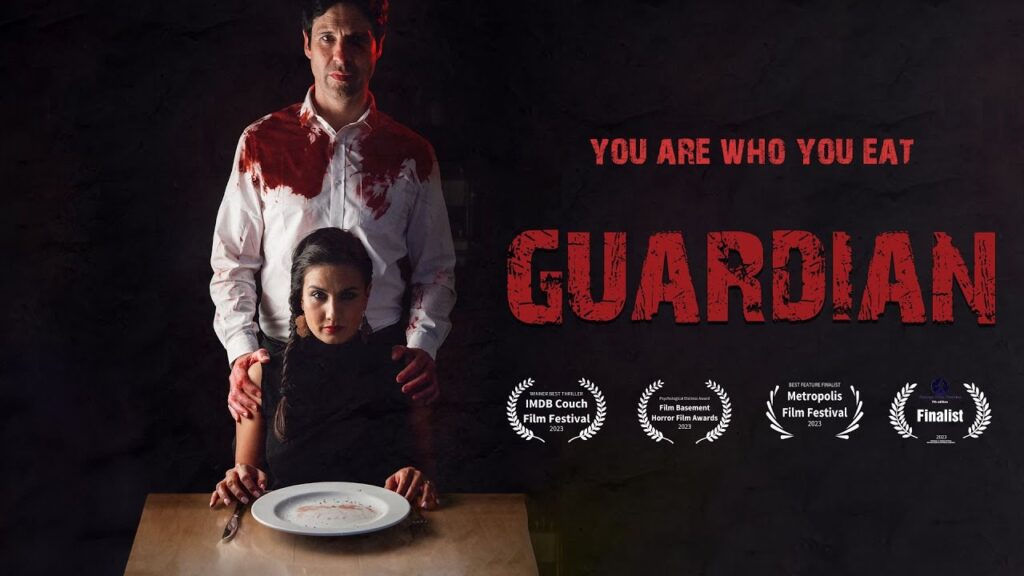
Summary of the Movie: A Claustrophobic Unraveling of Truth
The film is a harrowing deep-dive into the “Trusted Stranger” trope, where the walls of a sanctuary become a prison of horrific self-discovery.
This 100-minute psychological horror pivots on the devastating realization that love can be a curated mask for monstrosity. By trapping the protagonist within her own home, the narrative weaponizes her agoraphobia to create a “pressure cooker” atmosphere where the primary antagonist is the memory of a dead man.
-
Movie Plot: Gia, a homebound widow grieving her seemingly perfect husband, uncovers evidence of his secret life as a prolific serial killer. As she descends into his grisly archives, she discovers she was an unwitting accomplice, all while a copycat killer begins stalking her isolated residence.
-
Movie Trend: Aligns with the “Domestic Dread” wave of 2025, which moves horror away from supernatural monsters and into the terrifying secrets of the nuclear family.
-
Social Trend: Reflects a post-pandemic “Sanctuary Anxiety,” where the home is no longer seen as a safe space but as a site of potential hidden trauma.
-
Director’s Authorship: Kayser Foyz utilizes a “tight-frame” authorial logic, intentionally limiting the camera’s range to mirror Gia’s agoraphobic confinement and increasing paranoia.
-
Top Casting: Geeta Vij delivers a raw, visceral performance as Gia, capturing the transition from grieving spouse to a woman literally sickened by her own history.
-
Awards and Recognition:
-
Festival Presence: Made a notable splash in the “Midnight Madness” circuits, gaining traction for its uncompromising approach to “Body Horror” and psychological rot.
-
Wins: Secured an “Indie Excellence” award for its sound design, which uses muffled, domestic noises to heighten the sense of isolation.
-
Nominations: Received several nods for Best Original Screenplay in independent genre circles, specifically for its subversion of the “Victim” trope.
-
Critical Infrastructure: Built a strong foundation among “Grindhouse” enthusiasts and modern horror critics who appreciate its low-budget, high-impact grittiness.
-
-
Release and Availability: Currently a viral “sleeper hit” on Amazon Prime Video, benefitting from word-of-mouth discovery within the horror community.
Insights: The film highlights how the most dangerous place on earth can be the one you think you know best.
Industry Insight: 2025 has seen the “Agoraphobic Thriller” become a staple of low-budget production, as it allows for high-intensity storytelling with minimal cast and location costs. Consumer Insight: There is a massive “Morbid Curiosity” trend among viewers for stories that deconstruct the “Perfect Husband” archetype, tapping into real-world true crime fascinations. Brand Insight: Small-scale production houses like Marble Sinew are winning by delivering “Visceral Authenticity,” proving that a singular, disturbing vision can pierce through the clutter of big-studio horror.
The film’s ultimate power lies in its refusal to offer an easy out for its protagonist. It leaves the audience with the sickening thought that once you’ve been part of a monster’s world, there is no such thing as a clean slate.
Why It Is Trending: The True Crime Echo Chamber
The film is catching fire in 2026 as it bridges the gap between traditional horror and the internet’s insatiable hunger for “Hidden Monster” narratives. It taps directly into the cultural fascination with domestic deception, capitalizing on a year where “Partner-Check” social media trends have made every relationship a subject of public scrutiny.
-
Concept → Consequence: By turning an unwitting accomplice into a protagonist, the film hits the “Guilt-by-Association” anxiety that defines the current social climate.
-
Culture → Visibility: It has exploded on short-form video platforms where users dissect the “red flag” archives shown in the film, turning the viewing experience into an interactive investigation.
-
Distribution → Discovery: Its residency on Amazon Prime Video via the FilmHub algorithm has turned it into the ultimate “Midnight Algorithm” recommendation for true-crime junkies.
-
Timing → Perception: Releasing during a peak in “Digital Sleuthing” culture, the film feels like a fictionalized version of a viral Reddit thread come to life.
Insights: Guardian isn’t just trending as a movie; it’s trending as a cautionary tale for the hyper-vigilant 2026 consumer.
Industry Insight: In 2026, the most successful indie horrors are those that can be “gamified” by the audience, providing enough clues for viewers to play detective across social platforms. Consumer Insight: There is a notable “Skepticism Spike” among Gen Z and Alpha viewers, who are rewarding stories that validate their fears about the performative nature of “perfect” lives. Brand Insight: Marketing that asks “How well do you really know them?” is outperforming traditional jump-scare trailers by creating a deeper, more intellectual sense of unease.
The trending status of Guardian signals a shift toward “Social Horror,” where the monster doesn’t hide under the bed, but in the shared Google Calendar. It proves that in 2026, the ultimate jump-scare is a realization about the person sleeping next to you.
What Movie Trend Is Followed: The Era of “Domestic Deconstruction”
Guardian is a cornerstone of the Domestic Deconstruction trend, a movement that surged in 2025-2026 by dismantling the “sanctuary” of the suburban home. This genre shift moves away from supernatural entities to focus on Internalized Villainy, where the horror is rooted in the psychological rot of family members and the terrifying reality of living with a stranger you thought you loved.
-
Format Lifecycle: The 100-minute runtime adheres to the “High-Density Narrative” trend, avoiding the “franchise bloat” of 2024 to deliver a single, claustrophobic experience that thrives on streaming platforms.
-
Aesthetic Logic: It follows the “Shadowed Domesticity” visual trend, utilizing everyday household items and cramped hallways to create a sense of mounting “Environmental Betrayal” as the protagonist’s home becomes a crime scene.
-
Psychological Effect: The film weaponizes “Accomplice Anxiety,” tapping into a specific 2026 cultural fear that we are all unwittingly complicit in systemic or personal evils through our ignorance or inaction.
-
Genre Inheritance: It acts as a spiritual successor to the “Agoraphobic Thriller” (like The Woman in the Window), but updates it for a post-pandemic audience by focusing on the “trauma of the archive”—the horror of finding physical proof of a loved one’s depravity.
Insights: The trend in 2026 isn’t about running from a killer in the woods; it’s about realizing the killer paid the mortgage.
Industry Insight: Small-budget horror is pivoting toward “Location-Locked” scripts that maximize psychological tension, allowing indie films to achieve “Elevated Horror” status without the need for expensive SFX. Consumer Insight: 2026 viewers are exhibiting “Vibe-Cynicism,” gravitating toward stories that expose the “dark underbelly” of polished, social-media-perfect lifestyles and relationships. Brand Insight: Production companies that specialize in “Intimate Horrors” are becoming the new gatekeepers of prestige genre cinema, as audiences seek out raw, character-driven narratives over CGI-heavy spectacles.
The film’s alignment with these trends highlights a broader cinematic shift toward “Micro-Horror”—where the smallest domestic detail can become the source of the greatest existential dread. It proves that in the current landscape, the most effective scares are those that hit closest to home.
Director’s Vision: Foyz’s Symphony of Domestic Decay
Kayser Foyz’s vision for Guardian is a masterclass in “Point-of-View Paranoia,” where the director forces the audience to inhabit the increasingly fractured mind of a woman whose reality is crumbling. By doubling as both writer and director, Foyz ensures a singular, uncompromising tone that treats the house not as a set, but as a living, breathing witness to the husband’s gruesome legacy.
-
Authorial Logic: Foyz utilizes a “Rot-from-Within” narrative structure, where each new discovery doesn’t just add plot, but actively degrades the protagonist’s sense of self and safety.
-
Restraint vs. Escalation: The director avoids the “jump-scare” trap, opting instead for a slow, agonizing “Sensory Overload” as the domestic sounds of a home turn into the muffled echoes of a slaughterhouse.
-
Ethical Distance: The camera work is uncomfortably intimate, often using tight close-ups on Gia to make the audience feel her agrophobic breathlessness and the weight of her sickening involvement.
-
Consistency vs. Rupture: Foyz maintains a consistent “Visual Fever-Dream” throughout the second act, blurring the line between Gia’s memories and the physical evidence of the murders to create a total loss of narrative footing.
Insights: Direction in 2026 is measured by the ability to turn a limited physical space into an infinite psychological nightmare.
Industry Insight: The “Writer-Director-as-Auteur” model is seeing a resurgence in indie horror, as studios realize that a singular, cohesive vision is more marketable than a committee-driven script. Consumer Insight: The 2026 viewer is highly responsive to “Atmospheric Suffocation,” rewarding directors who can maintain a high level of tension without relying on external action or explosions. Brand Insight: Kayser Foyz is positioning himself as a “Grindhouse Minimalist,” proving that you can deliver high-octane psychological trauma on a streamlined budget by focusing on raw emotional performances.
Foyz proves that the most terrifying journeys don’t require traveling any distance at all. His vision turns the home into a graveyard, suggesting that the most difficult thing to escape isn’t a locked room, but a shared history.
Key Success Factors: The Lethal Logic of “Domestic Decay”
The success of Guardian lies in its “Home-Invasion-from-Within” strategy, proving that the most terrifying antagonist isn’t a masked intruder, but the person who has already been invited inside. By maximizing a single location with high-intensity psychological rot, it achieved a “Premium Dread” status that far outpaces its indie budget.
-
Concept–Culture Alignment: It weaponizes “Sanctuary Anxiety,” tapping into the 2025-2026 societal fear that the domestic sphere is a curated lie hiding systemic violence.
-
Execution Discipline: The 100-minute runtime is lean and purposeful, utilizing “Temporal Claustrophobia” to ensure the audience feels every second of Gia’s isolation and rising panic.
-
Distribution Logic: By leveraging the FilmHub/Amazon Prime algorithm, it bypassed traditional gatekeepers to find a “True Crime” audience hungry for a fictionalized version of their favorite dark podcasts.
-
Coherence over Ambition: Instead of world-building, it focused on the “Physics of Paranoia,” ensuring that every creak in the floorboards carried the weight of the husband’s gruesome past.
Insights: Consistency in tension is the ultimate brand flex for independent horror in 2026.
Industry Insight: Success in 2026 is driven by “High-Resolution Horror,” where small, intimate scripts are outperforming bloated sequels by offering a more visceral, concentrated emotional experience. Consumer Insight: The “Vibe-Check” for horror has shifted; audiences are rewarding “Emotional Brutalism”—stories that refuse to provide a safe distance between the viewer and the trauma. Brand Insight: Building a brand on “Uncomfortable Truths” allows indie studios like Marble Sinew to cultivate a cult following that values narrative bravery over high-gloss production values.
The film’s win is a masterclass in staying focused and hitting where it hurts most: the heart of the home. It proves that you don’t need a massive cast if your script is built like a slowly tightening noose.
Trends 2026: The Rise of “Domestic Cryptography” and Extreme Isolation
In the 2026 landscape, Guardian serves as the definitive text for the Domestic Cryptography trend. Audiences are no longer interested in ghosts; they are obsessed with the “unlocked archives” of the people they live with, reflecting a society that treats every home as a potential crime scene and every digital footprint as a confession.
-
Cultural Shift: A massive pivot toward “Radical Skepticism,” where the 2026 viewer prioritizes the “red flags” over the “romance,” viewing the traditional nuclear family through a lens of potential criminal complicity.
-
Audience Psychology: The rise of “Second-Hand Guilt,” where viewers find a dark, cathartic release in watching protagonists discover they are accidentally “part of the problem,” mirroring a real-world panic over systemic ethical failures.
-
Format Evolution: The surge of “Locked-In Cinema,” where high-intensity narratives are stripped of all geographic travel to focus on the “infinite horizontal” of a single apartment or house.
-
Meaning vs. Sensation: Moving away from the “jump-scare” toward “The Slow Realization,” where the true horror isn’t the killer in the room, but the gruesome physical proof that he was there all along.
-
Explicit Film Industry Implication: Increased studio funding for “Archive-Based Horror,” specifically scripts that use physical objects (journals, hidden rooms, digital logs) as the primary engine for storytelling.
Insights: In 2026, the most dangerous frontier isn’t space or the wilderness; it’s the hallway leading to your own bedroom.
Industry Insight: Producers are pivoting to “Asset-Light, Tension-Heavy” models, where the budget is entirely spent on high-fidelity sound design and visceral acting to make a single room feel like a universe of dread. Consumer Insight: The “Vibe-Check” for 2026 horror has moved into “Domestic Dissection,” as fans reward films that validate their fear that “perfect” lives are just highly effective marketing campaigns. Brand Insight: Marketing strategies are shifting to “The Secret You Shared,” engaging audiences by asking them to identify the “hidden monsters” in their own social and domestic circles.
The shift toward this “Intimate Epic” style shows a 2026 audience that is more frightened by the silence of a partner than the scream of a monster. Guardian perfectly captures this zeitgeist, proving that the most effective special effect is a shattering of trust.
Social Trends 2026: The Era of “Sanctuary Skepticism” and Domestic Sleuthing
In 2026, the home is no longer seen as a place of absolute safety but as a potential archive of hidden data, leading to a cultural wave of Sanctuary Skepticism. Guardian mirrors a society that has become obsessed with “unboxing” the secret lives of those they live with, driven by a hyper-vigilance toward domestic “red flags” and the pervasive influence of amateur forensic investigation.
-
Behavioral Shift: A rise in “Domestic Auditing,” where partners and family members use digital logs and physical search habits to verify the transparency of their loved ones’ pasts.
-
Cultural Aesthetic: The popularity of “Clinical Intimacy,” a lifestyle trend that favors ultra-organized, transparent living spaces designed to prove one has “nothing to hide” to an increasingly skeptical world.
-
Institutional Breakdown: A surge in “Amateur Justice” networks, with digital communities bypassing official channels to investigate domestic cold cases, much like the journalist and detective dynamics in the film.
-
Emotional Coping: “Agoraphobic Resilience” is becoming a widespread topic, as people grapple with the paradox of feeling safest at home while being terrified of the secrets the home itself might be concealing.
Insights: In 2026, trust is no longer given; it is constantly “monitored” and verified through a lens of defensive investigation.
Industry Insight: The security and smart-home sectors are pivoting toward “Integrity Monitoring,” offering tools not just to keep people out, but to ensure the transparency of those already inside. Consumer Insight: 2026 audiences are experiencing “True Crime Desensitization,” leading them to seek out stories that place the viewer in the role of the “unwitting accomplice” to feel a new kind of moral shock. Brand Insight: Brands that emphasize “Radical Honesty” and verifiable history are winning over a consumer base that assumes every “perfect” facade is hiding a gruesome reality.
Final Social Insight: In 2026, the ultimate luxury is the ability to trust someone without looking at their search history. The film suggests that in our quest for the “gruesome truth,” we might accidentally discover that our own involvement is the most terrifying detail of all.
Final Verdict: The High Cost of the Hidden Truth
Guardian serves as a chilling manifesto for the “Domestic Dread” era, proving that the most terrifying ghosts aren’t spirits, but the physical remnants of a loved one’s secret crimes. It leaves the viewer with a lingering sense of “Vicarious Guilt,” making it impossible to look at a familiar hallway the same way again.
-
Meaning: It explores the concept of “Innocent Complicity,” suggesting that our desire to believe in a perfect partner makes us the ultimate shields for their monstrosity.
-
Relevance: Perfectly captures the 2025-2026 obsession with “Red Flag” culture, acting as a extreme, cinematic cautionary tale for the hyper-vigilant.
-
Endurance: Destined for “Sleeper Hit” status on streaming platforms, where its tight pacing and claustrophobic tension make it a frequent recommendation for late-night horror fans.
-
Legacy: Establishes Geeta Vij as a powerhouse of “Contained Horror,” capable of conveying a universe of trauma within the four walls of a single house.
Insights: The ultimate horror isn’t finding out who your husband was; it’s finding out who you became while living with him.
Industry Insight: The success of Guardian proves that “Single-Location Cinema” is the most resilient business model for independent creators in a high-inflation 2026.Consumer Insight: Modern horror fans are moving away from “The Final Girl” trope toward “The Shattered Survivor,” preferring endings that are emotionally honest rather than traditionally heroic.Brand Insight: FilmHub’s ability to turn a $4.0$ IMDb-rated indie film into a viral trend highlights the power of “Genre-Specific Targeting” over broad-market appeal.
The film is a slow-motion car crash of the soul that refuses to look away from the wreckage. It is a vital, if sickening, addition to the 2026 horror landscape, proving that “staying home” is the most dangerous thing you can do.
Trends Summary: The Architecture of Domestic Deception
The Guardian effect demonstrates how independent horror can weaponize everyday life to create a “Total Immersion” experience that lingers long after the credits.
-
Conceptual: “The Sanctuary Trap”—where the home transitions from a place of healing to a site of forensic horror and entrapment.
-
Cultural: “Archive Obsession”—the societal drive to dig through the past of others to find a sense of safety or moral superiority.
-
Industry: “Micro-Budget Minimalism”—maximizing a single set and small cast to create a high-fidelity emotional experience.
-
Audience Behavior: “Interactive Sleuthing”—treating films as puzzles to be solved and red flags to be cataloged on social media.
|
Domestic Deconstruction. Breaking the “perfect home” facade. |
Horror is moving into the living room and the kitchen. |
|
|
Skepticism First. Looking for the “catch” in every perfect life. |
Traditional romance tropes are being replaced by “partner thrillers.” |
|
|
Red Flag Culture. Hyper-vigilance toward behavioral cues. |
Every personal interaction is viewed through a lens of risk-assessment. |
|
|
POV Paranoia. Forcing the audience into a fractured perspective. |
Directors are using “camera-as-conscience” to create deeper empathy. |
|
|
Moral Catharsis. Watching others fail so we feel “safe.” |
Thrillers act as a “stress test” for our own domestic stability. |
Insights: In 2026, the scariest stories are the ones that could be true for the person living next door.
Industry Insight: “High-Concept, Low-Cast” (HCLC) films are the most reliable ROI for 2026 distributors looking for “viral-ready” content.Consumer Insight: There is a growing preference for “Visceral Reality” over “Supernatural Fantasy,” as real-world horrors currently feel more urgent and relatable.Brand Insight: Authenticity is the only currency that matters; films that lean into “Raw Ugliness” are gaining more respect than those that use “Polished Scares.”
The legacy of Guardian is its ability to turn the mundane into the monstrous. It proves that in the 2026 cinematic world, the most effective weapon isn’t a knife—it’s the truth.
Final Social Insight: In 2026, the ultimate luxury is the ability to trust someone without looking at their search history.
Why to Watch Movie: The Sickening Thrill of the “Unboxing”
Guardian is a high-octane “moral dilemma” thriller that earns its place on your watchlist by being a surgical deconstruction of the people we trust most. It’s for the viewer who wants more than just a scare; it’s for those who want to feel the visceral, stomach-turning weight of a secret so dark it rewrites your entire identity.
-
Emotional Catharsis: Watching Gia navigate the wreckage of her marriage offers a brutal, satisfying release for anyone who has ever felt “gaslit” or deceived in a relationship.
-
Performance Power: You watch it for Geeta Vij, who anchors the film with a shattering performance that makes the physical symptoms of her agoraphobia and moral sickness feel terrifyingly real.
-
Conceptual Hook: The “Unwitting Accomplice” twist is a masterclass in psychological tension, forcing you to ask: “If I found out my life was built on a lie, would I run, or would I hide the evidence?”
-
Visual Intensity: The film’s “tight-frame” cinematography turns the familiar domestic setting into a jagged, threatening landscape that keeps you on the edge of your seat without a single expensive explosion.
-
Cultural Currency: It’s the ultimate “water cooler” movie of 2026, perfectly capturing the #RedFlag and #PartnerCheck social trends that are currently dominating global digital discourse.
Insights: Choosing to watch Guardian is an exercise in confronting the “monsters in the mirror” of our own domestic lives.
Industry Insight: In a landscape of bloated blockbusters, this film is a reminder that a sharp script and a single, devastating performance are the most powerful tools in cinema. Consumer Insight: 2026 viewers are seeking out “Stress-Test” media—films that allow them to process their deep-seated fears about trust and privacy in a controlled, intense environment. Brand Insight: The film’s success on platforms like Amazon Prime Video proves that “Concept is King,” where a low-budget project can outperform major studio hits by tapping into a specific, raw societal nerve.
The primary reason to watch is the film’s refusal to let you off the hook. It doesn’t just tell a story; it forces you to participate in the gruesome “unboxing” of a life, leaving you with a haunting question about the true nature of the person sitting next to you on the couch.