


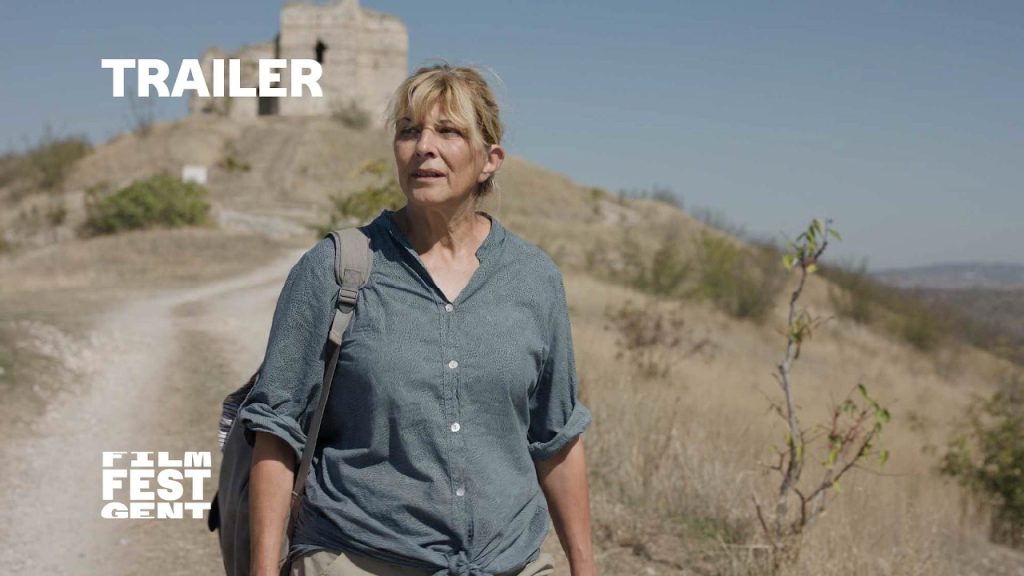
DE / FR / BG / AT | 2026 | 167 min | Drama / Crime / Adventure
➡️ Where to Watch: FR
A Woman Enters Bulgaria’s Criminal Underworld and Challenges the Men Who Control It
In The Dreamed Adventure (2026), Veska (Yana Radeva) agrees to help an old acquaintance, becoming involved in a dangerous journey through Bulgaria’s borderlands. Set against the socioeconomic instability of the late twentieth century, the story follows a woman navigating an environment shaped by corruption, criminal relationships and male authority. As she encounters people connected to her past, Veska must negotiate competing loyalties and confront her own desires while preserving her independence. Directed by Valeska Grisebach, the film combines crime, adventure and observational realism to explore how a seemingly ordinary woman responds to a world where power is concentrated in the hands of men. Rather than presenting conventional heroism, the story emphasizes Veska’s curiosity, determination and refusal to surrender control over her decisions.
➡️ Storyline: Unexpected Agreement → Dangerous Journey → Encounters With the Past → Criminal Relationships → Male Authority → Personal Desire → Resistance and Independence.
Why to Watch The Dreamed Adventure: A Woman’s Quiet Resistance in a World of Crime and Corruption
The Dreamed Adventure combines a female-centered crime story with the social realities of Bulgaria’s borderlands, using a deliberate, observational style to examine independence, power and personal freedom. Its strongest appeal lies in a protagonist whose determination challenges established authority without relying on conventional action-driven heroism.
|
1. Valeska Grisebach’s Direction |
The filmmaker uses observational realism and patient storytelling to explore crime, social relationships and the resilience of an independent woman. |
|
2. Yana Radeva’s Performance |
Her portrayal of Veska won the Silver Hugo for Best Lead Performance at the 2026 Chicago International Film Festival. |
|
3. Female Independence and Resistance |
Veska confronts male-dominated power structures while maintaining the freedom to question, desire and make her own decisions. |
|
4. Bulgarian Borderland Setting |
The film’s rural locations and late twentieth-century context provide a distinctive environment shaped by socioeconomic instability, corruption and changing European identities. |
|
5. Major Festival Recognition |
Winner of the 2026 Cannes Jury Prize and Chicago Gold Hugo for Best Feature, alongside recognition at Jerusalem and other international festivals. |
➡️ Reason to Watch: An award-winning, female-led crime drama that combines European realism, social conflict and a quietly defiant heroine whose independence challenges a world dominated by men.
Why The Dreamed Adventure Stands Out: A Woman’s Independence Becomes an Act of Resistance
The Dreamed Adventure distinguishes itself by placing an ordinary woman at the center of a dangerous environment traditionally associated with male authority and criminal power. Veska’s strength comes not from physical dominance but from her ability to observe, question and make independent choices despite the risks surrounding her. The film’s Bulgarian borderland setting adds historical and social depth, connecting personal relationships with the corruption and instability of a changing society. Grisebach’s deliberate pacing and observational filmmaking allow encounters and conversations to reveal power dynamics gradually, emphasizing character behavior over conventional suspense. Its distinctive perspective lies in presenting female independence as a form of resistance that does not require dramatic confrontation to become meaningful.
➡️ Why It Stands Out: A character-driven crime drama that transforms a woman’s curiosity, autonomy and quiet determination into powerful responses to corruption and male authority.
Movie Trend: Female-Led Crime Dramas — Women Challenge the Rules of Male-Dominated Worlds
Female-Led Crime Dramas explore criminal environments through women’s experiences, shifting attention from traditional male-centered stories toward questions of independence, vulnerability and resistance. The Dreamed Adventure reflects this trend through Veska, whose involvement in a dangerous journey brings her into contact with corrupt relationships and established hierarchies. Rather than adopting the behavior of the men around her, she maintains her own perspective, asserting power through observation, decision-making and personal boundaries. The film uses crime as a framework for examining broader social relationships, showing how authority can operate through intimidation, familiarity and economic inequality. Its approach suggests that female-centered crime stories can move beyond conventional action and suspense by exploring the psychological and social dimensions of independence.
➡️ Movie Trend Insight: Female-Led Crime Dramas reinterpret criminal worlds through women’s perspectives, presenting personal autonomy and resistance as alternatives to conventional displays of power.
Broad Trend: Female Empowerment — Independence Means Having the Freedom to Choose
Female Empowerment reflects the importance of autonomy, equality and women’s ability to make decisions without being controlled by established power structures. In The Dreamed Adventure, Veska enters a world where criminal relationships and male authority influence the choices available to her. Yet her independence emerges through her willingness to question expectations, pursue personal desires and refuse limitations imposed by others. The film suggests that empowerment does not always depend on visible confrontation or institutional authority; it can also emerge through everyday decisions and the determination to maintain personal agency. Beyond cinema, this theme connects with wider conversations about gender equality, freedom of choice and women’s participation in environments where traditional power structures remain influential.
➡️ Broad Trend Insight: Female empowerment becomes meaningful when women retain the freedom to make independent decisions, challenge restrictive expectations and define their own paths despite unequal power relationships.
Viewer Profile: Audiences Interested in Female Independence, European Crime and Social Realism
The Dreamed Adventure is likely to appeal to viewers interested in female-centered narratives, European arthouse cinema and stories exploring the relationship between crime, social inequality and personal freedom. Its deliberate pacing and character-driven approach make it particularly relevant to audiences who appreciate observational filmmaking rather than conventional thriller structures. These profiles are editorial interpretations, not verified audience research.
|
International arthouse viewers, European crime drama enthusiasts and audiences interested in female-centered cinema |
|
|
Primarily adult audiences interested in mature storytelling, historical contexts and psychologically complex characters |
|
|
Interested in international culture, European history, gender equality, social issues and independent cinema |
|
|
Slow-burn crime dramas, social realism, character studies and international festival films |
|
|
Following Veska’s dangerous journey and discovering how she maintains independence within a male-dominated environment |
|
|
International film festivals, critical recognition, auteur cinema and award-winning European productions |
|
|
Autonomy, courage, curiosity, resistance and the desire for personal freedom |
Key Profiles: Three Audiences, Three Reasons to Watch
1. Female Independence and Empowerment Audiences
Viewers drawn to stories about women challenging established authority and defining their own futures. Veska’s independence provides an unconventional representation of strength through observation, determination and personal choice.
2. European Crime and Social Drama Enthusiasts
Audiences interested in stories connecting criminal relationships with broader political, economic and social conditions. The film’s Bulgarian setting provides a distinctive perspective on corruption, power and the consequences of historical change.
3. International Arthouse and Festival Cinema Viewers
Viewers who appreciate deliberate pacing, naturalistic performances and observational filmmaking. Valeska Grisebach’s direction and the film’s Cannes and Chicago awards strengthen its appeal to audiences seeking unconventional, character-driven cinema.
➡️ Audience Insight: The Dreamed Adventure connects female independence with European social realism and crime storytelling, appealing most strongly to viewers who value psychological depth, cultural specificity and unconventional protagonists.
What This Movie Means for the Industry: Female-Led Crime Stories Expand Beyond Conventional Thrillers
The Dreamed Adventure illustrates how crime cinema can explore gender, social inequality and historical change through a woman’s perspective rather than relying on traditional action-driven storytelling. Valeska Grisebach places Veska’s independence at the center of a narrative shaped by corruption, male authority and changing socioeconomic conditions, allowing personal relationships to reveal wider power structures. The film’s Cannes Jury Prize and Chicago Gold Hugo demonstrate significant festival recognition for this patient, observational approach. Its reception also highlights the challenge of balancing artistic ambition with accessibility, as some viewers criticize the lengthy runtime and slow pacing. The broader creative opportunity lies in developing female-led crime dramas that prioritize character complexity, cultural specificity and meaningful social commentary over familiar genre conventions.
➡️ Industry Insight: Female-led crime dramas can broaden the genre by replacing conventional power fantasies with psychologically complex stories about women’s autonomy, resistance and everyday encounters with authority.
Final Verdict: An Award-Winning Crime Drama Driven by Female Independence
The Dreamed Adventure (2026) is a deliberately paced, character-driven drama that explores corruption, male authority and personal freedom through an unconventional female protagonist. Valeska Grisebach uses Bulgaria’s borderlands and the socioeconomic realities of the late twentieth century to create an atmosphere of uncertainty, while Yana Radeva’s restrained performance gives Veska a compelling sense of independence and determination. The film’s observational style and international festival recognition are among its strongest qualities, although its 167-minute runtime and ambiguous narrative may challenge viewers seeking a more conventional crime thriller.
➡️ Final Verdict: The Dreamed Adventure transforms a woman’s dangerous journey into an exploration of independence and resistance within a male-dominated society. Yana Radeva’s performance and Valeska Grisebach’s observational direction provide its strongest appeal, although the deliberate pacing demands patience. The film is best suited to audiences interested in European arthouse cinema, female-led crime dramas and socially grounded storytelling.
Final Insights: Female Empowerment Begins With the Freedom to Make Independent Choices
The Female Empowerment trend reflects the importance of autonomy and women’s ability to challenge restrictive power structures. The Dreamed Adventure explores this through Veska’s determination to preserve her independence while navigating a world shaped by corruption, intimidation and male authority.
The Female-Led Crime Dramas trend brings a different perspective to familiar criminal environments by emphasizing personal agency rather than conventional displays of strength. Through Veska’s decisions and resistance, the film suggests that empowerment can emerge through quiet determination and the refusal to surrender control. True independence is defined not by the power someone holds over others, but by the freedom to make their own choices.
➡️ Final Insight: Female Empowerment → Female-Led Crime Dramas → Women’s Independence in Male-Dominated Environments. The Dreamed Adventure explores how women can challenge established power structures through autonomy, resilience and independent decision-making. The creative opportunity lies in developing crime stories that redefine female strength through psychological complexity, personal freedom and resistance to traditional authority.