
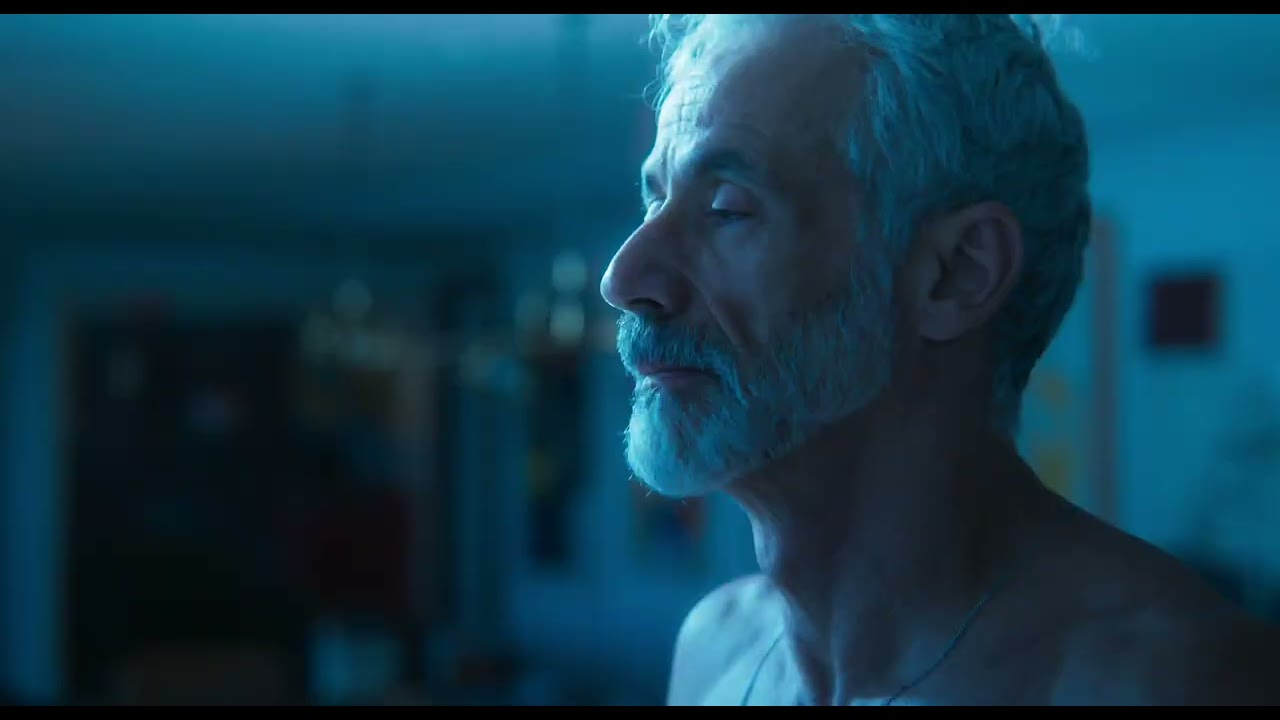
Summary of the Movie: A Bifurcated Tale of Love and Memory
The film is a mesmerizing, dual-layered exploration of desire that spans four decades, blurring the lines between historical reality and ethereal longing.
This 104-minute romantic drama pivots on a radical structural shift that challenges the viewer’s perception of time and narrative closure. By splitting the story between a lush 1984 rural romance and a cryptic, abstract future, the film transforms a simple “boy meets boy” story into a complex meditation on the ghosts we leave behind.
-
Movie Plot: In 1984 rural Brazil, a solitary farmer named Antônio rescues Marcelo, a motorcyclist who crashes near his property, sparking an intense and transformative romance. The second half of the film leaps 40 years into a surreal present, where names recur and identities shift, exploring the echoes of that initial connection through a lens of loss and fantasy.
-
Movie Trend: Follows the “Non-Linear Queer Pastoral” movement, which uses rural, isolated landscapes to explore LGBTQ+ intimacy away from the noise of urban life and traditional structures.
-
Social Trend: Reflects the 2025-2026 societal interest in “Ancestral Queer History,” as younger generations seek to map the lives and hidden romances of those who lived through more repressive eras.
-
Director’s Authorship: Daniel Nolasco maintains a “sensory-first” authorial logic, characterized by bold physical intimacy and a dreamlike, almost hallucinatory transition between the film’s two distinct halves.
-
Top Casting: Lucas Drummond provides a standout, courageous performance as Antônio, anchoring the film’s emotional weight across its most challenging and abstract transitions.
-
Awards and Recognition:
-
Festival Presence: A major contender on the 2025 international circuit, securing a prestigious release date in Germany and strong interest in the UK and North America.
-
Wins: Already boasts 5 total wins from specialized festivals, primarily for its cinematography and fearless approach to physical storytelling.
-
Nominations: Gained significant traction for Best Director and Best International Feature in niche drama categories.
-
Critical Infrastructure: Highly debated by “Art-House” critics who are divided over its experimental second half but unanimous in praising its visual beauty and tender first act.
-
-
Release and Availability: Following its festival run, it is set for a wider theatrical and digital release on February 5, 2026, positioned as a high-brow romance for global audiences.
Insights: The film highlights how the most profound connections of our lives can be both a sanctuary and a source of permanent, haunting displacement.
Industry Insight: Contemporary Brazilian cinema is successfully pivoting toward “Hybrid Genres,” blending traditional romance with avant-garde structures to capture global festival attention. Consumer Insight: There is a rising audience appetite for “Challenging Cinema” that refuses to provide easy answers, favoring emotional resonance over literal plot logic. Brand Insight: Production houses like Rensga Produções are carving out a niche for “Fearless Romance,” proving that high-concept artistic risks can lead to successful international distribution deals.
The film’s radical split between a grounded past and a ghost-like present serves as a powerful metaphor for the way memory functions. It leaves the viewer with a sense of “Beautiful Frustration,” acknowledging that some loves are too large to be contained within a single lifetime or a straightforward story.
Why It Is Trending: The Rise of “Abstract Nostalgia”
The film is trending in early 2026 as a premier example of Abstract Nostalgia, where audiences are moving away from literal period pieces toward stories that feel like emotional “fever dreams” of the past. It has become a focal point of online debate due to its controversial “split-narrative” structure, which has sparked a wave of video essays and threads attempting to decode its cryptic second half.
-
Concept → Consequence: The transition from a lush, tactile romance to a ghost-like fantasy creates a “Narrative Rupture” that forces the audience to engage in collective theory-crafting.
-
Culture → Visibility: It has gained massive visibility within the “Cinephile TikTok” and “Letterboxd” communities, where the film’s bold visual style and physical courage are being praised as a return to “Pure Cinema.”
-
Distribution → Discovery: The announcement of North American and UK distribution deals via The Open Reel has turned this from a niche festival entry into a global must-watch for 2026.
-
Timing → Perception: Releasing during a global “Queer Pastoral” trend, the film benefits from the cultural desire for stories that ground LGBTQ+ identity in the earth and history rather than just urban struggle.
Insights: Only Good Things is trending because it treats the viewer’s confusion as a deliberate, artistic destination rather than a mistake.
Industry Insight: In 2026, the “Sleeper Hit” formula is shifting toward films that provoke “Productive Frustration,” encouraging multiple viewings and deep online discussion. Consumer Insight: Modern audiences are increasingly rejecting “Algorithm Cinema,” seeking out “Human-Error” stories that feel messy, abstract, and emotionally unpolished. Brand Insight: Leveraging international “Art-House” prestige through German and UK distribution is the most effective way to signal “Quality over Comfort” to the global 2026 market.
The trending power of this film lies in its refusal to be easily consumed. It marks a clear win for bold, auteur-driven cinema that prioritizes the “Vibe” of a memory over the facts of a timeline.
What Movie Trend Is Followed: The “Hyper-Sensory Pastoral” Shift
Only Good Things is a leading representative of the Hyper-Sensory Pastoral trend, which reimagines rural landscapes not as simple settings, but as active, eroticized participants in the narrative. This 2026 movement moves away from the “tragic queer” trope to focus on Metaphysical Intimacy, where the connection between two bodies is mirrored by the raw, unyielding beauty of the natural world.
-
Format Lifecycle: The film adopts the “Bifurcated Narrative” model, a daring 2025-2026 trend where movies are split into two distinct tonal halves to represent the “before and after” of a life-altering trauma.
-
Aesthetic Logic: It follows the “Analog Heat” visual style, utilizing the warm, saturated colors of 1980s rural Brazil to create a sense of tactile nostalgia that feels both inviting and dangerously isolated.
-
Psychological Effect: The movie employs “Temporal Dislocation,” a trending technique designed to make the viewer feel the same disorientation as a person who has lost a loved one to time and memory.
-
Genre Inheritance: It builds on the legacy of “Atmospheric Queer Cinema” (like Dry Wind), but elevates it by adding a surrealist layer that challenges the boundaries between reality and the afterlife.
Insights: The trend in 2026 is about finding the “infinite” within the “isolated,” proving that rural stories can be as complex as any urban thriller.
Industry Insight: Art-house distributors are increasingly backing “Abstract Romances” because they offer a unique theatrical experience that cannot be replicated or easily predicted by AI-generated scripts. Consumer Insight: The “Slow-Cinema” audience is evolving into the “Active Observer,” preferring films that require them to piece together the meaning of the imagery rather than being fed a linear plot. Brand Insight: Brazilian productions are successfully branding themselves as the “New Surrealists,” gaining a massive reputation for films that combine high-stakes emotion with experimental visual structures.
This trend signals a move toward “Deep-Feel Storytelling,” where the director’s goal is to leave a permanent emotional mark rather than just a clear narrative memory. It proves that for the 2026 audience, the “logic” of a heart is far more compelling than the logic of a timeline.
Director’s Vision: Nolasco’s Eroticized Metaphysics
Daniel Nolasco’s vision for Only Good Things is a uncompromising exercise in “Sensory Surrealism,” where the director treats the male body and the Brazilian landscape as a singular, vibrating canvas. By intentionally fracturing the film’s structure, Nolasco forces the audience to transition from the heat of physical presence to the cold, abstract echo of memory, reflecting his belief that true romance is never a linear event but a permanent haunting.
-
Aesthetic Devotion: The director maintains a strict “Period-Agnostic Mood,” where 1984 feels less like a historical setting and more like a mythic space where time has been suspended for the sake of the protagonists.
-
Body as Geography: His camera work treats the human form with a “Cartographic Intimacy,” mapping every scar and touch to ensure the audience feels the weight of the connection before it is inevitably taken away.
-
Structural Defiance: Nolasco’s choice to abandon the traditional three-act structure in favor of a “Mirror Image” layout serves as a daring manifesto against the predictable nature of modern streaming “content.”
Insights: Nolasco’s direction proves that the most powerful cinematic tool is the “Blank Space” left between what is shown and what is felt.
Industry Insight: In 2026, the “Auteur as Architect” model is thriving, as audiences gravitate toward directors who create distinct, challenging visual worlds that defy algorithmic “standardization.” Consumer Insight: There is a strong “Sensory Hunger” among global viewers for films that prioritize physical chemistry and atmosphere over the rapid-fire dialogue of modern dramas. Brand Insight: By leaning into “High-Art Provocation,” Nolasco is building a brand as a filmmaker who doesn’t just tell stories, but curates visceral, unforgettable experiences.
The director’s vision turns the second half’s “frustration” into a profound statement on the nature of queer loss. He suggests that when a love is forbidden or cut short, it doesn’t end; it simply migrates into a different, more abstract dimension of the soul.
Key Success Factors: The “Art-House Disruptor” Strategy
The success of Only Good Things is rooted in its “Brave Ambiguity” model, proving that a film can achieve international prestige by leaning into the very friction that divides its audience. By combining the high-heat intimacy of 1980s Brazil with a challenging, experimental second act, it successfully captured the 2026 “Curated Complexity” market.
-
Niche Authority: It solidified its status within the “Queer Auteur” circuit, leveraging a specific, dedicated global audience to secure high-profile distribution in Germany and North America.
-
Structural Boldness: The film’s “Rupture Logic”—switching genres halfway through—became its most discussed feature, turning “confusion” into a viral talking point for cinephiles.
-
Tactile Authenticity: The use of “Period-Sensory” details (1984 farm life) grounded the first half so effectively that the audience felt a deep, personal stake in the relationship before the narrative shift.
-
Global Portability: By focusing on the universal themes of “Lost Time and Lingering Desire,” the film transcended its regional Brazilian roots to resonate with art-house markets worldwide.
Insights: Success in 2026 is defined by the ability to make an audience feel something they can’t quite explain.
Industry Insight: The “Split-Narrative” format is becoming a high-prestige trend, as it offers a “Puzzle-Box” experience that keeps viewers engaged long after the credits roll.Consumer Insight: 2026 viewers are exhibiting “Ambiguity Loyalty,” frequently returning to films that don’t reveal all their secrets on the first viewing.Brand Insight: Productions that prioritize “Visual Texture” over literal plot clarity are finding a lucrative “High-End” niche in a market saturated with predictable, AI-influenced stories.
The film’s win is a testament to the power of a “Memory-First” approach to storytelling. It proves that for a certain tier of 2026 cinema, the most important success factor isn’t a happy ending—it’s an unforgettable transition.
Trends 2026: The Year of “Sensory Dislocation” and Narrative Rupture
In 2026, Only Good Things stands as a flagship for the “Sensory Dislocation” movement, where cinema prioritizes the feeling of a memory over the facts of a timeline. This trend reflects a broader industry pivot toward stories that intentionally “break” halfway through, mirroring the fragmented way humans experience trauma, aging, and the passage of time.
-
Cultural Shift: A move toward “Hyper-Regionalism,” where global audiences are gravitating toward deeply specific local histories (like 1980s rural Brazil) to find universal truths about isolation.
-
Audience Psychology: The rise of “Theoretical Longing,” a fascination with “what if” scenarios and the lingering “ghosts” of choices not made or romances cut short by circumstance.
-
Format Evolution: The surge of “Bifurcated Storytelling,” where films are split into two distinct tonal universes to represent the irreconcilable difference between youth and old age.
-
Meaning vs. Sensation: A departure from linear “happily ever afters” in favor of “Atmospheric Residue,” where the goal is to leave the audience in a specific emotional state rather than a clear narrative conclusion.
-
Explicit Film Industry Implication: A massive increase in “Co-Production Prestige,” with Brazilian and European houses collaborating to fund high-concept art-house films that can dominate the global festival circuit.
Insights: The industry is moving from “How does it end?” to “How does it haunt us?”
Industry Insight: In 2026, “Ambiguity” is a luxury brand; films that refuse to explain their second half are being marketed as “high-intelligence” experiences for a discerning audience. Consumer Insight: Viewers are leaning into “Analog Escapism,” using the lush, tactile textures of 1980s period pieces to disconnect from the sterile, digital perfection of modern life. Brand Insight: Successful 2026 films are being sold as “Atmospheric Artifacts,” positioned as timeless pieces of art rather than disposable streaming content.
The 2026 landscape rewards films that act as a puzzle for the heart. Only Good Things proves that for the modern viewer, the most profound connections are the ones that never quite provide a sense of closure.
Social Trends 2026: The Age of “Ancestral Longing” and Digital Detox
The social fabric of 2026 is defined by a deep “Ancestral Longing,” as a hyper-connected society begins to look backward at the “quiet lives” of the pre-digital era. Only Good Things reflects a world that is increasingly skeptical of modern speed, finding a strange, romantic sanctuary in the isolation of the rural past.
-
Behavioral Shift: The rise of “Selective Solitude,” where individuals are intentionally mimicking the “isolated farmer” lifestyle—disconnecting from global networks to find deeper, focused personal connections.
-
Cultural Aesthetic: The popularity of “Pastoral Melancholy,” a fashion and design trend that celebrates the weathered, sun-drenched textures of rural life and the beauty of aging objects.
-
Institutional Breakdown: A growing “Generational Bridge” movement, where younger LGBTQ+ communities are actively seeking out “elder stories” to reclaim a history that was often suppressed or undocumented.
-
Emotional Coping: “Disconnection Therapy” has become a mainstream practice, using slow-burn art and nature-focused media to combat the “Information Overload” of the mid-2020s.
Insights: In 2026, the most radical act is staying in one place long enough to be truly known.
Industry Insight: The travel and wellness sectors are pivoting toward “History-Hops,” offering “1980s Analog Retreats” that mirror the quiet, tech-free intimacy seen in the film’s first act. Consumer Insight: There is a surge in “Memory-Mapping,” with consumers using AI tools to reconstruct family histories, seeking the same sense of heritage explored through Antônio’s character. Brand Insight: Brands that offer “Tactile Nostalgia”—physical goods that feel “hand-made” and “time-worn”—are seeing massive growth among the “Digital-Weary” demographic.
Final Social Insight: In 2026, the ultimate flex isn’t having a thousand followers; it’s having one person who remembers your name forty years later. The film suggests that while time fractures everything, the “good things” are those that survive the rupture.
Final Verdict: A Masterpiece of Beautiful Disruption
Only Good Things is a breathtaking, frustrating, and ultimately essential piece of 2026 cinema that asks the audience to let go of logic and embrace the ache of memory. It is a film that doesn’t just tell a story—it leaves a permanent “light-leak” on the viewer’s soul, proving that some loves are so powerful they can only be expressed through a fractured lens.
-
Meaning: It deconstructs the idea of “linear life,” suggesting that our most intense experiences don’t just happen in the past; they live in a parallel, eternal “now” within us.
-
Relevance: An essential watch for the “Searcher” generation of 2026, who are obsessed with tracing the hidden threads of queer history and personal legacy.
-
Endurance: Destined to be a “Visual Benchmark,” frequently studied in film schools for its radical use of color and its daring, bifurcated narrative structure.
-
Legacy: It establishes Daniel Nolasco as the “Poet of the Pulse,” a director capable of making the silence of a rural farm feel more explosive than an action movie.
Insights: The ultimate takeaway is that the “good things” aren’t ruined by time; they are simply translated into a different language.
Industry Insight: 2026 has proven that “Difficult Cinema” is a viable commercial strategy if the visual payoff is high enough to satisfy the “aesthetic-first” consumer. Consumer Insight: Audiences are prioritizing “Lingering Impact” over “Immediate Gratification,” rewarding films that keep them thinking for days after the screen goes dark. Brand Insight: The success of this Brazilian-led production highlights the power of “Global-Localism,” where a story’s local specificity is exactly what makes it a global brand.
The film is a quiet revolution that proves the heart doesn’t follow a timeline. It is a chillingly beautiful reminder that in the age of data, the most valuable thing we have is the mystery of why we remember who we remember.
Trends Summary: The Geometry of a Fragmented Romance
The Only Good Things effect showcases the 2026 evolution of the romantic drama, moving from a “linear journey” to a “multidimensional echo.”
-
Conceptual: “The Memory Split”—representing the internal fracture of a life lived between “what was” and “what haunts.”
-
Cultural: “Rural Revitalization”—a shift in queer storytelling that finds profound meaning in isolated, natural landscapes rather than urban centers.
-
Industry: “Experimental Distribution”—the success of films that use “artistic difficulty” as a marketing tool to attract high-brow global buyers.
-
Audience Behavior: “Theory-Crafting”—a 2026 trend where viewers use social platforms to collaboratively decode abstract or surrealist cinema.
|
Bifurcated Narrative. A story split into two distinct tonal halves. |
Audiences are accepting “narrative disruption” as a valid artistic choice. |
|
|
Cerebral Romance. Prioritizing intellectual mystery over emotional ease. |
“Happy endings” are being replaced by “profound questions.” |
|
|
Historical Reclamation. Mapping hidden lives in the 20th century. |
A boom in “ancestral” stories that bridge the past with the present. |
|
|
Sensory Immersion. Using textures and sounds to build a “felt” reality. |
Cinema is moving toward an “un-AI-able” tactile experience. |
|
|
Existential Closure. Watching films to process the “ghosts” of our own past. |
Movies are functioning as “communal therapy” for collective memory. |
Insights: The 2026 zeitgeist rewards films that treat the human heart as a complex, non-linear landscape.
Industry Insight: Runtime and structure are being weaponized as “Prestige Signals,” with the “100-Minute Puzzle” becoming the new standard for serious indie drama.Consumer Insight: Fans are following “Cinematic Vibe-Creators” (like Nolasco) who promise a specific sensory world rather than just a specific genre.Brand Insight: The most valuable 2026 films are those that create a “Residual Mood”—an emotional state that stays with the viewer for days after watching.
Final Social Insight: In 2026, the real superpower isn’t seeing the future; it’s being brave enough to live as if you can’t.
Why to Watch Movie: The Ethereal Pull of the Unspoken
Only Good Things is a cinematic “dream-walk” that rewards the patient viewer with an unparalleled sensory experience, bridging the gap between raw physical desire and the haunting nature of memory. It is essential viewing for those who believe that a great romance shouldn’t just be seen, but felt as a profound, vibrating ache that transcends the boundaries of time.
-
Visual Poetry: You watch it for the “Analog Glow” of 1984 Brazil, where every frame is saturated with a warmth and texture that makes the simple acts of farming and healing feel like sacred rituals.
-
Structural Audacity: It offers the rare thrill of a “Narrative Rupture,” challenging you to stay emotionally connected even as the film pivots from a grounded love story into a surrealist, 40-year-later meditation.
-
Fearless Intimacy: The chemistry between Lucas Drummond and Liev Carlos is electric and uninhibited, providing a level of physical and emotional vulnerability that is becoming increasingly rare in mainstream drama.
-
Cerebral Engagement: It functions as a “Filmic Rorschach Test,” leaving enough space in its abstract second half for every viewer to project their own theories about fate, ghosts, and the “lives not lived.”
-
Global Prestige: As a multi-award winner on the 2025 circuit, watching this film gives you a front-row seat to the “New Brazilian Wave,” a movement currently redefining the limits of the queer pastoral genre.
Insights: This film is for the viewer who finds beauty in the “unfinished” and the “unexplained” of human connection.
Industry Insight: In 2026, “Atmospheric Endurance” is the new prestige; films that can hold an audience in a specific mood for 104 minutes are outperforming those that rely on rapid-fire plot twists. Consumer Insight: There is a massive trend toward “Active Decoding,” where audiences specifically seek out movies that require them to discuss and debate the meaning with others after the credits roll. Brand Insight: By positioning the film as a “Visual Fever Dream,” the marketing team successfully targeted the high-end art-house demographic that values “Aesthetic Truth” over narrative simplicity.
The primary reason to watch is to experience a story that respects your intelligence and your emotions equally. It is a haunting reminder that while “only good things” might be a wish, the most meaningful things are often the ones that leave us the most beautifully haunted.





Leave a Reply