


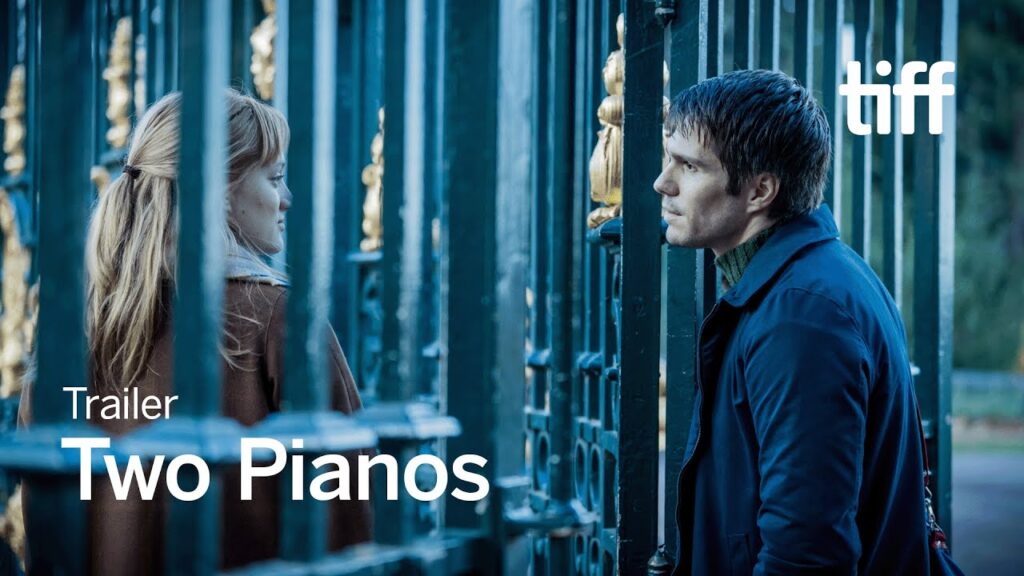
Summary of the Movie: A Love Story That Refuses to Stay in the Past
Mathias, a celebrated pianist returning from years of self‑imposed exile, steps back into France carrying the weight of unresolved love, artistic pressure, and a life he tried to outrun. His mentor Elena invites him to perform a prestigious series of concerts, but the emotional stability he hopes to rebuild collapses the moment he encounters a child who looks exactly like him. That uncanny shock pulls him back toward Claude — the first love he abandoned — reopening wounds he never truly healed. The film unfolds as a slow‑burn emotional thriller, where music, memory, and desire collide in ways that feel both intimate and destabilizing.
Mathias’ unraveling becomes the heartbeat of the story: a man torn between the life he built abroad and the one he left behind, between artistic perfection and emotional chaos. The film uses the world of classical music not as a backdrop but as a pressure chamber, amplifying every feeling, every silence, every unresolved longing. What begins as a return to the stage becomes a confrontation with identity, legacy, and the terrifying possibility that the past has been waiting for him all along.
A pianist comes home to perform — and instead finds the version of himself he tried to forget.
Genre: Romantic psychological drama set inside the high‑pressure world of classical music. It blends emotional intimacy with slow‑burn suspense.
Movie themes: Identity, artistic obsession, impossible love, and the haunting pull of unfinished stories. These themes shape every emotional beat.
Movie trend: Elevated European melodrama with psychological tension and auteur‑driven intimacy. It’s the kind of film that feels handcrafted rather than manufactured.
Social trend: Audiences are gravitating toward emotionally complex romances that feel adult, messy, and grounded. People want love stories that hurt a little.
Movie director: Arnaud Desplechin brings his signature blend of emotional volatility and intellectual depth, creating a film that feels raw, elegant, and deeply human.
Top casting: François Civil delivers one of his most vulnerable performances, matched by Nadia Tereszkiewicz’s magnetic presence and Charlotte Rampling’s quiet authority. Their dynamic gives the film its emotional electricity.
Awards and recognition: 1 win and 1 nomination — early signals that critics see this as a standout in contemporary French melodrama. The festival buzz is strong.
Release and availability: Released October 15, 2025 in France, with North American distribution secured by Kino Lorber. Its rollout positions it as a prestige international title.
Why to watch movie: It’s a rare romantic drama that feels both intimate and operatic, mixing emotional danger with artistic beauty. The kind of film that stays under your skin.
Key Success Factors: It turns a simple love triangle into a psychological labyrinth about identity, longing, and the cost of genius. That emotional sharpness makes it unforgettable.
Insight: Why This Film Is Resonating Right Now
Audiences are craving romance that feels emotionally mature, artistically rich, and psychologically layered — and this film delivers exactly that.
Industry Insight: European distributors are leaning into auteur‑driven melodramas that offer emotional sophistication and festival prestige. Consumer Insight: Viewers want love stories that feel real, flawed, and high‑stakes — not sanitized or formulaic. Brand Insight: The film positions itself as a premium French drama, signaling depth, artistry, and emotional complexity.
The movie is trending because it offers a rare blend of romance, mystery, and artistic tension. It resonates with audiences who want to feel something intense and beautifully uncomfortable. Its emotional realism sets it apart from mainstream romantic dramas. Its artistic ambition makes it a must‑see for 2025.
Why It Is Trending: The Return of High‑Emotion, High‑Art French Romance
Two Pianos is trending because it taps directly into the cultural appetite for adult, emotionally complex storytelling — the kind of romance that feels raw, unfiltered, and artistically elevated. Audiences are gravitating toward films that explore longing, identity, and emotional rupture with honesty rather than melodramatic excess. The movie’s blend of psychological tension and musical intensity gives it a distinctive edge in a landscape dominated by lighter, algorithm‑friendly romances. It feels handcrafted, intimate, and emotionally dangerous — exactly the kind of film people talk about after leaving the theater.
Atmosphere that lingers: The film creates a mood of elegant tension, where every silence between piano notes feels charged. That emotional precision makes it unforgettable.
Emotionally adult storytelling: Viewers are craving romances that feel messy, lived‑in, and psychologically rich. This film delivers a love story that refuses to simplify its characters.
Word‑of‑mouth magnetism: Early festival reactions highlight the film’s emotional intensity and François Civil’s performance, turning curiosity into genuine anticipation. People are recommending it because it feels different.
Contrast with mainstream romance: While many love stories lean on predictability, this one leans on emotional risk and artistic ambition. That contrast makes it feel premium.
Cultural timing: Audiences are reconnecting with European melodramas that explore identity and desire with nuance. The film arrives at the perfect moment for that shift.
Artistic credibility: Desplechin’s direction signals depth, complexity, and emotional intelligence. Viewers trust his films to challenge them.
Star‑driven appeal: François Civil and Nadia Tereszkiewicz bring a magnetic, volatile chemistry that elevates the entire narrative. Their performances are a major driver of buzz.
Insight: Why Audiences Are Falling for Emotionally Intense Romance Again
People want love stories that feel real — flawed, complicated, and charged with emotional stakes that don’t resolve neatly.
Industry Insight: Distributors are leaning into auteur‑driven romantic dramas because they perform strongly at festivals and maintain long‑tail cultural relevance. They offer prestige in a market saturated with formulaic content. Consumer Insight: Viewers crave narratives that reflect the emotional contradictions of real relationships — desire, regret, obsession, and the fear of what could have been. They want romance that feels lived, not manufactured. Brand Insight: Positioning Two Pianos as a high‑art, emotionally dangerous love story elevates its cultural value and signals that it belongs to the new wave of premium French melodrama.
The film is trending because it offers a rare combination of artistic sophistication and emotional volatility. It resonates with audiences who want to feel something intense and beautifully uncomfortable. Its psychological depth sets it apart from mainstream romance. Its artistic ambition makes it a must‑see for 2025.
What Movie Trend Is Followed: Prestige Romantic Melodrama With Psychological Depth
The film follows the current rise of prestige European melodramas that blend emotional volatility with auteur‑driven intimacy. Audiences are increasingly ready for romances that feel adult, psychologically layered, and artistically ambitious rather than formulaic. This trend has matured into a space where emotional realism and stylistic elegance matter more than conventional plot beats. Two Pianos fits perfectly into this moment, offering a romance that feels dangerous, sophisticated, and deeply human.
Macro trends influencing: European cinema is leaning into emotionally complex love stories that prioritize character depth over narrative simplicity. This shift reflects a desire for authenticity.
Macro trends influencing — economic & social context: In a world marked by instability and emotional burnout, viewers gravitate toward stories that explore longing, regret, and identity with nuance. These themes feel culturally resonant.
Description of main trend: Prestige romantic melodrama blends psychological tension with artistic intimacy, creating films that feel both emotionally raw and aesthetically elevated. It’s romance for grown‑ups.
Implications for audiences: Viewers feel more connected because the emotional stakes are grounded in real human contradictions. This creates stronger engagement and long‑tail conversation.
Audience motivation: People want love stories that challenge them emotionally and intellectually, not just entertain them. They seek narratives that feel lived, not manufactured.
Related movie trends: Psychological romance, identity‑driven drama, and music‑centered emotional storytelling. These trends reinforce the film’s appeal.
Related audience trends: A desire for emotionally intense, aesthetically rich films that explore the complexity of relationships. This audience wants depth, not escapism.
Related Films Using This Trend
La Chimera (2023) by Alice Rohrwacher — A man haunted by love and loss navigates a world where memory and desire blur. Anatomy of a Fall (2023) by Justine Triet — A relationship unravels under psychological pressure and emotional ambiguity. Passages (2023) by Ira Sachs — A volatile love triangle exposes the fragility of desire and identity. Cold War (2018) by Paweł Pawlikowski — A decades‑long romance shaped by longing, distance, and artistic ambition. Portrait of a Lady on Fire (2019) by Céline Sciamma — A forbidden love story told with emotional precision and artistic restraint. The Worst Person in the World (2021) by Joachim Trier — A modern exploration of identity, love, and emotional indecision.
Insight: Why Prestige Romance Is Having a Cultural Comeback
Audiences are rediscovering the power of love stories that feel emotionally dangerous, artistically crafted, and psychologically truthful.
Industry Insight: Distributors are investing in auteur‑led romantic dramas because they perform strongly at festivals and maintain cultural relevance long after release. They offer prestige in a market saturated with predictable content. Consumer Insight: Viewers want romances that reflect the contradictions of real relationships — desire, regret, obsession, and the fear of what might have been. They crave emotional honesty over fantasy. Brand Insight: Positioning Two Pianos within this trend signals sophistication, artistic ambition, and emotional depth, elevating it above mainstream romantic offerings.
Prestige romance is rising because it offers emotional realism without sacrificing cinematic beauty. Audiences reward films that respect their emotional intelligence. Studios are responding by backing stories that merge intimacy with artistic ambition. Two Pianos stands as a defining example of this shift, proving that the future of romance is complex, adult, and deeply felt.
Final Verdict: A Must‑See Romance That Cuts Deep and Plays Like a Symphony
Two Pianos stands out because it delivers the kind of emotional intensity and artistic precision audiences rarely get in modern romance. It’s a film that refuses to simplify longing, identity, or regret — instead, it leans into the messiness of real love and the psychological weight of returning to a life you tried to escape. The combination of Desplechin’s direction, François Civil’s raw vulnerability, and the film’s musical tension creates a cinematic experience that feels both intimate and operatic. This is the kind of movie that lingers long after the credits, not because of plot twists, but because of the emotional truth it exposes.
Emotional impact: The film hits with the force of unresolved love resurfacing at the worst possible moment. Every scene feels charged with what’s said — and what’s painfully unsaid.
Cultural relevance: Audiences are craving adult romance that feels honest, flawed, and psychologically rich. This film taps directly into that desire.
Artistic craft: The musical structure of the film — crescendos, silences, dissonance — mirrors Mathias’ emotional collapse. It’s a rare romance that uses form as storytelling.
Character depth: Mathias, Claude, and Elena are written with emotional contradictions that feel lived‑in, not scripted. Their complexity gives the film its staying power.
Cinematic tone: The blend of elegance and emotional danger creates a mood that feels unmistakably French and unmistakably modern. It’s romance with teeth.
Audience payoff: Viewers walk away feeling shaken, moved, and strangely understood. It’s the kind of film people recommend because it feels like an experience.
Long‑tail potential: Its emotional sophistication and festival buzz position it as a film that will grow through word‑of‑mouth, not marketing. It’s built for cultural longevity.
Insight: Why This Film Is the New Standard for Modern French Romance
Two Pianos proves that romance can be emotionally dangerous, artistically ambitious, and deeply human — all at once.
Industry Insight: Distributors are increasingly backing auteur‑driven romantic dramas because they deliver prestige, critical acclaim, and strong festival momentum. They fill a gap left by formulaic mainstream romance. Consumer Insight: Viewers want stories that reflect the contradictions of real relationships — desire, regret, obsession, and the fear of what might have been. They crave emotional honesty over fantasy. Brand Insight: Positioning Two Pianos as a high‑art, psychologically charged romance elevates its cultural value and signals that it belongs to the new wave of premium French melodrama.
Two Pianos is a must‑see because it offers emotional realism without sacrificing cinematic beauty. It respects the audience’s intelligence and emotional depth. It delivers a love story that feels dangerous, elegant, and unforgettable. And it cements itself as one of the defining romantic dramas of 2025.