


Why It Is Trending: The Cultural Magnetism of “Taboo” Reunions
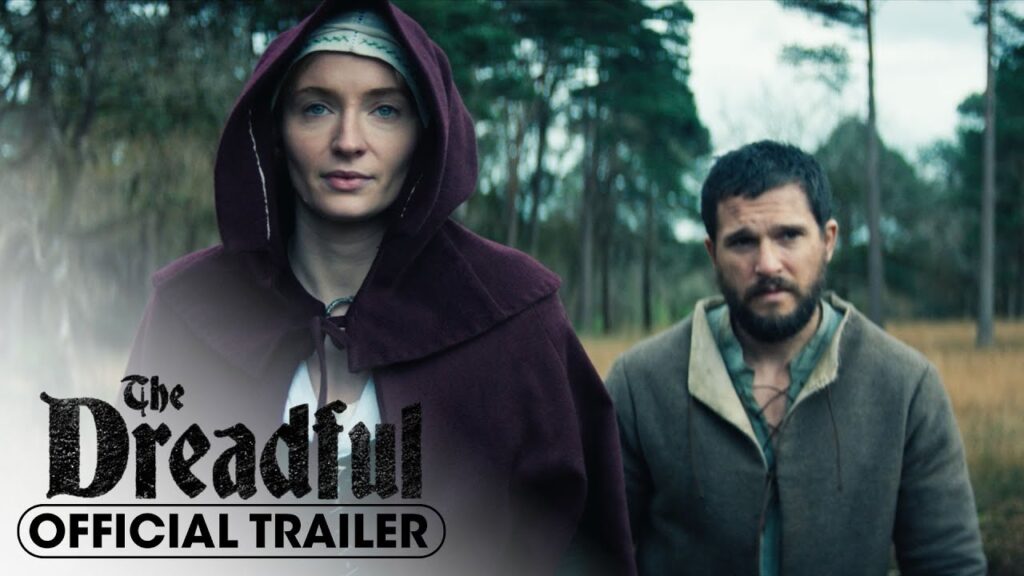
The film is dominating the digital discourse primarily due to the “uncanny valley” of seeing former onscreen siblings Kit Harington and Sophie Turner cast as romantic interests. This meta-narrative, fueled by the actors’ own candid interviews about the “vile” discomfort of their intimate scenes, has created an irresistible viral curiosity. Beyond the cast, the movie leans into the burgeoning “Folk Horror” revival that prioritizes psychological dread over conventional jumpscares. In an era of loud, fast-paced media, its deliberate 94-minute focus on female-centric isolation and dark ages survival feels like a prestige counter-culture statement.
Elements driving the trend: The “Prestige Discomfort” Draw
-
The Meta-Reunion Factor The subversion of the Game of Thrones legacy creates a built-in audience eager to witness the transition from platonic to “forbidden” chemistry.
-
Atmospheric Immersion A dark, haunting score and immersive sound design turn the solitary setting into a sensory-heavy experience that demands a theater or high-end home audio.
-
Folk Horror Renaissance The narrative taps into the current hunger for “slow-burn” genre pieces that explore historical trauma and religious claustrophobia.
-
The Female Survival Lens Centering the story on a mother-in-law and daughter-in-law dynamic provides a fresh, female-coded perspective on the “intruder” thriller trope.
Insights: A shift toward “meta-casting” as a tool to drive viral engagement for mid-budget horror.
Industry Insight: Studios are increasingly utilizing “stunt casting” not just for star power, but to leverage existing fan-base dynamics that spark controversial social media conversations. By leaning into the “awkwardness” of the lead reunion, the marketing team effectively bypassed traditional ad fatigue to reach a massive, pre-conditioned demographic.Consumer Insight: Modern horror fans are exhibiting “jumpscare exhaustion” and are instead rewarding films that maintain a consistent, heavy atmosphere of existential dread. They are more interested in the psychological “turning point” of a character than the mechanical tropes of the slasher genre.Brand / Cultural Insight: Forbidden Chemistry has become a potent marketing hook in 2026, where the friction between a star’s public persona and their fictional role creates high-value “scroll-stopping” content. Brands that embrace this discomfort rather than sanitizing it are finding deeper engagement with an audience that prizes authenticity and “weirdness.”
This film trends because it dares to be uncomfortable, both in its grueling Dark Ages setting and its provocative casting choices. While critics and audiences are divided on its slow-linear pacing, the sheer magnetism of seeing Harington and Turner in a high-stakes folk horror ensures its place in the 2026 cultural zeitgeist. It differs from typical horror entries by stripping away the supernatural in favor of a raw, historical realism that feels “dreadful” in its inevitability. The result is a film that functions as a conversation piece, driving viewers to theaters to judge the “weirdness” for themselves.
What Movie Trend Is Followed: The Gothic-Folk “Resurrection” Phase
The film marks a high-point in the “Folk Horror Revival,” moving from the niche, daylight terror of the 2010s (Midsommar) into a more somber, historically grounded “Medieval Noir.” Audiences in early 2026 are primed for “Elevated Genre” pieces that use period settings as a mirror for contemporary anxieties regarding gender, faith, and survival. While the trend has matured, The Dreadful tests the market’s readiness for “Adaptation-Plus”—taking a classic eastern parable (Onibaba) and transplanting it into the British Dark Ages. This phase of the trend is less about pure shocks and more about the “Atmospheric Hang,” where the audience is invited to exist in a bleak, meticulously textured world.
-
Macro trends influencing — Economic & social context In a post-blockbuster fatigue era, there is a socio-economic pivot toward “Intimate Epics” that focus on a handful of characters in isolated, cost-effective natural settings.
-
Implications of Macro for audiences The harsh, 15th-century scarcity depicted mirrors current cultural fascinations with “off-grid” living and the psychological toll of extreme self-reliance.
-
What industry trends is shaping The “Stunt Reunion” strategy—pairing iconic TV duos in subversive new roles—is becoming a primary driver for independent film visibility in a crowded streaming market.
-
Audience motivation to watch Viewers are primarily motivated by “Legacy Subversion,” the desire to see the Game of Thrones leads break their “Stark” personas through a gritty, taboo-leaning lens.
-
Other films shaping this trend:
-
Onibaba (1964) by Kaneto Shindō The foundational source text that established the “two women vs. a returning man” power dynamic in a desolate wasteland.
-
The Witch (2015) by Robert Eggers The film that redefined modern Folk Horror by prioritizing period-accurate dialect and an unshakeable sense of religious dread.
-
The Devil’s Bath (2024) by Veronika Franz & Severin Fiala A contemporary peer that explores the “Dark Ages” through a visceral, female-centric lens of mental health and social exclusion.
Insights: One expanded framing sentence on why the fusion of historical realism and “stunt casting” is the new genre blueprint.
Industry Insight: Independent distributors are capitalizing on “Social Media Friction”—the inherent discomfort of the Turner/Harington pairing—to generate millions in free earned media. This shift marks a move away from traditional “chemistry-based” casting toward “conflict-based” casting that prioritizes viral discourse over narrative harmony.Consumer Insight: The modern horror consumer is increasingly “Genre-Fluent,” often valuing the vibe and atmospheric fidelity of a period piece more than a tightly wound plot. They are willing to trade narrative momentum for a “sensory experience” that feels lived-in, unpolished, and historically punishing.Cultural/Brand Insight: Forbidden Nostalgia is a powerful cultural currency; by taking a beloved “safe” sibling dynamic and turning it “vile,” the film creates a must-see event through sheer cognitive dissonance. Brands that challenge pre-existing consumer comfort zones are winning the attention economy by forcing a radical re-evaluation of familiar icons.
The entertainment industry can respond to this trend by greenlighting “IP-Adjacent” originals—films that aren’t sequels but use the cast as the intellectual property. By placing familiar faces in radically different, “uncomfortable” genres, studios can create event-level curiosity without the billion-dollar price tag of a franchise. The Dreadful demonstrates that in 2026, the most effective “jumpscare” isn’t a monster in the dark, but the shock of seeing a familiar relationship redefined. Success moving forward lies in the “Atmospheric Pivot,” where setting and star-baggage do the heavy lifting for the story.
Final Verdict: The Gothic Reckoning of the “Stark” Legacy
The Dreadful serves as a somber, atmospheric capstone to the first quarter of 2026, solidifying the “Atmospheric Hang” as a viable, albeit polarizing, genre strategy. While critics are divided on its “laborious” pacing, the film’s cultural footprint is secured by its willingness to dismantle the high-fantasy baggage of its leads. It successfully reclaims the “folk horror” space for intimate, female-centric narratives that prioritize internal psychological rot over external monster mechanics. Ultimately, its legacy will be defined by its bold, uncomfortable casting and its status as a “vibes-first” entry in the mid-budget horror landscape.
-
Meaning — The Erosion of Inherited Fear The film’s depth lies in Anne’s struggle to decouple her identity from the domineering religious and familial structures represented by Morwen. It reframes the “Gothic Heroine” not as a victim of a ghost, but as a survivor of a generational survivalist pact that has outlived its necessity. The return of Jago serves as the catalyst for this awakening, forcing a choice between the familiar cage of “duty” and the terrifying unknown of individual desire.
-
Relevance to audience— The “Slow-Burn” Digital Detox In a media environment increasingly defined by “fast-cut” content, The Dreadful offers an intentional 94-minute sensory immersion that rewards patience. The audience is invited to experience the physical and spiritual “clutter” of 15th-century isolation, a relevant theme in a world increasingly wary of digital hyper-connectivity. The film speaks to a demographic that values “texture” and “mood” as much as plot, finding a strange comfort in the bleak, misty realism of the moors.
-
Performance — A Transactional Trio Marcia Gay Harden’s Morwen is the film’s unyielding anchor, delivering a terrifyingly pragmatic performance that justifies “evil” as a tool for survival. Sophie Turner provides a nuanced, “saintly” vulnerability that matures into a hard-won agency, while Kit Harington plays Jago with a “stray dog” desperation that feels authentically unsettling. The friction between them—fueled by the actors’ own vocalized discomfort—creates a palpable, “un-earned” chemistry that keeps the audience in a state of constant unease.
-
Legacy — The “Onibaba” of the West By successfully transplanting a Shinto-Buddhist morality play into the English Dark Ages, Natasha Kermani has created a blueprint for “Cross-Cultural Folk Noir.” The film is likely to become a cult staple for cinephiles who appreciate “Arthurian-coded” horror and the subversion of major TV icons. It signals a shift where mid-budget films can thrive by being “difficult” and “vile,” using discomfort as a primary aesthetic rather than a hurdle to be overcome.
-
Success: (Awards, Nominations, Critics Ratings, Box Office) — A Chilly Critical Consensus Debuting with a 55% Rotten Tomatoes score, the film has been labeled “dreadfully boring” by some while being hailed as a “Gothic delight” by genre purists. It hasn’t reached the mainstream box office heights of peers like Sinners, but it has found a steady niche in the “prestige horror” circuit. On the awards front, it is eyeing the Golden Scythe Horror Awards, though it was notably absent from the major 2026 Academy Award nods in a highly competitive genre year.
Insights: Longevity in 2026 is driven by atmospheric fidelity and the viral power of “Stunt-Reunion” casting.
Industry Insight: Streaming platforms are finding that “Slow-Burn Gothic” content has a higher re-watch value and “vibe-sharing” potential on social media than traditional slasher films. By investing in visually luscious, mid-budget period pieces, distributors can maintain a “prestige” brand identity that attracts high-tier talent looking to shed their franchise personas.Consumer Insight: There is a growing “Discomfort Economy” where audiences are actively seeking out films that challenge their nostalgic attachments to certain actors. The “retching” viral commentary from the leads became a more effective trailer than any marketing clip, proving that modern consumers value the “behind-the-scenes” truth as much as the on-screen fiction.Brand Insight: Bleak Authenticity is the new luxury in horror; brands that leverage historical research and raw, unpolished location shooting (like Tintagel) are cutting through the CGI noise. The “Dreadful” brand is built on a specific type of “Intellectual Horror” that prioritizes the “consequences of actions” over the “shock of the jump.”
The entertainment industry can address the trend of “Legacy Subversion” by continuing to pair iconic ensembles in radically different genres to spark viral “Must-See” curiosity. Success lies in the “Institutional Horror” model—using genre to critique family, religion, and patriarchy while maintaining a high-fidelity atmospheric score. The Dreadful proves that even a “boring” pace can be a stylistic win if the world-building is immersive enough to make the audience feel the cold of the moors.
Summary of the Movie: The Dreadful (2026)
-
Movie themes: The Weight of the Past. A visceral exploration of how war and poverty turn familial duty into a suffocating, violent cage.
-
Movie director: Historical Mythologist. Natasha Kermani prioritizes “Period-Noir” textures and folkloric warnings over traditional horror pacing or spectacle.
-
Top casting: The Subversive Duo. Turner and Harington weaponize their Game of Thrones chemistry to create a romantic dynamic that feels intentionally “wrong” and unsettling.
-
Awards and recognition: Early Genre Hopeful. Garnering buzz for the Golden Scythe Horror Awards and praise for Jamal Green’s hauntingly operatic score.
-
Why to watch movie: Watch it for the sheer sensory immersion of its 15th-century setting and the fascinatingly awkward “reunion” of two of the decade’s biggest fantasy stars.
-
Key Success Factors: It stands out by being a “Morality Play” disguised as a horror film, focusing on the psychological erosion of its characters rather than the supernatural.