


The French Social Thriller Where a Futuristic Construction Site Swallows Its Workers — And a Foreman Must Choose Between His Family’s Security and His Colleagues’ Lives
Vincent works the night shift on the construction site of Grand Ciel — a gleaming futuristic district promised to be a pioneering smart neighbourhood. The marketing images show a utopian residential future. The reality is a labyrinthine concrete shell in nocturnal darkness, staffed by undocumented immigrant workers with no legal protections. When a colleague — Ousmane, an undocumented worker — vanishes without trace, his closest friend Saïd begins organising the workers to demand accountability from management. Management’s response is to promote Vincent to foreman, give him more money his family desperately needs, and ask him directly to quell the uprising. When a second undocumented worker disappears, Vincent must decide who he is. Rooted in the real 2015 death of Mamadou Traoré — an undocumented temporary worker who died on a French construction site without his absence being immediately noticed, uncovered by a CGT union investigation. Written by Hata, Jérémie Dubois, and Camille Lugan. Cinematography by David Chizallet (Mustang, 2016). Score by Carla Pallone. Produced by Good Fortune Films (France) and Les Films Fauves (Luxembourg). World sales WTFilms. Venice Orizzonti world premiere September 2025. French theatrical January 21, 2026. Italian theatrical March 5, 2026.
Why It Is Trending: Venice Orizzonti Competition — A Japanese Director Based in Paris Making the Most Precise French Social Thriller of 2025 With the Stéphane Brizé Lineage Behind It
The feature debut of Akihiro Hata was selected in Venice’s Orizzonti section — the festival’s dedicated competition for formally innovative new cinema. In his debut feature, the Japanese-born but France-based director takes up the mantle of French social realism, adding thriller elements to the story of a construction worker torn between supporting his family and standing by his co-workers. French cinema has long been preoccupied with stories rooted in the workplace, and directors like Stéphane Brizé have built careers around depicting labour conflicts with stark realism — to this lineage now comes Grand Ciel. Cinematographer David Chizallet’s award-winning work on Mustang gives the film its most credentialed formal collaborator. The film’s starting point is rooted in a real-life incident: in 2015, Mamadou Traoré, an undocumented temporary worker, died on the job without anyone noticing his absence right away — a tragedy uncovered by a CGT investigation.
Elements Driving the Trend: The Nocturnal Construction Site as Haunted Space, Bonnard’s Moral Equivocation, and the Social Realism-Thriller Hybrid
-
The construction site becomes a haunted space, filled with strange sounds echoing through half-finished buildings, as if the structures themselves are alive — the monstrous logic of the development consuming human lives as raw material.
-
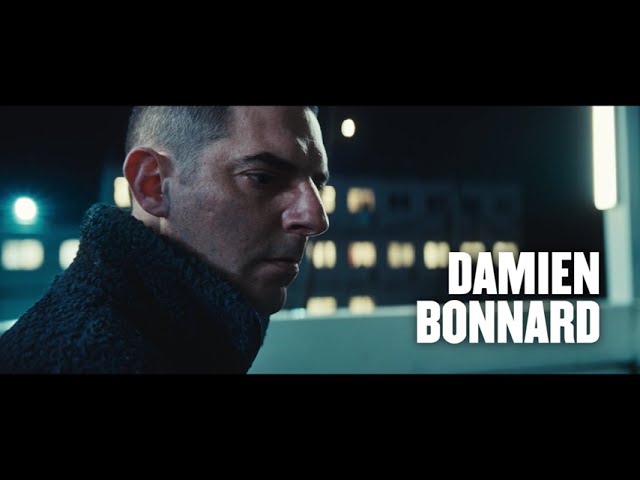
Bonnard carves a deeply enmeshed character through layers of ambiguity and deliberate obfuscation — Vincent is diligent and meticulous, hopeful that his unrelenting work will propel a position of rise, but as more people are shunted, his ingress into a leadership position smoothens out and the significance of others’ needs diminishes.
-
David Chizallet’s cinematography and Carla Pallone’s nerve-cutting electronic score genuinely build something that piques curiosity, especially given that Vincent and his crew are assigned to work on the dark basement levels of the new building-to-be.
-
Hata aimed to blend strict social realism with a more fantastical element — the construction sites he remembered observing as a child in Japan, places that felt both forbidden and unsettling, are transformed here into almost haunted spaces.
Virality: The Venice Orizzonti Platform and the Mamadou Traoré Real-Events Foundation
-
The Venice Orizzonti Horizons Award nomination gives the film its most commercially significant institutional validation and positions it within the international arthouse circuit that French social cinema depends on for global discovery.
-
The real-life foundation — Mamadou Traoré’s 2015 death on a French construction site, his absence unnoticed until a CGT union investigation — gives the film a documentary moral authority that fiction alone cannot manufacture.
Critics Reception: Venice Praised the Social Architecture and Bonnard — the Supernatural Resolution the Consistent Reservation
-
ICS Film — promising first feature; Bonnard strong as introverted man bottling increasing stress; Soualem given enough agency on her own; social realism approach mixes surprisingly well with suspense until the final five minutes; the supernatural resolution an unsatisfactory denouement.
-
Cineuropa — superbly orchestrated debut; greatest achievement is turning Hata’s “omnipresent concrete, cold and mineral, like a relentless toxic fog” into filmic reality; technical precision can outweigh emotional depth; strong social undercurrent.
-
High on Films — fuelled by a nihilistic force that keeps booming after credits; Bonnard does well to establish moral equivocation, Vincent quietly slithering into securing his own corner; Hata summons undercurrents with a considered hand.
-
Micropsia — visually embraces muted grays and nocturnal blues; spectral touches remain suggestive and metaphorical; effectively unsettling.
-
OutNow — oppressive atmosphere well constructed; construction site captured visually and acoustically; Bonnard a likeable protagonist who carries the slower patches. The film was very well received by the audience at the Venezia Orizzonti 25 competition. IMDb 5.8 from 68 viewers. 7 critic reviews.
Awards and Recognitions: 1 Nomination — Venice Horizons Award Best Film
-
Venice Film Festival 2025: Venice Horizons Award Best Film — nominee.
-
Venice Orizzonti world premiere September 2025. French theatrical January 21, 2026. Italian theatrical March 5, 2026. WTFilms international sales.
Director and Cast: A Japanese-Born Paris-Based Filmmaker Joining the French Social Realist Lineage — With One of French Cinema’s Most Trusted Character Actors at the Centre
-
Akihiro Hata — Japanese-born, Paris-based — brings a specifically Japanese visual sensibility to the French social realist tradition: the construction sites he remembered observing as a child in Japan, places that felt both forbidden and unsettling, give the French labour drama its most formally distinctive cross-cultural formal layer.
-
Damien Bonnard (Vincent) — Staying Vertical, Les Misérables — delivers what every review cited as the film’s most reliable foundation: through layers of ambiguity and deliberate obfuscation, Bonnard reaches out, carving a deeply enmeshed character whose ulterior schemes stay constantly hidden in the recesses.
-
Samir Guesmi (Saïd) — the film’s moral counterpoint — plays Vincent’s closest companion and the workers’ organiser with the specific conviction of a character who knows exactly where his loyalty lies, even when it costs him.
-
Mouna Soualem (Nour) — given enough agency on her own, her hiring and quick layoff constituting a key point in the arc of the film — brings the domestic stakes that give Vincent’s impossible choice its most personal dimension.
-
David Chizallet (cinematographer) — Mustang (award-winning) — embraces a muted palette of grays and nocturnal blues, emphasising the exhaustion of night labour and the sterility of a future designed only for the wealthy.
Conclusion: A Venice Orizzonti Debut That Confirms Hata as a Formally Distinctive Voice in the French Social Thriller — With Bonnard as the Moral Architecture at Its Centre
The Venice nomination confirms the film’s institutional standing within the international arthouse circuit. This is a promising first feature that could have used a bit more ambiguity, but shows a talent at the helm. Bonnard and Chizallet are the film’s most formally reliable assets. The real-events foundation gives the labour drama its most durable social authority.
What Movie Trend Is Followed: The French Labour Drama Adds Gothic Horror Architecture to Its Social Realist Foundation — Joining the Brizé-Gravel Lineage With a New Formal Dimension
Grand Ciel belongs to the tradition of French working-class social cinema — Stéphane Brizé’s Vincent Lindon collaborations, Éric Gravel’s À Plein Temps — in which the economic precarity of the contemporary French labour market is the film’s primary subject and the human cost of corporate indifference its most specific argument. On paper the social realism approach shouldn’t mix well with moments of suspense, but Hata’s change in approach to cinematography and the nerve-cutting electronic score genuinely build something that piques curiosity. His specific formal contribution is the construction site as haunted architecture: the supernatural undertone is not genre decoration but the most formally precise available metaphor for what happens when capitalism treats human beings as raw material.
Trend Drivers: The Foreman Promotion as the System’s Most Precise Trap, the Undocumented Worker as the Film’s Political Centre, and the Basement Levels as the Film’s Formal Architecture
-
The foreman promotion as management’s control mechanism — using Vincent’s need as the instrument of the workers’ suppression — is the film’s most formally specific social argument: the system does not need villains when it can simply make the worker’s survival contingent on his compliance.
-
The undocumented immigrant workers as the film’s political centre — the missing co-workers both being undocumented hints at something nefarious but more grounded, and connects directly to the real Mamadou Traoré case that inspired the screenplay.
-
The spectral touches remain suggestive and metaphorical — the effect is unsettling, as though the monstrous logic of the development itself consumes human lives as raw material.
-
The film explores the fading of individual identities, the fear of downward mobility, and loneliness in the workplace, transforming the construction site into a space that is as much psychological as physical.
What Is Influencing Trend: WTFilms’ International Sales and the Venice Orizzonti Discovery Pipeline
-
WTFilms’ international sales infrastructure gives Grand Ciel the arthouse distribution reach that a France-Luxembourg co-production of this scale requires for sustained international discovery beyond the domestic theatrical release.
-
The Venice Orizzonti section’s consistent positioning as the primary discovery platform for formally adventurous debut features confirms that Hata’s debut arrived through the most credentialed available institutional channel for this specific kind of French social thriller.
-
French cinema’s ongoing tradition of labour drama — from Brizé to Gravel — gives Grand Ciel a critical context in which its social argument is immediately legible and its thriller innovations are registered as formal additions to a well-established tradition.
Macro Trends Influencing: Undocumented Worker Invisibility and the Construction Industry’s Structural Exploitation
-
The real 2015 death of Mamadou Traoré — an undocumented temporary worker who died without his absence being immediately noticed — gives the film’s fictional disappearances a documented social reality that makes the drama impossible to aestheticise into pure genre.
-
The construction industry’s structural use of undocumented workers — illegal employment, neglected safety measures, the specific vulnerability of those who cannot report accidents without risking deportation — is one of contemporary European labour’s most politically urgent and least cinematically documented subjects.
-
The dream of progress begins to resemble a nightmare — workers vanish, accidents multiply, and the futuristic district’s promises are built on invisible human cost.
Consumer Trends Influencing: The French Social Cinema Audience and WTFilms’ European Arthouse Network
-
The French social cinema audience — which sustained the Brizé-Lindon collaborations and À Plein Temps — gives Grand Ciel a pre-converted domestic discovery community that responds to labour drama with institutional loyalty.
-
WTFilms’ European arthouse network gives the film the international sales infrastructure that connects French social cinema to the European territories where labour rights drama has the most sustained critical and audience engagement.
-
Bonnard’s profile — confirmed across Les Misérables and Staying Vertical — gives the film a domestic French discovery signal that the Orizzonti nomination amplifies internationally.
Audience Analysis: French Social Cinema Audiences, Arthouse Thriller Viewers, and the European Labour Rights Drama Community
The core audience is 30–60 — French social cinema followers who track the Brizé-Gravel tradition, European arthouse thriller audiences who respond to the horror-inflected construction site premise, and the labour rights and union community for whom the Mamadou Traoré real-events foundation gives the film immediate personal resonance. The Venice Orizzonti nomination positions the film within the international arthouse community’s most active discovery circuit.
Conclusion: A Formally Distinctive French Social Thriller That Earns Its Venice Placement Through the Precision of Its Labour Argument and the Authority of Its Construction Site Visual Language
Grand Ciel earns its institutional standing through the specific quality that distinguishes it within the Brizé lineage: the haunted architecture that gives the social realism its most formally inventive formal layer. All of the component parts are above-par in terms of their quality, and despite the film tending to limp along here and there, the social undercurrent is strong throughout. Hata’s next feature — with a denouement that matches the formal intelligence of the preceding 86 minutes — will be the one to watch most closely.
Final Verdict: A Formally Inventive French Labour Debut That Earns Its Venice Nomination — Anchored by Bonnard’s Moral Equivocation and Chizallet’s Nocturnal Construction Site Photography
Hata has orchestrated these disparate elements superbly for a feature debut — the social realism, the thriller atmosphere, the haunted construction site architecture, and Bonnard’s internalized moral collapse are all formally precise and consistently sustained. The film was actually quite successful in showing how capitalism often pits the working class against each other to protect their own interests. The supernatural resolution in the final five minutes is the film’s most widely noted limitation — but the 86 minutes that precede it are among the most atmospherically assured French debut features of 2025.
Audience Relevance: For French Social Cinema Audiences and Arthouse Thriller Viewers Who Respond to Labour Drama Inflected With Gothic Architecture
Works best for viewers who follow the French labour drama tradition and respond to social realism given a formally adventurous atmospheric register — the Brizé audience, viewers who found À Plein Temps’s workplace pressure compelling, and the arthouse thriller community that values atmosphere over genre resolution.
What Is the Message of Movie: The System Does Not Need Villains — It Only Needs to Make Your Survival Contingent on Someone Else’s Silence
The film spends most of its time fixated on Vincent’s split loyalties between Nour and Saïd — and the most precise observation is that his foreman promotion is not a reward but a mechanism. When the system gives you slightly more than you had, it takes something more important in return. That transaction is capitalism’s most reliable tool, and Hata renders it with complete formal clarity.
Relevance to Audience: A Film That Makes the Invisibility of Undocumented Construction Workers Impossible to Ignore for the Duration of Its 91 Minutes
The film uses the Mamadou Traoré incident as a symbolic element to explore the invisibility of the most vulnerable workers in today’s societies. The two disappeared workers — both undocumented, both without legal recourse — are the film’s most socially specific and most politically necessary presence. Their invisibility to the system is the film’s central horror.
Social Relevance: Undocumented Worker Deaths in European Construction as the Film’s Most Urgent and Most Specific Social Argument
The film delves into the fading of individual identities, the fear of downward mobility, and loneliness in the workplace — giving the labour drama a psychological dimension that purely procedural social realism cannot achieve. The real-events foundation transforms every fictional disappearance into a documented pattern rather than a dramatic device.
Performance: Bonnard Carries the Film’s Entire Moral Architecture in Silence — Guesmi and Soualem Give the Ensemble Its Counterweight
Bonnard does well to establish a sense of moral equivocation, with Vincent quietly slithering into securing and expanding his own corner — a cautious, deliberate plotting which won’t collapse under the weight of mounting suspicion. Guesmi’s Saïd and Soualem’s Nour are both well characterised — the moral clarity of the former and the domestic stakes of the latter giving the film’s central tension its most complete human architecture.
Legacy: A Debut That Announced Akihiro Hata as One of the Most Formally Distinctive New Voices in French Social Cinema
Grand Ciel will be remembered as the debut that introduced a Japanese-born Paris-based filmmaker into the most demanding available lineage of French social realism — and that did so with the formal confidence of a director who knew precisely what visual language the subject required. This is a promising first feature that shows a talent at the helm.
Success: 1 Nomination — Venice Horizons Award Best Film
-
Venice Film Festival 2025 Orizzonti, Venice Horizons Award Best Film — nominee.
-
Venice Orizzonti world premiere September 2025. French theatrical January 21, 2026. Italian theatrical March 5, 2026. WTFilms international sales. IMDb 5.8 from 68 viewers. 7 critic reviews.
The Venice nomination confirmed the formal ambition. Bonnard confirmed the performance authority. The real-events foundation confirmed the social necessity.
Grand Ciel proves that the most honest films about labour are the ones that make the haunted architecture visible — and that Akihiro Hata understood precisely which visual language the French construction site required.
Insights: A formally inventive French social thriller debut that earns its Venice Orizzonti placement through the precision of its labour argument and the haunted construction site visual language — the social realism-thriller hybrid is genuinely effective across the first 86 minutes, Bonnard’s internalized moral collapse is the film’s most reliable performance foundation, and the real-events Mamadou Traoré foundation gives the fictional drama its most enduring social authority. Industry Insight: WTFilms’ international sales infrastructure combined with the Venice Orizzonti nomination gives Grand Ciel the arthouse distribution positioning that French labour drama requires for European theatrical discovery — and positions Hata within the Brizé-Gravel tradition for international critics who follow that lineage as a specific genre of culturally necessary cinema. Audience Insight: Bonnard is the film’s most commercially efficient discovery asset — his profile across Les Misérables and Staying Vertical activates the domestic French social cinema audience that treats his involvement as a quality signal — while the Venice nomination activates the international arthouse community that uses the Orizzonti section as one of its primary discovery circuits. Social Insight: A film rooted in the documented 2015 death of Mamadou Traoré — an undocumented construction worker whose absence went unnoticed until a union investigation — is making one of French cinema’s most politically necessary observations about the specific vulnerability of those who cannot report workplace accidents without risking deportation; the undocumented worker’s invisibility is not a dramatic device but a documented structural feature of the construction industry. Cultural Insight: Grand Ciel positions Hata as the most formally distinctive new voice in French social cinema — a Japanese-born filmmaker whose childhood memory of construction sites as forbidden, unsettling spaces gives the French labour drama a cross-cultural formal layer that neither the Brizé tradition nor the pure thriller tradition could have produced independently.
Conclusion: A Venice Orizzonti Debut of Genuine Formal Precision — With a Real-Events Foundation That Transforms Every Disappearance Into a Documented Pattern and a Director Whose Next Film Will Be One of French Social Cinema’s Most Anticipated
The haunted construction site is fully realised. Bonnard’s moral collapse is fully committed. The social argument is fully documented. The next film is where Hata’s formal intelligence finds a denouement that matches the preceding 86 minutes — and that is the film French social cinema should be watching for.
Summary: One Construction Site, Two Disappearances, One Foreman Promotion, and the Price of Silence
-
Movie themes: The construction industry’s structural exploitation of undocumented workers, the foreman promotion as capitalism’s most reliable mechanism for co-opting dissent, the haunted architecture of a futuristic district built on invisible human cost, the specific invisibility of those without legal protections, and the moral transaction between personal survival and collective justice.
-
Movie director: Akihiro Hata — Japanese-born, Paris-based, feature debut — brings a cross-cultural formal sensibility to the French social realist tradition: his childhood memory of Japanese construction sites as forbidden and unsettling spaces gives the labour drama its most formally distinctive atmospheric layer. Co-written with Jérémie Dubois and Camille Lugan.
-
Top casting: Bonnard’s Vincent carries the film’s entire moral architecture through silence and internalized equivocation — the consensus performance across every review. Guesmi’s Saïd gives the film its moral counterpoint with specific and grounded conviction. Soualem’s Nour gives the domestic stakes their most personal dimension. Chizallet’s nocturnal cinematography is the film’s most formally admired technical contribution.
-
Awards and recognition: Venice Film Festival 2025 Orizzonti, Venice Horizons Award Best Film nominee. Venice world premiere September 2025. French theatrical January 21, 2026. Italian theatrical March 5, 2026. WTFilms international sales.
-
Why to watch: The French labour drama that adds haunted architecture to the Brizé social realist tradition — rooted in the documented 2015 death of Mamadou Traoré, anchored by Bonnard’s most precisely internalized performance, and shot by the cinematographer of Mustang in a muted nocturnal palette that makes the construction site’s violence permanently visible.
-
Key success factors: Bonnard’s established French cinema profile plus Chizallet’s award-winning cinematography plus the Venice Orizzonti institutional positioning plus WTFilms’ European arthouse sales network plus the Mamadou Traoré real-events moral authority plus Hata’s cross-cultural construction site formal sensibility.
-
Where to watch: French theatrical from January 21, 2026. Italian theatrical from March 5, 2026. International distribution via WTFilms. Check JustWatch for full streaming availability.
Conclusion: A Formally Precise French Social Thriller Debut That Confirms Akihiro Hata as a Director of Cross-Cultural Formal Authority — and That Gives Undocumented Construction Workers Their Most Formally Specific French Cinematic Treatment
The Mamadou Traoré foundation is inarguable. Bonnard’s performance is inarguable. The nocturnal construction site’s haunted architecture is the debut’s most formally distinctive contribution to the French social cinema tradition. The next film is the confirmation that this debut’s formal intelligence warrants.