


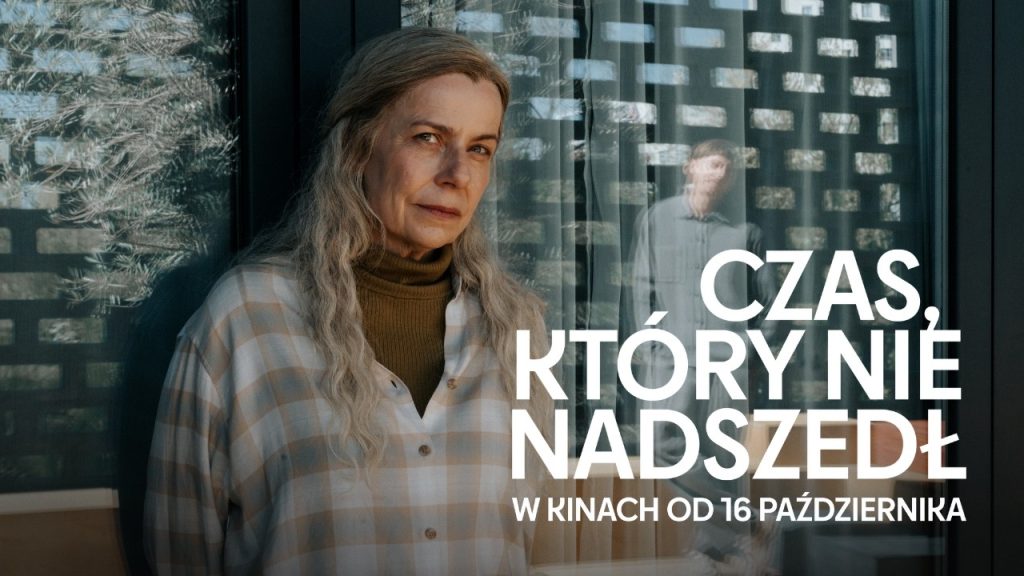
PL / BE | 2026 | 105 min | Dystopian Drama / Sci-Fi Romance / Melodrama
In a World Where Aging Can Be Stopped, a Woman Who Chose to Grow Old Searches for the Love She Lost
The Time That Never Came (Czas, który nie nadszedł) follows Sara, a woman who chooses to age naturally in a society obsessed with preserving youth. Her partner Oskar takes anti-aging treatment, creating a divide between two people who once shared a life but chose different relationships with time. Years later, Sara decides to search for her lost love, leaving the Refuge with Ed, her driver, and traveling toward the City of Youth. Her journey becomes an opportunity to confront buried emotions, revisit her past and reconsider what freedom means in a world where growing older is treated as a disadvantage. Directed by Julia Rogowska, the film combines dystopian science fiction, romance and social commentary to explore the emotional consequences of resisting a culture obsessed with eternal youth.
➡️ Storyline: In a society where anti-aging treatments redefine human relationships, a woman who chose to grow old naturally journeys toward the City of Youth to reunite with the partner who embraced eternal youth.
Why to Watch The Time That Never Came: A Dystopian Romance About Aging, Lost Love and the Price of Eternal Youth
The Time That Never Came combines a provocative anti-aging premise, an emotional love story and a feminist perspective on society’s obsession with youth. Julia Rogowska’s feature debut follows Sara, played by Agata Kulesza, whose decision to embrace natural aging separates her from a partner who chooses technological intervention. Through their contrasting choices, the film raises questions about identity, desirability and whether preserving youth can also preserve emotional connection.
|
1. A Distinctive Anti-Aging Premise |
A society where people can pursue prolonged youth creates a provocative setting for exploring identity, relationships and social expectations. |
|
Kulesza portrays a woman who chooses natural aging while confronting unresolved love and the emotional consequences of her past. |
|
|
3. Romance Meets Dystopian Science Fiction |
Sara and Oskar’s different approaches to aging transform their relationship into a story about time, separation and emotional attachment. |
|
4. A Feminist Perspective on Aging |
Sara’s choice challenges the pressure to preserve youthful appearance and questions how society defines women’s desirability and value. |
|
The film received the Gdańsk Radio Golden Claqueur Award and a Golden Lions Best Film nomination at the Polish Film Festival. |
➡️ Reason to Watch: A thought-provoking dystopian romance exploring whether the pursuit of eternal youth comes at the expense of authenticity, emotional connection and the freedom to age naturally.
Why The Time That Never Came Stands Out: When Eternal Youth Becomes a Threat to Love and Identity
The Time That Never Came distinguishes itself through the contrast between technological control over aging and the emotional consequences of living according to different values. Sara’s decision to grow older naturally challenges a society where youth is treated as a desirable condition to preserve, while Oskar’s anti-aging treatment represents the opposite choice. Their separation transforms the promise of prolonged youth into a question about relationships: what happens when two people experience time differently? The journey from the Refuge to the City of Youth reinforces this divide, turning physical locations into expressions of competing attitudes toward aging and personal freedom. Rather than presenting anti-aging technology solely as scientific progress, the film examines the possibility that preserving appearance may complicate emotional intimacy, suggesting that love and identity cannot necessarily be maintained through technological intervention.
➡️ Why It Stands Out: A dystopian romance that transforms anti-aging technology into a conflict between personal authenticity and social expectations, questioning whether eternal youth can preserve the relationships that give life meaning.
Movie Trend: Anti-Aging Dystopias — The Pursuit of Eternal Youth Challenges Love, Identity and Human Connection
Anti-Aging Dystopias explore imagined societies where the pursuit of youth and longevity reshapes social relationships, personal identity and the meaning of growing older. The Time That Never Came reflects this trend through Sara and Oskar, whose contrasting choices about aging separate them emotionally and physically. The film uses anti-aging treatment as more than a futuristic invention, presenting it as a force capable of influencing desirability, belonging and intimate relationships. Sara’s refusal to participate challenges the assumption that technological intervention necessarily produces a better life, while her journey toward the City of Youth exposes the emotional consequences of a society divided by its relationship with time. By connecting longevity technology, romantic separation and personal identity, the narrative explores how attempts to overcome aging can create new forms of inequality and emotional distance.
➡️ Movie Trend Insight: Anti-aging dystopias question the human consequences of technological youth preservation, revealing how the pursuit of longevity can reshape identity, intimacy and the freedom to accept natural aging.
Broad Trend: Authenticity / Self-Acceptance — Choosing to Age Naturally in a Society Obsessed with Youth
Authenticity / Self-Acceptance reflects the psychological need to remain comfortable with one’s identity and personal choices despite social expectations to change or conform. In The Time That Never Came, Sara’s decision to age naturally becomes an expression of independence in a society that increasingly values the preservation of youth. Her relationship with Oskar highlights the tension between accepting the natural passage of time and pursuing technological intervention to resist it. The film illustrates how self-acceptance can become an act of resistance when social standards define aging as something undesirable, particularly for women whose appearance is often closely connected to expectations of attractiveness and social value. Sara’s journey also suggests that authenticity involves more than rejecting physical transformation; it requires confronting unresolved emotions, accepting personal history and defining freedom according to individual values rather than external pressure.
➡️ Broad Trend Insight: Authenticity and self-acceptance emerge when individuals prioritize personal identity and emotional integrity over social expectations, transforming the choice to age naturally into an expression of independence and self-worth.
Viewer Profile: Audiences Interested in Dystopian Romance, Longevity and the Social Meaning of Aging
The Time That Never Came is likely to appeal to arthouse cinema audiences, mature romance viewers and people interested in science-fiction stories about aging, identity and social expectations. Its combination of dystopian worldbuilding and emotionally driven relationships offers relevance for viewers drawn to speculative narratives with recognizable human concerns. Agata Kulesza’s central performance and the film’s Polish festival recognition may also attract audiences following European cinema. These profiles are editorial estimates rather than measured audience research.
|
Arthouse cinema followers, dystopian drama enthusiasts, mature romance viewers and audiences interested in social science fiction |
|
|
Primarily Millennials, Gen X and older adults, approximately 30–65 |
|
|
Interested in longevity, beauty standards, personal identity, emotional relationships, feminist perspectives and international cinema |
|
|
Dystopian science fiction, European arthouse dramas, speculative romance and socially reflective films |
|
|
Discovering whether Sara can reconnect with Oskar while exploring the emotional consequences of their different choices about aging |
|
|
Festival cinema, emerging European directors, socially relevant science fiction and unconventional romantic narratives |
|
|
Love, nostalgia, self-acceptance, fear of aging, personal freedom and the desire for authentic connection |
Key Profiles: Three Audiences, Three Reasons to Watch
1. Arthouse and European Cinema Enthusiasts
Audience Description: Viewers approximately 30–65 interested in emotionally reflective narratives, emerging international filmmakers and socially relevant storytelling. Julia Rogowska’s feature debut and Agata Kulesza’s performance provide the central appeal.
2. Dystopian Science Fiction and Longevity Audiences
Audience Description: Adults approximately 25–55 attracted to speculative futures, anti-aging technology and the ethical consequences of scientific intervention. The film’s youth-preservation premise offers an accessible way to explore the social implications of longevity.
3. Mature Romance and Female Empowerment Viewers
Audience Description: Viewers approximately 35–65 drawn to stories about lost love, personal reinvention and women challenging restrictive social expectations. Sara’s choice to age naturally and her journey toward emotional freedom provide the primary connection.
➡️ Audience Insight: The Time That Never Came connects with audiences through three motivations: discovering thoughtful international cinema, exploring the consequences of anti-aging technology and following a woman’s search for love and self-acceptance.
What This Movie Means for the Industry: Longevity Becomes a New Storytelling Lens for Love, Identity and Social Inequality
The Time That Never Came illustrates how European dystopian cinema can transform contemporary anxieties about aging and appearance into emotionally accessible stories about relationships and personal identity. By imagining a society where anti-aging treatment separates individuals according to their choices about time, the film extends longevity beyond a scientific subject into questions of intimacy, social acceptance and freedom. Sara’s refusal to preserve her youth introduces a feminist perspective, challenging cultural assumptions that aging reduces personal value or desirability. The romantic storyline makes these concerns more relatable by showing how technological choices can reshape emotional relationships. For filmmakers, the broader creative opportunity lies in using speculative technologies to examine familiar human experiences, connecting science-fiction concepts with social commentary and character-driven drama rather than relying exclusively on futuristic spectacle.
➡️ Industry Insight: Longevity-focused science fiction offers opportunities for emotionally grounded storytelling, using anti-aging technology to explore evolving attitudes toward identity, relationships, beauty standards and personal freedom.
Final Verdict: A Thought-Provoking Dystopian Romance About Aging, Lost Love and the Freedom to Be Yourself
The Time That Never Came presents a distinctive science-fiction romance centered on a woman who chooses natural aging while the person she loves embraces technological youth preservation. Julia Rogowska’s feature debut combines dystopian social commentary with a personal journey involving lost love, unresolved emotions and the search for independence. Agata Kulesza’s central role and the film’s recognition at the Polish Film Festival strengthen its appeal within European arthouse cinema. Its IMDb rating of 5.8/10 from 73 users provides only a limited indication of audience reception, making broader conclusions premature. The film’s strongest attraction lies in its provocative anti-aging concept, feminist perspective and exploration of whether authentic relationships can survive a society that values youth above the natural passage of time.
➡️ Final Verdict Insight: A reflective dystopian romance that uses anti-aging technology to question social expectations, emotional connection and the value of accepting oneself in a world determined to remain young.
Final Insights: When Eternal Youth Becomes the Standard, Aging Naturally Becomes an Act of Freedom
The broader Authenticity / Self-Acceptance trend reflects the human need to preserve personal identity and self-worth despite pressure to conform to social expectations. The Time That Never Came explores this need through Sara, whose decision to age naturally challenges a society that increasingly treats youth as an essential condition for desirability and belonging. Her journey demonstrates how accepting the passage of time can become an expression of independence rather than resignation.
The Anti-Aging Dystopias trend transforms this conflict into a speculative narrative about technology, relationships and the social consequences of prolonged youth. By separating Sara and Oskar through their contrasting choices about aging, the film questions whether technological preservation can protect emotional intimacy. Its central insight is that the freedom to remain authentic may become more valuable as society gains greater power to change the human body.
➡️ Final Insight: Authenticity / Self-Acceptance reflects the desire to preserve identity and self-worth despite society’s expectations about appearance and aging. The Time That Never Came explores this need through a woman who rejects anti-aging treatment and searches for the love she lost. Its dystopian romance narrative suggests that as longevity technologies advance, the freedom to age naturally may become an increasingly meaningful expression of personal independence.