


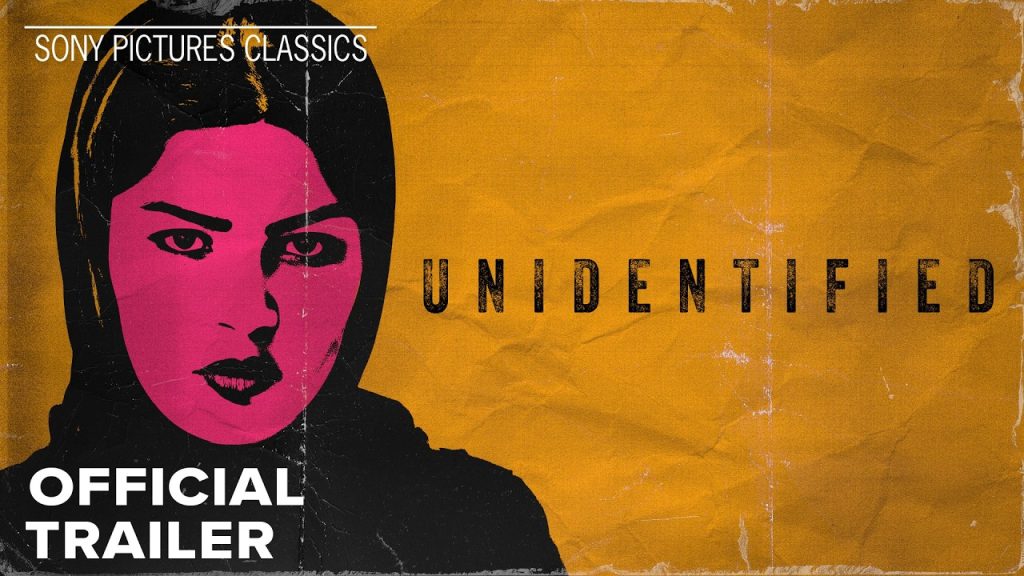
Saudi Arabia | 2025 | 99 min | Crime Mystery / Social Thriller
A Murder Mystery Exposes a Bigger Truth
A true-crime-obsessed woman investigates an unidentified teenager’s death, turning a familiar murder mystery into a sharper look at female visibility, family honor and whose stories society considers worth investigating.
Nawal is newly divorced, grieving the loss of her baby and working an administrative job at a police station in Riyadh. When an unidentified teenage girl is discovered dead in the desert, she becomes obsessed with finding out who the victim was and what happened to her.
Directed by Haifaa Al-Mansour, the pioneering Saudi filmmaker behind Wadjda, the film uses Nawal’s amateur investigation to enter spaces the male police officers cannot easily access. The mystery gradually becomes a way of examining the lives of women navigating modern Saudi society.
➡️ Movie Insight: Unidentified asks a powerful question beneath its murder mystery: what happens when identifying a victim also means confronting why society was willing to forget her?
Should You Watch It?: Come for the Mystery, Stay for the Social Story
As a pure whodunit, Unidentified is relatively straightforward. Its clues, interrogations and amateur-detective structure are accessible rather than especially complex, and the controversial late twist has divided critics.
The film becomes more distinctive when the investigation opens a window onto gender, family reputation, grief and female independence in contemporary Saudi Arabia. Mila Al Zahrani gives Nawal enough determination and vulnerability to make her personal search for answers more compelling than the mechanics of solving the crime.
➡️ Viewing Takeaway: Watch it for a female-driven Saudi mystery where solving the crime matters less than understanding the society surrounding it.
Why Everyone Is Talking About It?: Saudi Cinema Turns True Crime Into Social Commentary
The movie comes from a filmmaker whose career has been closely connected to changing representations of Saudi women. Unidentified premiered at the 2025 Toronto International Film Festival, before moving into its 2026 theatrical release.
Its true-crime angle also feels deliberately contemporary. Nawal consumes crime stories through a podcast that mixes murder cases with beauty content, connecting her investigation to a wider culture where violent crimes—particularly those involving women—can become entertainment consumed through phones and social media.
➡️ Conversation Insight: The film turns our fascination with true crime back on us, asking whether following a case means consuming someone’s tragedy or genuinely caring about the victim.
Why Unidentified Stands Out: The Victim Matters More Than the Killer
Many murder mysteries organize everything around discovering who did it. Unidentified is more interested in another question: who was she? Nawal refuses to allow an anonymous body to become another forgotten case.
That shift gives the movie its emotional and cultural weight. Identifying the teenager means uncovering relationships, family expectations and social pressures that existed long before her death. The investigation becomes an attempt to return an identity to someone who has effectively been erased.
➡️ Standout Insight: Unidentified makes recognition itself a form of justice—before solving who killed a woman, someone has to care enough to know who she was.
Movie Trend: Female-Led Social Crime — Murder Mysteries Are Investigating Society Too
Crime cinema is increasingly using investigations to expose the social systems surrounding violence, particularly when female protagonists or victims have been ignored by institutions. The crime provides the narrative engine; inequality, power and social expectations provide the deeper story.
Unidentified gives that trend a specifically Saudi perspective. Nawal’s gender initially limits her authority inside the police station, yet it also gives her access to women and conversations unavailable to her male colleagues.
➡️ Movie Trend Insight: The modern social thriller isn’t only asking who committed the crime—it is investigating the culture that allowed the victim to become invisible.
➡️ Movie Trend: Female-Led Social Crime
Viewer Profile: The Social Mystery Seeker — Crime Stories With Something Bigger to Say
The Social Mystery Seeker enjoys solving a case but wants the investigation to reveal something about the world beyond the crime. They are drawn to female-led mysteries, international cinema and stories where culture and social behavior become part of the puzzle.
|
Crime mystery and social-thriller viewers |
|
|
International and female-led cinema audiences |
|
|
Broad adult audience, with strong female appeal |
|
|
Broad middle-income audience |
|
|
Culturally curious, socially aware and interested in international perspectives |
|
|
Crime dramas, true-crime content, festival films and subtitled international cinema |
The strongest audience will be viewers willing to accept a deliberately simple procedural in exchange for access to a social environment rarely represented in mainstream crime cinema. The Saudi setting isn’t background decoration; it changes how Nawal investigates, who can speak and what the unidentified woman’s death means.
➡️ Audience Insight: Best for viewers who want a mystery to reveal how people live, what society hides and whose voices are easiest to ignore.
What This Movie Means for the Industry: Saudi Stories Are Expanding Beyond Cultural Introduction
International audiences have often encountered Saudi cinema through films explicitly explaining social restrictions or cultural change. Unidentified moves another step forward by placing those ideas inside an immediately recognizable global genre: the murder mystery.
That matters because emerging national cinemas become broader when filmmakers can tell thrillers, mysteries, comedies and genre stories without abandoning cultural specificity. Sony Pictures Classics acquiring broad international rights also gives Al-Mansour’s Saudi-language thriller an unusually wide route toward international audiences.
➡️ Industry Insight: Saudi cinema can reach broader audiences by using familiar genres to tell stories that remain unmistakably rooted in Saudi life.
Creative Analysis: The Crime Is the Doorway Into Women’s Lives
Unidentified works best when Haifaa Al-Mansour treats the investigation as a reason for Nawal to enter spaces, conversations and lives that would otherwise remain hidden. The mystery itself is conventional; what Nawal discovers around it is more interesting.
Storytelling — Identification Before Resolution. The screenplay keeps returning to the importance of understanding the dead girl rather than reducing her to evidence. Its biggest weakness is the late twist, which several critics felt disrupts ideas the film had carefully developed.
Direction — Genre Makes the Social Story Accessible. Al-Mansour packages commentary on women and contemporary Saudi society inside an approachable investigative structure rather than turning the film into a purely observational social drama.
Performances — Mila Al Zahrani Gives Nawal Her Drive. Her performance balances grief, curiosity and stubbornness. Nawal’s obsession with the case feels connected to her own emotional history rather than simply functioning as a convenient detective device.
Visual Style — Riyadh Becomes Part of the Investigation. Police offices, homes, schools, malls and desert landscapes create contrasts between public modernity and more private social expectations.
Themes — Visibility Is Power. The unidentified body becomes a symbol of how easily someone’s individuality can disappear beneath assumptions about gender, sexuality, reputation and family honor.
What Makes It Different — True Crime Changes Sides. Nawal begins as a consumer of other people’s mysteries. Once she encounters a real victim, true crime stops being entertainment and becomes responsibility.
➡️ Creative Insight: Unidentified is most compelling when the search for a name becomes a search for why some women’s stories are so easily erased.
If You Liked Unidentified (2025): Women Investigating Systems That Ignore Them
These films combine female perspectives, crime and institutional power, where finding the truth means exposing something bigger than a single crime.
Santosh (2024) by Sandhya Suri: A Murder Investigation Exposes Who Justice Leaves Behind
A newly widowed woman becomes a police constable in northern India and investigates the murder of a teenage girl. Like Unidentified, the case exposes gender inequality and institutions that can make vulnerable women invisible.
The Seed of the Sacred Fig (2024) by Mohammad Rasoulof: Political Control Tears a Family Apart
An investigating judge’s paranoia brings Iran’s political repression directly into his home. Like Unidentified, the thriller uses one intimate story to reveal the wider pressures shaping women’s lives.
The Witness (2024) by Nader Saeivar: Witnessing a Murder Becomes a Fight for Justice
A retired teacher believes a politically connected man murdered her adopted daughter, but the authorities refuse to investigate. Her search for justice turns into a confrontation with the system protecting him.
Tatami (2024) by Guy Nattiv & Zar Amir Ebrahimi: One Woman’s Choice Challenges State Control
An Iranian judoka is ordered to deliberately lose at the world championships. Like Unidentified, a woman’s individual decision becomes a larger story about authority, freedom and resistance.
For Santosh, I specifically found that the Italian JustWatch page exists but currently says the film is not available in Italy, so Italy should not appear on its Where to Watch line.
Final Verdict: The Social Mystery Is Stronger Than the Final Twist
Unidentified succeeds most when it keeps its attention on Nawal, the unidentified victim and the structures surrounding both women. Haifaa Al-Mansour understands that the Saudi setting can make an otherwise familiar amateur-detective story feel culturally specific and socially revealing.
The ending is considerably more divisive. Critics have argued that its late revelation weakens or even contradicts some of the film’s earlier social commentary. That keeps the movie from fully delivering on its strongest ideas, but Mila Al Zahrani’s performance and Al-Mansour’s perspective make the journey more interesting than the final answer.
➡️ Final Verdict: 3.5/5 — A culturally revealing female-led mystery whose investigation is more convincing than its controversial final twist.
Quick Facts: Unidentified at a Glance
|
Crime Mystery / Social Thriller |
|
|
Femicide, true crime, gender, grief, justice, identity |
|
|
Haifaa Al-Mansour, Brad Niemann |
|
|
Mila Al Zahrani, Aziz Gharbawi, Abdullah Al-Qahtani, Shafi Al Harthi |
|
|
Al Mansour Establishment, Rotana Studios |
|
|
Toronto International Film Festival 2025 |
|
Final Insight: Giving the Victim a Name Becomes an Act of Resistance
The smartest idea inside Unidentified is surprisingly simple. A murder victim can become a body, a case number or a headline, particularly when institutions decide her life is inconvenient to investigate.
Nawal refuses that disappearance. Whatever problems the movie develops in its final reveal, its strongest message remains intact: justice begins before identifying the killer. It begins by deciding that the person who died deserves to be known.
➡️ Final Insight: Unidentified turns solving a murder into something more human—a fight to make sure an invisible woman becomes visible again.