


A School Closure Exposes the Cost of a Broken Education System
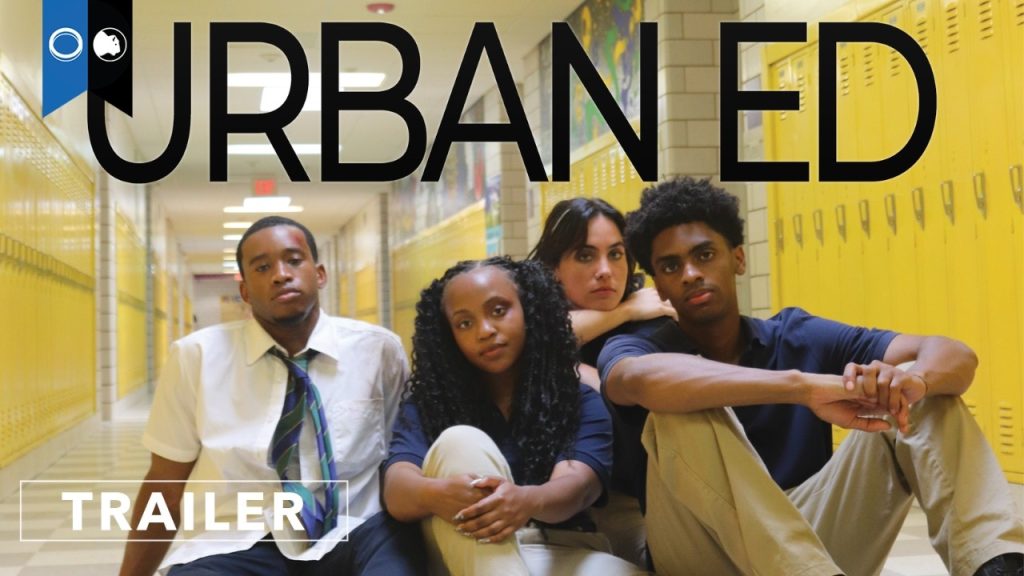
A small charter school closes in the middle of the academic year, forcing a group of inner-city students into a much larger school and disrupting the community that had provided structure to their lives. Writer-director Wade Wofford follows several teenagers as they confront the consequences of that decision while continuing to deal with poverty, family responsibility, relationships, grief, homelessness and the everyday pressures of adolescence.
At the center is Aryana, a student already balancing school with caring for younger siblings while her mother works two jobs. Around her, D’Avante negotiates family expectations, Olivia channels grief into artistic ambition, Beans attempts to remain engaged with school while experiencing housing insecurity, and refugee student Hawa struggles to access appropriate language support. The school closure connects these individual experiences, turning education policy into something personal rather than abstract.
➡️ Movie Insight: Urban Ed shifts the education-system debate away from institutions and toward the students living with their decisions. A school closure becomes more than an administrative event once its effects reach homes, friendships and futures. The film asks who absorbs the consequences when an education system stops providing stability.
Why This Movie Matters Right Now: Education Policy Becomes Personal
American education is frequently discussed through statistics, funding, testing, school choice and political arguments. Urban Ed brings those debates down to the scale of individual lives, showing how institutional decisions intersect with race, poverty, immigration, housing instability and family circumstances.
The film is particularly relevant because it resists making education the only problem facing its young characters. Aryana, Beans, Olivia, D’Avante and Hawa enter school carrying circumstances that cannot simply be left outside the classroom. Education therefore becomes part of a larger ecosystem determining whether vulnerable young people gain stability or encounter another layer of uncertainty.
➡️ Why It Matters: Educational inequality is rarely created by one classroom or one teacher. It develops where schools, housing, family economics, language access and public policy intersect. Urban Ed makes those connections visible through the lives of teenagers rather than through statistics alone.
Should Audiences Watch It?: Social Drama Grounded in Student Experience
Urban Ed is aimed at audiences interested in socially engaged independent cinema, youth drama and stories about institutions seen from the perspective of the people most affected by them. Rather than constructing the familiar inspirational-teacher narrative, the film distributes attention across students whose experiences reveal different dimensions of educational inequality.
Its strongest attraction is authenticity. Wofford was himself an educator, and the screenplay grew from his experience surrounding the closure of New Leadership Charter School in Springfield, Massachusetts. That connection between filmmaker and subject gives Urban Ed a perspective rooted in observation rather than an outsider’s reconstruction of an education crisis.
➡️ Viewing Recommendation: Urban Ed is best suited to audiences interested in realistic youth stories and socially conscious independent drama. The education system provides the framework, but adolescence remains the emotional center. Its significance comes from connecting institutional failure with recognizable individual lives.
Why Everyone Is Talking About It?: A Community Story Built With the Community
Urban Ed has an unusually direct relationship between subject matter and production. Wofford began developing the screenplay after witnessing the closure of the Springfield charter school where he taught and watching students disperse into the wider education system. The real event therefore became the starting point for a fictional drama about the human consequences of educational disruption.
That authenticity extended into production. Reporting around the film indicates that the filmmakers collaborated with more than 50 educators, recruited students from more than 20 schools and conducted open auditions at the region’s eight largest urban high schools; Kayla Staley, who plays Aryana, emerged through that process. The film was also shot in Springfield, Massachusetts, reinforcing the connection between the fictional story and the community that inspired it.
➡️ Viral Potential: Urban Ed has conversation potential because its social issue is connected to a genuine community experience. Educators, students, parents and audiences interested in inequality can approach the film from different perspectives. Its strongest word-of-mouth opportunity lies in turning a local story into a wider conversation about who gets protected—and who gets displaced—by education policy.
Why Urban Ed Stands Out: Students Replace the Inspirational Teacher
School dramas have traditionally centered teachers who enter troubled classrooms and transform their students. Urban Ed moves away from that familiar formula by making young people the primary emotional subjects and allowing the education system itself to become the destabilizing force.
That change in perspective matters. Aryana is not simply a student who needs academic motivation; Beans cannot have his housing insecurity solved by an inspirational lesson; Hawa’s language barriers require structural support rather than personal determination. By placing these circumstances alongside ordinary teenage friendships, romances and ambitions, Urban Ed prevents its characters from becoming illustrations in an education-policy argument.
➡️ Cinema Insight: Urban Ed updates the American classroom drama by moving the heroic teacher away from the center. Students become people navigating systems rather than problems waiting for an adult to solve them. That perspective makes institutional failure itself part of the dramatic conflict.
Movie Trend: System-Failure Drama — Institutions Become the Antagonist
A notable strand of contemporary social cinema is increasingly interested in institutional rather than individual antagonists. The central conflict may come from schools, housing systems, healthcare, employment or bureaucracy, while the drama examines how those structures shape everyday life.
Urban Ed fits this model because there is no single villain responsible for what happens to its students. The school closure triggers the story, but the deeper problem lies in an interconnected system where educational instability compounds poverty, housing insecurity, language barriers and unequal opportunity. The drama emerges from people trying to live inside structures they have little power to control.
➡️ Movie Trend: Social drama is becoming more interested in systems than simple villains. Institutional decisions can create consequences without any single character being responsible for all of them. Urban Ed turns that structural tension into a youth drama where policy becomes personal experience.
Viewer Profile: Social-Issue Cinema Meets Youth Drama
Urban Ed can reach beyond the conventional education-film audience because its young characters are dealing with recognizable adolescent experiences alongside larger structural problems. Friendship, romance, ambition, family tension and identity remain part of the story even as the education system around them becomes increasingly unstable.
The combination creates several potential audience entry points. Educators may recognize institutional pressures, younger audiences can connect with the students, parents may respond to the family circumstances, and independent-film audiences can engage with the production’s community-based authenticity.
|
Education inequality becomes the foundation for a broader examination of American opportunity. |
|
|
Teenage relationships, ambitions and identity remain central despite the institutional context. |
|
|
The story emerged from Wofford’s direct experience working within an urban charter-school environment. |
|
|
School instability is shown affecting households rather than remaining confined to classrooms. |
|
|
Independent Film Audiences |
Community casting and location-based production reinforce the film’s grounded identity. |
|
Education-Policy Audiences |
Charter schools, displacement and unequal resources become tangible through individual students. |
➡️ Audience Insight: Urban Ed can connect audiences who might normally approach education from very different positions. Its students provide the emotional bridge between policy discussion and lived experience. The film’s broader audience opportunity comes from making a systemic issue understandable through individual lives.
What This Movie Means for the Industry: Community Participation Becomes Part of Authentic Storytelling
Urban Ed demonstrates an alternative model for socially conscious independent filmmaking: instead of merely researching a community, production can actively involve that community. The participation of educators and students gives the project a relationship with Springfield that extends beyond using the city as a filming location.
That approach is particularly significant for films representing communities that mainstream cinema frequently depicts from the outside. Authenticity can become both a creative strategy and an audience-development strategy when participants recognize that the production understands the world it is portraying. With an estimated budget of $650,000, Urban Ed also demonstrates how a relatively small independent production can pursue substantial social themes without requiring studio-scale economics.
➡️ Industry Insight: Community-based production can provide independent films with credibility that money alone cannot manufacture. Urban Ed connects casting, location and filmmaker experience directly to its subject. For socially engaged filmmakers, participation can become as important to authenticity as representation on screen.
Creative Analysis: Realism Keeps the Institution Connected to the Students
Urban Ed builds its creative identity around proximity to lived experience. Its ensemble structure allows different characters to reveal different dimensions of educational inequality while maintaining the rhythms of teenage life.
Storytelling — One Closure Creates Multiple Stories
Wofford uses the charter-school closure as a common disruption rather than limiting the film to one protagonist. Aryana, Beans, Olivia, D’Avante and other students respond differently because each enters the crisis carrying a different family, economic and emotional situation.
Performances — Young Characters Carry the Argument
Kayla Staley’s Aryana provides an important emotional center, supported by Dalen Davis as Beans, Keaton McLachlan as Olivia and Ace M Small as D’Avante. The young ensemble allows institutional problems to emerge through behavior and relationships rather than reducing the film to speeches about education.
Direction — Experience Shapes Perspective
Wofford’s background as an educator gives the direction an important point of view. Rather than presenting students as a population to be rescued, the film attempts to remain close to their individual experiences and the contradictions surrounding the institutions responsible for educating them.
Visual Language — Springfield Becomes Part of the Story
Filming in Springfield gives Urban Ed a geographical identity closely connected to the real circumstances that inspired it. The city functions as more than an interchangeable urban backdrop because the project’s origins, casting process and production are all connected to the same community.
Sound & Music — Contemporary Youth Culture Supports the Social Realism
Composers Mtali Banda and Reed Sutherland provide the musical component of a film whose wider aesthetic is grounded in contemporary student experience. The soundtrack works within that youth-centered perspective rather than repositioning the story as an institutional procedural.
Pacing & Structure — An Ensemble Reveals the System
The approximately 90-minute structure allows the film to move among multiple students without transforming every storyline into a separate issue-based case study. Their experiences accumulate, gradually revealing that apparently different problems are connected by the same social environment.
➡️ Creative Insight: Urban Ed’s creative strategy is built around proximity rather than spectacle. Ensemble storytelling transforms an abstract education debate into a collection of individual experiences. Its realism works best when the characters remain teenagers first and representatives of social problems second.
If You Liked Urban Ed: Recent Youth Dramas Connect Personal Lives With Social Pressure
Recent independent films are increasingly examining young people through the economic, family and institutional pressures surrounding them. The closest companions to Urban Ed are therefore films where adolescence cannot be separated from the systems and circumstances shaping it.
Mad Bills to Pay (or Destiny, dile que no soy malo) (2025) by Joel Alfonso Vargas: Economic Pressure Forces Young People to Grow Up
Set in the Bronx, Joel Alfonso Vargas’s drama follows Rico as an apparently carefree young life collides with adult responsibility and economic reality. Like Urban Ed, the film refuses to isolate adolescence from the neighborhood, family and financial circumstances determining the character’s choices.
➡️ Why It Connects: Both films place young people inside environments where growing up is accelerated by circumstances beyond their control. Economic insecurity becomes part of character development rather than background decoration. Their cultural specificity gives each story a stronger sense of lived experience.
➡️ Where to Watch: US
The Unbreakable Boy (2025) by Jon Gunn: School Reveals the Gap Between Inclusion and Reality
Based on a true story, Jon Gunn’s drama follows Austin and his family as they navigate disability, family life and the difficulties he encounters at school. The film approaches education from a different emotional direction than Urban Ed but similarly explores how a child’s needs interact with systems that are not always designed around individual circumstances.
➡️ Why It Connects: Both films examine students whose experiences cannot be understood through academic performance alone. Family circumstances and individual needs fundamentally shape their relationship with school. Education becomes one part of a much larger question about whether institutions can accommodate different lives.
➡️ Where to Watch: US
Turnaround: The Reinvention of New Orleans’ Public Education System (2025): Charter-School Reform From the Documentary Side
This 2025 documentary examines the transformation of New Orleans public education following Hurricane Katrina, including the conversion of the city’s schools into a charter-based system. It provides a nonfiction counterpart to Urban Ed’s fictional examination of how structural decisions in education can reshape communities.
➡️ Why It Connects: Urban Ed dramatizes the human consequences of educational restructuring while Turnaround directly examines systemic reform. Together they illustrate two very different ways cinema can enter the debate around charter schools and public education. One begins with students; the other begins with the system.
➡️ If You Liked Insight: Recent youth and education films are increasingly connecting personal stories to larger social structures. Economic pressure, disability and institutional reform become inseparable from the lives of the people experiencing them. Urban Ed belongs to this movement because the education debate never becomes more important than the students living inside it.
Final Verdict: The Students Carry the Real Cost of Institutional Decisions
Urban Ed works from a simple but powerful premise: closing a school does not close the relationships, responsibilities and expectations built around it. Students still have to continue their education, but the stability that supported them can disappear almost instantly.
Wofford’s personal connection to the material and the production’s engagement with Springfield give the project a degree of authenticity that distinguishes it from more conventional school dramas. Its most important decision is also its simplest—keeping the young people at the center rather than allowing the education debate to overwhelm them.
➡️ Final Verdict: Urban Ed turns school closure into a human story about stability, inequality and adolescence. Its community-based perspective gives institutional problems recognizable faces and consequences. The result positions education not as an isolated policy issue but as one of the systems shaping the possibilities available to young people.
Quick Facts: Urban Ed at a Glance
|
Kayla Staley, Dalen Davis, Keaton McLachlan, Ace M Small |
|
|
Mtali Banda / Reed Sutherland |
|
|
Classrooms Speak / Happy Wasteland Studios / That Child Got Talent Entertainment |
|
|
Springfield, Massachusetts |
|
|
Students confront educational and personal instability after their charter school closes |
|
|
Inspired by Wade Wofford’s experience surrounding the closure of a Springfield charter school |
|
|
Social-drama audiences, educators, young-adult audiences and independent-film viewers |
Final Insights: Social Cinema Is Moving From Issues to Lived Consequences
The broader importance of Urban Ed lies in the way contemporary social drama is changing perspective. Rather than constructing movies around an argument and using characters to prove it, stronger issue-based films increasingly begin with individuals and allow systemic questions to emerge through their experiences. Education, housing, immigration and poverty become connected because they are already connected in people’s lives.
That approach may become increasingly important for independent filmmakers addressing politically or socially contested subjects. Audiences do not necessarily need another film telling them what position to adopt; they can be given enough proximity to characters to understand what a system feels like from inside it. Urban Ed’s community-driven origins make it a particularly relevant example of how lived experience can shape both storytelling and production.
➡️ Final Insight: Social cinema becomes more persuasive when institutions are measured by their consequences for individual lives. Urban Ed makes education policy visible through teenagers trying to maintain relationships, ambitions and stability after their school disappears. Its broader cinematic direction points toward social dramas that replace abstract arguments with human proximity.