


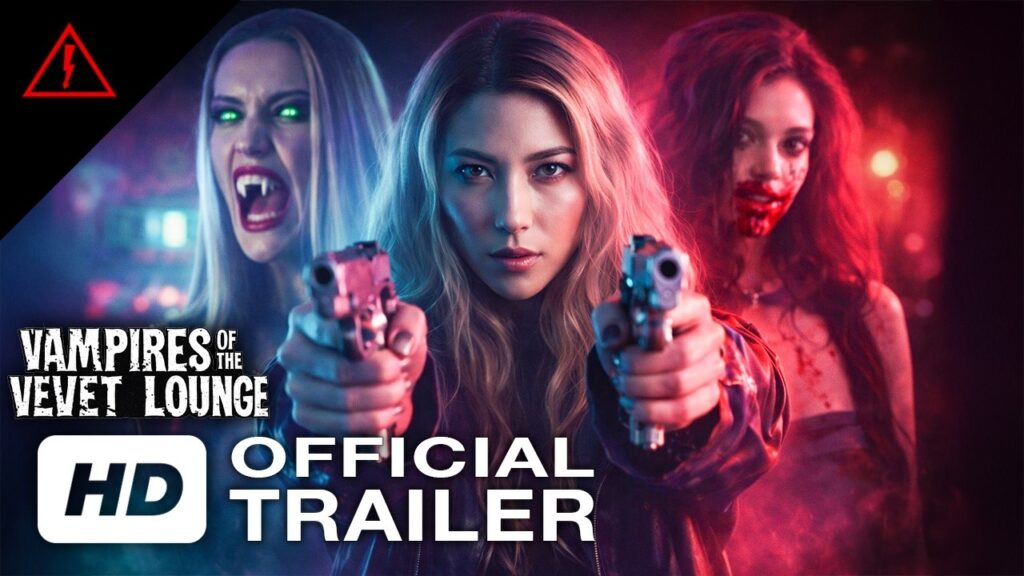
A hyper-stylized, blood-soaked satire blending dating culture with modern vampire chaos
Swipe right… and become the prey.
Vampires of the Velvet Lounge reinvents vampire mythology by embedding it within the mechanics of modern dating culture, transforming apps into hunting grounds and intimacy into danger. Set in a neon-soaked, hedonistic nightlife world, the film follows a coven of seductive vampires who lure victims through digital platforms, blurring the lines between desire, deception, and survival. The narrative leans heavily into excess—gore, humor, and stylized chaos—creating a grindhouse-inspired experience that prioritizes sensory impact over narrative precision. At its core, the film explores the commodification of relationships in the digital age, where attraction becomes transactional and vulnerability becomes lethal. By pairing vampire hunters with unsuspecting victims in the same digital ecosystem, the story builds a layered tension that reflects both modern anxieties and genre-driven spectacle.
Why It Is Trending: Horror meets dating-app culture in a provocative, high-concept genre mashup
The film gains traction by merging two culturally relevant themes: online dating and horror.
Its concept taps into widespread familiarity with dating apps, turning everyday behavior into a source of fear and satire
Elements Driving the Trend: High-concept storytelling fueled by digital culture and genre hybridity
The film’s appeal lies in its ability to translate modern habits into genre-driven narratives.
By combining horror, comedy, and thriller elements, it creates a dynamic and unpredictable viewing experience
Virality of Movie (Social Media Coverage): Concept-driven buzz around its bold premise and visual style
The film sparks curiosity due to its unique blend of dating culture and vampire lore.
Social conversations highlight its over-the-top aesthetic and provocative narrative setup
Critics Reception: Mixed reception balancing entertainment value with narrative inconsistency
Critics acknowledge the film’s stylistic ambition and entertainment value.
However, feedback points to uneven storytelling and excessive reliance on spectacle
Awards and Recognitions: Limited recognition reflecting niche genre positioning
No major awards highlighted on IMDb, indicating a primarily genre-focused release.
Its impact is driven more by concept and audience appeal than critical accolades
Director and Cast: Adam Sherman’s stylized vision elevated by bold, camp-driven performances
Adam Sherman embraces a maximalist approach, blending horror and satire with visual flair.
Performances by Mena Suvari and Dichen Lachman lean into the film’s campy tone, delivering exaggerated yet engaging character portrayals
Conclusion: A provocative genre experiment that transforms modern dating into a blood-soaked spectacle
Vampires of the Velvet Lounge stands as a bold attempt to modernize vampire storytelling through contemporary cultural frameworks. Its strength lies in its high-concept premise and unapologetic stylistic excess, even as narrative cohesion takes a secondary role. While it may not achieve critical acclaim, its originality and cultural relevance position it as a conversation starter within genre cinema. The film reflects a broader industry trend toward blending everyday experiences with heightened genre elements. Ultimately, it succeeds as a provocative and visually distinctive experiment in modern horror storytelling.
What Movie Trend Is Followed: Digital-age horror transforming everyday behavior into high-concept fear
Vampires of the Velvet Lounge follows the rising trend of digitally integrated horror, where everyday platforms like dating apps are reimagined as spaces of danger, manipulation, and psychological threat.
Instead of relying on traditional gothic horror settings, the film relocates fear into familiar digital environments, making the horror feel immediate and relatable. This trend thrives on the idea that modern convenience and connection tools can easily become mechanisms of vulnerability. The emotional hook lies in transforming routine behaviors—like swiping, messaging, and meeting strangers—into high-risk encounters. As a result, the film fits into a broader movement where technology is not just a tool, but the core antagonist shaping the narrative tension.
Trend Drivers: High-concept storytelling fueled by modern digital anxieties
The film taps into widespread concerns around online safety, identity deception, and superficial connections.
This allows horror narratives to evolve by embedding fear within familiar, everyday behaviors
What Is Influencing Trend: Cultural obsession with dating apps and digital intimacy
Modern relationships are increasingly shaped by online platforms, creating both opportunity and risk.
This duality provides rich narrative ground for stories that explore trust, deception, and vulnerability
Macro Trends Influencing: Genre hybridization and tech-driven storytelling
The industry is moving toward blending genres with contemporary themes and settings.
This shift enables films to remain relevant by reflecting current cultural behaviors and technologies
Consumer Trends Influencing: Audience preference for relatable and concept-driven horror
Viewers are drawn to horror that feels plausible and grounded in real-life scenarios.
They engage more deeply with stories that mirror their own experiences with technology and social interaction
Audience Analysis: Young, digitally native viewers seeking edgy and immersive content
The primary audience falls within the 18–34 demographic, particularly those active on social platforms.
These viewers value bold concepts, fast-paced narratives, and visually engaging storytelling
Conclusion: A growing trend redefining horror through technology and relatability
The trend followed by Vampires of the Velvet Lounge reflects a significant evolution in horror storytelling, where technology becomes central to both narrative and thematic development. Its scalability is high, as digital platforms are universally understood and widely used, making the concept easily adaptable across markets. As audiences continue to engage with technology in increasingly intimate ways, this trend will likely expand further. The industry is expected to explore more narratives that merge digital culture with genre storytelling. Ultimately, this approach ensures that horror remains relevant by evolving alongside societal behavior.
Final Verdict: A flashy, chaotic genre experiment that weaponizes modern dating culture into stylized horror spectacle
Vampires of the Velvet Lounge stands as a bold but uneven entry in contemporary horror, prioritizing concept and aesthetic over narrative precision. From an industry perspective, it reflects the growing appetite for high-concept, digitally rooted storytelling, where familiar technologies become narrative engines. Culturally, the film taps into anxieties surrounding online intimacy, trust, and identity, reframing dating apps as spaces of both desire and danger. Its identity relevance lies in exposing the performative nature of modern relationships, where attraction and deception coexist seamlessly. While its execution may lack consistency, its conceptual ambition positions it as a provocative experiment within genre evolution.
Audience Relevance: Strong appeal for viewers drawn to edgy, concept-driven horror
The film resonates with audiences who enjoy stylized, fast-paced, and visually bold horror experiences.
Its blend of satire and gore creates an engaging experience for viewers seeking entertainment over narrative depth
What Is the Message of Movie: Digital intimacy is built on illusion, not trust
The narrative suggests that modern connections are often superficial and potentially dangerous.
It highlights how technology can amplify both desire and deception in human relationships
Relevance to Audience: Reflecting real fears of online vulnerability and identity manipulation
The film mirrors contemporary anxieties around meeting strangers through digital platforms.
It resonates with audiences who are familiar with the risks and unpredictability of online interactions
Social Relevance: A critique of hookup culture and transactional relationships
The story comments on how relationships are increasingly commodified and reduced to quick exchanges.
It exposes the emotional detachment and risk embedded in modern dating behavior
Performance: Mixed reception with niche audience engagement
IMDb rating stands around 5.2, indicating a divided response among viewers.
Critical reception highlights entertainment value but notes inconsistencies in storytelling and pacing
Legacy: A niche but notable example of tech-driven horror evolution
The film contributes to the growing catalog of horror narratives centered around digital culture.
Its legacy will be tied to its concept rather than its execution
Success: Concept-driven visibility over critical or commercial acclaim
The film’s success lies in its bold premise and genre experimentation rather than awards or box office performance.
Its impact is primarily within niche horror audiences and digital-era storytelling discussions
Insights: When desire meets danger in the digital ageIndustry Insight: The film highlights a shift toward technology-driven horror narratives, where digital platforms become central to storytelling. This approach allows filmmakers to tap into contemporary fears and maintain relevance. It also demonstrates the industry’s focus on high-concept ideas as key differentiators.Audience Insight: Viewers are increasingly drawn to relatable horror scenarios rooted in everyday experiences. They engage more with stories that reflect their own interactions with technology. This trend enhances emotional immersion and relatability.Social Insight: The narrative reflects concerns about trust, identity, and vulnerability in digital relationships. It shows how modern dating culture can blur boundaries between authenticity and deception. This creates a strong emotional and psychological impact.Cultural Insight: The film contributes to redefining horror as a genre that evolves alongside societal behavior. By integrating digital culture into its narrative, it reinforces the idea that fear adapts to contemporary realities. This ensures its continued cultural relevance.
Conclusion: A concept-first horror film that reflects the dangers of modern connection through exaggerated spectacle
Vampires of the Velvet Lounge succeeds in capturing the essence of modern digital anxieties, even if its execution remains inconsistent. Its impact lies in its ability to translate everyday behaviors into heightened horror scenarios. From a market perspective, it fits within niche audiences seeking bold and unconventional storytelling. For the industry, it reinforces the importance of concept-driven narratives in a crowded content landscape. Ultimately, it stands as a vivid example of how horror continues to evolve by reflecting the realities of contemporary life.
Summary of the Movie: A hyper-stylized vampire thriller that turns dating apps into deadly playgrounds of desire and deception
• Movie themes: Digital intimacy, deception, desire, survival — the film explores how modern relationships built through technology blur the lines between attraction and danger
• Movie director: Adam Sherman delivers a visually bold, grindhouse-inspired narrative, blending horror, satire, and excess to create a chaotic and stylized cinematic experience
• Top casting: Mena Suvari leads with a commanding, seductive presence, supported by Dichen Lachman and Sarah Dumont, whose performances embrace the film’s campy and exaggerated tone
• Awards and recognition: No major awards listed on IMDb, reflecting its positioning as a niche genre film focused more on concept than critical recognition
• Why to watch movie: A provocative, high-concept horror film that reimagines everyday dating culture through a dark, entertaining, and visually striking lens
• Key Success Factors: Unique premise, stylized visuals, and genre-blending approach drive its appeal within niche horror audiences
• Where to watch: Released April 29, 2026 (Philippines); available through select theatrical releases and digital platforms
Conclusion: A bold and chaotic horror experience that transforms modern dating into a spectacle of danger and excess
Vampires of the Velvet Lounge stands out for its willingness to push boundaries and embrace a highly stylized approach to horror storytelling. The film’s emotional takeaway lies in its exploration of vulnerability within modern digital interactions. As a viewing experience, it is energetic, provocative, and visually intense. Its lasting impression comes from its high-concept premise and unapologetic execution. Ultimately, it reflects the evolving nature of horror, where everyday behaviors are transformed into sources of fear and fascination.