



Robert A. Heinlein wasn’t fond of working as a screenwriter in Hollywood, and he definitely hated working in TV.
The famed sci-fi author loved the movies, but was always more comfortable sticking to his preferred medium of the printed page. Heinlein was quoted in a 1994 issue of Cinefantastique Magazine saying that working on a Hollywood screenplay meant a great deal of stress, but also that seeing a completed movie he had worked on was a rewarding experience. Heinlein, however, was pretty negative about his experience working on 1960s TV. That, he recalls, was totally miserable.
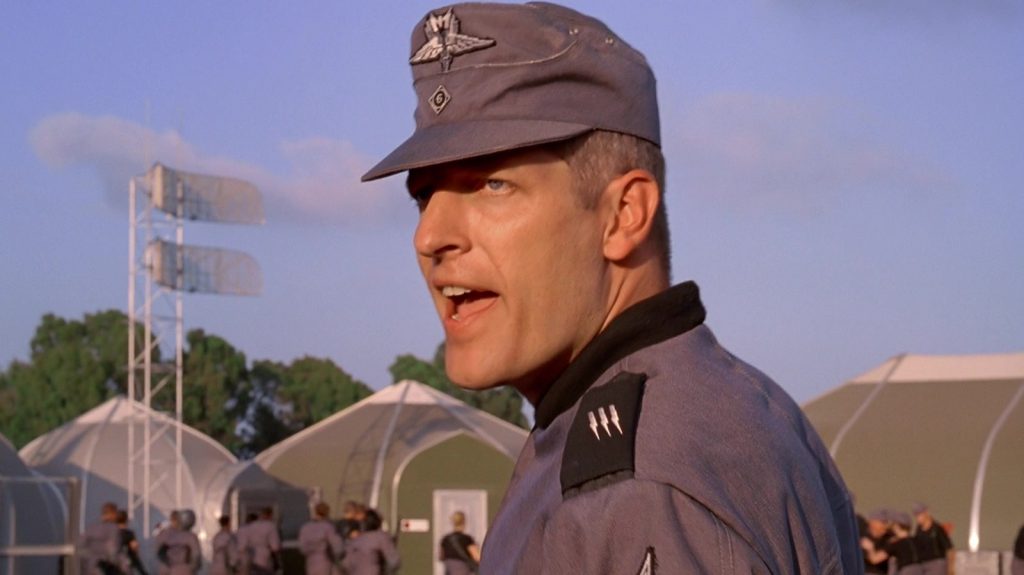
Movie fans may know Robert A. Heinlein’s name best for writing the 1959 novel that provided the source material for Paul Verhoeven’s 1997 sci-fi war satire “Starship Troopers,” a movie full of disturbing details. He was also behind the short story ” ‘—All You Zombies—’ ,” which was adapted into the wibby-wobbly time travel movie “Predestination.” Sci-fi fans, however, know him as a giant of the genre, having written books like 1951’s “The Puppet Masters,” 1961’s “Stranger in a Strange Land,” and many others besides.
In the ’50s, Heinlein was also tapped by Hollywood to write a few screenplays, and the famed author is a credited screenwriter on movies like Irving Pichel’s 1950 film “Destination Moon” (which adapted elements of Heinlein’s 1947 teen novel “Rocket Ship Galileo”) and Richard Talmidge’s 1953 film “Project Moonbase.” About “Destination Moon,” Heinlein noted that he was actually pleased with the results.
It was when he was approached in the 1960s to write the pilot for an unmade TV series called “XXII Century,” however, that Heinlein’s experience in Hollywood turned sour. That show, it seems, was a huge headache.
Robert A. Heinlein liked the movies, but an unmade 1963 TV show left him annoyed
To give you an idea of how well “Project Moonbase” was received by the public, it was featured on an episode of the bad-movie showcase program “Mystery Science Theater 3000.” Robert A. Heinlein didn’t comment on that movie directly. But “Destination Moon” has been recognized by Steven Spileberg as the movie that taught him about cinematic suspense, and Cinefantastique quoted Heinlein about his rewarding experiences working on it:
“(I)t had cost me eighteen months work, my peace of mind, and almost all of my remaining hair. Nevertheless, when I saw the ‘rough cut’ of the picture, it seems to have been worth it.”
Heinlein wrote his masterpiece, “Stranger in a Strange Land,” several years after his experiences working on “Moonbase” and “Moon,” so Hollywood started looking at him again. A producer named Howie Horowitz called Heinlein about making a TV pilot, and the result was a script called “XXII Century” (also called “Century XXII” various places online). The script can be purchased on the Heinlein archive website, and that edition contains pages and pages of notes, seemingly requiring that Heinlein repeatedly alter his work.
About the show, Heinlein noted:
“(I)f the series is never produced, I hope I have sense enough to stay home and write books in the future, and leave the movie never-never land to those who enjoy the rat race.”
It seems those pages of notes didn’t leave Heinlein in a good mood. It was the last time he would be directly involved in any major Hollywood production.
What was XXII Century about?
The basics behind the pilot of “XXII Century” can be found on the Libertarian Futurist Society website. “XXII Century” was to take place in the year 2163, and followed the plight of a secret society of powerful superhumans who had the ability to think rationally at all times, even if it pained them. They had cordoned themselves off from the rest of society, and developed a benevolent dictatorship.
The LFS website notes that this premise was culled from Robert A. Heinlein’s 1949 novella “Gulf.” In the pilot episode, called “The Man Who Wasn’t There,” it was explained that the United States, Russia, and China engaged in a devastating war in the year 1984. Thereafter, the former two affected authoritarian governments founded moon colonies, and eventually began sending criminals and undesirables there. Fast forward a few centuries, and “XXII Century” can begin. The moon colonies were matriarchal in nature, as there were far fewer women than men, and were also meant to reflect a post-racism future, where prejudice was left behind. And all of this was written before “Star Trek” ever made it to the air in 1966.
Why did the show fall apart? The Space Review has some commentary on “XXII Century” from noted Heinlein scholar Bill Patterson, and he said that the script was way too daring for its own good, and that there was no way it could have ever made its way to the small screen. The project was abandoned, Heinlein lost interest in television, and he went back to writing hit novels. The TV show sounds great, but Heinlein was likely better off in his preferred medium.