


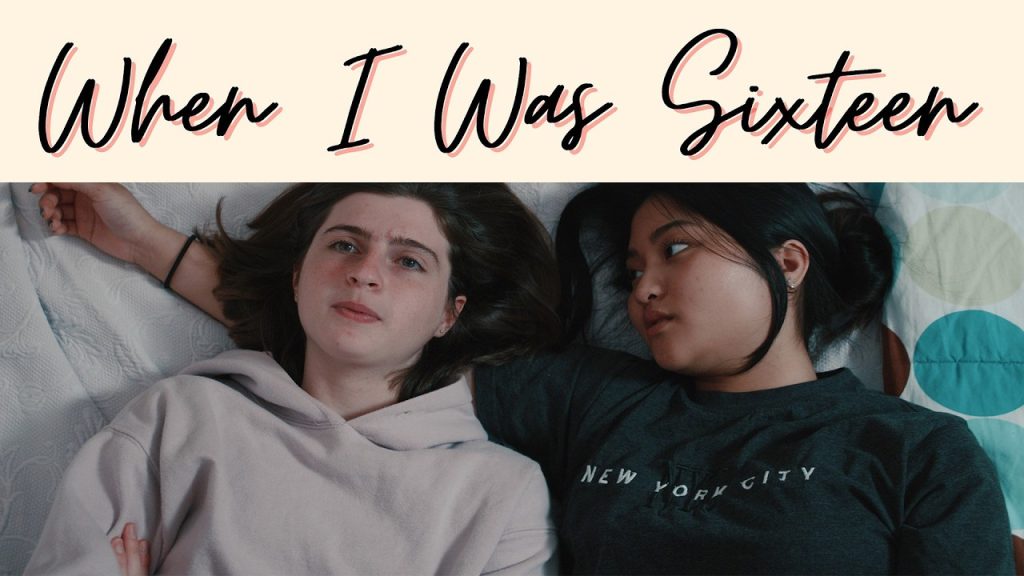
A Coming-of-Age Drama About First Love, Unspoken Feelings, and the Emotional Complexity of Senior Year
High school has long provided filmmakers with the perfect setting to explore friendship, identity, and first love, but When I Was Sixteen approaches these familiar themes through an ensemble coming-of-age drama centered on overlapping relationships and unspoken emotions. Written by Jacob Elijah Nickless and David Papa, and directed by David Papa, the independent film follows a group of seniors whose final school project forces long-hidden romantic feelings to surface, transforming an ordinary assignment into an emotionally revealing journey.
Built around what the filmmakers describe as a “love hexagon,” the story examines the uncertainty of adolescence, where affection is rarely straightforward and every relationship influences another. Rather than focusing on grand romantic gestures, When I Was Sixteen explores the awkwardness, vulnerability, and emotional confusion that often define the transition from high school into adulthood.
Quick Facts: An Independent Coming-of-Age Drama Focused on Love and Self-Discovery
|
First love, friendship, identity, unrequited love, coming of age, senior year |
|
|
Jacob Elijah Nickless, David Papa |
|
|
Released on June 15, 2024 (United States). |
|
|
No major awards or nominations have been reported. |
➡️ Key Takeaway: When I Was Sixteen is a low-budget independent coming-of-age drama that explores the emotional uncertainty of adolescence through an interconnected story of friendship, romance, and self-discovery.
Should You Watch It?: A Character-Driven Teen Drama That Prioritizes Relationships Over Spectacle
If you enjoy intimate coming-of-age stories focused on emotional relationships rather than high-concept drama, When I Was Sixteen offers a sincere portrait of teenage life. The film centers on everyday emotions—crushes, misunderstandings, friendships, and difficult choices—allowing its characters’ personal journeys to take precedence over larger plot twists.
Rachel finds herself in love with Caiden, who is already in a relationship with Desherry, while Jenny quietly harbors feelings for Rachel. The arrival of newcomer Tristan further complicates these relationships when an unexpected senior project forces the students to work together, bringing hidden emotions into the open. This ensemble approach allows the film to examine love from multiple perspectives rather than presenting a single romantic storyline.
➡️ Key Takeaway: When I Was Sixteen is best suited for viewers who appreciate character-focused independent dramas about adolescence, friendship, and the emotional uncertainty of growing up.
Why Everyone Is Talking About It?: An Independent Film That Celebrates the Emotional Reality of High School
Unlike many contemporary teen dramas that rely on heightened conflict or melodrama, When I Was Sixteen embraces a quieter, more personal approach. Its modest independent production allows the story to focus almost entirely on character interactions and the emotional complexity of young relationships, presenting senior year as a period of uncertainty rather than certainty.
The film also stands out for presenting multiple intersecting romantic perspectives instead of following a traditional love triangle. By exploring unrequited feelings, changing friendships, and new beginnings simultaneously, it reflects the complicated emotional landscape many teenagers experience as graduation approaches and lifelong relationships begin to evolve.
➡️ Key Takeaway: When I Was Sixteen distinguishes itself through its sincere portrayal of teenage relationships, emphasizing emotional honesty and personal growth over conventional high-school drama.
Movie Trend: Independent Coming-of-Age Films Are Embracing Emotional Authenticity Over High School Stereotypes
In recent years, independent coming-of-age cinema has shifted away from exaggerated teen comedy and sensationalized high-school drama toward more emotionally grounded storytelling. Rather than focusing on popularity, rebellion, or spectacle, filmmakers are increasingly exploring the quieter realities of adolescence—uncertainty, identity, unspoken affection, and the difficult transition into adulthood. When I Was Sixteen fits comfortably within this movement by presenting teenage relationships with sincerity and emotional restraint.
The film also reflects a growing interest in ensemble storytelling. Instead of centering on a single romance, it explores multiple interconnected relationships, allowing different perspectives on love, friendship, and self-discovery to emerge simultaneously. This structure captures the emotional complexity of senior year, where friendships evolve, romantic feelings overlap, and every decision carries greater significance as graduation approaches.
➡️ Key Takeaway: When I Was Sixteen reflects the growing popularity of independent coming-of-age dramas that prioritize emotional honesty, relatable characters, and realistic portrayals of teenage relationships.
Audience Profile: Ideal for Viewers Who Enjoy Character-Driven Coming-of-Age Stories
|
Fans of coming-of-age dramas and relationship-driven independent films |
|
|
Young adults, students, LGBTQ+ drama audiences, independent film enthusiasts |
|
|
Students, young professionals, independent film fans, romance and drama viewers |
|
|
Coming-of-age films, relationship dramas, indie cinema, school-based dramas |
When I Was Sixteen will resonate most with viewers who appreciate emotionally driven stories rather than plot-heavy narratives. Audiences who enjoy films centered on friendships, first love, and personal growth will likely connect with its honest portrayal of adolescence and the uncertainty that accompanies life’s transitional moments.
The film may also appeal to viewers looking for inclusive relationship dynamics presented as a natural part of everyday life. By exploring multiple forms of attraction and unrequited love within the same story, it offers a broader perspective on teenage emotions without allowing any single relationship to dominate the narrative.
➡️ Key Takeaway: When I Was Sixteen is best suited for audiences seeking intimate, character-focused coming-of-age stories that capture the emotional complexity of growing up.
What This Movie Means for the Industry: Independent Filmmakers Continue to Find Universal Stories in Everyday Experiences
When I Was Sixteen demonstrates how independent filmmakers can tell meaningful stories without relying on large budgets or elaborate production values. Produced on an estimated budget of $14,000, the film focuses almost entirely on its characters and relationships, illustrating how emotional authenticity can become an independent production’s greatest strength.
The film also highlights the continued importance of coming-of-age stories within independent cinema. While major studios increasingly concentrate on franchise entertainment, smaller productions continue exploring universal experiences such as first love, friendship, identity, and personal growth. These stories remain relevant because nearly every audience can recognize aspects of their own adolescence within them.
By centering its narrative on multiple intersecting relationships rather than a single protagonist, When I Was Sixteen also reflects a broader trend toward ensemble storytelling. This approach creates a richer emotional landscape while acknowledging that adolescence is rarely defined by one relationship or one life-changing moment, but by the many connections that shape personal identity.
➡️ Key Takeaway: When I Was Sixteen illustrates how independent cinema continues to tell relatable coming-of-age stories through authentic characters, emotional honesty, and everyday experiences rather than spectacle.
Creative Analysis: An Honest Portrait of Teenage Relationships and Emotional Growth
At its core, When I Was Sixteen is less interested in dramatic twists than in capturing the emotional uncertainty that defines adolescence. David Papa approaches the story with a quiet realism, allowing conversations, awkward encounters, and unresolved feelings to shape the narrative rather than relying on conventional romantic comedy formulas. The result is a character-driven drama that reflects how confusing and emotionally unpredictable senior year can be.
The film’s greatest strength lies in its interconnected relationships. Rather than presenting love as a simple destination, it explores the reality that affection is often one-sided, misunderstood, or arrives at the wrong moment. Through its ensemble cast, the story becomes a reflection on growing up and learning that emotional maturity often comes from accepting uncertainty rather than finding easy answers.
➡️ Key Takeaway: When I Was Sixteen succeeds as a coming-of-age drama because it treats teenage emotions with sincerity, presenting first love as complicated, imperfect, and deeply human.
Storytelling: Multiple Perspectives Create a Realistic Portrait of Young Love
Instead of following a traditional romance between two characters, the screenplay builds its narrative around a web of interconnected relationships. Rachel loves Caiden, Caiden is committed to Desherry, Jenny quietly loves Rachel, and newcomer Tristan unexpectedly becomes part of this emotional equation. This “love hexagon” allows the film to examine romance from several perspectives, showing how every relationship influences another.
The senior project acts as the story’s primary catalyst, bringing together characters who might otherwise have remained emotionally distant. As conversations deepen and hidden feelings emerge, the project becomes a metaphor for self-discovery, forcing each character to confront emotions they have long avoided expressing.
➡️ Key Takeaway: The screenplay uses overlapping relationships to portray adolescence as a period where emotional growth often comes through vulnerability rather than certainty.
Direction: David Papa Prioritizes Authenticity Over Dramatic Spectacle
David Papa directs the film with restraint, allowing the performances and dialogue to carry the emotional weight. Rather than relying on elaborate visual techniques or melodramatic confrontations, he focuses on creating believable interactions that reflect everyday teenage experiences.
This understated approach complements the independent nature of the production. The film feels intimate, emphasizing classrooms, conversations, friendships, and ordinary locations instead of stylized cinematic spectacle. By keeping the storytelling grounded, Papa allows viewers to focus on the characters’ emotional journeys rather than the mechanics of the plot.
➡️ Key Takeaway: David Papa’s understated direction creates an intimate atmosphere where emotional authenticity becomes the film’s greatest strength.
Performances: A Young Ensemble Brings Emotional Sincerity to the Story
Emma Kob anchors the film as Rachel, portraying a teenager struggling to balance hope, disappointment, and uncertainty as she navigates complicated feelings for Caiden. Her performance captures the quiet vulnerability of adolescence without exaggeration, making Rachel an accessible and relatable protagonist.
Riley Ornido brings emotional complexity to Caiden, whose existing relationship with Desherry places him at the center of several conflicting emotions. Teryn Macallan adds warmth and curiosity as Tristan, the newcomer whose arrival subtly changes the group’s dynamics. Illia Paloma, Victoria Neely, Bella Brusa, and the supporting cast help create a believable ensemble where every relationship contributes to the film’s emotional landscape.
➡️ Key Takeaway: The ensemble performances emphasize natural chemistry and emotional honesty, reinforcing the film’s grounded portrayal of teenage relationships.
Cinematography & Visual Style: Everyday School Life Becomes Emotionally Resonant
When I Was Sixteen embraces a straightforward visual style that reflects its realistic approach to storytelling. Rather than using elaborate cinematography, the film captures familiar environments—classrooms, hallways, neighborhoods, and everyday meeting places—as spaces where meaningful emotional moments quietly unfold.
The naturalistic presentation reinforces the authenticity of the characters’ experiences. By avoiding excessive stylistic flourishes, the cinematography keeps viewers focused on expressions, conversations, and subtle emotional shifts, allowing the relationships themselves to remain at the center of the film.
➡️ Key Takeaway: The understated visual style complements the film’s intimate storytelling, allowing ordinary settings to become emotionally meaningful.
Themes & Messages: Growing Up Means Accepting That Love Isn’t Always Simple
One of the film’s central themes is the reality that love rarely follows predictable paths. Every character experiences affection differently—whether through unspoken feelings, established relationships, or unexpected new connections. Rather than offering idealized romance, the film acknowledges that adolescence is often defined by uncertainty, misunderstanding, and emotional growth.
The story also explores friendship, identity, and communication. As graduation approaches, each character begins confronting difficult questions about who they are and what relationships truly matter. In doing so, When I Was Sixteen presents senior year not simply as the end of high school, but as the beginning of emotional adulthood.
➡️ Key Takeaway: The film suggests that growing up is less about finding perfect love than learning to understand yourself and the people around you.
What Makes This Movie Different?: An Ensemble Coming-of-Age Story That Embraces Emotional Complexity
Many teen dramas focus on a single romance or central conflict, but When I Was Sixteen distinguishes itself by presenting multiple interconnected relationships with equal importance. Every character occupies a different emotional position, allowing the film to explore romance, friendship, heartbreak, and self-discovery simultaneously.
Its independent production also gives the film a quieter, more personal identity. Rather than chasing mainstream high-school stereotypes, it concentrates on recognizable emotions and everyday experiences, reminding audiences that some of life’s most significant moments occur during ordinary conversations rather than dramatic life-changing events.
➡️ Key Takeaway: When I Was Sixteen stands apart through its ensemble storytelling, sincere emotional perspective, and thoughtful exploration of the complicated relationships that define adolescence.
If You Liked When I Was Sixteen (2024): Coming-of-Age Dramas About First Love and Self-Discovery
If When I Was Sixteen resonated with you because of its honest portrayal of teenage relationships, emotional uncertainty, and the transition into adulthood, these films explore similar themes. Each captures the excitement, heartbreak, and personal growth that define adolescence while focusing on authentic characters rather than conventional high-school stereotypes.
The Fallout (2021) by Megan Park
Like When I Was Sixteen, The Fallout examines how teenagers navigate complicated friendships, romance, and emotional vulnerability. While its subject matter is more serious, the film shares a deeply personal approach to adolescence, emphasizing character development and authentic conversations over melodrama.
➡️ Where to Watch: Streaming on Max. Also available to rent or purchase on Apple TV, Prime Video, and Fandango at Home.
Snack Shack (2024) by Adam Carter Rehmeier
Set during one unforgettable summer, Snack Shack explores friendship, first love, and the bittersweet transition toward adulthood. Like When I Was Sixteen, it finds humor and emotional truth in ordinary teenage experiences while celebrating the awkwardness and excitement of growing up.
➡️ Where to Watch: Streaming on Starz. Also available on Apple TV, Prime Video, and Fandango at Home.
My Old Ass (2024) by Megan Park
Blending coming-of-age drama with light fantasy, My Old Ass follows a teenager forced to reconsider her future after an unexpected encounter with her older self. While more imaginative in concept, it shares When I Was Sixteen‘s thoughtful exploration of identity, relationships, and the emotional uncertainty of leaving adolescence behind.
➡️ Where to Watch: Streaming on Prime Video.
➡️ Key Takeaway: These films demonstrate that the strongest coming-of-age stories are rarely about dramatic events—they are about the small emotional moments that shape who we become.
Final Verdict: A Sincere Independent Drama That Captures the Emotional Complexity of Senior Year
When I Was Sixteen may be a modest independent production, but its greatest strength lies in its sincerity. Rather than relying on exaggerated high-school stereotypes or romantic clichés, David Papa focuses on the emotional uncertainty that accompanies adolescence, allowing relationships and personal growth to take center stage. The interconnected “love hexagon” provides an engaging framework for exploring friendship, attraction, heartbreak, and self-discovery from multiple perspectives.
The ensemble cast brings authenticity to the story, while the film’s grounded direction keeps the focus on relatable experiences that many viewers will recognize from their own teenage years. Its emphasis on communication, vulnerability, and the difficult transition from adolescence into adulthood gives the drama an emotional honesty that distinguishes it from more conventional teen romances.
Although produced on a very limited budget, When I Was Sixteen demonstrates how independent filmmaking can tell meaningful stories through strong characters and relatable emotions rather than spectacle. It is a heartfelt reminder that some of life’s most important moments occur during ordinary conversations, quiet realizations, and the relationships that shape our future.
➡️ Final Verdict: 3.5/5 — A heartfelt independent coming-of-age drama that offers an honest and relatable portrait of first love, friendship, and the emotional challenges of growing up.