


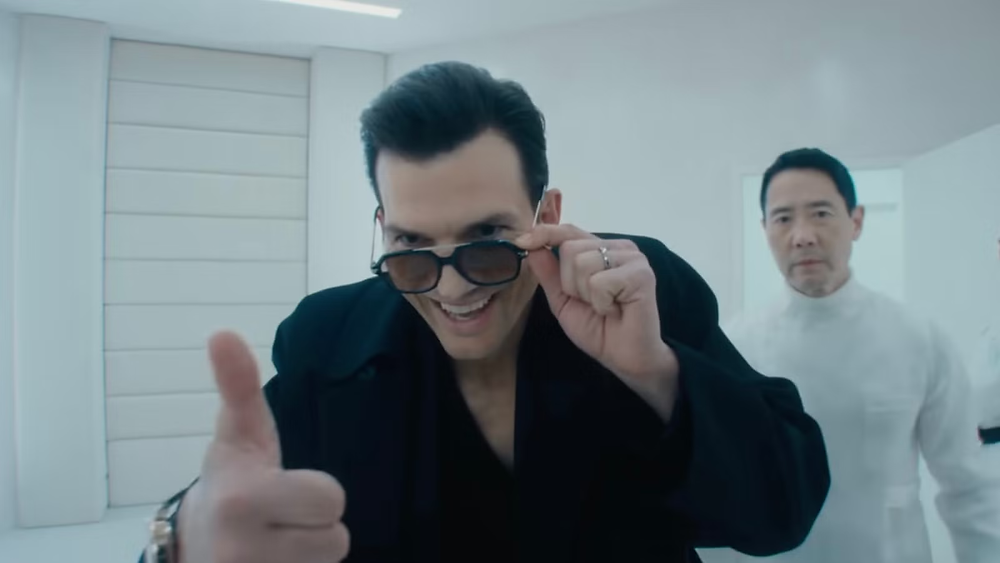
Why the trend is emerging: Platform saturation → spectacle-first success
Horror television in 2026 is thriving not because it is safer or smarter, but because it is optimized for maximum immediate reaction in crowded streaming ecosystems. The success of The Beauty reflects a system where visibility, controversy, and aesthetic extremity are more reliable drivers of reach than critical consensus.
• Structural driver: Streaming platforms are locked in an arms race for attention, rewarding projects that generate instant social traction rather than long-term acclaim. Trailer views, trending metrics, and meme velocity now function as greenlights in themselves.
• Cultural driver: Audiences are culturally primed for heightened, grotesque, and satirical horror that mirrors anxieties around beauty, aging, and bodily control. Horror has become the genre most capable of metabolizing discomfort into entertainment.
• Economic driver: IP-driven horror offers high engagement at comparatively lower production risk than prestige drama, especially when paired with celebrity casting. Even poorly reviewed series can deliver strong returns through initial spikes in viewership.
• Psychological / systemic driver: In an environment of constant algorithmic pressure, viewers respond more predictably to extremes than nuance. Shock cuts through fatigue faster than subtlety.
This trend exists because reaction now precedes evaluation.Attention is secured before meaning is tested.Visibility has become the primary currency of success.
Insights: Shock is no longer a risk—it is a growth strategy.
Industry Insight: Platforms increasingly prioritize projects that guarantee conversation, even if sentiment is divided.Consumer Insight: Audiences sample aggressively before committing emotionally.Brand Insight: Early spectacle can outweigh long-term reputation in launch windows.
This dynamic is structurally reinforced by algorithms and release models.As long as platforms reward noise, spectacle will scale.
What the trend is: Horror-as-marketing → controversy as distribution
This trend is not simply “more horror” or “shock TV.” It is the transformation of horror into a promotional engine where outrage, comparison, and discomfort act as distribution mechanisms.
• Defining behaviors: Record-breaking trailer views, polarizing comment sections, rapid comparison to adjacent IP, and heavy reliance on visual provocation. Marketing becomes inseparable from narrative tone.
• Scope and boundaries: This logic dominates genre television, particularly horror, satire, and body-centric narratives, but is increasingly visible in thrillers and sci-fi as well.
• Meaning shift: Horror shifts from cathartic storytelling toward attention extraction. The question becomes not “Is it good?” but “Did you see it?”
• Cultural logic: In a crowded content economy, familiarity plus escalation beats originality alone. Even accusations of imitation fuel circulation.
Horror now functions as both content and campaign.Controversy is not collateral—it is infrastructure.Reaction sustains reach.
Insights: Distribution is embedded in the narrative itself.
Industry Insight: Marketing impact is increasingly designed at the script level.Consumer Insight: Viewers expect exaggeration and judge later.Brand Insight: Differentiation must happen after attention is secured.
This reframing is difficult to reverse once normalized.When outrage performs, it repeats.
Detailed findings: Viral reach → structural proof of the model
The launch of The Beauty provides concrete evidence that spectacle-first horror is now a validated industrial strategy rather than an anomaly.
• Market / media signal: The trailer became FX’s most-viewed promo ever, surpassing historical benchmarks regardless of sentiment polarity. Reach alone justified its cultural footprint.
• Behavioral signal: Viewers engaged heavily through comparison, accusation, and debate, extending the promotional cycle organically. Negative reactions amplified rather than suppressed visibility.
• Cultural signal: Persistent comparisons to The Substance reveal an audience attuned to thematic overlap but still willing to engage with repetition when stakes are escalated.
• Systemic signal: The project aligns with a broader slate of high-profile horror releases positioned as flagship attention drivers across platforms.
• Main finding: Success metrics now favor immediate saturation over sustained approval.
Proof no longer requires praise.Momentum substitutes for consensus.Horror thrives on friction.
Insights: Engagement does not need endorsement.
Industry Insight: Controversial launches outperform quiet excellence.Consumer Insight: Curiosity overrides skepticism at scale.Brand Insight: Differentiation can be deferred until after launch.
This validates a durable model under current conditions.When attention is the goal, resistance becomes fuel.
Description of consumers: Saturation-native viewers trained to sample, judge, and move on
These consumers are not passive fans of horror; they are algorithm-literate viewers who understand media as a flow rather than a commitment. They engage with content quickly, publicly, and often skeptically, using early exposure to decide whether something deserves time, not loyalty.
• Life stage: Primarily Gen Z and younger millennials shaped by streaming abundance and short-form media logic. They are comfortable entering and exiting narratives without emotional investment.
• Cultural posture: Ironically engaged, comparison-driven, and fluent in genre tropes. They enjoy identifying similarities, flaws, and excess as part of the entertainment itself.
• Media habits: Heavy users of TikTok, YouTube trailers, comment sections, Reddit threads, and reaction content. Discovery happens through discourse as much as through promotion.
• Identity logic: Cultural literacy is demonstrated by recognizing references, influences, and repetitions. Being able to critique is as valuable as enjoying.
These viewers treat content as conversation material.Watching is optional; reacting is essential.Participation often matters more than completion.
Insights: Viewers optimize for relevance, not resolution.
Industry Insight: Audiences no longer require trust to engage—only curiosity.Consumer Insight: Sampling replaces commitment as default behavior.Brand Insight: Early moments must reward attention immediately.
This audience expands as choice overload intensifies.When everything is available, discernment becomes performance.
What is consumer motivation: Cultural relevance → low-risk engagement
The motivation behind engagement with spectacle-first horror is not immersion but awareness. Viewers want to know enough to stay culturally current without investing deeply.
• Core fear / pressure: Fear of missing out on cultural conversation rather than missing narrative depth. Silence equals irrelevance.
• Primary desire: To remain informed, reactive, and fluent in what is circulating. Knowledge functions as social currency.
• Trade-off logic: Consumers accept lower narrative quality in exchange for high visibility and discussion value. Engagement is brief but intense.
• Coping mechanism: Using irony, critique, and comparison to maintain emotional distance. Detachment protects against disappointment.
Motivation prioritizes presence over pleasure.Being aware matters more than being moved.Engagement is strategic.
Insights: Cultural literacy drives consumption choices.
Industry Insight: Visibility creates demand independent of satisfaction.Consumer Insight: Awareness feels safer than attachment.Brand Insight: Conversation-worthiness outweighs coherence.
This motivation stabilizes the trend.When relevance is the reward, spectacle wins.
Core macro trends: Algorithmic amplification → normalization of excess
Several structural forces lock this trend into place, making spectacle-driven horror a rational outcome rather than a creative accident.
• Technological force: Algorithms reward velocity, outrage, and repetition, pushing extreme content further and faster than nuanced storytelling.
• Economic force: Streaming economics favor front-loaded engagement over slow-burn appreciation. Launch impact outweighs legacy.
• Cultural force: Audiences increasingly expect exaggeration and provocation as baseline entertainment. Subtlety struggles to circulate.
• Industry force: Genre recycling accelerates as familiar frameworks reduce discovery friction. Novelty is delivered through escalation, not reinvention.
These forces normalize excess as efficiency.Shock becomes predictable infrastructure.Amplification rewards intensity.
Insights: The system selects for extremity.
Industry Insight: Platform mechanics quietly dictate creative outcomes.Consumer Insight: Viewers adapt expectations to algorithmic logic.Brand Insight: Differentiation must happen within, not against, amplification systems.
This creates a self-reinforcing loop.What spreads fastest defines what gets made.
Trends 2026: When horror becomes a launch mechanism, not a genre
By 2026, horror television increasingly functions as a visibility accelerator rather than a purely narrative form. Shows like The Beauty demonstrate how shock, satire, and bodily extremity are used to guarantee immediate cultural penetration in an overcrowded streaming landscape.
• Trend definition: Spectacle-first horror designed to maximize early attention, social debate, and algorithmic amplification before critical consensus forms.
• Core elements: Extreme premises, provocative aesthetics, celebrity casting, rapid trailer circulation, and controversy-friendly themes such as beauty, control, and bodily risk.
• Primary industries: Streaming television, genre entertainment, digital marketing, celebrity-driven IP, and social media platforms.
• Strategic implications: Success is measured in launch velocity—views, shares, comments—rather than long-term narrative cohesion.
• Strategic implications for industry: Marketing, casting, and concept development increasingly outweigh script quality in early-stage greenlighting.
• Future projections: Horror continues to dominate as the genre most capable of sustaining this model, with satire and body horror leading escalation.
Horror becomes a delivery system for attention.Narrative depth is tested after reach is secured.Launch replaces longevity.
Insights: In 2026, the first week matters most.
Industry Insight: Early saturation predicts platform confidence.Consumer Insight: Viewers follow what breaks through, not what is refined.Brand Insight: Shock is used to guarantee cultural entry.
This trend intensifies as competition increases.When attention is scarce, extremes travel fastest.
Social trends 2026: Reaction culture replaces appointment viewing
Socially, this shift reflects how audiences engage with media less as long-form experiences and more as reaction prompts within continuous feeds.
• Implied social trend: Media consumption framed around commentary, critique, and comparison rather than emotional immersion.
• Behavioral shift: Viewers encounter shows through clips, trailers, and discourse before—or instead of—watching full episodes.
• Cultural logic: Participating in conversation offers social validation even without full consumption.
• Connection to Trends 2026: Spectacle-first horror feeds reaction culture by providing instantly legible provocation.
Reaction becomes participation.Watching becomes optional.Conversation is the product.
Insights: Media functions as social signal.
Industry Insight: Discourse sustains relevance beyond viewership.Consumer Insight: Being able to comment matters more than completion.Brand Insight: Designing for debate extends lifespan.
This social logic reinforces spectacle strategies.When reaction circulates, content survives.
Summary of trends: When visibility outpaces meaning, controversy becomes structure
The success of The Beauty illustrates a broader transformation in how television success is defined. In a saturated streaming economy, horror evolves into a high-efficiency vehicle for attention, using shock as infrastructure rather than exception.
Related trends
Strategic synthesis
|
Main trend: Visibility-driven horror |
||
|
Main social trend: Reaction participation |
||
|
Main brand strategy: Controversy leverage |
Attention before approval |
|
|
Main industry trend: Algorithmic commissioning |
||
|
Main consumer motivation: Relevance maintenance |
Insights: Success is now front-loaded.
Industry Insight: Platforms reward immediate impact over endurance.Consumer Insight: Awareness substitutes for attachment.Brand Insight: Being seen matters more than being praised.
This summary confirms a structural shift, not a momentary spike.When algorithms reward noise, horror answers loudly.
Areas of innovation: Designing for spectacle without collapse → turning attention into endurance
As spectacle-driven launches become normalized, innovation shifts toward preventing attention spikes from collapsing into reputational fatigue. The challenge is no longer how to generate shock, but how to metabolize it into sustained trust, narrative depth, and franchise longevity.
• Structural innovation: Building narrative architectures that can absorb extreme premises without fragmenting coherence. Shock operates as an entry point, not a substitute for story.
• Creative innovation: Designing escalation curves that peak early but deepen psychologically over time. Intensity is redistributed across seasons rather than exhausted at launch.
• Strategic innovation: Separating visibility tactics from long-term brand positioning through phased communication strategies. Early controversy is followed by credibility reinforcement.
• Systemic innovation: Developing success metrics beyond first-week views, including retention, completion rates, and post-launch sentiment stabilization. Measurement evolves from noise to durability.
• Organizational innovation: Creating internal guardrails that balance algorithmic incentives with creative stewardship. Teams are empowered to say no to unnecessary escalation.
Innovation reframes spectacle as a resource, not a liability.Shock is managed, not indulged.Endurance becomes the differentiator.
Insights: Attention must be converted, not repeated.
Industry Insight: Sustainable franchises require restraint mechanisms alongside amplification tools.Consumer Insight: Audiences reward depth after curiosity is satisfied.Brand Insight: Longevity depends on what happens after the first spike.
This area defines who survives the spectacle era.Those who stabilize attention will outlast those who chase it.
Trends 2026 – Entertainment & visibility supremacy: When being seen becomes the story itself
Entertainment & Visibility Supremacy describes a cultural shift in which movies are no longer just narrative objects but visibility engines, designed to generate attention, discourse, and recognizability as primary outcomes. The trend reflects an industry reality where cultural impact is measured less by depth of interpretation and more by immediacy of reaction, circulation, and memorability.
• Narrative mechanism (movie as visibility machine):The Substance (2024, dir. Coralie Fargeat) builds its entire narrative around bodily spectacle and shock as a metaphor for how visibility consumes identity. The film’s exaggerated visuals and provocation are inseparable from its commentary on fame and beauty economies, mirroring how movies themselves now rely on extremity to cut through noise.
• Aesthetic escalation (shock as differentiator):Saltburn (2023, dir. Emerald Fennell) uses excess, taboo imagery, and viral moments to ensure cultural saturation beyond traditional plot recall. The film’s most discussed scenes function less as story beats and more as shareable visibility spikes.
• Star power as amplification logic:Don’t Worry Darling (2022, dir. Olivia Wilde) demonstrates how off-screen controversy and celebrity visibility can eclipse the film itself. The movie’s cultural footprint was driven as much by discourse and spectacle as by its narrative content.
• Meta-commentary on attention culture:Babylon (2022, dir. Damien Chazelle) explicitly dramatizes entertainment as a brutal system that rewards visibility while discarding individuals. The film mirrors the modern industry’s obsession with being seen at any cost.
• Platform-first storytelling:Joker (2019, dir. Todd Phillips) illustrates how transgressive performances are engineered to dominate conversation and algorithmic circulation. Its success was amplified by controversy-driven visibility rather than quiet appreciation.
Entertainment becomes indistinguishable from exposure.Movies are built to travel before they are built to last.Visibility becomes narrative infrastructure.
Insights: Attention is no longer a byproduct—it is the plot.
Industry Insight: Films are increasingly greenlit for their visibility potential rather than narrative innovation.Consumer Insight: Audiences recognize and reward spectacle that invites reaction.Brand Insight: Cultural saturation often matters more than critical consensus.
This trend accelerates as platforms reward immediacy.When reach defines success, stories are engineered to be seen first.

