


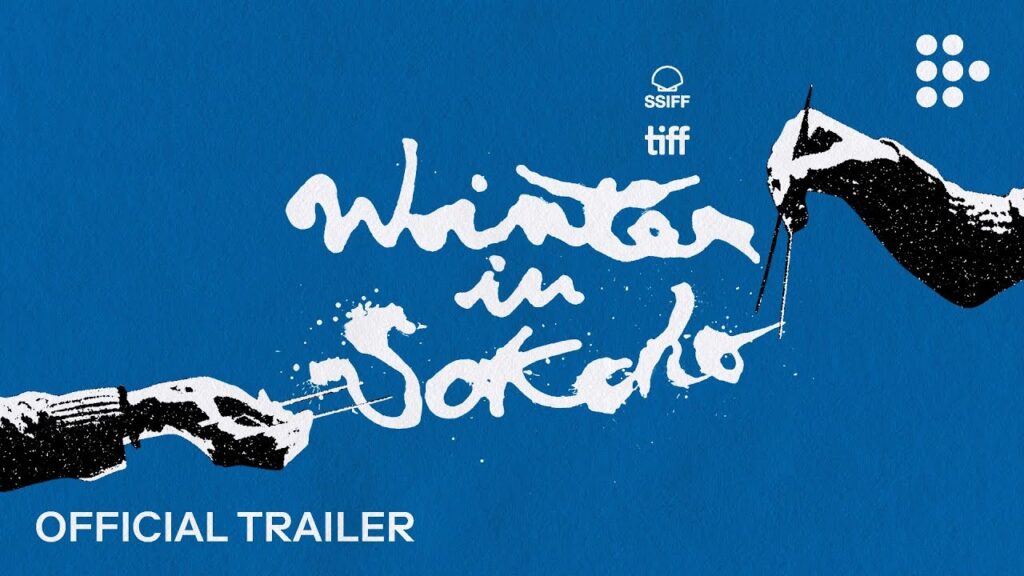
The French-Korean Bilingual Drama Where a Half-French Woman in a Deserted Seaside Town Meets the French Artist Who Forces Her to Face the Father She Never Knew
Soo-Ha is 25 and stuck — studying literature was supposed to be temporary, but she is still working at the Blue House guesthouse in Sokcho, a coastal town near the North Korean border that empties completely in winter. Her boyfriend wants to model in Seoul and treats her as an afterthought. Her mother, a fishmonger, wants her married. Her body dysmorphia — the neighbours suggest plastic surgery with casual cruelty — goes unaddressed. When Yan Kerrand, a successful French graphic novel author who visits busy places only when they are deserted, arrives and books in, Soo-Ha’s suppressed half-French identity stirs. She has never met her father. Kerrand is not her father. But proximity to France in human form destabilises everything she has organised her life to avoid confronting. Based on Elisa Shua Dusapin’s 2016 debut novel — the same author appearing as a character in the film. Directed by Koya Kamura — French-Japanese, whose César-selected short Homesick (2021) announced him before this feature. Cinematography by Élodie Tahtane. Score by Delphine Malausséna. Animation by Agnès Patron. Co-written with Stéphane Ly-Cuong. TIFF Platform Competition world premiere September 8, 2024. French theatrical January 8, 2025. Worldwide gross $715,663.
Why It Is Trending: TIFF Platform Competition — San Sebastián New Directors — Tokyo FILMeX Grand Prize Nominee — Élodie Tahtane Wins Two AFC Awards for Cinematography
Koya Kamura’s short film Homesick, about a father braving the Fukushima no-go zone to see his young son, garnered universal acclaim and an official selection at the 2021 César Awards. The feature consolidates that profile across five major festival sections: TIFF Platform Competition, San Sebastián New Directors, Tokyo FILMeX Grand Prize, San Francisco Golden Gate New Director, and Munich CineVision. Cineuropa described it as “a delicate and charming film, showcasing the many directorial qualities of this French-Japanese director who shot in South Korea and deftly orchestrated the coming together of newcomer Bella Kim and star Roschdy Zem.” Tahtane won both the French Cinematographer’s Debut and Spotlight Award at the 2026 AFC Prizes — double recognition for a cinematographer who “breathe(s) so much life into these characters.”
Elements Driving the Trend: The Puffer Fish Metaphor, the Body Dysmorphia Animation, and the Kim-Zem Imbalanced Dynamic
-
Cineuropa’s opening metaphor is the film’s most precise thematic statement: the fugu puffer fish is “toxic and deadly, unless you master the culinary art of how to cook it — the same could be said of the nebulous secrets from which we have to be careful how we free ourselves if we truly wish to find out who we are.”
-
Agnès Patron’s abstract animated sequences — a naked body exploding and dissolving, a flying fish finally swimming free — give Soo-Ha’s body dysmorphia and her longing for freedom a visible formal language that avoids direct exposition.
-
The bilingual Korean-French register is the film’s most formally specific cultural statement: when Soo-Ha makes mistakes with her French, “it exposes a gulf between her and Kerrand, as well as how distant she feels from her French ancestry.”
-
Variety: “Kim and Zem spend much of the film merely having their respective characters observing one another — with curiosity, apprehension and, sometimes, even something resembling desire. But script and film alike demand they keep a distance.”
Virality: Bella Kim’s Lumière Revelation Nomination and the Novel’s US National Book Award Recognition
-
Bella Kim’s Lumière Award nomination for Most Promising Actress gives the film its most specific French institutional recognition — the French cinema community’s validation of a debut screen presence that every reviewer cited as exceptional.
-
Dusapin’s novel won the US National Book Award for Translated Literature after its English publication — giving the adaptation a pre-established anglophone literary audience.
Critics Reception: Consistently Admired — the Ending’s Abruptness the Only Consistent Reservation
-
Variety: “a painterly portrait of fickle intimacy quite engrossing, precisely because it avoids slotting its characters into recognizable and ready-made templates.”
-
High on Films: “Kamura tells the story with tenderness and ache — it’s so subdued it’s almost like a whisper”; Bella Kim “captures the stasis with minimal fuss, stirring an emotional avalanche in the smallest of gestures.”
-
The Seventh Row: “a satisfying, emotionally resonant film about family, identity, and finding your own path, featuring a breakout performance from Bella Kim.”
-
Loud and Clear: “the film is so understated that it’s hard to glean anything of substance from their words or actions — often this subtlety is to be applauded.” IMDb 6.8 from 1,500 viewers.
Awards and Recognitions: 2 Wins, 6 Nominations — AFC Double Cinematography Win, Lumière Revelation Nominee
-
PRIX AFC 2026: Best Cinematography French Debut and Spotlight Award — both wins for Élodie Tahtane.
-
Lumière Awards 2026: Most Promising Actress nominee — Bella Kim.
-
TIFF 2024: Platform Award nominee. San Sebastián 2024: New Directors nominee. Tokyo FILMeX 2024: Grand Prize nominee. Munich 2025: CineVision nominee. San Francisco 2025: Golden Gate New Director nominee.
-
Additional wins: Bergamo Film Meeting 2025 Best Director (Kamura). Galway Film Fleadh 2025 win.
-
French theatrical January 8, 2025. Worldwide gross $715,663.
Director and Cast: A French-Japanese Filmmaker Whose Own Bicultural Identity Is the Film’s Most Honest Creative Foundation
-
Koya Kamura — French-Japanese, César-selected short Homesick (2021); half-French, half-Japanese, describes his lifelong shame at not mastering Japanese as a key connection to Soo-Ha’s relationship to her own French-Korean identity.
-
Bella Kim (Soo-Ha) — the film’s unanimous critical consensus for best element; her stillness, her searching glances, and the ability to convey internal avalanche through minimal gesture is the performance every review cited first.
-
Roschdy Zem (Yan Kerrand) — French-Moroccan; an “excellent” portrayal that “wields reserve and magnetism” without resorting to “tortured artist” clichés.
-
Élodie Tahtane (cinematographer) — whose blues, greys, and whites match the winter landscape to the characters’ emotional states, winning the AFC’s double recognition for debut and overall cinematography.
Conclusion: A Festival Debut of Formal Maturity That Confirmed Kamura, Bella Kim, and Tahtane Across Five Major Festival Sections — and Gave Dusapin’s Novel Its Most Formally Faithful Cinematic Treatment
The TIFF, San Sebastián, Tokyo, Munich, and San Francisco circuit placed this debut in more simultaneous new director competition sections than most films achieve in a full festival career. Cineuropa’s formulation is the most precise: the film presents “the fugu — poisonous unless handled correctly — as a metaphor for secrets and identity.” Bella Kim and Tahtane are the film’s two most durable legacies.
What Movie Trend Is Followed: The French-Korean Bicultural Art Film Gives the Divided Self Its Most Formally Specific Seaside Town Architecture
Winter in Sokcho belongs to the quiet bilingual European-Asian art cinema tradition — Hong Sang-soo’s structural repetitions without the irony, Claire Denis’s attention to bodies and surfaces without the opacity — in which a small coastal location becomes the external architecture of a protagonist’s internal stasis. Variety’s most precise formulation: “at times, the film plays like a muted romance; at others, like a domestic thriller — there’s a knotted tension throughout that risks ballooning out of control.”
Trend Drivers: The Border Town as Identity Mirror, Food as Emotional Language, and the Absent French Father as the Film’s Gravitational Centre
-
Sokcho’s proximity to the North Korean border — day trips to the DMZ, the sound of soldiers — gives the town itself a divided identity that mirrors Soo-Ha’s.
-
Food is the film’s most formally specific emotional language: from the fish her mother sells to the cooking scenes, food serves as “the significant binding factor” in every relationship.
-
The absent French father — never met, never explained — is the film’s gravitational centre; Kerrand’s arrival doesn’t substitute for that absence but activates the feelings that surround it.
-
The body dysmorphia thread — the plastic surgery suggestions from boyfriend and mother alike — gives Soo-Ha’s search for identity a specifically gendered dimension that the animation sequences render with the imperfect hand-drawn quality of something unresolved.
What Is Influencing Trend: Be For Films’ International Sales and the TIFF Platform Section’s Emerging Director Pipeline
-
Be For Films’ international sales infrastructure gives the film the arthouse distribution reach that a France-South Korea bilingual debut requires to sustain across multiple festival circuits simultaneously.
-
The TIFF Platform Section — specifically designed for formally ambitious first and second features — gave the film its most prestigious institutional launch and the critical attention that five subsequent festival sections built upon.
-
Kamura’s biography is the film’s most credible creative credential: half-French, half-Japanese, shooting in Korean — the bicultural division he films is the one he has lived.
Macro Trends Influencing: Bicultural Identity Cinema and the Korean Coastal Town as Cinematic Space
-
The half-French, half-Korean protagonist in a film directed by a half-French, half-Japanese filmmaker gives the bicultural identity theme its most formally autobiographical available grounding.
-
Sokcho’s emergence as a cinematic space — through Dusapin’s novel and now this adaptation — gives the coastal town a specific literary and cinematic identity that the Korean tourism board’s conventional representations cannot replicate.
-
The body dysmorphia thread, handled without direct exposition, connects the film to a growing tradition of Korean cinema’s attention to appearance pressure that international arthouse audiences have become progressively more attuned to.
Consumer Trends Influencing: Dusapin’s Literary Fanbase and the French-Korean Arthouse Circuit
-
Dusapin’s US National Book Award win gives the film a pre-converted anglophone literary audience that treats the adaptation as both a companion and a test of the novel’s visual potential.
-
Bella Kim’s Lumière nomination gives the film a French industry discovery signal that extends the festival circuit into awards season visibility.
-
The bilingual Korean-French register gives the film a specific discovery pathway through both the Korean cinema community and the French arthouse circuit simultaneously.
Audience Analysis: French Arthouse Cinema Audiences, Korean Cinema Followers, and the Dusapin Literary Community
The core audience is 25–55 — French arthouse cinema audiences who follow Kamura’s trajectory from the César-selected Homesick, Korean cinema followers who respond to the Sokcho setting’s literary credibility, and Dusapin’s anglophone literary fanbase who encountered the novel through the National Book Award. The bilingual format gives the film discovery across both language communities’ streaming platforms.
Conclusion: A Formally Mature Bilingual Debut That Found Its Audience Simultaneously Across Five Festival Sections — With Sokcho as One of Cinema’s Most Formally Precise Locations for the Divided Self
The film earns its five festival nominations through formal consistency rather than dramatic spectacle — the same quality that makes it difficult for “populist cinema consumers to connect with” is precisely what gives it sustained critical community advocacy.
Final Verdict: A Formally Exquisite Bilingual Debut of Almost Perfect Restraint — Sustained by Bella Kim’s Quietly Magnificent Performance and Tahtane’s Double-Award-Winning Cinematography
Kamura delivers a debut of exceptional formal maturity — the Korean-French bilingual register, the Sokcho winter landscape as emotional architecture, the animated sequences as the only direct access to Soo-Ha’s interior, and the Kim-Zem imbalanced dynamic are all formally precise and consistently sustained. Variety: “this painterly portrait of fickle intimacy is quite engrossing, precisely because it avoids slotting its characters into recognizable and ready-made templates.” The abrupt ending is the film’s most consistent critical note — and possibly its most formally honest decision.
Audience Relevance: For French Arthouse and Korean Cinema Audiences Who Respond to Restraint, Atmosphere, and Unresolved Intimacy
Works best for viewers who engage with cinema through feeling rather than plot — the Hong Sang-soo audience, the Claire Denis audience, viewers for whom the space between scenes is as important as the scenes themselves.
What Is the Message of Movie: You Cannot Know Who You Are Until You Have Confronted the Absence at the Centre of How You Were Made
The absent French father is the film’s gravitational centre and its most carefully withheld formal subject. Kerrand’s arrival doesn’t substitute for that absence — it makes its weight finally legible. Soo-Ha’s imperfect French is the film’s most specific formal statement about what it costs to be half of something you never had access to.
Relevance to Audience: A Film That Gives the Bicultural Experience Its Most Formally Specific and Most Geographically Precise Cinematic Architecture
Kamura’s own identity — half-French, half-Japanese, describing lifelong shame at not mastering Japanese — gives the film a biographical authority that distinguishes it from an outsider’s ethnographic gaze.
Social Relevance: Body Dysmorphia, Plastic Surgery Pressure, and the Gendered Cost of Being Half-Seen in South Korean Society
The neighbours and the boyfriend who suggest plastic surgery with casual cruelty give the film its most socially specific observation about appearance pressure in Korean society — rendered through the animated body sequences rather than direct dialogue, which is the formally most precise available treatment.
Performance: Bella Kim Is the Film’s Architecture — Zem Is Its Most Necessary Formal Counterweight
High on Films: “Bella Kim captures the stasis with minimal fuss, stirring an emotional avalanche in the smallest of gestures and searching glances — her quietly magnificent performance is the key to Winter in Sokcho.” Zem’s Yan — reserve without cliché, magnetism without warmth — is the precisely calibrated force that Kim’s Soo-Ha cannot stop orbiting.
Legacy: A Debut That Confirmed Three Creative Voices Simultaneously — Kamura, Bella Kim, and Tahtane — Across the Most Demanding Festival Circuit Available to a First Feature
Winter in Sokcho will be remembered as the debut that announced all three with equal authority — and as the most formally faithful available cinematic treatment of Dusapin’s novel, which one TIFF reviewer described as a rare case where the film surpasses the book it adapts.
Success: 2 Wins, 6 Nominations — AFC Double Cinematography — Lumière Revelation Nominee
-
AFC Prizes 2026: double win for Tahtane (French Debut and Spotlight). Bergamo Film Meeting 2025 Best Director. Galway Film Fleadh 2025 win.
-
Lumière 2026 Most Promising Actress nominee (Bella Kim). TIFF Platform, San Sebastián New Directors, Tokyo FILMeX Grand Prize, Munich CineVision, SFIFF Golden Gate nominees.
-
French theatrical January 8, 2025. Worldwide gross $715,663.
Winter in Sokcho proves that the most formally honest films about divided identity are the ones that refuse to explain the division — and that Bella Kim, Koya Kamura, and Élodie Tahtane each arrived at their most formally authoritative work simultaneously, in the same 104 minutes.
Insights: A formally exquisite French-Korean bilingual debut that earns its five-festival-section sweep through restraint, formal precision, and a lead performance that conveys emotional avalanche through minimal gesture — the bicultural identity theme grounded in Kamura’s own biography giving the film the moral authority that external observation cannot manufacture. Industry Insight: The TIFF Platform-San Sebastián-Tokyo FILMeX triple simultaneous circuit is the most demanding available institutional gauntlet for a bilingual debut — and Kamura’s five nominations across five separate major festival sections in a single year is one of the most extensive new-director validation records in recent French co-production history. Audience Insight: Bella Kim’s Lumière Most Promising Actress nomination is the film’s most commercially efficient French industry discovery signal — the same French cinema community that will encounter Winter in Sokcho through her nomination will find a debut performance that justifies the recognition more completely than most Lumière selections. Social Insight: A film in which a young woman’s body dysmorphia is handled entirely through animated sequences rather than dialogue — because the people around her never acknowledge it enough to make dialogue possible — is making the most formally precise available observation about how appearance pressure operates in Korean society: as ambient, normalised, and structurally invisible. Cultural Insight: Winter in Sokcho positions Kamura as the French-Japanese filmmaker most formally equipped to translate the bicultural divided-self experience into cinema — his own lifelong relationship to imperfect Japanese giving the film’s central French-Korean identity architecture a lived specificity that makes every frame autobiographical without being confessional.
Conclusion: A Debut of Formal Authority That Confirmed Three Creative Voices — and Gave the Bicultural Identity Film Its Most Geographically and Emotionally Precise Winter Architecture
Kim’s stillness carries the film. Tahtane’s blues and greys give it its emotional temperature. Kamura’s restraint refuses to explain what the audience is allowed to feel. Winter in Sokcho earns its sustained five-festival validation through the consistency of that refusal — and positions all three as creative voices whose next work will be closely watched.
Summary: One Guesthouse, One French Artist, One Half-French Woman, and the Absent Father That Neither of Them Can Name
-
Movie themes: Bicultural identity and the specific shame of the language you were never given access to, the absent father as the gravitational centre of everything a daughter cannot resolve, body dysmorphia rendered through animation rather than dialogue, food as the only emotional language available between people who cannot speak directly to one another, and Sokcho’s winter emptiness as the external architecture of the protagonist’s internal stasis.
-
Movie director: Koya Kamura — French-Japanese, César-selected Homesick (2021) — brings his own bicultural divided-self experience to a novel written by a half-French, half-Korean author, giving the adaptation a biographical authority that distinguishes it from any externally observed cultural portrait.
-
Top casting: Bella Kim’s Soo-Ha is the film’s unanimous critical consensus — quietly magnificent, emotionally devastating through minimal gesture. Zem’s Yan is the precisely calibrated counterweight — reserve without cliché. Tahtane’s double AFC award is the cinematography recognition the film’s visual authority warrants.
-
Awards and recognition: AFC Prizes 2026: double win (Tahtane). Bergamo Film Meeting 2025 Best Director. Galway Film Fleadh 2025 win. Lumière 2026 Most Promising Actress nominee. TIFF Platform, San Sebastián New Directors, Tokyo FILMeX, Munich CineVision, SFIFF Golden Gate nominees. French theatrical January 8, 2025. Worldwide gross $715,663.
-
Why to watch: The French-Korean bilingual debut that gives the divided self its most formally precise seaside winter architecture — with Bella Kim’s career-announcing first performance, Tahtane’s double-award-winning cinematography, and a director whose own bicultural biography makes every frame of Soo-Ha’s imperfect French feel personally true.
-
Key success factors: Kamura’s biographical authority plus Bella Kim’s career-announcing debut plus Tahtane’s double-award-winning cinematography plus Dusapin’s National Book Award literary foundation plus Be For Films’ international sales infrastructure plus the five-festival simultaneous circuit’s sustained institutional validation.
-
Where to watch: French theatrical from January 8, 2025. International distribution via Be For Films. Check JustWatch for streaming availability by territory.
Conclusion: A Formally Restrained Bilingual Debut That Announced Three Creative Voices With Equal Authority — and That Gives the Bicultural Identity Film Its Most Geographically and Emotionally Precise Treatment in Recent French Co-Production Cinema
Winter in Sokcho earns its sustained festival recognition through the formal precision of its restraint — Sokcho’s winter emptiness as the film’s most considered structural argument, and Bella Kim’s debut performance as its most compelling reason to engage with both. Kamura’s second feature, arriving with this debut’s formal maturity already confirmed, will be among the most closely watched directorial follow-ups in French-Korean co-production cinema.