
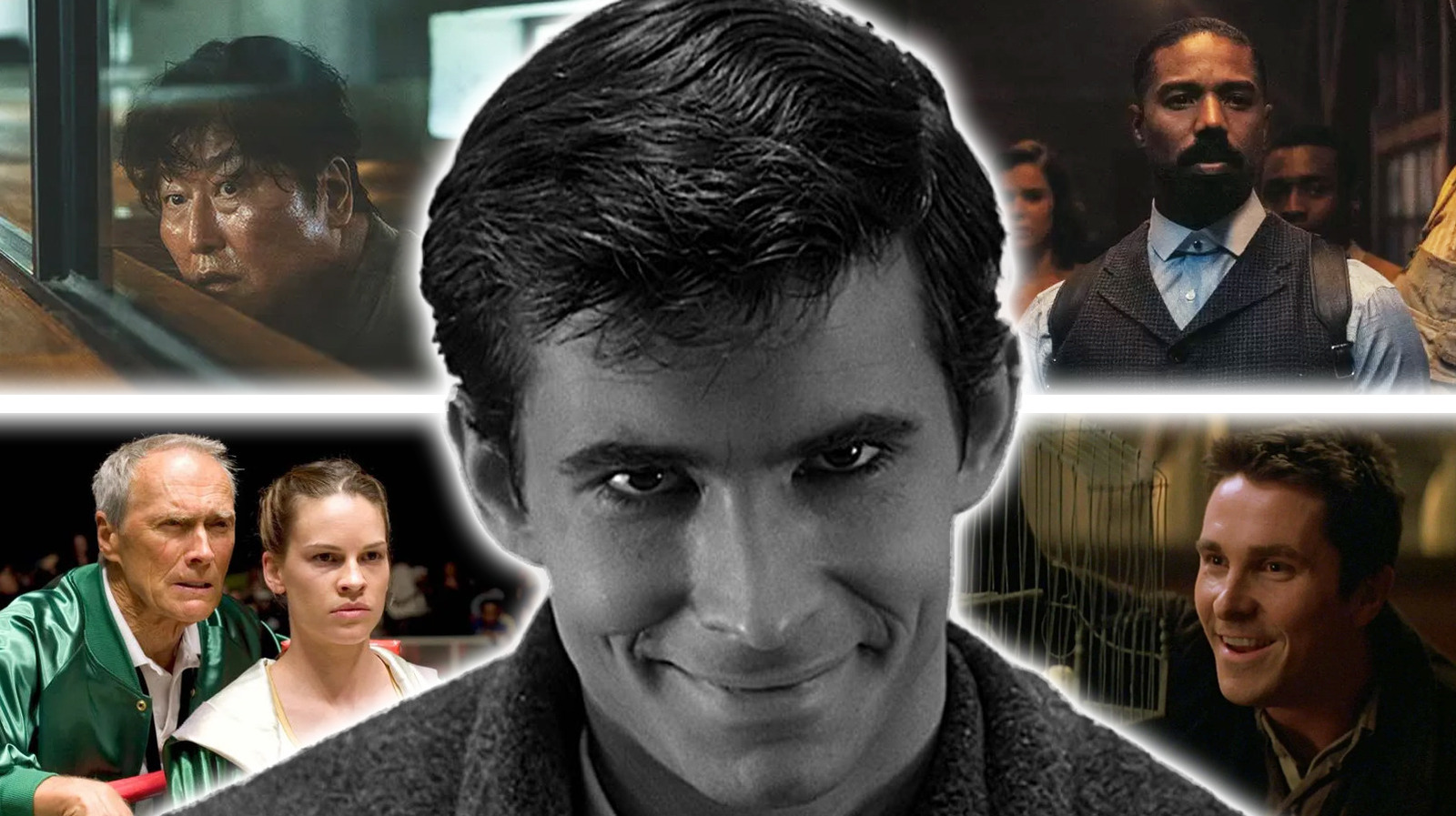
Joel Coen once described a director’s job as “tone management,” ensuring that a film’s consistent or shifting sense of temperament and mood is achieved in a legible, compelling manner. That can be hard to do even on films that dedicate themselves to a single consistent genre. But what about the ones that decide to flip the script on that genre well into a film’s runtime?
Films that decide to transition genres halfway through are taking a risky gamble. A director is playing with fire, risking losing the audience’s emotional or intellectual interest or earning their ire for delivering a movie they weren’t necessarily sold on, especially if the marketing didn’t suggest any genre flexibility. But that’s why the films that pull this feat off successfully are remembered so well, and they’re occasionally rewarded with awards for Best Picture or immense cultural influence. They deliver a memorable, unpredictable film to an unsuspecting audience, one that is more than happy to be taken on such a mercurial ride, given that they’re guided by steady hands that know how to navigate the changes. An experience like that can be what going to the movies is all about.
Here are 12 movies that switched genres halfway through — and were still good.
The World’s End
Edgar Wright is no stranger to genre fluidity within his filmmaking. In every entry of his cult classic trio of films known as the “Cornetto Trilogy,” he toes the line right in the middle of tongue-in-cheek winking and a genuine commitment to his chosen genre homage, whether that be zombie horror, buddy cop movie, or, in the case of “The World’s End,” 1950s sci-fi B-movies.
What sets “The World’s End” apart is how cleanly it bisects itself into two halves: Wright luxuriates in the film’s setup of a group of old high school buddies getting wrangled together by their rosy-eyed old ringleader Gary King (Simon Pegg) to complete an infamous, failed bar crawl in their hometown before pulling the rug and letting you in on the fact that nearly everyone therein has been replaced by blue-blooded, destructible alien androids.
What starts as a quick-witted, coming-of-middle-age British comedy morphs into a high-octane sci-fi action adventure as our group of friends tries to survive the night by blending in and completing the bar crawl, getting progressively drunker and increasingly more in danger at each stop. This is not to mention the impressive character detail that Wright and Pegg write into the script, affording the film a tragicomic underpinning that easily makes “The World’s End” Wright’s best movie.
Bone Tomahawk
The genre change of S. Craig Zahler’s “Bone Tomahawk” is a little more subtle than some of the other films on this list, but ask anyone who happens to have thrown on this intense Kurt Russell-led neo-Western, and they’ll likely tell you they weren’t quite expecting this level of brutality. The conceit of the film may remind you of your standard low-budget star vehicle for an aged A-lister or intentionally recall big hits from Russell’s past. Indeed, even Russell himself was reminded of “Tombstone” while filming “Bone Tomahawk,” which makes it all the more shocking when the film turns to bleak, gory cannibal horror.
To be fair, “Bone Tomahawk” sets this up during its introduction, when a group of small-town civilians are kidnapped, seemingly by a cannibal tribe of troglodytes that reside in the “Valley of the Starving Men.” This kickstarts what is seemingly a suicide mission — led by Russell, Patrick Wilson, Matthew Fox, and Richard Jenkins — to rescue those captured, and it turns the film into a fatalistic, dread-filled trek toward inevitable brutality.
And, oh, how brutal “Bone Tomahawk” is. Zahler withholds the really nasty stuff for the climax of the movie, maybe because once you get there, he knows that you know there’s no turning back. That’s when he unleashes one of the most horribly gruesome kills most people will have likely ever seen in a motion picture, successfully making the transition from novelistic Western to hyper-violent cannibal exploitation horror.
Million Dollar Baby
It’s amazing how easy it still is to go into “Million Dollar Baby” blissfully unaware of the crushing tragedy that actually defines what seems to be a sturdy, classical Hollywood underdog sports drama. The film spends two-thirds of its runtime following the exact trajectory you would expect, and then it veers so hard into complete misery that writer-director-star Clint Eastwood had to put in extra legwork to convince Warner Bros. executives to greenlight the thing.
In fairness to that executive, “Million Dollar Baby” is something of an anti-crowdpleaser, despite being marketed as an inspirational story of an amateur athlete beating the odds that would have been perfect for the 2003 holiday season. Writing a story in which that athlete, an aspiring boxer played by Hilary Swank, begs to die as she withers away in a hospital bed, after suffering a brutal sucker punch and becoming quadriplegic, is not necessarily primed for a rosy audience reception.
Nevertheless, “Million Dollar Baby” earned an “A” CinemaScore from audiences, along with critical acclaim and awards, including a Best Actress win for Swank, which helped boost it to huge box office success. Turns out your genre switch-up from motivational sports movie to oppressively harrowing drama about accepting death can work out, at least if you are an effortlessly adept filmmaker such as Clint Eastwood.
The Cabin in the Woods
“The Cabin in the Woods” is a film that threw even me off-balance when I saw it as a teenager back in 2012. Marketed as your bog-standard cabin-in-the-woods teen slasher flick, anyone not aware that this bait-and-switch was co-written by Joss Whedon and Drew Goddard, and directed by the latter, couldn’t have been prepared for the ways in which “The Cabin in the Woods” takes horror tropes to task.
“The Cabin in the Woods” fills out your standard cast of stereotypical teens to get killed off on their woodland vacation — the jock, the stoner, the pretty blonde, all your favorites — as it’s revealed they’ve become part of machinations much larger than themselves. Specifically, they’re the latest subjects of an underground, professional operation, led by Richard Jenkins and Bradley Whitford, that seeks to appease ancient Gods secretly ruling over Earth by sacrificing a group of unwitting people at the hands of the supernatural killer of their choosing.
It’s a genuinely very clever set-up that horror movie fanatics are primed to get a kick out of, and it’s a marvel that it was released without much inkling of what the film was actually about. Maybe that’s why the film was only a modest success at the box office, though word-of-mouth and cult status have since lifted “The Cabin in the Woods” to streaming hit status.
Audition
The transition in Japanese director Takashi Miike’s “Audition” is so stark because it initially seems more primed for broad comedy than for the film’s quiet drama, which eventually turns to squeamish violence. Ryo Ishibashi stars as Shigeharu Aoyama, a recent widower who is eventually convinced it’s time to start playing the dating field again. He does this unconventionally by having his film producer friend stage a series of fake film casting auditions in which the women are actually auditioning to be Shigeharu’s new partner.
His chosen woman is Asami Yamazaki (Eihi Shiina), a curious former ballet dancer whom Shigeharu becomes entranced by, only for her to disappear after a few dates. Strange events begin stacking up around Asami’s places of interest, and eventually, Shigeharu finds himself at the mercy of a woman with far more, let’s say, cutting capabilities than he could have ever imagined.
“Audition” is a fairly long movie, and its slow, deliberate build-up to its violent climax makes the film that much more upsetting – and somewhat funny, given that Miike says he doesn’t watch many horror films. Miike’s film is a work of genius, though, because its horrific conclusions are the culmination of a story about pain and trauma within love and life.
From Dusk Till Dawn
“From Dusk Till Dawn” is one of the most memorable genre switch-ups most people would have seen, mostly because of how fiercely it switches gears when the time comes. The first half has all your expected trappings of a crime movie as directed by Robert Rodriguez and written by Quentin Tarantino: a dusty Texas setting, a pair of violent criminal brothers played by George Clooney and Tarantino himself, quick-witted pulp dialogue — regular elements of Tarantino’s honing of dimestore paperback schlock.
That all changes once they arrive at a strip club in the barren desert, where they expect to meet a contact who will take them to their next destination. Their plans go wrong when the night at the club turns violent, and it’s revealed that nearly the entirety of the staff are blood-sucking vampires that are more than ready to feed on their available meals.
The tongue-in-cheek scenario gives Rodriguez and Tarantino ample opportunity to engage in some less-than-highbrow visual humor and ironies, like featuring a group of vampire strippers and an extended Cheech Marin speech centered around the club’s stewardship of, erm, women’s private parts. But that’s all part and parcel of the winking, exaggerated genre flair that the two are engaging in here, which more often than not allows “From Dusk Till Dawn” to remain a singular and bloody cinematic experience.
One Cut Of The Dead
“One Cut of the Dead” is a movie that outright lies to you about what type of movie it is for half of the runtime. You’ll spend the first half of this Japanese zombie flick, written and directed by Shin’ichirō Ueda, impressed by the high-octane momentum of what seems like a fairly rote, gory horror movie following familiar tropes to all the other films about the undead that you’ve ever seen.
It’s midway through “One Cut of the Dead” when it drops one type of earnestness for another. What started as an unapologetic homage to a very familiar strain of zombie movie turns into a good-natured treatise on the collaborative process of filmmaking itself. It’s revealed that everything you’ve seen thus far has been the final product of an amateur filmmaking crew, and the movie flashes back to run through the production process.
It’s honestly a bit of a strange gambit to throw onto an unsuspecting audience, as you’re trusting them to put up with derivative genre fare only to hope that they’re interested in a movie that’s actually about filmmaking. But if you make it to that back half, you may find it hard to deny the good-natured fun of watching a group of people doing everything they can to make something they love.
Parasite
Bong Joon-ho’s Best Picture-winning sensation “Parasite” has a certain fluidity of genre throughout, weaving between its dark-comedy and latent-thriller elements, but it does hit a full transition by the time it reaches its mid-section and into its final stretch. This social satire about a lower-class family that forcefully intrudes into the lives of a wealthy household conveys commentary on the class hierarchy of South Korea through its sudden shift from witty satire to a dark thriller.
It’s Bong’s steady hand over that tonal transition, as well as that of the internal desires and contradictions of his central family, that made the film such a surprise crowd-pleasing phenomenon that has retained its influence seven years on. In fact, “Parasite” was recently voted the best film of the 21st century by The New York Times. Bong’s control is remarkable, conveying the film’s disparate temperaments with a confidence that makes it difficult to deny the film’s effectiveness.
Bong has an established cinematic career of making genre outings both arch and grounded, continued most recently with last year’s “Mickey 17,” but “Parasite” was the first time he found true crossover critical and commercial appeal, helping to redefine what a Best Picture winner looks like moving further into the 21st century.
The Prestige
“The Prestige” doesn’t get enough credit for being the wacky movie that it is. Maybe that’s because writer-director Christopher Nolan still approaches it with his towering sense of emotional weight and gravity. Nolan gives you the space necessary to fall into the rhythms and steady mood of this psychological character drama about two competing magicians in 19th-century London before pulling the rug out.
The twist in “The Prestige” is two-fold in how the story is guided into completely unexpected destinations. Both have to do with secrets from the two rivals played by Hugh Jackman and Christian Bale: Bale is revealed to be one half of a set of twins, while Jackman turns to Nikola Tesla (David Bowie) to continuously clone himself to accomplish his teleportation trick.
Nolan turning to the soapy, pulpy story elements of a secret, long-lost brother and outright science fiction flies in the face of the type of film he initially builds up, yet he makes it work through sheer force of will and his insightful character study of two myopic, ego-driven men. “The Prestige” was only a modest box-office hit, counter to the now-reliable box-office draw of Nolan’s name, but those who return to it will find a director testing the waters of how his signature style can translate to diverse sorts of stories.
Sinners
“Sinners” fits exceptionally well onto this list because it’s a direct descendant in structure and genre of another film on this list: “From Dusk Till Dawn.” Writer-director Ryan Coogler’s expansive vampire epic has a similar surprise in its eventual reveal, where the vampire carnage waiting in the shadows of an otherwise straightforward drama will define the climax.
Coogler is a laudable craftsman for how long he takes to get you to that point. He’s leisurely in his set-up and world-building, luxuriating in his painstakingly crafted milieu of Jim Crow-era Mississippi, following the twin brothers Smoke and Stack, both played by Michael B. Jordan, as they return to their old hometown to open a new juke joint for the persecuted Black population. The first half of “Sinners” is quite simply a well-crafted period piece about the struggles of the 1930s.
Then Jack O’Connell shows up as Remmick, plucking away at a banjo and then turning everyone in town into vampires that do stomp-clap group performances of Irish folk tunes while trying to invade Smoke and Stack’s newly opened establishment. Even more than a mere transition from period drama to vampire horror, Coogler folds in musical elements and a bracing examination of Irish American history into “Sinners,” giving the film an even greater and varied sense of texture. With the film still circling the awards-season conversation this far out from its release, it seems Coogler’s audacious genre cocktail has been proven to carry a particular resonance.
Click
Hear me out. This may seem like a silly entry for anyone who has not seen the 2006 Adam Sandler comedy vehicle “Click,” but those who have can attest to the film’s surprising switch-up in the back half. It’s not unlike “Million Dollar Baby,” discussed earlier on this list: the film starts by giving you what you came for, then turns to surprising, heart-wrenching tragedy.
Now, that may be a slightly dramatic description for this film (though I’ll stick by comparing “Click” to the Academy Award-winning “Million Dollar Baby”), but it’s true that “Click” explores an emotional range that sneaks up on you, given your realistic expectations for the film. It starts as you expect, with Adam Sandler’s Michael Newman in a zany, broad comedy in which he receives a “universal remote” that lets him skip past the annoying inconveniences of everyday life, like traffic jams or boring work meetings.
The movie shifts as the implications of having such a remote turn more sinister, and Michael suddenly finds himself skipping past entire years full of important family moments and experiences, leading him to a tragic end where he’s failed to find any meaning in his existence. The film plays this section amazingly straight, and there’s real emotional weight behind the idea of being present for the small moments in your life. “Click” isn’t aberrant enough to have a truly tragic ending, but its melodrama is authentic enough for the film to land in our list of Adam Sandler’s 15 best movies.
Psycho
It’s no exaggeration to say that Alfred Hitchcock changed both moviemaking and audience expectations when he unleashed “Psycho” onto an unwitting public, and much of that is due to the rug-pull he delivers midway through the movie. The entirety of “Psycho” has been so ingrained in the public consciousness that it’s easy to forget just how shocking the film’s genre transition was to contemporary audiences. But it’s worth remembering how viewers experienced it when they sat down to watch it in 1960.
“Psycho” was famously marketed as having strict, unconventional audience behavior rules for its time. Most prominently, it was touted that audience members would not be allowed into any of the film’s showings following the punctual start of the runtime. This helped earmark the film as one with a story that needed to be experienced properly from beginning to end, ensuring the effectiveness of its transition from a story about a woman on the run to a tense thriller about the serial killer that ends her life midway through the movie.
The palpable genius of the conceit is obvious with decades of hindsight, but “Psycho” was a huge swing for its era, especially given that Hitchcock had just come off his globetrotting crowdpleaser “North by Northwest” the year before. His innovations would change the standards of filmmaking forever, further opening the world to new types of stories and helping normalize a new level of on-screen perversions acceptable in American cinema.






Leave a Reply