
Many great TV shows have been canceled after only one season, and many terrible ones have suffered a similar fate. That’s no different for TV Westerns, which were so prevalent in the mid-20th century they might as well have been the only thing on TV. Still, no matter how popular the genre was, there were always going to be those shows that never managed to catch on and ultimately fell by the wayside while others galloped their way to success.
It’s not always clear why some projects became beloved classic Western TV series while others very quickly failed. Why did a show about a mysterious cowboy such as “The Virginian” catch on when another show about a mysterious cowboy, like “The Loner,” didn’t? And why did so many small screen Westerns with solid casts and interesting premises simply fail to garner the kind of ratings they needed to stay on the air? What we do know is TV history is littered with swiftly-canceled Western shows, many of which more than deserved a second chance.
Here, we’ve assembled five examples. While some of these might not have been the finest sagebrush sagas to grace the small screen, they all had something promising to them and, given a second chance, might have been able to earn their place in the pantheon of legendary TV Westerns.
The Quest (1976)
By the mid-’70s, the Western was fully in its revisionist era. Clint Eastwood had become the poster boy for the genre’s evolution into a more cynical and deconstructionist version of itself that ultimately marked the end of its pop culture dominance. Meanwhile, networks had begun the decade by carrying out the so-called “rural purge,” cancelling shows with a rural setting en masse. The legendary “Gunsmoke” wasn’t even immune and was abruptly canceled in 1975 after two decades on the air. A year later, “The Quest” ventured into this precarious TV terrain.
NBC’s Western series debuted in September 1976 with Kurt Russell and Tim Matheson in the lead roles of formerly estranged brothers Morgan and Quinton Beaudine, respectively. The show follows the pair as they scour the Old West in search of their sister, Patricia, who was taken captive alongside Morgan eight years prior. While Morgan was raised by the Cheyenne and Quinton had a more traditional upbringing in San Francisco, the fate of their sister remains undetermined. On their travels, they meet former bounty hunter turned trail boss Tank Logan (Brian Keith), who hires the boys to help him with his cattle drives.
A pilot episode of “The Quest” aired as a TV movie in May 1976 and fared well in the ratings, prompting NBC to green-light a series. But the show struggled. For one thing, it ran opposite ABC’s “Charlie’s Angels,” which ultimately sealed its fate, and “The Quest” was canceled after one season. In fact, it was pulled after just 11 episodes, despite the fact Russell and Matheson had great chemistry and the show was an all-around well-made entry in the small screen Western canon. It should have lasted longer, and perhaps if it debuted a decade prior, it would have.
Barbary Coast (1975–1976)
After “Star Trek: The Original Series” was canceled in 1969, it took a while for William Shatner to lead another show. Though he appeared in multiple TV movies, small screen guest spots, and in several movie projects, Shatner’s first leading role in a TV series after “Star Trek” came with 1975’s “Barbary Coast.” It was short-lived.
The show starred Shatner as government agent Jeff Cable, who’s tasked with investigating the various illicit dealings that take place in the titular section of 1870s San Francisco. Cable, who operates out of a casino in the district, is a master of disguise, and is assisted in his investigations by his pal and casino owner Cash Conover (Doug McClure).
It was a “Wild Wild West”-style spy adventure in the Old West, though in fairness it was more realistic than Robert Conrad and Ross Martin’s beloved series. Shatner was clearly enjoying the opportunity to don his various disguises, but he and McClure (who replaced Dennis Cole after he portrayed Conover in the pilot) didn’t exactly have the best chemistry. The show also didn’t get off to the best start when Shatner broke his ankle on set and production had to stop for 10 days. Things didn’t seem to improve for “Barbary Coast,” and ABC pulled the plug after 13 episodes.
Still, given time, the show and its stars could very well have come into their own. Though networks were moving away from rural shows at the time, “Barbary Coast” was set in an exciting and dynamic section of San Francisco and incorporated a spy element that meant it was, at the very least, offering more than your standard small screen Oater.
Nichols (1971–1972)
“Nichols” has to be one of the most delightfully misguided shows in TV history. This offbeat 1970s Western starred James Garner alongside “Superman” star Margot Kidder in a show that tried to have it both ways and was rewarded with a swift cancellation.
Garner plays Frank Nichols, the sheriff of a small town also called Nichols that was founded by his own family. After leaving the Army, Frank returns to Nichols with the intent to settle down and live a quiet life far away from the violence of his military career. But he’s blackmailed into taking on the sheriff job by the matriarch of the town’s new ruling dynasty.
The show was set in 1914, which was significantly later than standard Western TV shows that typically unfolded during the immediate post-Civil War era. This was seemingly an attempt to update the genre during the “rural purge” of the early 1970s. The thing is, the Nichols of 1914 isn’t all that different than your typical Old Western town. The only thing this updated time period really did was allow Garner’s sheriff to ride a motorcycle rather than a horse.
That might sound like a show destined for failure, but “Nichols” was sort of charming. Garner and Kidder, who played the local barmaid Ruth, had some great chemistry, and there was a self-awareness to both Garner’s sheriff and the show as a whole. Sadly, it was canned after one season, ending with an amusingly off-the-wall episode in which Nichols is shot dead, only for his twin brother (also played by Garner) to show up sporting a mustache. Imagine how that second season would have gone…
The Yellow Rose (1983-1984)
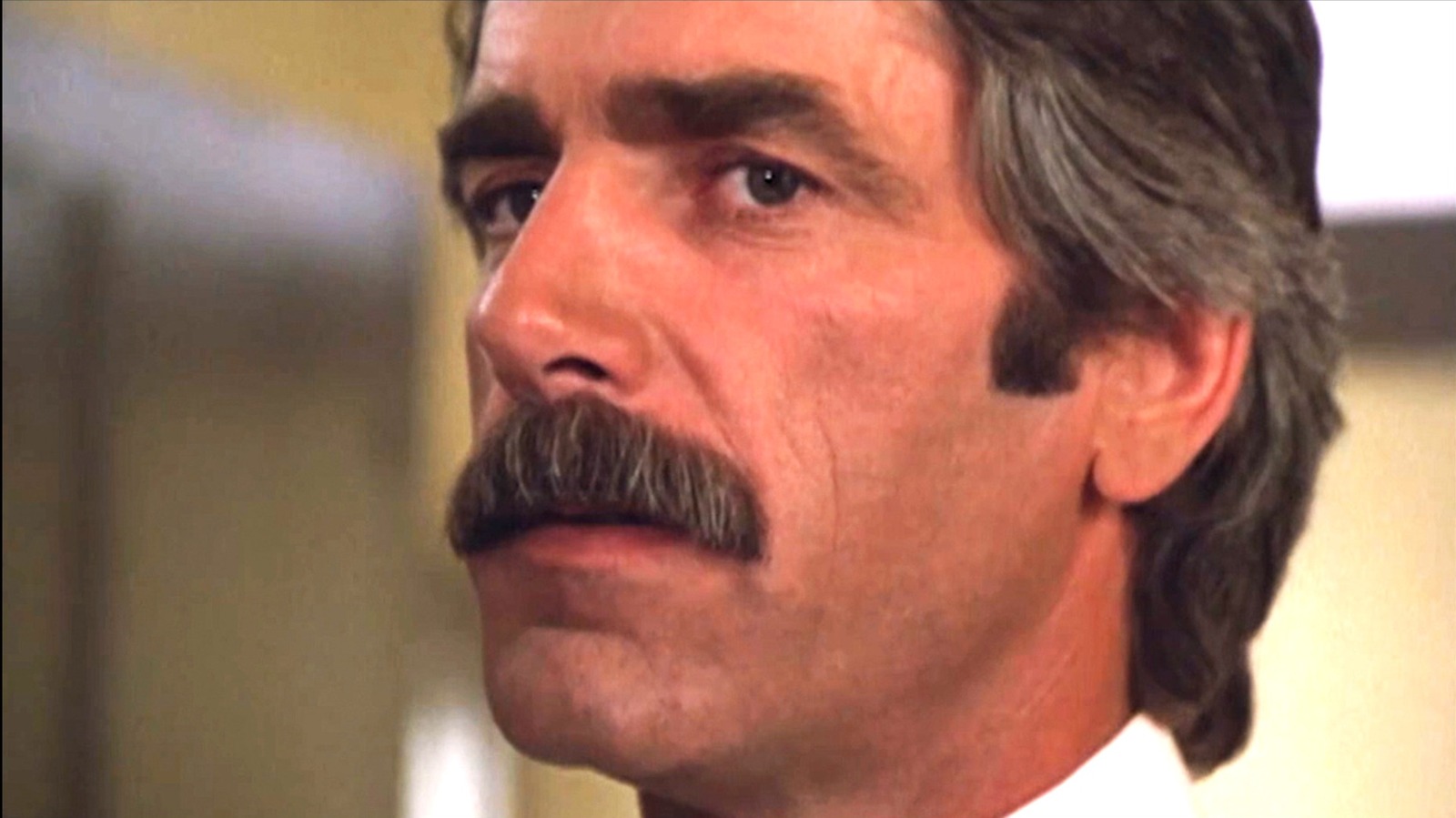
A show featuring one of the best Western actors of all time defending his ranch from various foes intent upon ending a longstanding family dynasty? That sounds a heck of a lot like “Yellowstone.” Unfortunately, Sam Elliott’s forgotten Western series “The Yellow Rose” aired long before Taylor Sheridan’s neo-Western captured the public’s attention, and only ended up lasting one season.
Elliott plays ex-con Chance McKenzie, who arrives at the eponymous ranch after gaining his freedom. His father, Wade Champion, previously won the land on which the ranch is built from his neighbor, Jeb Hollister (Chuck Connors of “The Rifleman”). When he passed away, Champion left the ranch to his sons Roy (David Soul) and Quisto (Edward Albert). But Chance wants his share of the property, too, and arrives in the series premiere to join Roy, Quisto, and the rest of the family.
We then witness McKenzie and co. battling to keep hold of their father’s ranch in a soapy melodrama clearly designed to capitalize on the popularity of “Dallas,” which had been running since 1978. “The Yellow Rose,” which debuted in 1983, seemed to have what it needed to succeed in that regard, and certainly wasn’t lacking in legendary Western actors with both Elliott and Connors involved.
Unfortunately, the ratings just weren’t good enough, and NBC canceled the show after one season of 22 episodes. But there must have been something to it, as the network aired “The Yellow Rose” again in 1990, perhaps in the hopes audiences would respond differently. Alas, it would take until 2018 before those audiences were ready for a soapy Western show about a family defending their ranch, and by that time, Sheridan was poised to strike. Perhaps a “Yellow Rose” remake might fare better now…
Wildside (1985)
When we talk about short-lived TV shows, we’re usually talking one-season wonders. But “Wildside” has to be one of the shortest-lived Western shows in TV history. The ABC series ran for six episodes between March and April 1985 before it was pulled off the air in what is one of the most disappointing cancellations on this list.
“Wildside” had a great cast and an interesting premise, but wasn’t even given a chance to come into its own. William Smith, who’d previously led the classic ’60s Western series “Laredo,” stars as Brodie Hollister, a former outlaw who’s an expert marksman. In his past, Hollister was part of a five-man group of outlaws, four of whom decided to clean up their act and settle down in the relatively peaceful town of Wildside, California. The group is made up of Hollister (who, after leaving his lawless ways behind, became a horse breeder), John D’Aquino’s Varges de la Cosa, Howard Rollins’ Bannister Sparks, and Terry Funk’s Prometheus Jones. All of them seem to be upstanding members of society, but when trouble arrives in Wildside, they reteam to defend their community.
Smith’s casting was inspired. The actor was known for playing villains and therefore easily exuded the aura of a man with a shady past. Meg Ryan also appeared in this underrated Western series, playing Wildside’s newspaper editor, Cally Oaks, who forms an attraction to Hollister’s son, played by J. Eddie Peck. The whole thing was a solid show with a unique premise that could have been great had it been given more time. Sadly, ABC put it up against “The Cosby Show,” which proved too formidable a foe for Hollister and his band of reformed outlaws.


Leave a Reply