
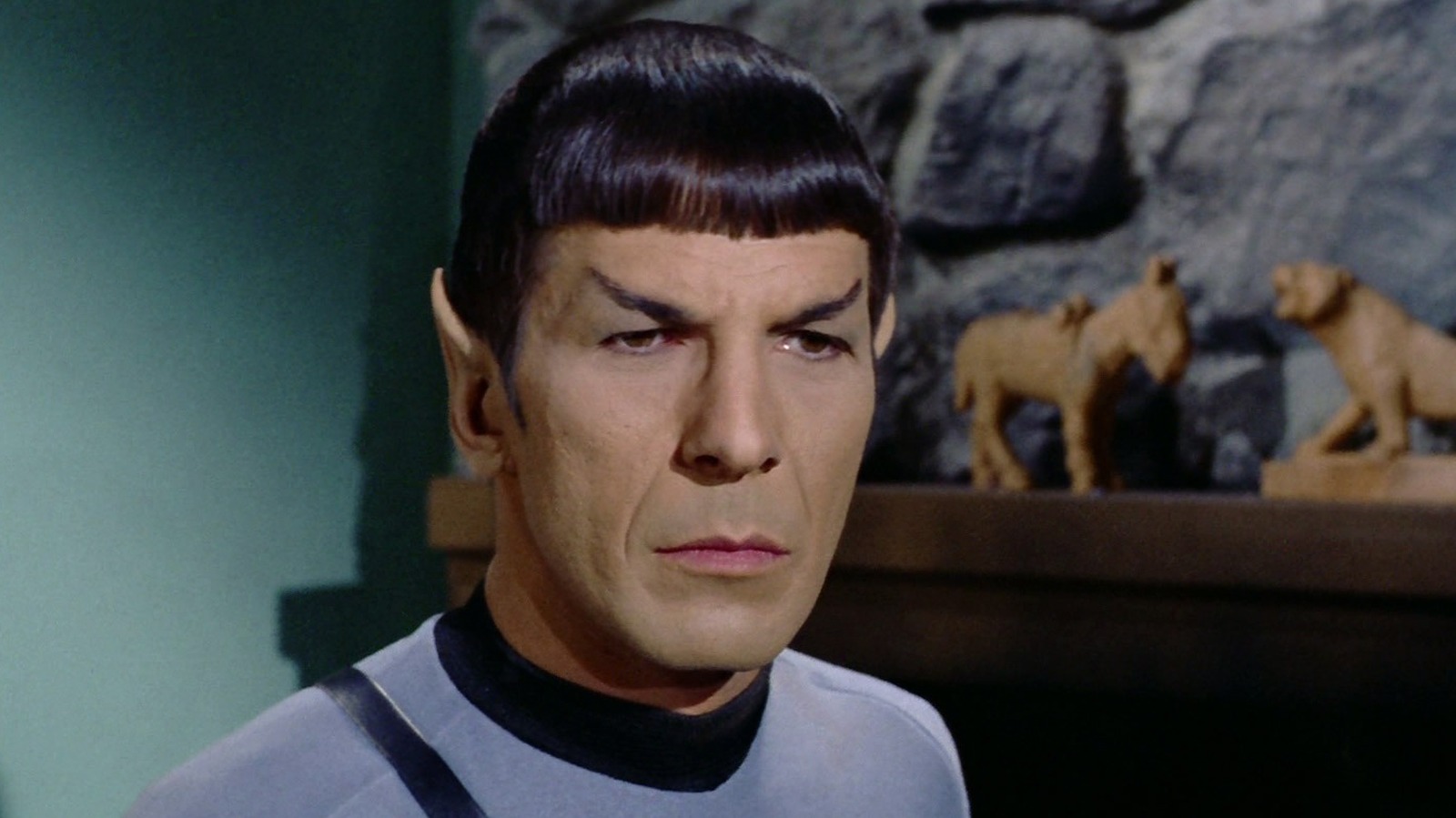
What was Leonard Nimoy’s favorite “Star Trek” episode? It’s almost a trick question. Human beings are constantly changing and fickle creatures; the answer to our favorite anything can change depending on our moods. Nimoy, who played Spock for almost 50 years, couldn’t be expected to give one consistent answer for that long.
But there are a few episodes that Nimoy consistently named among his favorites, including in his 1975 autobiography “I Am Not Spock.” One of them was “This Side of Paradise,” co-written by D. C. Fontana and Nathan Butler and one of the best Spock episodes of “Star Trek.” The Enterprise visits colony world Omicron Ceti III, home to a plant species that secretes spores that take root in humanoid hosts. Once they do, the hosts remain in a state of perfect bliss, but they also lose all their ambition. (The story is a likely reference to the Lotus-Eaters in “The Odyssey.”)
Spock is one of the infected. His stone face cracks into rubble as he becomes joyful, happily expressive, and even rekindles a romance with local botanist Leila Kalomi (Jill Ireland). Nimoy wrote in “I Am Not Spock” that he enjoyed the episode for showing Spock in a mood we almost never saw him — not coldly logical, sarcastic, or struggling to control his emotions, but genuinely carefree.
“This is a very special episode for me for obvious reasons and particularly because, where Spock was so totally adult in most of his attitudes and reactions throughout the series, this episode provided a chance to expose the complete child within. We saw him loving, picnicking, romping, and literally swinging playfully in the trees. It was a total exposure of internal Spock that so many people have always suspected was there.”
This Side of Paradise lets Spock be happy for once
Watching “This Side of Paradise” now, it might remind you of the Apple TV series “Pluribus,” where all of humanity is turned into a blissful hive mind (collectively “The Others”). In “This Side of Paradise,” strong negative emotions literally destroy the spores, which is also a weakness of the Others in “Pluribus.”
In “This Side of Paradise,” though, there’s no identity theft. The spores let Spock be his innermost self. Compare other times we see Spock’s emotions come out, like in “The Naked Time” where he cries over having never told his mother he loved her, or “Journey to Babel” where said mother, Amanda (Jane Wyatt), recounts how Spock used to cry because other Vulcan children bullied him. As only a half-Vulcan, Spock is especially self-conscious about living up to his people’s teachings about logic.
When the spores hit him, those anxieties melt away. Note how Leila says to him he has “no need to hide (his) inner face anymore” and Spock says “I can love you,” as if finally allowing himself something he’d previously denied.
Nimoy described other “Star Trek” episodes as favorites such as “Devil in the Dark,” where the Enterprise crew visit a mining colony to find a creature killing the inhabitants. The culprit, a Horta (resembling a pile of living molten lava), is sentient and Spock telepathically communicates with it, discovering it was only acting to protect its offspring. Nimoy praised that one as a “wonderful episode about the fear of the unknown,” and “Devil in the Dark” is known to be a favorite of William Shatner’s, too.
“Devil in the Dark” and “This Side of Paradise” are very different episodes, but both ones anchored by Spock. Little surprise that Leonard Nimoy loved them.





Leave a Reply