
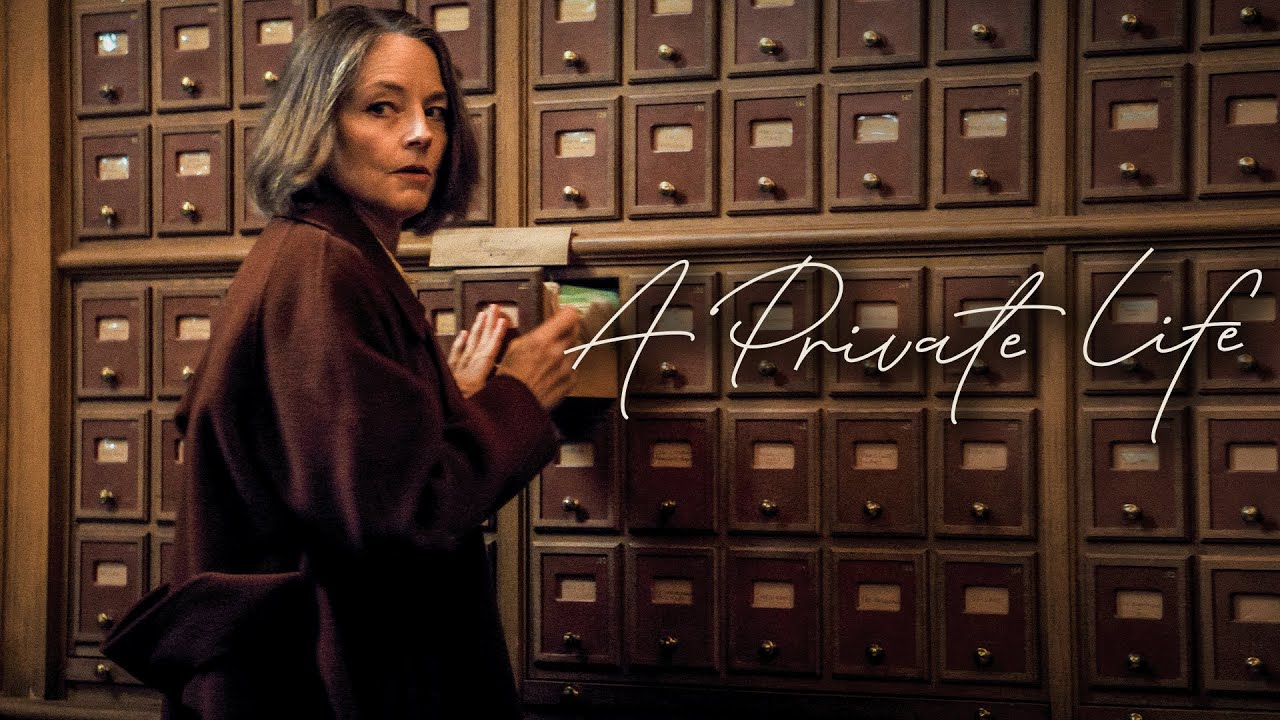
A Psychological Thriller exploring clinical shadows and the architectural unraveling of the mind. A clinical descent into the shadows of a Parisian murder mystery
Jodie Foster and Daniel Auteuil lead this acclaimed Rebecca Zlotowski psychological thriller following a psychiatrist’s obsessive hunt for a killer that earned six nominations including the Lumiere Award for Best Actress.
In this sophisticated psychological thriller, psychiatrist Lilian Steiner spirals into obsession following a patient’s suspicious death. Directed by Rebecca Zlotowski, the film features a powerhouse French-language performance by Jodie Foster alongside Daniel Auteuil and Virginie Efira. Despite earning six nominations, including a Best Actress nod for Foster at the Lumiere Awards, the plot favors intellectual vertigo over standard procedural beats. The narrative serves as a sharp, oneiric study of professional failure and repressed trauma set against a moody Parisian backdrop. This high-pedigree noir effectively trades traditional suspense for a haunting character deconstruction.
Why It Is Trending: The Intellectual Noir Revival
The release of A Private Life has sparked a significant trend centered on the “Intellectual Noir” revival, where European clinical coldness meets Hollywood star power. This film is relevant now because it satisfies a growing audience hunger for “slow-burn” mysteries that prioritize psychological depth over digital effects or physical action. By casting Jodie Foster in a French-speaking role, the film leverages the industry driver of “prestige linguistic cross-over,” creating a curiosity gap that bridges domestic and international markets. It serves as a sophisticated alternative to the over-saturated superhero and horror genres, positioning itself as a “must-see” for the intellectual elite.
Elements Driving the Trend: The Aesthetic of Clinical Coldness
-
The fascination with high-profile American actors performing in foreign languages as a display of master-level craft.
-
A cultural shift toward “Soft Thrillers” that focus on mental health, therapy, and the fallibility of experts.
-
The aesthetic appeal of Parisian “Old Money” production design, which resonates with luxury lifestyle trends on social media.
-
A renewed interest in Hitchcockian tropes like the “unreliable observer” within the context of modern psychiatry.
-
The rise of “Silver Cinema,” targeting an older, affluent demographic that values narrative over spectacle.
These elements collectively transform a standard mystery into a cultural event that dictates the conversation around aging, expertise, and identity. Consequently, the film has achieved a level of sophistication that ensures its longevity in both festival circuits and high-end streaming platforms.
Virality of Movie: The Allure of Linguistic Mastery The film trended significantly on platforms like X and TikTok, specifically through clips of Foster’s “impeccable” French, which sparked debates about American actors’ dedication to craft. Film enthusiasts also circulated stills of the spiral staircases, turning the movie’s architecture into a viral aesthetic.
Critics Reception: Atmospheric Tensions and Gravitas Critics have generally praised the film for its atmospheric tension and Foster’s “formidable” performance, though some noted a lack of narrative clarity. Many reviews highlight that while the script pulls in many directions, the sheer gravitas of the cast saves it from being a mess.
Awards and Recognitions: A French Validation The film has garnered 6 nominations total, marking it as a serious contender during the 2025–2026 awards season. Its most important recognition is the Lumiere Award for Best Actress nomination for Jodie Foster, which validates her technical and emotional range in a non-native tongue. This nomination at a prestigious French festival underscores the film’s success in bridging two distinct cinematic cultures.
This specific trend indicates a move toward cinema that demands active, intellectual participation from the viewer rather than passive consumption. Culturally, it positions the professional woman as a site of both immense power and deep, hidden vulnerability. Industry-wise, it suggests that mid-budget adult dramas can still thrive by focusing on high-pedigree talent and specific, localized aesthetics. The film’s success highlights a demand for sophisticated, multilingual narratives that reflect a globalized, albeit polarized, identity. Ultimately, A Private Life succeeds by making the audience feel as though they are part of an exclusive, high-brow investigation.
What Movie Trend Is Followed: The Expert-Deconstruction Noir
The narrative of A Private Life aligns with the “Expert-Deconstruction” trend, a specific sub-genre of noir where the protagonist’s professional authority is systematically dismantled by their own subconscious. This trend moves away from the classic “genius detective” model, instead presenting high-functioning professionals like Lilian Steiner whose expertise becomes a barrier to the truth rather than a tool for discovery. It echoes the thematic resonance of films like Tár or Other People’s Children, where the central figure’s identity is stripped of its clinical armor. By utilizing a psychiatrist as the lead investigator, the film cleverly transforms the act of “solving a case” into an act of “unlearning” one’s own rigid intellectual framework.
Trend Drivers: The Fragility of Professional Logic
-
A post-pandemic cultural skepticism toward institutional authority and the fallibility of “experts.”
-
The cinematic shift from physical action to “internal stakes,” where the battlefield is the protagonist’s own mind.
-
A renewed interest in the “American Expat” narrative, exploring the friction between rationalism and European surrealism.
-
The “Second Life” trope, where characters seek professional or romantic redemption late in their careers.
-
The use of hypnotic or “oneiric” storytelling to reflect modern anxieties about memory and truth.
These drivers merge the traditional detective procedural with the “screwball comedy of remarriage,” resulting in a film that feels both vintage and strikingly contemporary. This hybrid approach allows the narrative to explore deep psychological trauma while maintaining a “Frenchly nonchalant” tone that avoids the heavy-handedness of typical Hollywood thrillers.
What Is Influencing Trend: The Catharsis of Vulnerability The trend is heavily influenced by the “loneliness epidemic” among high-achieving professionals, who increasingly find that their careers offer no protection against emotional isolation. Additionally, a broader social movement toward “vulnerability as strength” has made the sight of a powerful doctor losing her “marbles” feel cathartic rather than tragic.
Macro Trends Influencing: The Crisis of Subjective Truth A global “truth crisis” fueled by digital misinformation has led audiences to gravitate toward stories where the primary conflict is distinguishing between “false memories” and objective reality. The rising popularity of “metaphysical healing” and “past-life regression” in secular circles also provides a timely, if controversial, backdrop for Lilian’s descent.
Consumer Trends Influencing: The Demand for Prestige Comfort Consumer data shows a pivot toward “Prestige Comfort,” where audiences seek films that offer high-end production values and intellectual puzzles without the stress of excessive violence. This has led to a surge in demand for “atmospheric noirs” that can be enjoyed both in boutique cinemas and on premium streaming platforms like Sony Pictures Classics.
Audience Analysis: The Discerning Intellectual
-
Age range: 45–75 (primarily affluent Boomers and Gen X “Grownups”).
-
Preferences: Subtitled European cinema, character-driven mysteries, and high-pedigree “legacy” actors.
-
Behavior: Values theatrical “event” screenings but is highly likely to purchase the film for home “repeat viewing.”
-
Platform habits: Heavy consumers of Criterion Channel, MUBI, and prestige newsletters like The New Yorker or Cahiers du Cinéma.
-
Psychographics: Intellectual, skeptical of mainstream blockbusters, and deeply interested in the intersections of psychology and art.
The “Expert-Deconstruction” noir provides a vital mirror for an audience that has built its own lives on the foundations of logic and professional success. By showing a world-renowned doctor finding “vision” through her own weeping eyes, the film offers a hopeful, albeit messy, path toward personal reintegration. This trend suggests that the most compelling mysteries of the late 2020s are no longer about “whodunnit,” but about “who-am-I” after the mask of competence falls. Ultimately, A Private Life confirms that the most private mystery of all is the one we keep from ourselves.
Final Verdict: A psychological thriller delivering an essential masterclass in intellectual vertigo and the hypnotic power of a legend reborn.
A Private Life is a stylish, electrically portrayed psychological thriller that succeeds as an intimate character study even as it falters as a traditional murder mystery. The film’s greatest asset is the “formidable” performance of Jodie Foster, whose impeccable French and nuanced portrayal of professional unraveling keep the narrative psychologically engaging. While the plot may be “limp and convoluted” for those seeking a high-stakes procedural, its charm lies in its “Frenchly open-minded” approach to love, aging, and trauma. It is a quintessential “Movie for Grownups” that prizes the “small character details of ordinary life” over big dramatic payoffs.
Audience Relevance: The Burden of Expertise The film speaks directly to those in the “sandwich generation” who are balancing professional legacies with the demands of family and the vulnerability of aging. It validates the idea that even at the peak of one’s career, it is never too late for a “second act.”
What Is the Message of Movie: The Vision of Vulnerability The movie suggests that total rationalism is its own kind of blindness, and that “hearing” someone—be it a patient or oneself—requires emotional presence over clinical diagnosis. It is a call to trade the “private” safety of professional isolation for the “messy” reality of human connection.
Relevance to Audience: The Catharsis of Unraveling For an audience tired of explosive stakes, the film’s focus on “internal vertigo” and personal growth feels both relatable and sophisticated. It offers a “soft landing” for anyone who has ever felt like they were “terrible at their job” despite years of expertise.
Social Relevance: The Shadow of Shared History The film touches on contemporary anxieties regarding antisemitism and the persistent trauma of the Holocaust, anchoring its oneiric visions in a very real, historical context. It also addresses the cultural friction between the “American expat” and the “Bourgeois Parisian” lifestyle.
Performance: A Masterclass in Linguistic Nuance Jodie Foster is “dexterous” and “incandescent,” proving her power remains undiminished in what is her most challenging role in years. Daniel Auteuil provides a “lovely” and “affectionate” counterpoint, grounding the film’s more surreal flights of fancy.
Legacy: A Milestone for the Prestige Cross-over The film will likely be remembered as a significant technical milestone for Foster—the first American to be nominated for a Lumiere Award—and a key entry in the “Prestige Noir” revival. It cements Rebecca Zlotowski’s reputation for directing high-caliber, “thought-provoking” adult dramas.
Success: A Niche Triumph for Adult Narrative With a domestic gross of 1,421,315 and positive critical reception, the film is a niche success that has successfully tapped into the “Grownups” market. Its nomination haul, including Foster’s Best Actress nod, ensures its place in the 2026 awards conversation.
Insights: A Private Life demonstrates that a “mystery” is often just a metaphorical staircase leading back to the protagonist’s own unresolved history.Industry Insight: Casting “Global Icons” in localized, foreign-language projects is a powerful strategic move to diversify a film’s marketability while elevating its “prestige” status. This “linguistic stunt” acts as a high-brow viral hook that transcends traditional trailers.Audience Insight: Modern “Grownup” audiences are increasingly seeking “low-stress, high-intellect” content that offers aesthetic immersion and emotional intelligence over physical violence. They view film-watching as an extension of their intellectual lifestyle rather than just an escape.Social Insight: There is a growing cinematic interest in the “unraveling of the expert,” reflecting a broader social discourse on the limitations of professional stoicism. The film’s use of “involuntary weeping” serves as a literal manifestation of the “defrosting” of the modern professional.Cultural Insight: The integration of “past-life memories” into a secular psychological thriller reflects a cultural pivot toward the “metaphysical” as a way to process generational trauma. It suggests that even the most “rational” modern citizens are searching for spiritual continuity in a fragmented world.
Rebecca Zlotowski has crafted a “mystery dish” ultimately about the “mystery of the self.” While the ending may feel “deflationary” to some, the film’s “sleazily suave” characters and “crisp camera work” make the descent into Lilian’s psyche a journey worth taking. It understands some lives should remain private, yet it cannot help but rummage through the trash of the human soul to find the truth. Ultimately, A Private Life is a “complete delight” for those preferring thrillers served with a side of psychoanalysis and a glass of French wine. It stands as a reminder that the most dangerous investigation remains the one we conduct on our own hearts.
Summary of the Movie: The Clinical Anatomy of a Psychological Descent
-
Movie themes: The Fragility of Expertise The fallibility of experts, the rekindling of past love, and the surreal intersections of generational trauma and memory.
-
Movie director: Rebecca Zlotowski’s Sixth Feature Rebecca Zlotowski, masterfully balancing the “sinister and the playful” in her sixth feature film.
-
Top casting: The Powerhouse Performance Duo Jodie Foster (Lilian Steiner), Daniel Auteuil (Gabriel Haddad), and Virginie Efira (Paula Cohen-Solal).
-
Awards and recognition: 6 Nominations at the Lumiere Awards 2026 6 nominations total. MOST IMPORTANT: Nomination for the Lumiere Award for Best Actress (Jodie Foster).
-
Why to watch movie: The Masterclass in Linguistic Dedication To witness a legendary actress deliver a powerhouse performance in her “most dexterous role in years,” performed entirely in French.
-
Key Success Factors: Linguistic Mastery, Vertigo Atmosphere, and Expert Unraveling Foster’s linguistic achievement, the Hitchcockian “Vertigo” atmosphere, and the poignant exploration of “expert” unraveling.
-
Where to watch: Digital Platforms and Sony Pictures Classics Released January 16, 2026 — available for digital purchase and rental on Apple TV, Amazon Prime Video, and Google Play, following its Sony Pictures Classics theatrical window.




Leave a Reply