
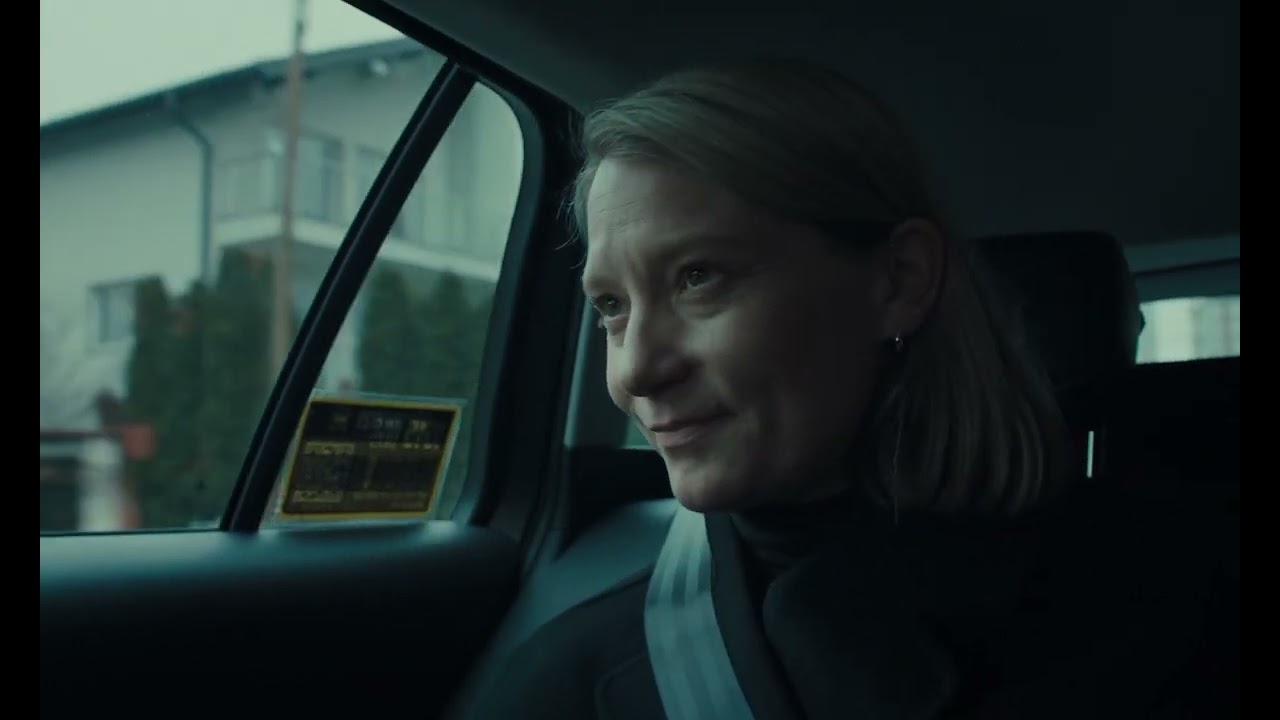
AU | 2026 | 95 min | Comedy / Drama / War Story
➡️ Where to Watch: IT — MYmovies ONE — Available September 6, 2026 at 20:00 until September 9, 2026 at 20:00 via the Biennale Cinema Channel.
A Writer Goes Looking for War and Finds the People Living Beyond It
Polish-Australian novelist Agata travels from Sydney to Sarajevo determined to write a serious novel about the Bosnian war. She arrives with the confidence of an author searching for material, but the people she meets are less convinced. When locals begin questioning her motives and her right to turn their experiences into fiction, the certainty behind her project starts to collapse.
Then something stranger enters the story. Provocative and obscene artworks begin mysteriously disappearing, pulling Agata into an unexpected mystery while her original novel starts changing direction. What began as an attempt to write about war gradually becomes something more human: a story about the quiet moments, complicated lives and everyday resilience that continue long after conflict has moved out of the headlines.
➡️ Movie Insight: Agata the Writer begins with a woman searching for a war story and gradually questions whether war is really the story she should be telling. Sarajevo forces Agata to look beyond history and toward the people still living inside its consequences. The result turns authorship itself into part of the drama.
Why This Movie Matters Right Now: War Stories Are Moving Beyond Combat
War cinema is often associated with battlefields, soldiers and immediate survival, but Agata the Writer approaches conflict from another direction. The Bosnian war belongs to the past of the film’s setting, yet its presence remains embedded in Sarajevo, its people and the stories outsiders continue wanting to tell about them.
That distinction matters because Agata arrives expecting history to provide material for her novel. Instead, the people around her challenge the assumptions behind that ambition. The film shifts attention from dramatic representations of conflict toward what remains afterward: memory, resilience, discomfort, ordinary life and the complicated relationship between people who experienced history and outsiders who want to represent it.
➡️ Why It Matters: War does not end when the fighting disappears from view. Its stories continue through survivors, families, cities, memories and the people who inherit its consequences. Agata the Writer explores what happens when an outsider discovers that telling those stories carries responsibilities of its own.
Should You Watch It?: A War Story for Audiences Interested in What Happens After the Headlines
Agata the Writer is not a conventional battlefield drama. Its combination of comedy, drama and mystery suggests something more unpredictable: a film capable of questioning serious ideas about conflict and representation without treating itself like a solemn historical reconstruction.
Mia Wasikowska also provides a compelling center for that approach. Agata is not simply observing Sarajevo; she is forced to reconsider herself as an artist. Her uncertainty becomes increasingly important as the novel she planned to write begins transforming into something she did not expect.
➡️ Viewing Recommendation: Watch it for a different kind of war story—one focused on memory, storytelling and people rather than combat. The combination of Mia Wasikowska, Sarajevo, darkly comic self-questioning and an art mystery gives the film several routes beyond conventional war drama. It should particularly appeal to festival audiences interested in films about writers, artists and the ethics behind creating stories from real histories.
Why Everyone Is Talking About It?: Mia Wasikowska Returns With an Unusual Venice War Story
Agata the Writer enters the 2026 Venice conversation through Giornate degli Autori, where Kuba Dorabialski’s feature competes alongside a highly international selection of emerging and established filmmakers. The film also marks Dorabialski’s feature debut, moving the Polish-born Australian writer, director and video artist into narrative feature filmmaking with a story connecting Australia and Sarajevo.
Mia Wasikowska gives the project additional international visibility, playing Agata while also serving as an executive producer. Rather than surrounding her with a conventional war narrative, Dorabialski places her inside a story about someone trying—and initially struggling—to understand what telling a war story actually demands.
➡️ Viral Potential: The central question is immediately provocative: what happens when a writer arrives in another country intending to turn its war into her novel? Mia Wasikowska’s presence gives that idea wider audience recognition, while Sarajevo and the disappearing artworks add cultural and mystery hooks. The conversation can move easily from the film itself into larger debates about war stories, authenticity and who gets to shape historical memory.
Why Agata the Writer Stands Out: The War Is Present Even When the Battlefield Is Gone
The most interesting decision is to make war important without making combat the center of the film. Agata travels to Sarajevo specifically because she wants to write about conflict, but the story gradually redirects attention toward the human moments existing in its shadow. War becomes context rather than spectacle.
That creates a productive contradiction. Agata wants something dramatic enough to become literature, while the people she encounters have already lived with the reality behind the material she is searching for. The distance between those perspectives allows the film to question whether the most meaningful war stories might sometimes be found precisely where conventional war narratives stop looking.
➡️ Cinema Insight: Agata the Writer expands the idea of what a war movie can be. Conflict remains central even when soldiers and battlefields move away from the foreground. The film suggests that some of the most revealing war stories begin after attention turns toward the people who continue living with what happened.
Movie Trend: War Stories — Beyond the Battlefield
War stories are increasingly powerful when they explore more than combat. Memory, displacement, journalism, family, cultural identity, trauma and everyday survival can reveal the consequences of conflict without recreating battles themselves. The battlefield becomes only one part of a much longer human story.
Agata the Writer takes that idea into the world of authorship. Its protagonist wants to transform war into fiction, only to discover that Sarajevo cannot simply become material for the story she already intends to tell. The city, its residents and their responses begin changing both the novel and the novelist.
➡️ Movie Trend: War Stories — Beyond the Battlefield shifts attention from how wars are fought toward how they continue shaping people after the fighting. These films find conflict inside memory, relationships, art, journalism and everyday life. Agata the Writer adds another dimension by asking what happens when someone else arrives and decides to tell that story.
Viewer Profile: Audiences Looking for a Different Kind of War Movie
Agata the Writer should connect strongly with festival and independent-film audiences interested in war cinema that moves beyond conventional military storytelling. Its combination of Sarajevo, authorship, mystery and dark comedy gives it crossover potential among viewers who might not normally choose a traditional war drama.
There is also a clear audience among writers, journalists, filmmakers, artists and culturally engaged viewers interested in questions around representation. Agata’s dilemma is specific to writing a novel, but the larger question applies across creative industries: what responsibilities come with transforming someone else’s history into a story?
|
Arthouse, international festival and contemporary drama audiences |
|
|
Viewers interested in war stories, writers, journalism, art and cultural identity |
|
|
Primarily adults and younger culturally engaged audiences |
|
|
Broad, with strongest appeal among culturally engaged audiences |
|
|
Literary, arts-oriented, internationally minded and culturally curious |
|
|
Film festivals, independent cinema, European cinema, literary adaptations and character-driven dramas |
➡️ Audience Insight: Agata the Writer can reach beyond traditional war-film audiences because conflict is the starting point rather than the entire experience. Its deeper attraction lies in watching an artist discover that reality refuses to fit neatly inside the story she planned. That makes the film equally relevant to audiences interested in creativity, identity and cultural responsibility.
What This Movie Means for the Industry: War Cinema Can Find New Stories in the Aftermath
Conflict remains one of cinema’s most enduring subjects, but filmmakers do not need to keep returning to the battlefield to make war visible. Cities rebuilt after conflict, people carrying memories, displaced communities, journalists documenting consequences and younger generations inheriting unresolved histories can all extend the genre in different directions.
Agata the Writer pushes that evolution further by making storytelling itself part of the subject. Instead of only asking what happened during a war, it asks how those events are subsequently transformed into novels, films and cultural narratives—and what responsibility belongs to the person doing the transforming.
➡️ Industry Insight: War cinema has room to expand far beyond military action. Stories about memory, witnesses, artists and everyday aftermath can make historical conflict relevant to audiences who might not normally engage with traditional war films. Agata the Writer shows how the genre can become more contemporary by examining not only war, but the way war is remembered and represented.
Creative Analysis: Turning a War Novel Into a Story About Storytelling
Kuba Dorabialski builds the film around a useful reversal. Agata believes she knows what her book will be about when she arrives in Sarajevo, but the process of researching it destabilizes that certainty. Instead of simply gathering material, she becomes part of the problem the film wants to examine.
The disappearing artworks introduce a contrasting mystery that prevents the story from becoming purely intellectual. Agata’s creative crisis and the strange disappearance of provocative art can interact as two forms of uncertainty: she cannot completely understand what is happening around her, just as she can no longer confidently define the story she has come to tell.
Storytelling: The Story Changes the Writer
The narrative begins with a clear objective: Agata travels to Sarajevo to write a war novel. That straightforward mission gives the film something it can gradually dismantle as local resistance forces her to question the assumptions behind her project.
The transformation of the novel becomes the transformation of Agata herself. By the time she begins reading what she has written, the story is no longer fundamentally about war. It has shifted toward the quiet human resilience existing around it.
Direction: Kuba Dorabialski Makes the Outsider Part of the Question
Dorabialski does not position Agata as an unquestioned guide to Sarajevo. Her outsider status becomes something the film can examine, particularly when local people challenge her intentions.
That changes the relationship between protagonist and setting. Sarajevo is not simply an atmospheric location waiting for Agata to interpret it. The city and its people resist becoming passive material for someone else’s artistic reinvention.
Performances: Mia Wasikowska Makes Uncertainty the Center of Agata
Mia Wasikowska plays Agata as a writer whose confidence becomes increasingly unstable. That gives the performance an interesting trajectory: the character arrives intending to observe others but gradually becomes the person whose assumptions require examination.
Vedrana Božinović, Selma Alispahić, Mia Morrissey, Admir Glamočak, Zoran Jevtic, Hatidža Ćorić and Dorabialski himself build the social world around her. Their importance lies partly in preventing Sarajevo from existing solely through Agata’s perspective.
Visual Style: Sarajevo Becomes More Than a Historical Setting
Dorabialski also serves as cinematographer, giving the filmmaker unusually direct control over how Agata sees Sarajevo and how the audience sees Agata seeing it. That relationship is particularly important for a movie concerned with perspective.
The city can therefore function on two levels. It is the place Agata has travelled to because of its history, but it is also a contemporary city full of lives that cannot be reduced to that history.
Themes: War, Memory and the Responsibility of Telling Someone Else’s Story
The film’s largest theme is responsibility. Agata may have the freedom to write about Sarajevo, but the movie distinguishes artistic freedom from understanding. Her encounters force her to consider what obligations accompany the decision to transform another community’s history into fiction.
War memory becomes inseparable from that question. Historical events can become novels, movies and images long after the people who experienced them have returned to everyday life. Agata the Writer asks what can disappear when those stories become more important than the people behind them.
What Makes It Different: A War Movie About the Person Trying to Write the War Movie
The cleverest aspect of Agata the Writer may be its self-awareness. Instead of presenting itself simply as another story about Bosnia and war, it places an outsider at the center and makes her desire to tell that story part of what needs examining.
The mysterious disappearance of provocative artworks adds another layer. A film already concerned with who creates, interprets and controls stories also becomes concerned with art that literally disappears, giving its questions about representation a playful mystery structure.
➡️ Creative Insight: Agata the Writer turns the creation of a war story into the story itself. Agata begins as the observer but gradually becomes the person being examined. By combining war memory, authorship and mystery, Dorabialski finds an unusual way to explore the responsibility hidden behind storytelling.
If You Liked Agata the Writer (2026): War Stories Beyond Combat
These films connect with Agata the Writer through war, witnesses and the responsibility of representing conflict. Some move closer to the battlefield than Dorabialski’s film, but each asks audiences to look beyond military action toward the people responsible for seeing, recording or surviving what happens.
Quo Vadis, Aida? (2020) by Jasmila Žbanić: Sarajevo Cinema Confronts the Human Reality of Bosnia’s War
Aida works as a United Nations translator during the 1995 Srebrenica crisis, placing her between institutional decisions and the civilians desperately seeking safety. Jasmila Žbanić makes the machinery of war terrifying through one woman’s increasingly impossible attempt to protect her family.
➡️ Why It Connects: Both films are deeply connected to Bosnia while approaching war through individual human responsibility. Quo Vadis, Aida? places audiences inside the conflict itself, while Agata the Writer looks back from the distance of a later generation trying to understand and represent what remains. Together they show the difference between living history and turning history into a story.
Lee (2024) by Ellen Kuras: Recording War Becomes a Responsibility of Its Own
Kate Winslet plays photographer Lee Miller as she moves from fashion into war photography and documents the Second World War. Her camera becomes both a way of witnessing history and a responsibility to make atrocities visible to people who were not there.
➡️ Why It Connects: Lee and Agata the Writer both focus on creators trying to represent conflict, although they approach that responsibility from very different positions. Lee records events as they unfold; Agata arrives decades later intending to transform historical trauma into fiction. Both make the person behind the image or story part of the larger conversation about how war reaches audiences.
A Private War (2018) by Matthew Heineman: The Person Telling the War Story Becomes Part of It
Rosamund Pike plays war correspondent Marie Colvin, whose determination to report from conflict zones repeatedly places her inside the violence she is attempting to document. The film turns journalism into both vocation and personal cost.
➡️ Why It Connects: Agata and Marie approach war storytelling from radically different positions, but both films ask what responsibility belongs to the person carrying another person’s suffering to an outside audience. A Private War focuses on witnessing conflict directly, while Agata the Writer questions what happens when an artist arrives afterward and tries to reconstruct its meaning.
➡️ If You Liked Insight: These films expand war cinema by focusing on witnesses, storytellers and survivors as much as conflict itself. They ask who records history, whose perspective reaches audiences and what responsibility comes with representing suffering. Agata the Writer takes that conversation into fiction by making a novelist confront the difference between finding a war story and understanding the people whose lives created it.
Final Verdict: A War Story That Questions the Person Telling It
Agata the Writer takes a potentially familiar premise—a foreign writer arriving in Sarajevo to explore the legacy of war—and deliberately makes the outsider’s confidence part of the problem. Instead of allowing Agata to simply discover material for a profound novel, Kuba Dorabialski forces her to reconsider what she came looking for and why she believed she was equipped to tell it.
That makes War Stories — Beyond the Battlefield a particularly natural fit. The film is interested in what remains after conflict becomes history: people, memories, cultural assumptions, creative responsibility and the quiet resilience of everyday life. The war remains essential, but the human lives continuing around its memory become more important than recreating the battlefield itself.
➡️ Final Verdict: Agata the Writer offers a distinctive route into contemporary war cinema through authorship rather than combat. Mia Wasikowska’s writer becomes both storyteller and subject as Sarajevo challenges the narrative she expected to create. Its strongest idea is simple: understanding a war requires listening to the lives that continue after it.
Quick Facts: Agata the Writer at a Glance
|
Vedrana Božinović, Selma Alispahić, Mia Morrissey, Admir Glamočak, Zoran Jevtic, Hatidža Ćorić, Kuba Dorabialski |
|
|
Comedy / Drama / Mystery / War Story |
|
|
Erik Black, Lesleigh Jermanus, Chris Buchanan, Mia Wasikowska |
|
|
2026 Venice International Film Festival — Giornate degli Autori Competition |
|
|
2026 Giornate degli Autori Award Nominee — Kuba Dorabialski |
|
|
War Stories — Beyond the Battlefield |
|
|
Agata, a Polish-Australian novelist travelling from Sydney to Sarajevo |
|
|
Agata wants to write about the Bosnian war but is forced to question her motives and responsibilities as an outsider telling someone else’s history |
|
|
A war novel gradually transforms into a mystery and a self-examination of storytelling itself |
|
|
War memory, authorship, responsibility, cultural perspective, resilience, art and representation |
|
|
A different kind of war story that turns attention from battlefields toward memory, storytelling and the people living in conflict’s shadow |
Final Insights: War Stories Are Finding Their Power Beyond the Battlefield
War cinema does not have to abandon history to move beyond traditional representations of combat. Instead, it can follow history into the lives that come afterward: survivors rebuilding communities, younger generations inheriting memories, journalists deciding what to document and artists deciding what stories they believe they can tell. This expands war cinema from a genre about conflict into one about the much longer consequences of conflict.
Agata the Writer brings the storyteller directly into that evolution. Agata goes searching for a war novel but discovers that Sarajevo contains lives that cannot be reduced to the war she wants to describe. The shift from conflict toward quiet human resilience captures the larger direction behind War Stories — Beyond the Battlefield: the most revealing story may begin after the battle has already ended.
➡️ Final Insight: War Stories — Beyond the Battlefield gives cinema more ways to explore conflict without repeatedly returning to combat. Memory, art, journalism, identity and everyday survival can reveal how wars continue shaping people long after the fighting stops. Agata the Writer adds a particularly timely question to that movement: telling someone else’s history is itself an act carrying responsibility.








Leave a Reply