
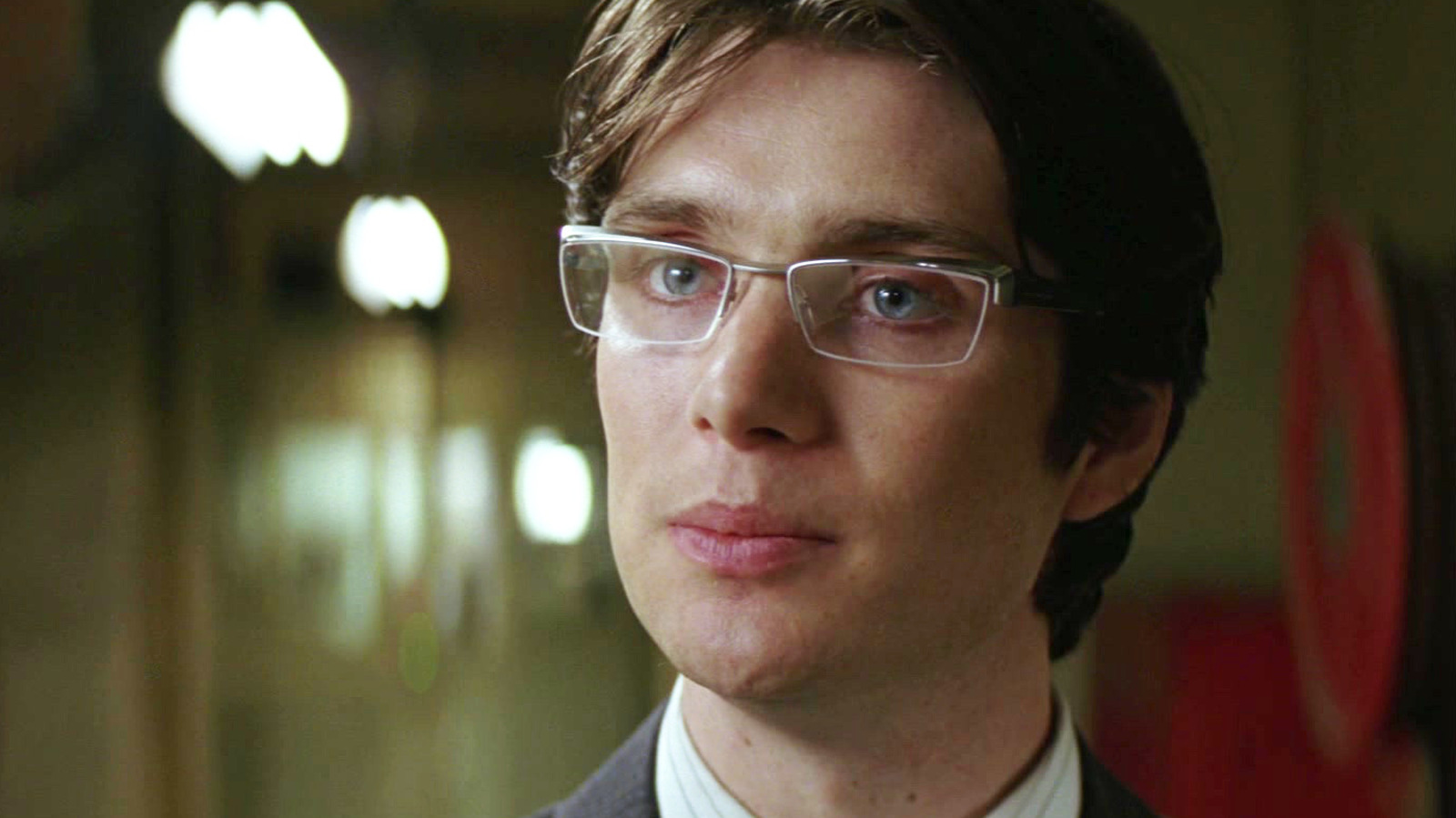
Like many filmmakers, Christopher Nolan often works with the same actors across different projects. Sir Michael Caine has appeared in eight Nolan films total. In second place, with room to eventually become no. 1 given Caine’s retirement, is Cillian Murphy.
Murphy has acted in six films directed by Nolan, in chronological order: “Batman Begins,” “The Dark Knight,” “Inception,” “The Dark Knight Rises,” “Dunkirk,” and their shared magnum opus “Oppenheimer.” This prosperous creative relationship all started when Murphy auditioned to play Bruce Wayne in “Batman Begins.” The two recall that they both knew Murphy wasn’t the right pick for the Dark Knight, but Murphy’s acting impressed Nolan enough that he fought, and won, to cast Murphy instead as one of the movie’s villains: Doctor Jonathan Crane, the Scarecrow.
Since then, Nolan has always known just the right way to use Murphy, to the point you could call the actor his secret weapon. Until “Oppenheimer,” Murphy had never played the lead in a Nolan movie, but the director always cast him in important supporting roles (ones that needed the right actor or the whole film around them would suffer). With “Oppenheimer,” Murphy carried the entire movie on his back, and his previous Nolan film performances show why he had earned the trust needed for that casting.
4. The Shivering Soldier (Dunkirk)
Even Cillian Murphy’s smallest role in a Christopher Nolan movie still has meat on the bones. Nolan’s World War II film “Dunkirk” depicts the 1940 evacuation of British troops from the eponymous French shoreline. Murphy plays one of those thousands of troops, specifically one whose boat gets destroyed by a German U-Boat. He’s rescued by a civilian ship volunteering as a rescue boat, but taking that ride means sailing back into the carnage he just escaped.
Murphy’s character doesn’t even have a name, being known only as “the Shivering Soldier.” Pulled from the cold water by Mr. Dawson (Mark Rylance) and boys Peter (Tom Glynn-Carney) and George (Barry Keoghan), he indeed shivers, wrapping himself in a blanket onboard. The soldier already counts himself one of the lucky ones for surviving, and he refuses to let the ship continue heading towards Dunkirk, which he believes is certain death.
With the terrifying scene the movie paints of the battle, it’s hard to dismiss the soldier’s fears. Peter asks if the soldier is a coward, but Mr. Dawson counters he’s only shell-shocked. Murphy can pull off a thousand-yard stare like few other actors can (something he’d again do to great effect in “Oppenheimer”). That silent and haunted quality he can project makes him perfect for this part: A man who stared death in the face while watching it work all around him … and is now being asked to do so again after getting no time to recover.
3. Dr. Jonathan Crane/The Scarecrow (The Dark Knight trilogy)
Cillian Murphy’s Scarecrow is the only villain to appear in all three of the “Dark Knight Trilogy” films. During “Batman Begins,” Jonathan Crane, reimagined as the head of Arkham Asylum, is in bed with both the mob and the League of Shadows, who plot to destroy Gotham City with Crane’s fear toxin. Crane then returns for cameos in “The Dark Knight,” being captured by Batman (Christian Bale), and “The Dark Knight Rises,” serving as a judge in Bane’s (Tom Hardy) kangaroo court.
Murphy is relishing playing a super-villain without ever going into pure camp territory. Though Dr. Crane admittedly isn’t physically imposing, his frosty blue-eyed gaze still makes him look like a guy who can and would kill you. He’s even the first villain to get one over on Batman, dosing the Dark Knight with his fear toxin and setting him on fire. Crane does the last part with a cruel quip befitting his psychologist background: “You look like a man who takes himself too seriously. Do you want my opinion? You need to lighten up.”
Crane is both a sadist and a psychologist obsessed with studying the effects of fear. He relishes putting people on edge, particularly pesky crusading lawyer Rachel Dawes (Katie Holmes). But Murphy’s best Scarecrow scene is definitely when he pulls rank on imprisoned mob boss Carmine Falcone (Tom Wilkinson). Murphy completely changes the tenor of the scene with Crane’s line: “Would you like to see my mask?” It instantly shows Crane is not some mere corrupt bureaucrat.
Scarecrow always shows a catty sense of humor, too. So, it’s fitting that his last scene in the trilogy is sentencing Jim Gordon (Gary Oldman), and others who refuse to choose between “death or exile,” to “death — by exile.”
2. Robert Fischer (Inception)
In between “Dark Knight” movies, Christopher Nolan and Cillian Murphy made a little film you might’ve heard of called “Inception.” It’s a heist/con movie, but it’s set inside a dreamscape. Murphy plays the dreamer and the crew’s mark: Robert Fischer, the heir to an oil empire reeling from the death of his disapproving father (Pete Postlethwaite). Dominic Cobb (Leonardo DiCaprio) and his crew are hired by Fischer’s rival, Mr. Saito (Ken Watanabe), to plant an idea inside his head that’ll make him resolve to break up his father’s empire instead of inheriting it.
Speaking to Irish Central in 2010, Murphy mentioned he researched the sons of Rupert Murdoch to understand how being raised in a titan of industry’s shadow would shape someone (and this was well before “Succession” gave us a Murdoch roman à clef). Murphy added that he played Fischer as “a petulant child who’s in need of a lot of attention from his father.” But while “Inception” is all about tricking Fischer, the movie isn’t unsympathetic to him.
“Inception” is widely read as an allegory for filmmaking itself. Fischer is the audience, the one who needs to be deceived by the craft and illusion, to believe that something is real in their gut even when their brain knows it isn’t. The entire movie hinges on the titular inception, where Fischer sees an illusion of his father on his deathbed and gets what life denied him: reassurance that his dad did care about him. And just as the inception has to convince Fischer, Murphy has to convince us of the emotional sincerity. An overwhelmed Fischer tears up, and as his face crumbles, it’s hard not to get a lump in your own throat. It’s extra painful since it’s all a falsehood.
1. J. Robert Oppenheimer (Oppenheimer)
“Oppenheimer” cleaned house at the 96th Oscars, including Cillian Murphy winning Best Actor for playing the father of the atomic bomb — or, as Oppenheimer infamously called himself later in life, “death, destroyer of worlds.”
On the surface, it’s a transformative performance. Murphy lost weight to better capture the gaunt Oppenheimer’s physique, and he completely re-modulated his voice. (Murphy based his soft but deep and rhythmic baritone as Oppenheimer on a combination of Orson Welles and Fred Rogers). But despite those hallmarks of actor transformation, the kind that often feel cynically used to win an Oscar, Murphy as Oppenheimer isn’t gaudy acting. No, it’s more like a chameleon shifting into a new color: Murphy becomes Oppenheimer, utterly.
“Oppie” may have been eccentric, but “Oppenheimer” is much more interested in exploring how his foibles led to his downfall — and perhaps humanity’s — than venerating them as the cost of his scientific know-how. Oppenheimer is willfully naive about how the bomb he’s building will be used and pathologically incapable of taking too strong a stand on anything. His equivocation often only digs him deeper. Indeed, Murphy excels in scenes that show the weighty consequences of Oppenheimer’s awkwardness, like when he meets with violently anticommunist Colonel Pash (Casey Affleck) or stumbles while urging U.S. President Harry Truman (Gary Oldman) to push for nuclear de-escalation.
Oppenheimer seeking absolution from Truman by talking about the “blood on (his) hands” makes it hard to disagree with Lewis Strauss’ (Robert Downey Jr.) argument that Oppenheimer wanted to be both the maker of the bomb and a martyr for its destructiveness. But in Murphy’s moments of silent stillness (particularly the ending when his character imagines the world’s fiery end), he shows how Oppenheimer’s guilt, though self-inflicted, was all too real and impossibly heavy to carry.






Leave a Reply