
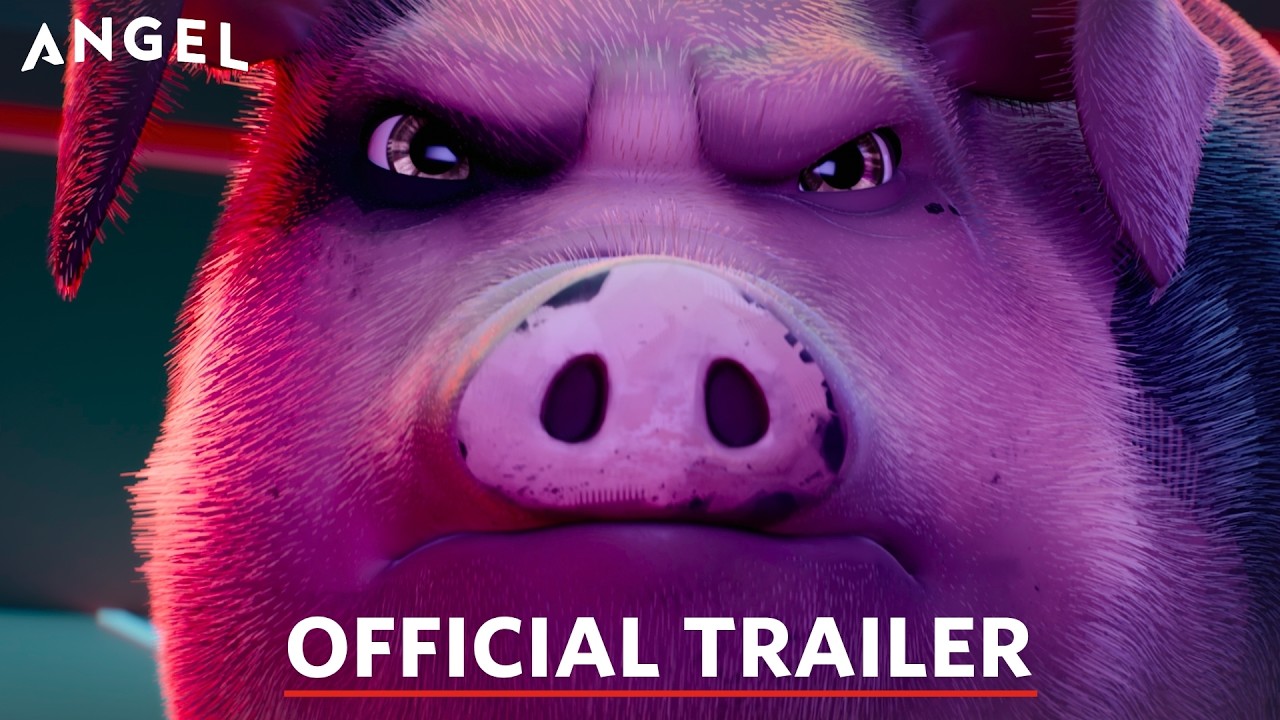
The Animated Orwell Adaptation That Spent 15 Years in Development — and Arrived at the Most Politically Urgent Possible Moment With the Least Politically Courageous Available Version
When farmer Jones loses his farm to foreclosure, the animals rebel. Lucky, a young pig who can read, leads the revolution alongside Snowball. Napoleon — calculating, charismatic, and voiced by Seth Rogen’s iconic chuckle — waits in the background. The pigs consolidate power, rewrite the rules, crush Boxer, and erase the revolution’s original promise. A new character named Lucky (Gaten Matarazzo) serves as audience surrogate, learning lessons aloud for children who might not follow the allegory. The film updates Orwell’s Stalinist critique to target Trump-coded authoritarianism and Musk-adjacent tech billionaires — then undercuts everything with a Hollywood-friendly hopeful ending the book explicitly denies. Directed by Andy Serkis. Written by Nicholas Stoller (Forgetting Sarah Marshall). Premiered Annecy Animation Festival June 9, 2025. BFI London Film Festival October 2025. US theatrical Angel Studios May 1, 2026. Metascore 40. No awards.
Why It Is Trending: 15 Years in Development, the Most Politicised Cultural Moment for Orwell Since 1984 — and the Most Divided Critical Response to an Animated Film in Recent Memory
The development history is the film’s most telling production fact: in development since 2011 through Rise of the Planet of the Apes, through Netflix’s 2018 acquisition and subsequent drop, through Venom: Let There Be Carnage, through mocap ambitions that became CGI pragmatism, finally finished in 2024 and distributed by Angel Studios in December 2025. Deadline’s Pete Hammond called it “frighteningly perceptive and uncannily meeting its time — a little too close for comfort to America’s drift toward authoritarianism.” Variety’s Peter Debruge countered that Serkis “dilutes Orwell’s political allegory in favor of something more audience friendly — celebrity voices, cutesy character designs, and antic mile-a-minute energy of big-studio American toons.”
Elements Driving the Trend: Napoleon as Trump, Pilkington as Musk, and the Allegory Shift From Communism to Corporatism
-
Napoleon is explicitly Trump-coded — winning over a mindless herd by appealing to their worst and laziest instincts, altering perception with baseless claims that “everyone is saying” whatever he finds expedient, accompanied by a mewling sycophant quasi-son Squealer (Kieran Culkin).
-
Glenn Close’s Pilkington is a tech billionaire — “basically Elon Musk if Elon Musk had any actual charisma” — extending the allegory from Orwell’s original capitalist-communist binary into a 2025 corporate power critique.
-
IGN noted Serkis shifts the allegory from Stalinism to modern corporate corruption, trading a dystopian tone for “something a little more uplifting.”
-
The PG rating and the addition of Lucky as a child-audience surrogate represent the film’s most contested formal decision — the choice to make Orwell’s darkest fable accessible to younger viewers at the cost of its most devastating argument.
Virality: Rogen’s Napoleon as the Most Debated Casting Choice and the Hopeful Ending as the Most-Discussed Formal Deviation
-
Letterboxd: “This sanitized version of Animal Farm is a tonal nightmare where quotes from the book get lost in the muck of fart jokes, slapstick, and embarrassing music choices like the theme from The Price Is Right.”
-
Rogen’s Napoleon — voiced with his signature chuckle — is cited by multiple reviewers as both the film’s most effective against-type element and its most commercially misaligned casting choice for the role.
Critics Reception: Deeply Divided — Positive Reviews Cite Political Timeliness, Negative Reviews Cite Orwell Betrayal
-
Deadline (positive): “gorgeous animation, frightening perceptiveness — Harrelson beautifully voices Boxer’s pathetic naïveté; Rogen’s iconic laugh turns chilling under the right circumstances.”
-
Hollywood Reporter (negative): “juvenile; sacrifices the story’s powerful anti-Stalinist message for a dumbed-down critique of corporatization — the Bottom Line: Juvenile.”
-
Screen Daily (mixed, 70): “may struggle to satisfy Orwell purists but takes a political stance and delivers an emphatic message celebrating equality, with more hope than Orwell permitted.”
-
Consequence: “there are bad movies, and then there are movies that drain all life and joy out of a person’s soul — this falls firmly into the latter category.”
-
Metascore 40 from 6 critic reviews. 33% positive / 33% mixed / 33% negative split.
Awards and Recognitions: No Awards — Annecy World Premiere June 2025 — Angel Studios US May 1, 2026
-
No awards. Annecy International Animation Film Festival world premiere June 9, 2025. BFI London Film Festival October 2025. Angel Studios US theatrical May 1, 2026.
Director and Cast: The Motion Capture Pioneer Who Spent 15 Years Getting This Film Made — and the Most Commercially Recognisable Animated Voice Cast of 2026
-
Andy Serkis — Caesar in Planet of the Apes, Gollum in Lord of the Rings — directs his long-gestating passion project; his Planet of the Apes experience with animals and human-animal moral dynamics gives him the most specific available credential for the material, which makes the execution’s critical reception more confounding.
-
Seth Rogen (Napoleon) — The Studio — delivers Orwell’s most notorious villain with a man-cave dude-bro register that divides critics between chilling and miscast.
-
Woody Harrelson (Boxer) — unanimously the film’s most praised individual performance element: “brings a pathetic naïveté to Boxer that adds to his tragedy.”
-
Kieran Culkin (Squealer), Glenn Close (Pilkington), Laverne Cox (Snowball), Gaten Matarazzo (Lucky), Steve Buscemi (Mr. Whymper), Jim Parsons (Carl), Kathleen Turner (Benjamin), Iman Vellani (Puff) — a voice cast whose collective commercial recognition far exceeds the film’s Metascore 40 critical standing.
Conclusion: An Animated Orwell Adaptation That Arrived at the Most Politically Urgent Moment — and Squandered It on the Most Commercially Cautious Available Formal Choices
The political timing is impeccable. The casting is star-studded. The formal execution — PG rating, fart jokes, hopeful ending — is the most consistent critical failure point across every review position. Harrelson is the film’s only unanimous praise.
What Movie Trend Is Followed: The Animated Political Allegory Attempts to Reach a Family Audience — and Discovers That Orwell’s Most Devastating Arguments Are Incompatible With the PG Register
Animal Farm belongs to the animated literary adaptation tradition — The Lorax, Charlotte’s Web, Watership Down — but occupies a uniquely difficult formal position: it is adapting the most politically specific allegory in the English literary canon for an audience that cannot yet vote. The specific formal failure the critics uniformly identify is the happy ending: Serkis claims society is in a perpetual cycle, but then says this time will be different, for no particular reason — “you can’t claim history is a never-ending circle and then say, as an afterthought, right at the end, that this time will be different.”
Trend Drivers: The Trump-Era Political Relevance, the Angel Studios Distribution, and the Allegory Shift
-
The Napoleon-as-Trump, Pilkington-as-Musk update gives the film its most commercially compelling discovery argument and its most politically specific deviation from Orwell’s original Stalinist target.
-
Angel Studios — whose Sound of Freedom and The Strangers’ Case demonstrated the viability of faith-adjacent and politically pointed content for under-served conservative and family audiences — gives the film its most strategically aligned distribution partner.
-
The 15-year development creates the most commercially unusual production story in recent animation — a passion project that survived Netflix, Matt Reeves, and the shift from motion capture to CGI.
What Is Influencing Trend: Angel Studios’ Audience and the Animation-as-Political-Statement Cultural Moment
-
Angel Studios’ track record with politically charged content gives the film a pre-converted audience for whom Orwell’s anti-authoritarian message carries immediate contemporary resonance.
-
The Letterboxd community’s most quoted response — “thank you, CIA, very cool” — references the original 1954 animated film’s actual CIA funding, positioning the new version in an ironic lineage.
-
The animation format’s family-friendly expectations versus the source material’s devastating political argument is the film’s most formally irresolvable tension — and the one every negative review identifies as the production’s central mistake.
Macro Trends Influencing: Orwellian Political Anxiety and Animation’s Adult Ambition
-
Orwell’s relevance in the Trump era — 1984 returning to bestseller lists, Animal Farm assigned in schools with new urgency — gives the film the most culturally pre-primed audience available to any literary adaptation.
-
The animation format’s expanding adult ambition — Arcane, The Super Mario Galaxy Movie’s evening audience, Spider-Verse — makes the decision to aim Animal Farm at children rather than adults the film’s most strategically contested choice.
Consumer Trends Influencing: The Angel Studios Family Audience and the Orwell Readership
-
Angel Studios’ motivated audience — families who respond to content with clear moral stakes and non-nihilistic conclusions — makes the hopeful ending a commercial calculation even if it is an artistic failure.
-
The school-assigned readership of Orwell’s novella gives the film a built-in audience of teenagers and young adults who will come with source material expectations the film cannot satisfy.
Audience Analysis: Angel Studios Family Audiences, Orwell Readership, and the Animated Political Allegory Community
The core audience is 8–45 — Angel Studios’ family demographic who will find the political allegory accessible and timely, Orwell readers who will find the ending a betrayal, and the animation community who will evaluate it against Spider-Verse and Arcane’s formal ambition. The generational gap in expectation is the film’s most commercially defining challenge.
Conclusion: A Politically Timely Animated Allegory That Chose Commercial Safety Over Formal Courage — and Paid the Critical Price for the Choice
The Trump-Musk allegory is genuinely effective. The happy ending is genuinely indefensible. The voice cast is genuinely excellent. The combination confirms that the most commercially cautious version of Animal Farm is also the least politically honest one.
Final Verdict: The Most Timely Animated Political Allegory Since WALL-E — Undermined by a Formal Commitment to Accessibility That Orwell’s Text Was Specifically Designed to Resist
Serkis delivers a film of genuine political relevance and genuine formal confusion — the Trump-coded Napoleon, the Musk-adjacent Pilkington, and Harrelson’s Boxer are all precisely calibrated to the 2026 moment; the fart jokes, the cutesy animation, and the hopeful ending are calibrated to a studio audience calculation that Orwell’s most devastating allegory cannot survive intact. The Metascore 40 is accurate.
Audience Relevance: For Families Who Want Orwell Lite — Not for Anyone Who Knows the Source Material Well
Works best for Angel Studios’ family audience who arrive without specific literary expectations and will find the political allegory’s contemporary references immediately legible. Works least for anyone who read the book and knows the ending should be devastating.
What Is the Message of Movie: Power Corrupts — and So Does the Decision to Make That Lesson Safe for a Family Audience
The film’s most honest self-indictment is the hopeful ending — “You can’t claim history is a never-ending circle and then say, as an afterthought, right at the end, that this time will be different, and for no particular reason.” The message Orwell wrote was that the revolution always ends the same way. Serkis disagreed for commercial reasons.
Relevance to Audience: The Most Politically Urgent Animated Film of 2026 — For the Audience Least Equipped to Receive Its Full Force
Releasing in the Trump era with a Trump-coded villain is the most obvious creative decision available; delivering it with a PG rating and a happy ending is the most cowardly. The film is most relevant to the youngest part of its audience and least honest to the most politically aware part.
Social Relevance: Authoritarian Rise, Tech Billionaire Power, and the Sanitisation of the Most Important Political Fable in the English Language
Rendy Reviews’ most precise indictment: “Somehow, this is both worse than the CIA-funded ’50s cartoon and the most Orwellian thing to happen in real time.”
Performance: Harrelson Is Unanimously the Film’s Most Affecting Voice — Rogen the Most Divisive — Close the Most Wasted
Harrelson’s Boxer — pathetic naïveté, tragic loyalty — is the film’s only unanimous positive performance note. Rogen’s Napoleon divides between chilling and miscast. Close’s tech billionaire is squandered. Culkin’s Squealer delivers the film’s most scenically effective political characterisation.
Legacy: The Serkis Passion Project That Spent 15 Years in Development and Arrived Exactly When It Was Most Needed — With the Least of What It Needed to Have
Animal Farm will be remembered as the animated political allegory that had the most prescient possible premise in 2026, the most commercially recognisable possible voice cast, and the least formally courageous possible conclusion.
Success: Metascore 40 — Annecy World Premiere — Angel Studios US May 1, 2026 — No Awards
-
Metascore 40. No awards. Annecy International Animation Film Festival June 9, 2025. BFI London Film Festival October 2025. US theatrical Angel Studios May 1, 2026.
Animal Farm proves that the most politically timely animated allegory of 2026 is also its most formally cowardly — and that Orwell specifically designed his ending to be the part nobody gets to change.
Insights: A politically urgent animated Orwell adaptation that updated the allegory from Stalinism to Trump-coded authoritarianism and Musk-adjacent tech power with genuine precision — then undermined every formally courageous decision with a PG rating, fart jokes, and a hopeful ending the source material was written specifically to deny. Industry Insight: The 15-year development journey — Netflix acquisition and drop, Matt Reeves attachment and departure, mocap to CGI, finally landing at Angel Studios — is the most commercially instructive production history in recent animation: the studio that eventually distributed it is the only one whose audience calculus aligns with the family-friendly formal choices that made the critical community declare Orwell a casualty. Audience Insight: Harrelson’s Boxer is the film’s most reliable word-of-mouth asset — the one performance that every critical position cited as genuinely affecting — and his unanimous praise is the single most commercially efficient discovery argument for a film that its negative reviews have made dangerous to recommend on general terms. Social Insight: Releasing an animated Animal Farm with a Trump-coded Napoleon and a Musk-adjacent tech billionaire in 2026, then giving it a hopeful ending, is the most specific available demonstration of the film’s own central thesis: that those in power always find a way to make the revolution’s most uncomfortable conclusions disappear. Cultural Insight: Serkis’s Animal Farm will occupy the same cultural position as the CIA-funded 1954 version — an adaptation that tells you as much about what its era was unwilling to say as it does about Orwell’s original argument.
Conclusion: The Most Politically Timely Animated Allegory of 2026 Is Also Its Most Self-Defeating — Confirming That the Only Version of Animal Farm That Would Satisfy Is the One That Keeps the Ending
The Napoleon allegory is precise. The Musk billionaire is effective. Harrelson’s Boxer is genuinely moving. The happy ending is the film’s most Orwellian decision — and not in the way Serkis intended. Serkis’s next directorial project, freed from 15-year development expectations, is the one to watch.
Summary: One Farm, One Revolution, One Napoleon, and the Ending Orwell Wrote That Nobody in Hollywood Was Willing to Film
-
Movie themes: Revolutionary idealism corrupted by power, the authoritarian who rebrands the revolution in his own image, propaganda as the mechanism that makes oppression feel like freedom, and the specifically American refusal to accept that the revolution always ends the same way.
-
Movie director: Andy Serkis — Mowgli: Legend of the Jungle, Venom: Let There Be Carnage; Caesar in Planet of the Apes — brings 15 years of development investment to his most politically ambitious project, updating Orwell’s Stalinist allegory to 2025 authoritarian corporatism with precision and then deploying a happy ending that contradicts everything that precision established.
-
Top casting: Harrelson’s Boxer is the film’s unanimous performance consensus — the one character whose ending lands with the weight Orwell intended. Rogen’s Napoleon divides critics but is consistently cited as more effective against-type than expected. Culkin’s Squealer delivers the political portrait most specifically calibrated to 2025.
-
Awards and recognition: No awards. Metascore 40. Annecy Animation Festival June 9, 2025. BFI London Film Festival October 2025. US theatrical Angel Studios May 1, 2026.
-
Why to watch: The most politically timely animated film of 2026 — Napoleon coded as Trump, Pilkington as Musk, Squealer as the sycophant son, and Harrelson’s Boxer as the most affecting performance in any animated film this year — for the audience that arrives without Orwell’s ending in mind.
-
Key success factors: The Trump-era political relevance plus Harrelson’s performance plus the all-star voice cast’s collective commercial recognition plus Angel Studios’ pre-converted family audience plus the 15-year development story plus the Annecy-BFI festival circuit institutional credibility.
-
Where to watch: US theatrical from May 1, 2026 via Angel Studios.
Conclusion: The Animated Orwell Adaptation That Arrived Exactly When It Was Most Needed — and Chose Commercial Safety at the Precise Moment Political Courage Was the Only Defensible Formal Choice
Animal Farm earns its place in 2026’s cultural conversation through the precision of its allegorical updating and the quality of its ensemble voice work. Its commercial legacy will be determined by Angel Studios’ theatrical performance; its critical legacy has already been established by the decision to deny its audience the ending that Orwell considered the allegory’s entire point. Serkis’s next directorial project — freed from fifteen years of development constraints — represents a more accurate measure of his formal capabilities.





Leave a Reply