
LB | SA | EG | 2024 | 90 min | Comedy, Drama
One Stolen Scooter Sends a Mother Across Beirut
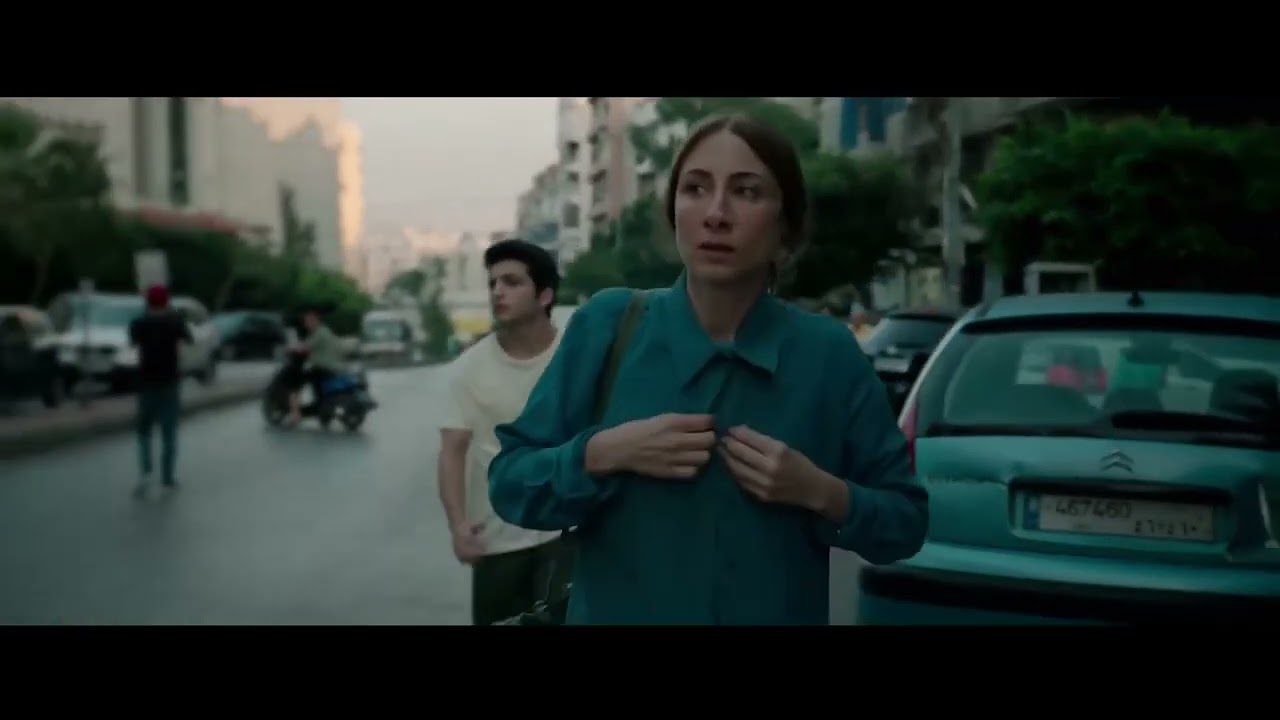
Arzé is a struggling single mother trying to keep her family afloat through a small homemade pie business in Beirut. She lives with her teenage son Kinan and her older sister Layla, and when growing demand makes deliveries increasingly difficult, she takes a financial risk to secure a scooter that could give the family a little more stability. Then the scooter is stolen.
What follows is much bigger than a search for missing property. Arzé and Kinan move through different neighborhoods and communities across Beirut, encountering the religious, social and economic divisions of the city while their own strained mother-son relationship begins to reveal tensions that have been building at home.
➡️ Movie Insight: Arzé makes an ordinary stolen object feel enormously important because the scooter represents economic survival. Recovering it becomes a journey through Beirut, family tensions and the compromises people make when money is tight. A simple search gradually reveals an entire city.
Why This Movie Matters Right Now: Everyday Survival Is Becoming a Bigger Story
Arzé understands something increasingly important in contemporary social cinema: financial insecurity does not always need to be represented through spectacular poverty or catastrophe. Sometimes survival depends on something as ordinary as having transportation, making enough deliveries, paying the rent or finding a way to keep a tiny family business operating.
That makes Arzé’s predicament immediately understandable beyond Lebanon. The scooter is valuable not because it is luxurious but because it could make daily life slightly easier, turning its theft into a genuine economic crisis. Mira Shaib uses that small emergency to explore the much larger pressure experienced by families living without a meaningful financial safety net.
➡️ Why It Matters: Arzé turns economic insecurity into a deeply human story rather than an abstract social issue. One stolen scooter threatens work, money and family stability at the same time. The movie shows how small setbacks become enormous when people have no room for anything to go wrong.
Should You Watch It?: Watch for Beirut, Family and Humor Rather Than Heavy Political Drama
Watch Arzé if you like character-driven films that explore serious social realities without becoming relentlessly bleak. The search takes viewers through a Beirut defined by different neighborhoods, religions, accents and identities, but Shaib repeatedly uses humor to expose the absurdity of the prejudices Arzé encounters.
The emotional centre remains the relationship between Arzé and Kinan. She is determined to protect the life she has built for him, while he is reaching an age when he wants a future that may take him away from her, giving their journey the recognizable tension of a parent trying to hold a family together while a child begins imagining independence.
➡️ Viewing Recommendation: Watch Arzé for a warm, funny and socially observant journey through Beirut. The stolen scooter provides momentum, but the mother-son relationship provides the emotional payoff. It is particularly rewarding for viewers who enjoy films where everyday life reveals much bigger cultural realities.
Why Everyone Is Talking About It?: Beirut Becomes the Real Co-Star
Arzé has traveled through an impressive international festival circuit, including Beijing, Tribeca, Cairo, Newport Beach and the Asian World Film Festival. Its recognition includes screenplay and acting wins at Cairo, while Diamand Abou Abboud also won Best Actress at the Asian World Film Festival.
Yet the movie’s strongest conversation point is not its awards profile but its portrait of Beirut. Instead of treating the city as a distant political symbol, the film takes audiences into neighborhoods, homes, businesses and communities while allowing humor, frustration and ordinary human interaction to define the experience.
➡️ Viral Potential: Arzé gives international audiences a Beirut that feels lived in rather than explained from a distance. Its combination of humor, family conflict and social observation makes difficult subjects unusually accessible. Word-of-mouth can grow from the feeling that viewers have discovered both a compelling character and a side of the city they rarely see on screen.
Why Arzé Stands Out: The City Changes Every Time They Cross a Neighborhood
The scooter search creates a clever structure for exploring Beirut because every new clue sends Arzé and Kinan somewhere different. Moving between communities means navigating assumptions about religion and identity, and Arzé adapts herself to whoever she believes might help her.
That gives the film an unusually playful way of examining sectarianism. Instead of stopping the narrative for political explanations, Shaib lets prejudice emerge through conversations, clothing, language, accusations and Arzé’s increasingly elaborate attempts to fit into whichever community she is entering.
➡️ Cinema Insight: Arzé turns movement through a city into movement through its social divisions. Every neighborhood reveals another layer of Beirut while pushing the search forward. The result is political filmmaking disguised as an energetic family adventure.
Movie Trend: Everyday Survival — When One Small Loss Changes Everything
Everyday Survival stories focus on people whose lives can be destabilized by events that wealthier characters might consider minor. A broken vehicle, lost job, unpaid bill or stolen possession can become a genuine crisis when there is no financial cushion waiting underneath.
Arzé makes that reality tangible through the scooter. It represents transportation, faster deliveries, greater income and the possibility that Arzé’s pie business might finally become sustainable, so losing it threatens far more than mobility.
➡️ Movie Trend: Everyday Survival makes ordinary problems feel urgent because the characters cannot simply buy their way out of them. Small objects become symbols of independence, dignity and hope. Arzé turns one stolen scooter into a compelling portrait of how precarious everyday stability can be.
Viewer Profile: Audiences Looking for Human Stories Behind Social Issues
Arzé should appeal strongly to viewers interested in international cinema, contemporary Arab filmmaking and character-driven social comedy. Its accessibility comes from approaching complex questions about class, religion and identity through an immediately understandable family problem rather than making political debate the entire narrative.
There is also a strong multigenerational appeal. Parents can recognize Arzé’s determination to protect her son, while younger audiences can understand Kinan’s frustration with the limitations surrounding him and his desire to imagine a different future.
|
International cinema audiences drawn to humanistic social dramas and comedies |
|
|
Viewers interested in Arab cinema, family stories and contemporary Beirut |
|
|
Broad audience with strong appeal to viewers interested in female-led stories |
|
|
Broad middle-income arthouse, streaming and festival audience |
|
|
Culturally curious, socially aware, urban and internationally minded |
|
|
Festival films, family dramas, social comedies, Middle Eastern cinema and character-driven independent films |
➡️ Audience Insight: Arzé makes culturally specific material accessible through a universal family struggle. Audiences do not need detailed knowledge of Lebanon to understand a mother worried about money and a son wanting independence. That combination of specificity and familiarity gives the film unusually broad emotional reach.
What This Movie Means for the Industry: Arab Cinema Can Tell Everyday Stories Too
International films from politically unstable regions are often expected to explain conflict, trauma or national history to outside audiences. Arzé takes another route by allowing those realities to exist inside a story whose immediate concerns are work, family, transportation and a mother trying to solve a problem.
That matters because everyday stories can communicate culture just as powerfully as explicitly political ones. Beirut’s divisions become understandable through Arzé’s interactions with ordinary people, while humor prevents the city and its inhabitants from being reduced to conflict alone.
➡️ Industry Insight: International audiences are increasingly receptive to culturally specific stories built around universally recognizable problems. Arzé demonstrates that social commentary does not need to overwhelm character, humor or entertainment. Its strength comes from making Beirut part of everyday life rather than treating the city as a political case study.
Creative Analysis: A Simple Search Opens Up an Entire City
The screenplay by Louay Khraish and Faissal Sam Shaib uses an elegantly simple engine: find the scooter before its loss destroys the family’s fragile finances. That objective gives the movie constant forward movement while allowing each new stop to reveal another character, community or family problem.
The approach recalls the tradition of films where a missing everyday object becomes the gateway to a much broader portrait of society. Here, however, the emotional journey belongs to a Lebanese mother whose determination keeps pushing her through barriers that might otherwise stop her.
Storytelling: One Problem Creates Dozens of Encounters
The stolen scooter gives the story an effective chain structure. One clue leads to another person, another neighborhood and another encounter, meaning the search itself becomes the mechanism through which viewers discover Beirut.
At the same time, the external mission creates space for internal problems to emerge. Arzé may believe she is looking for transportation, but the journey increasingly forces her to confront the state of her family and the truths she has avoided.
Direction: Mira Shaib Finds Humor Inside Social Division
Shaib refuses to treat every encounter with sectarianism as solemn political drama. Arzé changes how she presents herself depending on the neighborhood she enters, allowing comedy to expose how absurd deeply embedded assumptions about identity can become.
That tonal lightness is important because it keeps the characters from becoming symbols. The city remains complicated and divided, but it is also funny, busy, contradictory and filled with people capable of both prejudice and generosity.
Performances: Diamand Abou Abboud Makes Arzé Impossible to Ignore
Diamand Abou Abboud gives the central character the determination required to keep the story moving. Arzé can be stubborn, impulsive and willing to cross ethical boundaries, but those imperfections make her struggle feel more human rather than weakening her.
Bilal Al Hamwi gives Kinan a different kind of urgency. His frustrations with his mother are connected to the larger desire of a young person imagining a life beyond the limitations of the family, making their arguments part of a genuine generational conflict rather than simple teenage rebellion.
Visual Style: Beirut Is Seen From Street Level
The film’s journey structure allows Beirut to unfold geographically rather than through establishing shots designed primarily for outsiders. Streets, stores, apartments and neighborhood differences become part of the narrative because Arzé must physically navigate them.
That street-level perspective keeps the city connected to the people living inside it. Beirut is not simply background scenery; its geography, divisions and everyday rhythms actively determine how difficult the search becomes.
Themes: Survival, Motherhood, Identity, Sectarianism and Independence
Arzé’s strongest themes emerge from the collision between economic necessity and personal freedom. She needs Kinan to help sustain the family business, while he increasingly needs a life that belongs to him rather than to the survival strategy his mother has constructed.
The city mirrors that tension in a broader form. People are divided by inherited identities and assumptions, yet Arzé’s search continually requires her to cross those boundaries, revealing both their power and their absurdity.
What Makes It Different: Serious Lebanon Becomes a Feel-Good Journey
Arzé deals with economic insecurity, sectarian division, family secrets and the possibility of emigration, but it refuses to define Lebanese life exclusively through suffering. Humor and affection coexist with instability.
That choice gives the film a distinctive identity within socially conscious cinema. Its victories may be small, but that is precisely the point: when everyday life is difficult, a small victory can carry enormous emotional weight.
➡️ Creative Insight: Arzé succeeds by keeping its story simple while allowing its world to remain complicated. The scooter gives viewers something immediate to follow while Beirut provides constantly expanding social context. Mira Shaib turns an everyday crisis into a warm, funny and revealing journey through family and city life.
If You Liked Arzé (2024): More Stories About Family, Community and Everyday Survival
These films similarly use ordinary people and everyday problems to reveal much larger social realities. Each keeps human relationships at the centre while allowing questions of class, community, identity or independence to emerge naturally around them.
Wadjda (2012) by Haifaa al-Mansour: When One Bicycle Represents Freedom
A determined Saudi girl wants a green bicycle even though the social expectations surrounding her make that seemingly simple ambition difficult. Her attempt to earn enough money to buy it turns an everyday object into a symbol of independence.
➡️ Why It Connects: Wadjda and Arzé both understand how transportation can represent something much larger than getting from one place to another. A bicycle and a scooter become connected to freedom, possibility and independence. Both films use humor and warmth to explore social restrictions without losing sight of their characters.
Costa Brava, Lebanon (2021) by Mounia Akl: When a Family Cannot Escape the Country Around Them
A Lebanese family leaves polluted Beirut hoping to create a more peaceful existence in the mountains, only for the outside world to intrude when a landfill appears beside their property. Their attempted escape becomes a confrontation with family tensions and the society they tried to leave behind.
➡️ Why It Connects: Costa Brava, Lebanon and Arzé both make Lebanese family life inseparable from the larger pressures surrounding it. One family crosses Beirut while the other attempts to escape it, yet neither can completely separate private life from social reality. Both use family relationships to make national pressures emotionally immediate.
The Old Oak (2023) by Ken Loach: When Economic Survival Tests a Community
In a struggling former mining community in northeast England, the arrival of Syrian refugees intensifies existing resentment while a local pub becomes an unlikely space for connection. Ken Loach uses everyday economic hardship to examine what makes communities divide and what might bring them together.
➡️ Why It Connects: The Old Oak and Arzé both look at communities where financial pressure can intensify existing social divisions. Neither reduces people to political positions, instead grounding larger conflicts in food, work, family and everyday survival. Both ultimately search for humanity across boundaries that communities have learned to defend.
➡️ If You Liked Insight: Wadjda turns mobility into personal freedom, Costa Brava, Lebanon examines family life under national pressure, and The Old Oak explores survival inside a divided community. All three make large social questions understandable through ordinary lives. Together with Arzé, they demonstrate the power of small human stories to reveal much bigger worlds.
Final Verdict: A Small Search With a Much Bigger Destination
Arzé begins with an instantly understandable problem and gradually reveals how many other problems are hiding underneath it. The scooter is connected to money, work and survival, but searching for it also forces a mother and son to move through the divisions of their city while confronting divisions inside their own family.
Mira Shaib’s lightness of touch is crucial. Rather than turning Beirut into a catalogue of social problems, she creates a lively city populated by complicated people, allowing humor and frustration to coexist with economic hardship and sectarian tension.
➡️ Final Verdict: Arzé is a warm, socially observant film about how quickly an everyday setback can threaten an already fragile life. Diamand Abou Abboud gives its determined mother a mixture of strength, desperation and imperfection that keeps the story human. What begins as a search for a scooter becomes a memorable journey through Beirut, family and the struggle to keep moving forward.
Quick Facts: Arzé at a Glance
|
Louay Khraish, Faissal Sam Shaib |
|
|
Diamand Abou Abboud as Arzé |
|
|
Bilal Al Hamwi as Kinan; Betty Taoutel as Layla; Shaden Fakih as Dina |
|
|
Lebanon, Saudi Arabia, Egypt |
|
|
Ambient Light, Spotless Mind Films |
|
|
Beijing, Tribeca, Cairo, Newport Beach, Asian World Film Festival |
|
|
3 wins and 6 nominations, including Cairo screenplay and acting wins and an Asian World Film Festival Best Actress win |
|
|
Everyday Survival — When One Small Loss Changes Everything |
|
|
Arzé and her teenage son Kinan |
|
|
A struggling mother must recover the stolen scooter her family depends on for its livelihood |
|
|
A stolen-scooter search becomes a journey across Beirut’s communities and divisions |
|
|
Motherhood, survival, family, identity, sectarianism, class, independence |
|
|
A funny, compassionate and culturally rich family story that turns one everyday crisis into a portrait of contemporary Beirut |
Final Insights: Everyday Survival Is Becoming One of Cinema’s Most Universal Stories
Everyday Survival films remind audiences that drama does not require extraordinary circumstances. For millions of people, losing transportation, missing a payment or having a source of income suddenly disappear can change the direction of an entire family, making apparently small problems emotionally and economically enormous.
This kind of storytelling also gives filmmakers a powerful way to explore societies from the ground up. Instead of explaining politics first and people second, films like Arzé begin with a recognizable human need and allow class, identity, migration and social division to emerge naturally from the struggle to meet it.
➡️ Final Insight: Everyday Survival turns ordinary problems into windows onto much larger social realities. These stories resonate because audiences understand the fear of having one setback too many. Arzé shows how a stolen scooter can reveal the pressures facing a mother, a family and an entire divided city.





Leave a Reply