
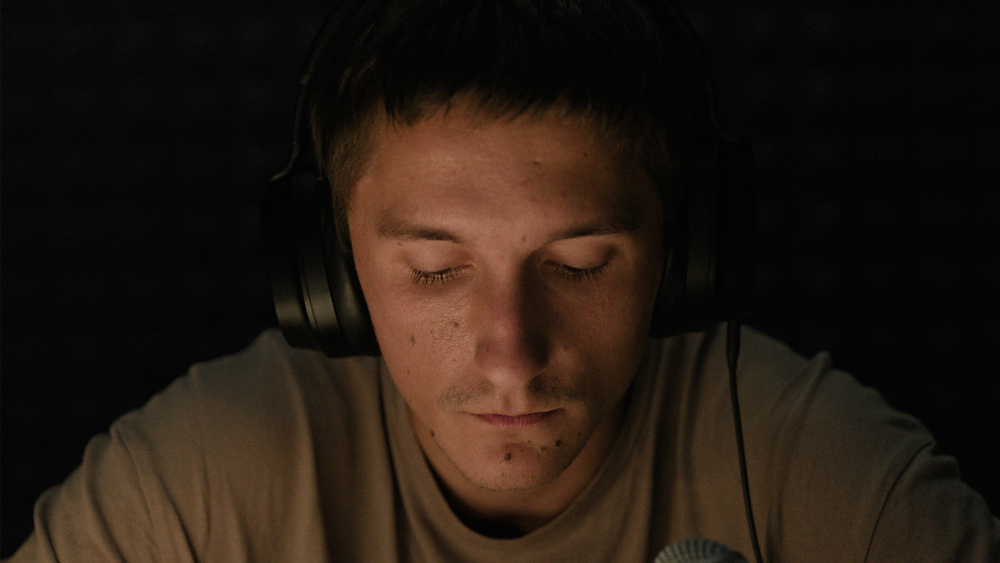
DE | 2026 | 102 min | Drama / Coming-of-Age / Migration Drama
➡️ Where to Watch: IT — MYmovies ONE / Biennale Cinema Channel, available September 11–14, 2026.
War Changes Everything About Growing Up
Twenty-two-year-old Vitaly leaves his mother and sister behind in Ukraine and moves to Munich hoping to build a new life as a student. Germany represents independence, possibility and the chance to become someone beyond the family and country that shaped him. Slowly, a student theatre group begins giving him the feeling that this unfamiliar place could become home.
Then February 24, 2022 changes everything. Russia’s full-scale invasion of Ukraine forces the political crisis Vitaly has been watching from a distance directly into his personal life. His mother and sister flee Ukraine, and suddenly the family he physically left behind becomes impossible to separate from the new identity he has been trying to create in Germany.
➡️ Movie Insight: Camouflage turns war into a coming-of-age crisis rather than a conventional battlefield story. Vitaly is already trying to become independent when history suddenly changes the meaning of home, family and nationality. Growing up becomes much harder when the past cannot stay in the country left behind.
Why This Movie Matters Right Now: Young Lives Are Being Rewritten by War and Migration
War stories often focus on soldiers, political decisions, survival or the immediate destruction happening inside conflict zones. Camouflage looks at another reality: the young people attempting to continue ordinary lives while war changes their relationship with the places and families they have left behind. Vitaly is physically safe in Munich, but safety does not protect him from the emotional consequences of what is happening in Ukraine.
That makes the film particularly relevant to a generation whose coming-of-age experiences increasingly cross borders. Migration can offer education, independence and reinvention, but it can also create distance from family, language and national identity. Camouflage brings those tensions together by asking how a young person builds a future while the meaning of the place called home is changing in real time.
➡️ Why It Matters: Camouflage shows that war continues affecting people long after they have crossed into physical safety. Migration can create a new life without removing emotional responsibility toward the old one. The movie makes a geopolitical crisis personal by showing how conflict reshapes the ordinary process of growing up.
Should You Watch It?: A Coming-of-Age Drama About War, Migration and Finding Home
Camouflage should connect most strongly with audiences interested in contemporary coming-of-age cinema where personal identity is shaped by larger social realities. Vitaly’s desire is recognizable: he wants independence, friendship and somewhere he genuinely belongs. The extraordinary circumstances surrounding that desire transform a familiar young-adult story into something much more politically and emotionally complicated.
The film should also appeal to audiences interested in stories about Ukraine that move beyond conventional representations of combat. Munich becomes just as important as Ukraine because the emotional story is about the distance between the two places. Vitaly can leave one country and live inside another, but belonging proves much harder to relocate.
➡️ Viewing Recommendation: Camouflage is particularly suited to audiences interested in intimate films about young adulthood, migration, identity and the human consequences of war. Its strongest attraction is the collision between an ordinary desire to start again and an extraordinary historical event that makes starting again almost impossible. The result positions war inside everyday life rather than exclusively on the battlefield.
Why Everyone Is Talking About It?: Venice Is Putting a New Ukrainian-German Story on the International Stage
Camouflage arrives with strong early festival positioning through the 2026 Giornate degli Autori Competition at Venice. Its press and industry screening is scheduled for September 7, followed by a September 9 public screening at Sala Perla with a Q&A and another public screening on September 12. That gives Mykyta Gibalenko’s film an important international launch platform at the moment its themes of Ukraine, migration and displaced young adulthood remain intensely current.
The film also enters Venice with two nominations: the 2026 Giornate degli Autori Award and the 2026 Queer Lion Award, both for Gibalenko. Its Queer Lion selection places Camouflage within another major festival conversation around identity and belonging, while its inclusion among the Giornate titles selected for MYmovies’ Biennale Cinema Channel extends its potential discovery beyond physical festival screenings.
➡️ Viral Potential: Camouflage brings together several highly discussable subjects without depending on a conventional war-film premise. Ukraine, migration, queer identity, family tension and young adulthood give different audiences distinct ways into the story. Venice and two early award nominations could help transform an intimate debut into a wider conversation about the generation growing up around war.
Why Camouflage Stands Out: War Arrives Inside an Ordinary Young Life
Vitaly’s story begins with something familiar: leaving home and trying to become independent. Munich gives him distance from Ukraine, while the student theatre group begins offering the community and belonging that migration has disrupted. Camouflage could have remained a straightforward story about a young migrant slowly creating a new identity, but the invasion radically changes the emotional meaning of everything Vitaly has already built.
The film becomes especially interesting because Germany does not simply replace Ukraine as home. The arrival of Vitaly’s displaced family forces different realities into the same space: the life he has been constructing, the family history he carries and the war that has made separation from Ukraine emotionally impossible. Home consequently becomes less a geographical answer than a conflict Vitaly must learn to live inside.
➡️ Cinema Insight: Camouflage stands out because war does not replace the coming-of-age story—it changes it. Vitaly still wants friendship, independence and belonging, but each becomes more complicated once his family and homeland enter crisis. The film makes history feel immediate by showing how it can suddenly rewrite an ordinary young person’s future.
Movie Trend: Growing Up in Wartime — War and Migration Are Changing Coming-of-Age Stories
Coming-of-age cinema is expanding beyond familiar stories about first love, friendship, school and rebellion. More films are examining young people whose transition into adulthood is shaped by migration, political instability and displacement. Growing up becomes more complicated because characters are not simply deciding who they want to become; they are also deciding where they belong while the meaning of home is changing around them.
Camouflage makes that trend especially clear because Vitaly begins his journey before the invasion. His move to Munich is initially about creating a different future, but war transforms personal independence into something connected to family responsibility, national identity and memory. The familiar coming-of-age desire to move forward becomes difficult when history keeps pulling attention backward.
➡️ Movie Trend: Growing Up in Wartime — War and Migration Are Changing Coming-of-Age Stories captures a generation forming identities while borders, families and ideas of home are being disrupted. These stories turn migration and conflict into part of growing up rather than treating them as separate political subjects. Camouflage makes that shift personal through one young man caught between the future he wants and the home he cannot emotionally leave behind.
Viewer Profile: Audiences Drawn to War, Migration and Contemporary Coming-of-Age Cinema
Camouflage should connect most strongly with international festival audiences interested in socially grounded films that make large political realities understandable through individual lives. Its Ukraine-Germany perspective creates immediate relevance for viewers following contemporary European cinema, while Vitaly’s age and search for independence keep the story rooted in recognizable coming-of-age emotions.
The film also has potential beyond audiences specifically seeking Ukrainian stories. Migration, family distance, assimilation and the uncertainty of belonging to more than one place are experiences shared across many diaspora communities. Its Queer Lion nomination creates an additional point of connection for queer-cinema audiences interested in films where identity exists alongside nationality, family and displacement rather than as an isolated theme.
|
International arthouse, coming-of-age, migration and festival audiences |
|
|
Ukrainian and diaspora audiences, queer-cinema viewers and contemporary European cinema audiences |
|
|
Primarily young adults and adults |
|
|
Broad, with strongest appeal among culturally engaged cinema audiences |
|
|
Internationally minded, socially aware, culturally curious and interested in contemporary political and identity issues |
|
|
Film festivals, independent cinema, European arthouse, migration dramas and socially conscious coming-of-age films |
➡️ Audience Insight: Camouflage can connect beyond audiences specifically interested in war because Vitaly’s underlying struggle is universally recognizable. He wants independence and belonging while his family and history complicate both. War makes the circumstances exceptional, but the desire to understand where home exists keeps the emotional story accessible.
What This Movie Means for the Industry: War Stories Can Follow People Beyond the Battlefield
Camouflage shows how contemporary filmmakers can expand war cinema by concentrating on everything conflict changes outside the immediate combat zone. Migration turns war into an international experience, with families separated across countries and young people trying to build new identities while remaining emotionally connected to events happening elsewhere. That opens much broader creative territory than traditional battlefield storytelling alone.
The film’s production reflects that international perspective. Kalekone film produces, with ZDF Das Kleine Fernsehspiel as co-producer and collaboration from the University of Television and Film Munich, while the project also received support from FFF Bayern. Its move into Giornate degli Autori demonstrates how a culturally specific story about Ukraine and Germany can use the international festival system to reach audiences far beyond either country.
➡️ Industry Insight: Contemporary war cinema can become more accessible by showing how conflict changes everyday life far beyond the battlefield. Migration, family separation and young adulthood provide filmmakers with human-scale ways of exploring enormous political events. Camouflage demonstrates how a personal coming-of-age story can carry international relevance without losing its emotional intimacy.
Creative Analysis: Turning War Into a Crisis of Identity and Belonging
Mykyta Gibalenko builds Camouflage around a powerful collision between an ordinary young life and extraordinary historical circumstances. Vitaly’s move to Munich creates one version of his future, while the invasion of Ukraine suddenly forces family, nationality and memory back into a life he has been trying to redefine.
That gives the film a creative structure based on competing realities rather than conventional war spectacle. Munich can represent possibility and distance at the same time, while Ukraine can represent both home and something Vitaly has already begun moving away from.
Storytelling: A New Life Collides With the Old One
Gibalenko and co-writer Sharyhan Osman give Vitaly a recognizable coming-of-age trajectory before radically changing its context. Leaving home, struggling to belong and finding community through theatre create the foundation of a young-adult story; the invasion then transforms those personal questions into conflicts involving family, nationality and responsibility.
The strongest dramatic tension comes from refusing to let either life disappear. Vitaly cannot simply return to the person he was before leaving Ukraine, but neither can he continue behaving as though the world he left behind has remained unchanged.
Direction: Mykyta Gibalenko Keeps War Close to Everyday Life
Gibalenko’s direction positions the political crisis through its impact on relationships rather than making spectacle the film’s primary language. The invasion matters because it changes how Vitaly experiences Munich, his family and himself.
That approach allows Camouflage to remain recognizably a coming-of-age film even as its circumstances become increasingly political. History enters the story through people, homes and relationships instead of replacing them.
Performances: Arthur Aliiev Gives the Conflict a Young Human Center
Arthur Aliiev plays Vitaly, with Yelyzaveta Tsilyk as Eugenia, Anna Yaremchuk-Bobalo as Tetyana, Klara Lange as Fiona, Alina Danko as Alina and Andrii Kudin as Maxim. The ensemble gives Gibalenko different perspectives through which migration and war can be experienced rather than making displacement a single emotional condition.
Vitaly remains the natural center because his life contains the movie’s central contradiction. He wants to become someone new while circumstances continually remind him that identity cannot always be reinvented independently from family and history.
Visual Style: Two Countries Become Two Versions of Home
Mirko Hans’ cinematography has a strong conceptual divide to explore through Vitaly’s movement between identities and places. Germany represents the environment in which he is trying to create adulthood, while Ukraine remains connected to family, memory and a political reality that increasingly invades that new life.
Olga Yurasova’s production design can further ground those differences in everyday spaces rather than reducing them to national symbols. Homes, student environments and family spaces become places where belonging is felt before it is ever explained.
Themes: Growing Up Without Knowing Where Home Is
The film’s clearest theme is belonging. Vitaly has physically moved away from Ukraine, but migration has not provided a simple replacement identity. War makes that ambiguity more urgent because national belonging suddenly carries emotional and political weight that may not have felt equally immediate before.
Family adds another layer. Independence normally requires some distance from parents and siblings, but displacement reverses that movement by bringing family responsibilities and unresolved relationships back into Vitaly’s new life.
What Makes It Different: The War Story Begins Somewhere Safe
Camouflage makes an important creative choice by centering someone who has already left Ukraine. Vitaly’s physical safety does not end the story; it creates a different perspective on what war does to people living beyond the immediate conflict zone.
That distinction allows the film to explore guilt, distance, assimilation and belonging without requiring Vitaly to experience war in the same way as relatives who remained closer to it. Different experiences of the same historical event can coexist inside one family.
➡️ Creative Insight: Camouflage finds its identity by placing war inside the familiar structure of growing up and leaving home. Vitaly’s new life, family relationships and Ukrainian roots continually compete without producing an easy answer about where he truly belongs. The film’s creative strength comes from making displacement feel like an emotional condition as much as a geographical one.
If You Liked Camouflage (2026): War, Migration and Belonging Are Reshaping Personal Cinema
These films connect with Camouflage through migration, borders, identity and the difficulty of constructing a future after leaving home. Each approaches displacement differently, but all show that crossing a border rarely ends the emotional relationship with the place, people or circumstances left behind.
Souleymane’s Story (2024) by Boris Lojkine: Starting Again Becomes a Daily Fight for Stability
Souleymane works as a food-delivery cyclist in Paris while preparing for the asylum interview that could determine whether he is allowed to remain in France. Boris Lojkine turns migration into an intensely immediate experience where employment, paperwork, housing and identity become part of the same struggle to establish a future.
➡️ Why It Connects: Both movies understand migration as something that continues long after arrival in another country. Vitaly and Souleymane are trying to create new lives while systems, histories and identities continually remind them how uncertain belonging can be.
Crossing (2024) by Levan Akin: Crossing a Border Does Not End the Search for Belonging
Levan Akin follows retired Georgian teacher Lia to Istanbul as she searches for her missing transgender niece Tekla. Her journey brings her into contact with Evrim, a lawyer and trans-rights activist, turning physical movement across borders into a wider exploration of family, identity and the communities people find away from home.
➡️ Why It Connects: Camouflage and Crossing both treat migration as an emotional transformation rather than simply a change of location. Family relationships remain powerful across borders, while new communities create alternative ways of understanding where someone belongs.
Green Border (2023) by Agnieszka Holland: Migration Becomes a Political Weapon
Agnieszka Holland’s Green Border follows refugees, activists and border guards caught in the humanitarian crisis between Belarus and Poland. Its perspective is much harsher than Camouflage, but both films show how political decisions can suddenly determine where people are allowed to live, move and imagine a future.
➡️ Why It Connects: Both movies place individual lives inside geopolitical forces that are far larger than any single character. Green Border concentrates on the danger of crossing into Europe, while Camouflage examines the complicated emotional life that can continue after migration has already happened.
➡️ If You Liked Insight: These films show migration as the beginning of another emotional journey rather than the end of one. Borders may change physical location, but family, identity, politics and memory continue shaping the lives built afterward. Camouflage adds coming of age to that conversation by showing how difficult it is to discover who someone wants to become while history keeps redefining where they came from.
Final Verdict: Growing Up Becomes Harder When Home Is at War
Camouflage has a strong and immediately understandable foundation: a young man leaves home to build a different life, only for war to make the home he left impossible to ignore. Mykyta Gibalenko uses that conflict to connect migration with one of cinema’s most familiar experiences—the desire to grow up, become independent and decide who to be.
Its Venice positioning makes the film particularly interesting heading into its international launch. Giornate degli Autori competition status, two award nominations and inclusion in the Biennale Cinema Channel give a personal German-Ukrainian coming-of-age story several routes toward wider discovery. More importantly, the film arrives with a subject that extends beyond one conflict: the emotional difficulty of building a new home while another remains part of identity.
➡️ Final Verdict: Camouflage turns war, migration and coming of age into one emotionally connected story. Its strongest idea is not that Vitaly must choose between Ukraine and Germany, but that growing up may require learning how both remain part of him. For audiences interested in contemporary European cinema, migration and young lives shaped by political change, it has the potential to become one of Venice 2026’s most relevant discoveries.
Quick Facts: Camouflage at a Glance
|
Mykyta Gibalenko, Sharyhan Osman |
|
|
Yelyzaveta Tsilyk, Anna Yaremchuk-Bobalo, Klara Lange, Alina Danko, Andrii Kudin |
|
|
Drama / Coming-of-Age / Migration Drama |
|
|
Ukrainian / German / English / Russian |
|
|
Boris Gavrilović, Mykyta Gibalenko |
|
|
ZDF Das Kleine Fernsehspiel |
|
|
Katharina Kolleczek, Lea Neu, Jennifer Drake |
|
|
Giornate degli Autori 2026 — Competition |
|
|
Giornate degli Autori Award / Queer Lion Award |
|
|
Growing Up in Wartime — War and Migration Are Changing Coming-of-Age Stories |
|
|
Vitaly, a 22-year-old Ukrainian building a new life in Munich |
|
|
Vitaly’s attempt to create a new identity collides with war, displacement and the arrival of his family from Ukraine |
|
|
A coming-of-age story where leaving home becomes more complicated after home goes to war |
|
|
War, migration, coming of age, family, identity, belonging, displacement and home |
|
|
A personal European coming-of-age drama that explores war through migration, family and the struggle to belong |
Final Insights: War and Migration Are Creating a New Kind of Coming-of-Age Story
Coming-of-age cinema changes whenever the pressures facing younger generations change. For young people shaped by war and migration, growing up can now involve crossing borders, learning new languages, rebuilding communities and deciding how much of a former home remains part of a new identity. Independence becomes more complicated because leaving home does not necessarily mean gaining emotional distance from it.
That gives filmmakers a powerful new direction for the genre. War does not always need to appear through combat to transform a character’s life; it can enter through a phone call, a displaced relative, a changing relationship with nationality or the realization that returning home may no longer mean returning to the same place. Camouflage brings those pressures into one young man’s attempt to grow up and makes migration part of the emotional architecture of contemporary coming-of-age cinema.
➡️ Final Insight: Growing Up in Wartime gives coming-of-age cinema a new emotional reality shaped by borders, displacement and interrupted futures. Camouflage shows how war can transform the ordinary desire to leave home into a much harder question about whether home can ever truly be left behind. The future of this trend lies in personal stories that make enormous political events understandable through the young lives being permanently changed by them.





Leave a Reply