

Photo Credit: Spotify
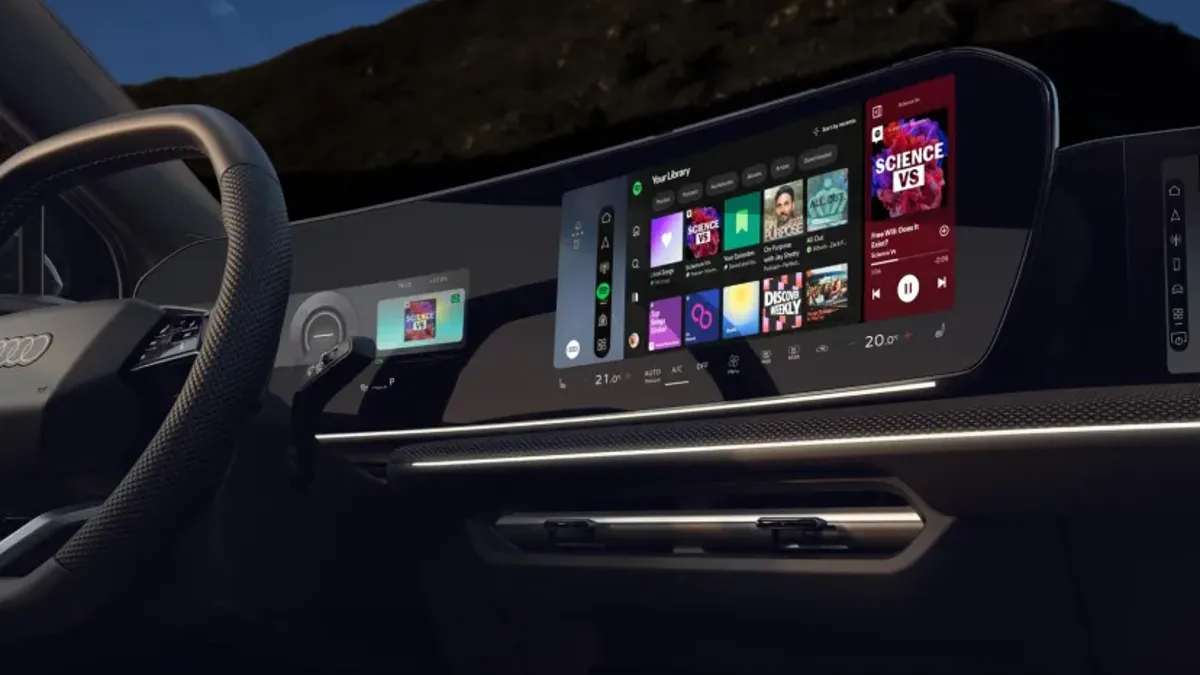
Spotify and Audi launch a next-gen native in-car app built on Google’s Android Automotive operating system, available now in select Audi models.
On Wednesday, Spotify and Audi announced the launch of a new native in-car app built using Google’s Android Automotive operating system. Launching today in select Audi models, the app runs directly using the vehicle’s infotainment system, removing the need for Bluetooth connections, phone tethering, or the use of cables.
The launch represents a major step away from Apple’s CarPlay and the existing Android phone projection systems that most people currently use to consume media in their vehicles. The timing is apt, given that an impressive 34% of Spotify’s monthly active users and an even more impressive 77% of Premium subscribers stream music, podcasts, and audiobooks in their cars.
At launch, the app comes native in several Audi models, including the electric A6 e-tron and Q6 e-tron and the gas-powered A5, Q5, and A6.
According to Jonathan Tarlton, Spotify’s Automotive Business Development Lead, the new app allows Spotify to draw and render its own native UI directly on the vehicle’s infotainment screens without using templates required by Google for standard Android Automotive integration or Apple CarPlay.
“We’re drawing all the pixels. We own the user experience. So we’re not in a template or a framework—it’s 100% Spotify,” Tarlton told The Verge.
That said, Spotify is not eliminating integration with CarPlay and Android Auto, and Tarlton says the company is still “heavily invested” in phone projection tech. That’s important, since the new app is currently exclusive to certain Audi models. However, the native app is designed to compete directly with those existing systems, because the company envisions a future where users have the choice of listening through their car’s native operating system rather than projecting their phones.
“We want to give users choice,” said Tarlton. “We want to be wherever they are, and we want to make sure that they’re accessing Spotify in the way they want to access it, whether they’re locked into the iOS ecosystem (…) or Android on the phone as well.”
Among its benefits, the native Spotify app enables passengers to scan a QR code displayed on-screen to join a wireless “Spotify Jam” session and add songs directly to the queue from their phones. Vehicles with a dedicated secondary passenger display enable front-seat passengers to browse content, view lyrics, and watch videos without disturbing the driver. While the vehicle is parked, video podcasts, lyrics, and other motion graphics move to the central display so everyone in the car can watch.
The new app’s rollout focuses particularly on cars with Android-based operating systems so that Spotify can avoid building separate apps for every individual automaker by using a standard Android Automotive APK that can be distributed through multiple app stores.






Leave a Reply