
Mexican Political Thriller That Refuses the Thriller’s Tempo — the Dead Body Is Not the Point
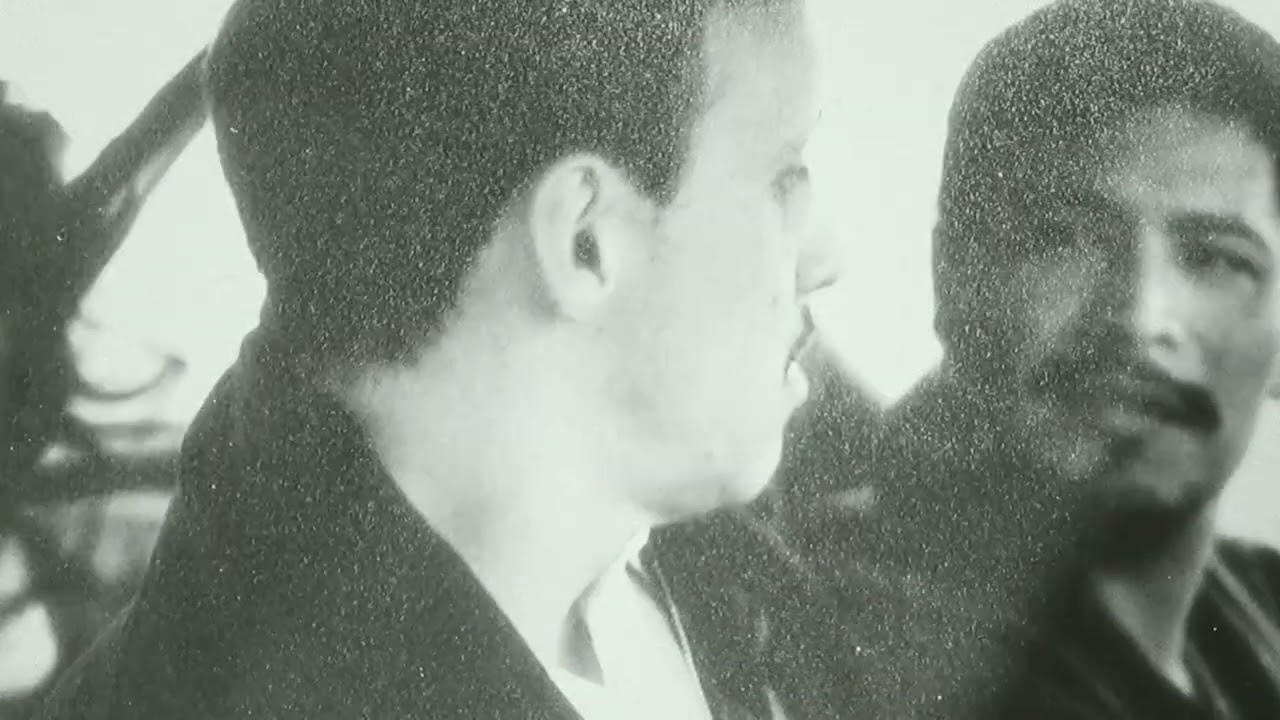
Lázaro is a mine worker navigating Mexican government bureaucracy to obtain an oxygen tank due to his poor health from years working in the local copper mines, who unexpectedly finds a dead body by the side of the road. His mother Tere tells him to say nothing. A radio piece confirms it is the third body in six months — implying a conspiracy by mysterious forces in the mine town’s administration. The mystery is never investigated. The oxygen tank is pursued instead. The film started after Pereda learned about the suspicious death of an activist protesting labor conditions in a mining town. Directed by Nicolás Pereda. Cinematography by Miguel Tovar. Written by Pereda and Juan Francisco Maldonado. World premiere FIDMarseille July 9, 2025. North American premiere TIFF September 12, 2025.
Why It Is Trending: FIDMarseille Special Mention — TIFF — San Sebastián Horizons — OFCS Best Non-U.S. Release
A wry thriller of bureaucracy that started after Pereda learned about the suspicious death of an activist protesting labor conditions in a mining town. Pereda does not build a central narrative around the murder mystery but moves off-center to explore how systemic violence seeps into the inner lives of those on the periphery. In Review Online: “the latest subtly brilliant work of Pereda’s magical realist world.” The OFCS Best Non-U.S. Release win confirms the most commercially specific North American critical validation Pereda has received.
Elements Driving the Trend: Fruit, the Oxygen-Tank-for-Date Deal, and the Static Camera
-
Lázaro’s compulsive fruit consumption becomes a strangely sensual intermediary for displaced and unmet desire — moments of deliberate performance paradoxically mediate moments of truth. ➡️ The film’s most formally inventive and most discussed recurring detail across every critical review.
-
When Lázaro sets Rosa up on a date with his doctor in exchange for a free oxygen tank, the camera lingers on their hands touching timidly as slow, transgressive desire percolates. ➡️ Pereda turns seemingly banal interactions into sly displays of power.
-
The Kafkaesque apex: Rosa waits for a manager to approve her forged signature on a nondescript document — Pereda’s static camera lingers on her face; her breathing is shallow and unsteady. ➡️ Trauma internalized then made external through phantom pains and repeated gestures.
-
The Baroque dungeon bedroom, the dreams of the dead man, the motorcycle that inevitably breaks down — magical realist inventory applied to a political thriller without raising the tempo. ➡️ The film’s most formally distinctive tonal signature.
Virality: Limited But Earned — Why It Should Reach a Wider Audience
The film has not achieved broad viral discovery — the IMDb 5.8 from a small early voter pool and the absence of mainstream critical coverage confirm a specialist arthouse circuit reach rather than a general streaming audience. The virality case rests on three specific qualities that the film’s festival circuit has not yet fully activated. First, the oxygen-tank-for-date exchange is the most formally absurd and most universally relatable single plot event in the film — a man trading his aunt’s romantic autonomy for the medical equipment his employer’s negligence has made necessary is the premise of a scene that would land immediately on any social media platform that rewards the absurd intersection of workplace grievance and familial awkwardness. Second, the fruit motif — counted by Letterboxd reviewers across multiple viewings — has already generated the kind of specific, eccentric community engagement that drives niche discovery. Third, the film’s central premise — a man who finds a murder, is told to ignore it, and then cannot obtain basic healthcare — is the most universally legible available description of how extraction industries operate in rural communities globally, not only in Mexico.
Critics Reception: Specialist Press Enthusiastic — General Audience Divided
-
In Review Online: “subtly brilliant — another moment of the unexplainable everyday.” ➡️
-
Filmmaker Magazine: “impressive satire — mundanity of bureaucracy as an inescapable cudgel.” ➡️
-
Letterboxd dissent: “the line between conceptual art and being taken for a fool disappears completely.” ➡️ The most honest articulation of the film’s formal risk.
-
IMDb 5.8 from early voters. 5 critic reviews.
Awards and Recognitions: 2 Wins, 2 Nominations
-
FIDMarseille 2025: Special Mention (win). Grand Prix nominee.
-
OFCS 2026: Best Non-U.S. Release (win).
-
San Sebastián 2025: Horizons Award nominee.
-
Morelia Film Festival 2025 selection.
-
World premiere FIDMarseille July 9, 2025. North American premiere TIFF September 12, 2025.
Director and Cast: Mexico’s Most Prolific Arthouse Director — Most Politically Direct Film to Date
-
Nicolás Pereda — Verano de Goliat, Lázaro at Night — builds each film from the same recurring ensemble and the same political concern: systemic violence made invisible through its ordinariness. ➡️ Copper is his most formally direct political statement.
-
Gabino Rodríguez (Lázaro) — Pereda regular; Job-like patience across every institutional humiliation. ➡️ The film’s emotional anchor.
-
Rosa Estela Juárez (Rosa) — new collaborator; the film’s most emotionally complex secondary register. ➡️
-
Teresita Sánchez (Tere) — the mother whose instruction to say nothing is the film’s most politically specific single moment. ➡️
-
Miguel Tovar (cinematographer) — Baroque dungeon lighting in a Mexican mining town bedroom. ➡️
Conclusion: Pereda’s Most Politically Direct Film — the Impossibility of the Investigation Is the Argument
In classic Pereda fashion, the degree to which the company is actually murdering activists or denying workers’ healthcare is never revealed. That refusal is the film’s most formally honest and most politically specific decision — confirmed by FIDMarseille, TIFF, San Sebastián, and the OFCS as one of Mexican arthouse cinema’s most formally precise 2025 entries. ➡️ The distribution reach required to match the critical recognition has not yet arrived.
What Movie Trend Is Followed: Mexican Arthouse Thriller Uses Bureaucratic Obstruction as Political Violence — Extraction Industry Corruption Made Visible Through the Mundane
Copper belongs to the Latin American slow cinema political tradition in which systemic violence is visible not through dramatic confrontation but through the accumulation of small institutional denials. Copper never quickens its pace to match the urgent sleuthing of All the President’s Men or The Day of the Jackal — Lázaro is no political journalist nor even a whistleblower. The specific formal contribution is the mining town’s complicity: the roadblocks to Lázaro’s oxygen tank are built by the town’s conformity to the company and a personal dismissal of Lázaro rather than an opaque labyrinthine bureaucracy. Pereda’s most formally precise political observation: when everyone in a community depends on the same employer, the corporation does not need to enforce silence — the community enforces it for free. ➡️ That structural argument is the most commercially legible and most globally transferable political observation the film makes.
Trend Drivers: The Body Nobody Reports, the Oxygen Tank as MacGuffin, and the Community as Enforcer
-
The dead body is the film’s formal pretext and its least dramatically developed element — the oxygen tank is the real narrative engine. ➡️ The reorientation from murder mystery to healthcare obstruction is the film’s most formally honest and most politically specific structural decision.
-
Systemic violence seeps into the inner lives of those on the periphery — Lázaro’s respiratory illness, possibly caused by the mine, is treated as a personal inconvenience rather than an occupational crime. ➡️ The film’s most precise social observation about how extraction industries evade accountability.
-
The community’s complicity — the mother, the doctor, the boss — is more damaging than any single institutional actor. ➡️ When everyone depends on the same employer, silence becomes the community’s primary economic survival strategy.
-
The Baroque bedroom dreams and the fruit consumption give the political thriller its most formally distinctive tonal counterweight — the absurd and the sensual operating alongside the deadly without narrative hierarchy. ➡️ The film’s most formally specific departure from conventional political cinema.
What Is Influencing Trend: Pereda’s FIDLab Project and Mexico’s Extraction Industry Crisis
-
Pereda participated in FIDLab 2025 with his upcoming project Everything Else Is Noise — confirming his sustained institutional relationship with the festival that premiered Copper and giving him the most actively supported production pipeline in Mexican experimental arthouse cinema. ➡️ The FIDMarseille relationship is the film’s most reliable ongoing institutional discovery circuit.
-
Mexico’s copper and mining industry — concentrated in states where labor activism and suspicious deaths have generated sustained civil society documentation — gives the film a real-world political context that no promotional campaign needs to explain. ➡️ The premise is journalism before it is fiction.
Macro Trends Influencing: Latin American Extraction Cinema and the Slow Thriller’s Critical Rehabilitation
-
The slow cinema political thriller — rehabilitated internationally through Alonso, Reygadas, and the post-Apichatpong wave — has established a critical infrastructure that treats deliberate pacing as political argument rather than formal limitation. ➡️ Copper arrives in a critical environment already prepared for its formal register.
-
Mexico’s mining sector violence — documented across Sonora, Chihuahua, and Coahuila — gives the film’s El Carmen setting an immediately recognisable political geography for any viewer who follows Latin American labor journalism. ➡️ The most commercially specific available macro context for international discovery.
Consumer Trends Influencing: OFCS Discovery and the Arthouse Political Cinema Community
-
The OFCS Best Non-U.S. Release win gives the film its most commercially efficient North American critical endorsement — the online film critics community’s most motivated and most active discovery advocacy network. ➡️ The win functions as a quality signal for the streaming platform algorithm that the festival circuit alone cannot generate.
-
Pereda’s recurring ensemble — Gabino Rodríguez, Teresita Sánchez — gives each new film a pre-converted community of viewers who treat each Pereda release as a discovery event rather than a cold recommendation. ➡️ The most reliable available word-of-mouth infrastructure for a filmmaker without mainstream theatrical distribution.
Audience Analysis: Arthouse Political Cinema Audiences, Latin American Cinema Communities, and Labor Justice Advocates
The core audience is 25–55 — arthouse political cinema audiences who follow the FIDMarseille-TIFF-San Sebastián circuit as a quality signal, Latin American cinema communities for whom the mining town setting and the bureaucratic obstruction are immediately personally recognisable, and labor justice advocates for whom the film’s central premise is documentary before it is dramatic. The 78-minute runtime is the film’s most commercially accessible single formal quality for streaming discovery.
Conclusion: A Formally Precise Mexican Political Film That Earns Its Festival Recognition Through Structural Honesty — the Distribution Reach Required to Match That Recognition Is the Missing Element
The FIDMarseille-TIFF-San Sebastián-OFCS circuit confirms that the specialist critical community has identified Copper as one of Mexican arthouse cinema’s most formally rigorous 2025 entries. The film’s commercial ceiling is determined not by its formal qualities but by its distribution infrastructure — the audience that would respond to the oxygen-tank-for-date exchange and the fruit motif and the static camera on Rosa’s face has not yet been reached. ➡️ That gap between formal recognition and audience reach is the most commercially specific challenge Pereda’s distribution partners face.
Final Verdict: Formally Precise, Institutionally Validated, and Waiting for the Distribution Infrastructure to Match Its Critical Standing
Copper is Pereda’s most politically legible film — the static camera, recurring ensemble, and magical realist texture intact, but the political argument more directly stated than in any previous work. The refusal to accelerate toward the thriller’s expected resolution is simultaneously the film’s most formally courageous and most commercially limiting decision. The OFCS win and the FIDMarseille-TIFF-San Sebastián circuit confirm critical recognition; the distribution infrastructure to convert that into audience reach has not yet arrived. ➡️
Audience Relevance: For Arthouse Political Cinema Audiences Prepared for Deliberate Pacing
Works best for viewers who approach slow cinema as political argument rather than formal limitation — the Alonso audience, the post-Apichatpong arthouse community, and labor justice advocates for whom the mining town obstruction is personally recognisable. ➡️ Not for viewers who arrived expecting the murder mystery the premise advertises.
What Is the Message: The Corporation Does Not Need to Enforce Silence — the Community Does It for Free
In a town where everyone depends on the same employer, silence is not imposed but reproduced — by the mother, the doctor, the boss, the aunt. ➡️ The most universally transferable political argument in the film, and the one most legible to audiences outside Mexico.
Relevance to Audience: A Film Whose Central Premise Is More Globally Relevant Than Its Distribution Suggests
The oxygen tank blocked by institutional indifference, the body nobody reports — these are not Mexico-specific observations but the most widely shared description of how extraction industries operate globally. ➡️ The film’s most commercially underexploited quality is the universality of its specific subject matter.
Social Relevance: Extraction Industry Violence Made Invisible Through Community Compliance
The third body in six months confirmed by radio — not by investigation, not by protest — is the film’s most precise social observation. ➡️ Systemic violence is most durable when the community has calculated that the cost of resistance exceeds the cost of silence.
Performance: Rodríguez’s Patience Is the Foundation — Juárez’s Static Close-Up Its Most Concentrated Moment
Rodríguez’s Lázaro endures every institutional humiliation without losing audience identification — the Job-like patience of a man who knows the system is wrong and continues to engage with it anyway. ➡️ The film’s most consistent commercial performance asset. Juárez’s Rosa — the static camera on her face during the forged signature scene, shallow breathing, darting eyes — is the film’s most formally concentrated single performance moment without a line of dialogue. ➡️
Legacy: Pereda’s Most Accessible Entry Point — Without Compromising His Formal Identity
Copper will be remembered as the Pereda film that most directly named what his entire career has been circling — the extraction industry’s mechanism of community silence — within the 78-minute format most accessible to the streaming discovery audience his festival circuit cannot reach. ➡️
Success: 2 Wins, 2 Nominations — OFCS Best Non-U.S. Release, FIDMarseille Special Mention
-
FIDMarseille 2025: Special Mention (win). Grand Prix nominee.
-
OFCS 2026: Best Non-U.S. Release (win).
-
San Sebastián 2025: Horizons Award nominee. Morelia Film Festival 2025 selection.
-
World premiere FIDMarseille July 9, 2025. North American premiere TIFF September 12, 2025.
Copper proves that the most politically honest films about extraction industry violence are the ones that never show the violence — and that Pereda understood this well enough to build a film where the oxygen tank is more dangerous to pursue than the dead body.
Insights: Pereda’s most politically legible film — formally precise, institutionally validated, and commercially underserved by its current distribution reach. Industry Insight: The OFCS win is the most efficient available North American signal for a film without mainstream theatrical distribution — its streaming algorithm value exceeds its festival circuit function. The FIDLab 2025 selection confirms FIDMarseille as Pereda’s most reliable ongoing institutional infrastructure. Audience Insight: The 78-minute runtime is the film’s most commercially accessible quality — the audience prepared for its formal register is reachable in a single sitting. The gap between the OFCS recognition and the IMDb 5.8 score confirms that audience has not yet been reached. Social Insight: A community that ignores three suspicious deaths because the economic cost of resistance exceeds whatever the truth might be worth is the film’s most universally transferable political observation. Cultural Insight: Copper confirms Pereda as the Mexican filmmaker most formally committed to making extraction industry silence visible through everyday texture — a political argument more globally transferable than its current distribution suggests.
Conclusion: A Formally Precise Mexican Political Film Whose Critical Recognition Has Outpaced Its Distribution Reach
Copper earns its festival circuit validation through the formal precision that distinguishes the most honest political cinema from the merely pointed — the static camera that refuses to explain what the audience is allowed to feel, the community silence that requires no villain because the economic logic is sufficient, and the oxygen tank that is more dangerous to pursue than the murder that started everything. Pereda’s next film, arriving with this political seriousness confirmed, will be among Mexican arthouse cinema’s most closely watched productions. ➡️
Summary: One Mine Worker, One Dead Body, One Oxygen Tank, and the Community That Made All Three Invisible
-
Movie themes: Extraction industry violence made durable through community compliance, the corporation that never needs to enforce silence because the community enforces it for free, bureaucratic obstruction as the most precise available description of systemic violence, and the argument that the oxygen tank is more dangerous to pursue than the dead body that started everything. ➡️ The most globally transferable political argument in recent Mexican arthouse cinema.
-
Movie director: Nicolás Pereda — Verano de Goliat, Lázaro at Night — builds each film from the same recurring ensemble and the same political concern: systemic violence made invisible through its ordinariness. Copper is his most formally direct political statement and his most accessible entry point without compromising the static camera, magical realist texture, and deliberate pacing that define his practice. ➡️ The filmmaker most formally equipped to make extraction industry silence visible through everyday texture — and whose next film arrives with this political authority confirmed.
-
Top casting: Rodríguez’s Job-like patience is the film’s emotional foundation and most consistent commercial asset. Juárez’s Rosa — shallow breathing, darting eyes, no dialogue — is its most formally concentrated single performance moment. Sánchez’s Tere — the instruction to say nothing — is the film’s most politically specific single scene. ➡️ Three performances that collectively demonstrate how systemic violence is reproduced at the level of the family before it reaches any institutional actor.
-
Awards and recognition: FIDMarseille 2025 Special Mention and Grand Prix nominee. OFCS 2026 Best Non-U.S. Release winner. San Sebastián 2025 Horizons Award nominee. Morelia Film Festival 2025 selection. World premiere FIDMarseille July 9, 2025. North American premiere TIFF September 12, 2025. ➡️ Four major festival constituencies confirming a formal achievement whose audience reach has not yet matched its critical standing.
-
Why to watch: The Mexican arthouse thriller that turns a murder mystery into a healthcare obstruction story — because in a mining town where everyone depends on the same employer, the body by the road is less dangerous than the oxygen tank your doctor refuses to prescribe. OFCS Best Non-U.S. Release winner. 78 minutes. ➡️ The most accessible entry point into Pereda’s formal world and the most universally legible political argument he has made on film.
-
Key success factors: Pereda’s formal identity and political seriousness plus the recurring ensemble’s pre-converted community plus the OFCS win’s streaming algorithm value plus the FIDMarseille-TIFF-San Sebastián institutional circuit plus the 78-minute runtime’s streaming accessibility plus the extraction industry subject matter’s global transferability. ➡️ A combination that confirms critical authority without yet delivering the commercial reach the film’s formal qualities warrant.
-
Where to watch: Available via Movielena streaming platform. Festival circuit distribution ongoing. Check local arthouse theatrical availability by territory. ➡️ The most commercially urgent gap in the film’s release strategy is the absence of a major streaming platform acquisition that would convert the OFCS recognition into sustained algorithmic discovery.
Conclusion: A Mexican Political Film of Complete Formal Precision — Confirming Pereda as the Most Institutionally Recognised Mexican Arthouse Director Working Today, and Awaiting the Distribution Infrastructure That Would Give His Most Accessible Film Its Widest Available Audience
Copper earns its place in the Latin American slow cinema political tradition through the qualities that define Pereda’s most rigorous work — the static camera that refuses to explain, the community silence that requires no enforcement, and the mundane detail that carries the full weight of the political argument. The 78-minute format and the universally legible central premise are the film’s most commercially specific assets; the distribution infrastructure to activate them is the most commercially urgent outstanding challenge for every platform that has not yet acquired it. Pereda’s next film, arriving with this political seriousness and this formal precision confirmed across four major festival constituencies, will be among Mexican arthouse cinema’s most closely watched productions. ➡️ The critical case for wider distribution has already been made — what remains is the commercial decision to act on it.





Leave a Reply