

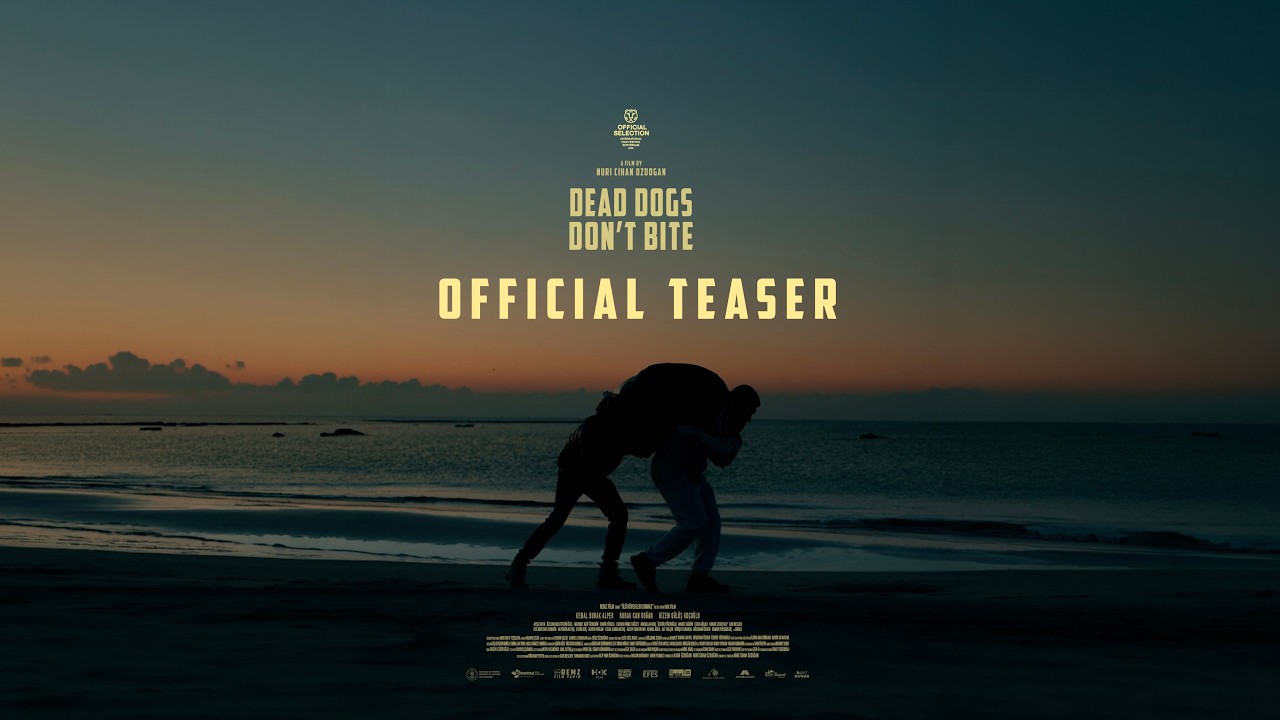
TR | 2026 | 103 min | Environmental Crime Drama / Social Thriller / Gangster Drama
A Young Man’s Desperate Attempt to Save His Ailing Mother Draws Him Into the Criminal World of Illegal Waste Trading
Dead Dogs Don’t Bite (2026) follows Ismet (Kemal Burak Alper), a mild-mannered man drawn into the dangerous world of illegal waste trading while attempting to raise money for his ailing mother’s medication. Within a criminal economy that transforms discarded materials into profitable commodities, Ismet and his close friend Dogo (Burak Can Doğan) witness their relationship gradually deteriorate alongside the polluted landscapes surrounding them. As financial desperation pushes Ismet deeper into a violent criminal conflict, Nuri Cihan Özdoğan explores how economic vulnerability can challenge personal integrity, destroy meaningful relationships and force individuals into morally compromising situations.
➡️ Storyline: Economic Vulnerability → Family Responsibility → Criminal Involvement → Gangland Conflict → Friendship Under Pressure → Moral Compromise.
Why to Watch Dead Dogs Don’t Bite: A Powerful Crime Drama About Economic Desperation, Friendship and Moral Compromise
Nuri Cihan Özdoğan combines environmental destruction, organized crime and financial vulnerability in an award-winning feature debut that explores the difficult choices individuals face when economic survival conflicts with personal values.
|
1. Nuri Cihan Özdoğan’s Award-Winning Direction |
The Turkish filmmaker received Best Director awards at the Ankara International Film Festival and Tarkovsky Film Festival for his feature debut. |
|
2. Kemal Burak Alper’s Award-Winning Performance |
Winner of Best Actor at the Istanbul Film Festival, Alper portrays a man whose financial desperation increasingly challenges his moral boundaries. |
|
3. Socially Relevant Economic Themes |
The film explores financial insecurity, healthcare affordability, criminal exploitation and the consequences of limited economic opportunities. |
|
4. Award-Winning Visual Storytelling |
Mustafa Yeşilova’s cinematography and Hakan Çelik’s editing received recognition at the Ankara International Film Festival. |
|
5. Environmental Drama Meets Gangster Cinema |
The illegal waste trade provides a distinctive setting for exploring economic survival, environmental exploitation and deteriorating human relationships. |
➡️ Reason to Watch: An award-winning Turkish crime drama that combines environmental destruction with a deeply human exploration of economic desperation, family responsibility and the personal cost of survival.
Why Dead Dogs Don’t Bite Stands Out: Environmental Pollution Becomes a Metaphor for Human Moral Deterioration
Dead Dogs Don’t Bite distinguishes itself by connecting environmental exploitation with the economic vulnerability of individuals trapped within corrupt systems. Rather than presenting criminal involvement exclusively as a pursuit of wealth or power, the film explores how financial necessity and family responsibilities can pressure individuals into dangerous situations. The deteriorating friendship between Ismet and Dogo mirrors the destruction of their surrounding environment, creating a parallel between ecological pollution and human moral compromise.
➡️ Why It Stands Out: A socially conscious crime drama that uses environmental destruction to expose the interconnected consequences of financial desperation, criminal exploitation and deteriorating personal relationships.
Movie Trend: Economic Survival Crime Dramas — Financial Desperation Challenges Individual Morality
Economic Survival Crime Dramas explore individuals whose financial circumstances push them toward dangerous opportunities, criminal involvement and morally compromising decisions. Dead Dogs Don’t Bite reflects this trend through Ismet’s determination to secure essential medication for his mother, a responsibility that draws him into an exploitative criminal economy. The film challenges conventional distinctions between criminal ambition and economic necessity, examining how limited opportunities and financial vulnerability can transform ordinary individuals into participants in destructive systems.
➡️ Movie Trend Insight: Economic Survival Crime Dramas reveal how financial insecurity can transform crime into a perceived survival strategy, exposing the tension between economic necessity, personal responsibility and moral integrity.
Broad Trend: Economic Uncertainty — Financial Insecurity Is Reshaping Individual Priorities and Decision-Making
Economic Uncertainty reflects the anxiety individuals experience when their financial resources become insufficient to guarantee personal security, essential services and family well-being. In Dead Dogs Don’t Bite, Ismet’s financial vulnerability illustrates how economic pressure can narrow perceived choices and encourage individuals to accept risks they would otherwise avoid. His journey explores the psychological consequences of financial insecurity, particularly when immediate survival and family protection take precedence over long-term stability, ethical considerations and personal relationships.
➡️ Broad Trend Insight: Economic uncertainty can shift individual priorities from long-term aspirations toward immediate financial survival, security and the protection of loved ones, sometimes at significant personal and moral cost.
Viewer Profile: Audiences Interested in Economic Insecurity, Social Inequality and Morally Complex Crime Narratives
Dead Dogs Don’t Bite is likely to appeal to audiences seeking socially relevant cinema that combines suspense, psychological complexity and contemporary economic concerns. Its environmental setting and exploration of financial desperation provide additional relevance beyond conventional crime thriller audiences.
|
Social thriller enthusiasts, international arthouse audiences, crime drama viewers and socially conscious cinema audiences |
|
|
Adult Gen Z, Millennials and Gen X audiences interested in economic pressures, social inequality and contemporary societal challenges |
|
|
Socially aware, economically pragmatic and culturally curious individuals interested in the relationship between financial security and quality of life |
|
|
Socially conscious crime dramas, psychological thrillers, environmental dramas and realistic gangster narratives |
|
|
Understanding how financial desperation, family obligations and limited opportunities influence individual decisions |
|
|
Emerging international filmmakers, award-winning festival cinema and narratives addressing contemporary economic and environmental challenges |
|
|
Empathy, anxiety, frustration with inequality, moral conflict and the desire for economic security |
Key Profiles: Three Audiences, Three Reasons to Watch
Economically Conscious and Socially Aware Audiences
Viewers interested in financial insecurity, healthcare affordability, economic inequality and the pressures individuals experience when essential needs become difficult to meet. Ismet’s journey provides an emotionally accessible exploration of how economic circumstances can influence personal choices and moral boundaries.
Crime Thriller and Gangster Drama Enthusiasts
Audiences attracted to criminal underworlds, complex protagonists and narratives involving loyalty, corruption and dangerous decisions. The illegal waste economy provides a distinctive setting that expands conventional gangster storytelling through contemporary environmental and economic concerns.
International Arthouse and Environmental Cinema Audiences
Viewers interested in culturally distinctive storytelling, emerging filmmakers and cinema addressing systemic social challenges. The film’s extensive festival recognition, award-winning cinematography and combination of environmental and psychological themes provide additional discovery appeal.
➡️ Audience Insight: Dead Dogs Don’t Bite connects the suspense of crime-driven entertainment with contemporary concerns about financial insecurity, economic exploitation and the struggle to protect personal and family well-being.
Industry Insight: Economic Survival Narratives Can Make Complex Social Issues More Accessible Through Crime Thriller Storytelling
Dead Dogs Don’t Bite illustrates the creative potential of combining socially relevant economic issues with established entertainment genres. By integrating financial desperation, healthcare affordability and environmental exploitation into a gangster narrative, the film transforms systemic challenges into an emotionally engaging individual struggle. Its recognition at Ankara, Istanbul, Rotterdam and other international festivals reinforces the potential of culturally distinctive crime dramas to attract festival attention through contemporary social themes. However, its limited number of IMDb ratings means broader audience demand remains unproven.
➡️ Industry Insight: Crime dramas can differentiate themselves by connecting criminal narratives with recognizable economic pressures, transforming complex social inequalities into emotionally accessible stories about survival, responsibility and moral compromise.
Final Verdict: A Gritty Turkish Crime Drama About the Human Cost of Economic Desperation
Dead Dogs Don’t Bite (2026) combines environmental drama, gangster storytelling and psychological realism to explore how financial insecurity can undermine personal integrity and meaningful relationships. Nuri Cihan Özdoğan’s award-winning feature debut uses the illegal waste trade as a setting for examining the interconnected consequences of economic exploitation, environmental destruction and individual desperation. Kemal Burak Alper’s award-winning performance reinforces the emotional complexity of a protagonist whose determination to protect his family draws him into increasingly dangerous circumstances.
➡️ Final Verdict: Dead Dogs Don’t Bite transforms an environmental crime narrative into a compelling exploration of economic vulnerability and the moral consequences of financial desperation. Its award-winning direction, performances and visual craftsmanship distinguish it within contemporary Turkish independent cinema. The film is particularly suited to audiences seeking socially relevant crime dramas that explore economic inequality, family responsibility and the personal cost of survival.
Final Insights: Economic Survival Can Force Individuals to Redefine Their Moral Boundaries
The Economic Uncertainty trend reflects growing concerns about financial stability, access to essential resources and the ability to protect personal and family well-being. Dead Dogs Don’t Bite explores how financial vulnerability can undermine individual freedom of choice, creating tensions between immediate economic necessities and long-term personal values.
Economic Survival Crime Dramas reveal the psychological and social consequences of living within systems where legitimate opportunities appear insufficient to meet essential needs. The film’s central insight is that economic security is not simply about financial stability but also about preserving individual dignity, personal relationships and the freedom to make ethical choices.
➡️ Final Insight: Economic Uncertainty → Economic Survival Crime Dramas → Search for Financial Stability, Economic Security and Family Protection. Dead Dogs Don’t Bite explores how financial desperation can transform survival into a morally complex struggle with far-reaching personal and social consequences. The creative opportunity lies in developing socially conscious crime narratives that connect economic insecurity with emotionally compelling stories about individual vulnerability, systemic exploitation and the human cost of financial survival.






Leave a Reply