
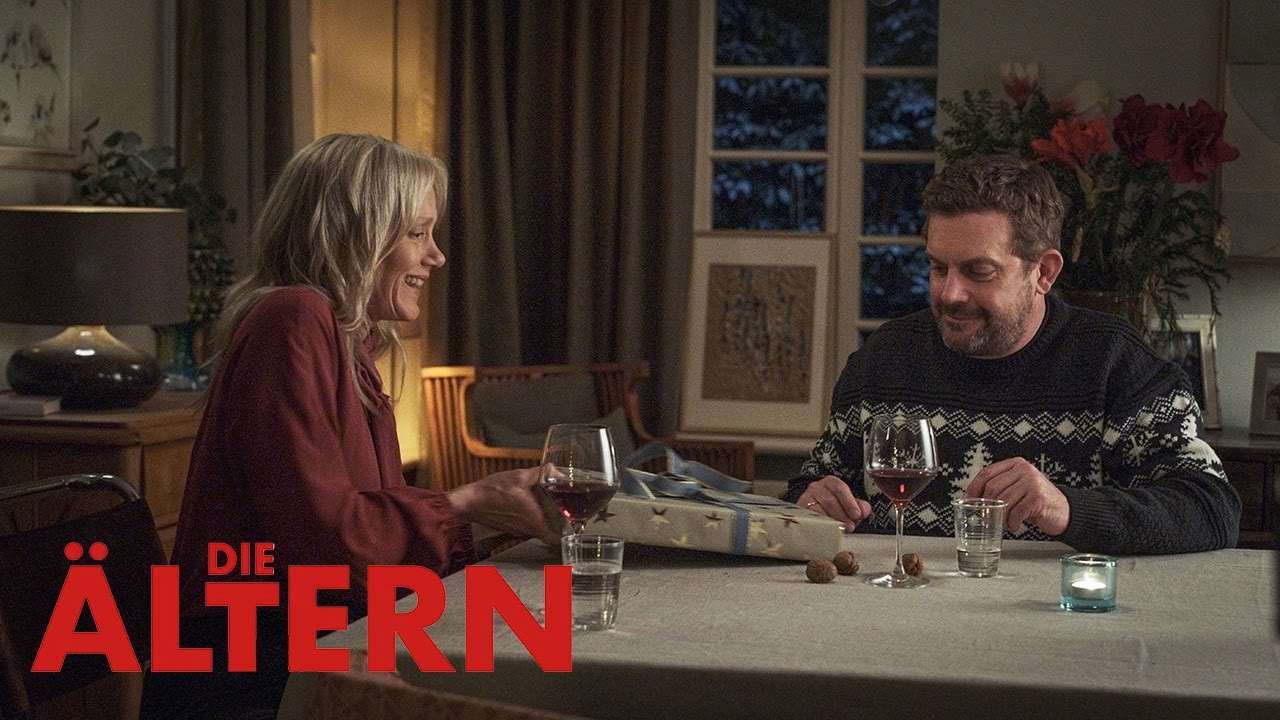
The Fourth Jan Weiler Pubertier Film — When the Children Leave, the Parents Discover They Don’t Know Who They Are Without Them
Hannes Wenger is a Hamburg author who has been writing the same fantasy series for years — comfortable routine, stattliches Haus, family as the architecture of his identity. Within weeks, everything shifts: daughter Carla moves out, wife Sara decides to move with her into the same WG, and Hannes is left with teenage son Nick and the specific panic of a man who never noticed his life had quietly become a holding pattern. The title is a pun — Die Ältern means both “the parents” and “the older ones,” nesting the generational comedy inside its most commercially honest available single word. Based on Jan Weiler’s 2020 bestseller — the fourth book in the Pubertier series, which his 2017 film adaptation turned into one of the biggest German domestic comedies of the decade, outselling Kong: Skull Island at the German box office. Screenplay by Weiler and Robert Gold (Der Fall Collini). Directed by Sönke Wortmann — Der Nachname, Das Wunder von Bern. Stars Sebastian Bezzel, Anna Schudt, Kya-Celina Barucki, Philip Müller, Judith Bohle, Nilam Farooq. Score by Helmut Zerlett. Cinematography by Andreas Berger. Produced by Constantin Film and Little Shark Entertainment. German theatrical February 12, 2026. ➡️ Wortmann: “Die Ältern is not a shrill midlife-crisis comedy — it is a film in a light, humorous register with high recognition value” — the most commercially honest available description of what the Jan Weiler adaptation model delivers to its most loyal available domestic audience.
Why It Is Trending: Jan Weiler’s Pubertier Franchise — Sönke Wortmann’s Most Commercially Consistent Available German Comedy Track Record — Bezzel and Schudt as the Film’s Most Commercially Recognisable Available Pairing
The Pubertier franchise is one of the most commercially reliable available German domestic comedy properties — the 2017 film sold 900,000 tickets in its opening weeks, placing it above Kong: Skull Island in German annual box office charts. ➡️ Die Ältern inherits the franchise’s most commercially pre-converted available audience — German families who followed Carla’s adolescence in the previous film now watching her leave the house. TV Movie: “Wortmann tells with fine humour and quiet melancholy of the moment when the family structure shifts and you suddenly have to reorganise yourself.” ➡️ The quiet melancholy is the film’s most commercially specific available tonal departure from conventional German family comedy — a warmhearted midlife portrait that earns its emotional moments rather than manufacturing them.
Elements Driving the Trend: The Empty Nest as the Film’s Central Comedy-Drama Engine, Hannes’ Resistance to Change, and the Wife Who Moves Out With the Daughter
-
Hannes hates change and experiences it in concentrated form — the daughter leaving and the wife following is the film’s most formally specific available comedic and emotional double blow. ➡️ The specific image of a man left alone with the son he understands least while the family he built his identity around walks out the door together is the film’s most commercially legible available premise.
-
Wortmann directs Hannes not as a culture-war antagonist but as a man who has lost sight of himself — a more emotionally generous and more commercially durable available approach than the genre’s most obvious option. ➡️ The warmth is the most commercially specific available quality that separates Die Ältern from the German comedy’s most reflexive available cultural-conflict register.
-
The Pubertier franchise’s continuity — Carla grown up, moving out rather than arriving at puberty — gives the film its most commercially productive available emotional arc for the returning audience. ➡️ The viewers who watched Carla become herself in the previous film now watch her leave, which is the most emotionally resonant available structural decision for a sequel that arrives nine years later.
-
Wessels-Filmkritik: “lovingly, absurdly and in the best moments genuinely captivating — a mix of subtle irony, warm character drawing and precise everyday observation.” ➡️ The precise everyday observation is the franchise’s most commercially reliable available formal quality — the humour that lands because the audience has lived the scene.
Virality: The Jan Weiler Fanbase and the Pubertier Returning Audience
The Jan Weiler readership — the most commercially pre-converted available German domestic comedy audience — is the film’s most reliable available discovery community. ➡️ The 2020 book’s success gives the film its most commercially motivated available literary fanbase before a single theatrical marketing campaign launches. Letterboxd: “leichte Kost mit subtil inszeniertem Tiefgang — ich nehme aus dem Film sogar ein paar wertvolle Impulse mit; Veränderungen machen Angst und es braucht Mut, sich ihnen zu stellen.” ➡️ The “valuable impulses” response is the most commercially productive available audience reaction for a family comedy that wants to be remembered beyond its runtime. The film is for the audience that has been Hannes — and for the audience that has watched their own Hannes from across the dinner table.
Critics Reception: Warm Domestic Recognition — Wortmann’s Tone and Bezzel’s Performance the Consistent Strengths
-
TV Movie: “a humorous and honest answer to how change feels when you actively want to avoid it.” ➡️
-
Wessels-Filmkritik: “a warmhearted, often comic father portrait that overall convinces.” ➡️
-
Kino-Zeit: “Wortmann directs Hannes not as antagonist in a culture war but as a man who has lost sight of himself — the film does not surrender to the most obvious available comedic temptation.” ➡️
-
IMDb (9/10): “this is funny, but will most likely touch more nerves with people that have lived and have regretted — leichte Kost mit subtil inszeniertem Tiefgang.” ➡️
-
IMDb 6.1 from 97 voters. 13 critic reviews. Worldwide gross €2.4 million.
Awards and Recognitions: No Awards — German Theatrical February 12, 2026
Director and Cast: Wortmann’s Most Commercially Consistent Available Domestic Comedy Register — Bezzel as the Most Recognisable Available German Family Comedy Lead
-
Sönke Wortmann — Das Wunder von Bern, Der Nachname — applies the lightest available directorial hand to the Jan Weiler adaptation model, prioritising warmth, recognition value, and precise everyday observation over formal ambition. ➡️ The most commercially reliable available German family comedy director working with the most commercially reliable available German family comedy source material — the combination that gives the film its most institutionally pre-validated available domestic audience.
-
Sebastian Bezzel (Hannes) — Weißbier-Ermittler, Der Vorname — gives the midlife resistance to change its most domestically recognisable available human register. ➡️ Bezzel’s specific quality — the likeable man who is also quietly impossible to live with — is the film’s most commercially specific available casting decision.
-
Anna Schudt (Sara) — Tatort, Der Vorname — gives the wife who finally does something about the stagnation its most emotionally credible available performance. ➡️ Sara leaving is the film’s most emotionally resonant available structural catalyst — Schudt makes it feel inevitable rather than dramatic.
-
Kya-Celina Barucki (Carla) and Philip Müller (Nick) — the generational counterweights that give the empty nest its most commercially specific available human texture. ➡️
-
Nilam Farooq — the most commercially recognisable available younger German actress in the supporting cast, giving the WG world its most contemporary available register. ➡️
Conclusion: A Jan Weiler Adaptation That Earns Its Franchise Placement Through Wortmann’s Warmth and Bezzel’s Recognisable Everyman — the Most Commercially Pre-Validated Available German Family Comedy of February 2026
The Pubertier franchise’s domestic commercial track record and the Weiler-Wortmann-Bezzel combination give the film its most institutionally reliable available audience infrastructure. ➡️ The “leichte Kost mit subtil inszeniertem Tiefgang” formulation is the most commercially honest available description of the film’s precise tonal achievement — and the most reliable available quality signal for the German domestic comedy audience that knows exactly what it is coming to see. The film confirms that the Jan Weiler adaptation model is the most commercially consistent available German family comedy franchise currently in production.
What Movie Trend Is Followed: German Domestic Family Tragicomedy — the Jan Weiler Adaptation Model at Its Most Emotionally Mature
Die Ältern belongs to the German domestic family comedy tradition — Wortmann’s own Der Vorname and Der Nachname, the Jan Weiler Pubertier cycle — in which the comedy of generational conflict is the vehicle for a more emotionally precise available portrait of what middle age actually feels like from the inside. ➡️ The shift from adolescence as subject (Das Pubertier) to the parents’ own crisis as subject (Die Ältern) is the franchise’s most formally honest available evolution — the audience that grew with the Wenger family is now being asked to recognise themselves in the parents rather than the children.
Trend Drivers: The Empty Nest as Midlife Trigger, the Warmhearted Register, and the Precise Everyday Observation
-
The empty nest is the film’s most commercially legible available premise and its most emotionally resonant available midlife trigger — the moment every German family comedy audience recognises as the one that reorganises everything. ➡️ The specific timing — children leaving not one by one but simultaneously, taking the wife with them — gives the premise its most commercially compressed available emotional charge.
-
The warmhearted register without cultural-war reflexes gives the film its most commercially distinctive available positioning within the German comedy landscape. ➡️ Wortmann: “not a shrill midlife-crisis comedy” — the restraint is the most commercially productive available formal decision for a film whose audience comes to recognise rather than to be provoked.
-
The precise everyday observation — Hannes’ unchanged fantasy series, the specific Hamburg suburb comfort, the family dinner as the site of accumulated misunderstandings — is the franchise’s most commercially reliable available formal quality. ➡️
What Is Influencing Trend: Jan Weiler’s Bestseller Track Record and Constantin Film’s German Domestic Distribution
-
Jan Weiler’s Pubertier readership — one of Germany’s most commercially consistent available domestic comedy fanbases — gives every adaptation its most pre-converted available theatrical audience. ➡️ The literary fanbase is the film’s most reliable available opening-weekend community.
-
Constantin Film’s domestic distribution infrastructure is the most commercially motivated available German theatrical platform for a family comedy of this scale. ➡️
Macro Trends Influencing: The German Midlife Comedy’s Domestic Moment and the Empty Nest Subject’s Cultural Timing
-
The German domestic family comedy has established a theatrical infrastructure that treats the midlife subject as one of the most commercially consistent available genres for the 35–60 demographic. ➡️ Die Ältern arrives in a domestic market already prepared for precisely this register.
-
The empty nest subject — children leaving, marriages reorganising, identity reforming — has become one of contemporary German comedy’s most commercially productive available subjects, reflecting the specific anxieties of a generation that built its identity around family structure. ➡️
Consumer Trends Influencing: The Pubertier Returning Audience and the Jan Weiler Literary Community
-
The Pubertier returning audience — viewers who watched Carla’s adolescence in the 2017 film — is the film’s most emotionally invested available discovery community. ➡️ The continuity gives the sequel its most commercially specific available emotional advantage over a standalone comedy of the same register.
-
The Jan Weiler literary community — readers of the Pubertier book series and his broader autobiographical work — treats each new adaptation as a priority theatrical event. ➡️
Audience Analysis: German Family Comedy Audiences, Jan Weiler Readers, Midlife Identification Communities
The core audience is 35–60 — German family comedy audiences who follow Wortmann’s domestic comedy work as a reliable theatrical event, Jan Weiler readers who treat the adaptation as the most commercially pre-validated available version of the material, and the midlife identification community for whom Hannes’ specific resistance to change is the most personally resonant available comedic subject. ➡️ The film is most productively watched by the audience that has been Hannes at least once — and by the audience that has lived with someone like him.
Conclusion: A Jan Weiler Franchise Entry That Earns Its Domestic Theatrical Placement Through the Most Commercially Reliable Available German Family Comedy Infrastructure
The Pubertier franchise’s domestic commercial track record and the Weiler-Wortmann combination give the film the most institutionally pre-validated available German domestic comedy positioning. ➡️ The midlife subject, the warmhearted register, and the precise everyday observation collectively confirm that the Jan Weiler adaptation model is the most commercially consistent available German family comedy franchise currently in production. The empty nest subject gives the franchise its most emotionally mature available chapter.
Final Verdict: A Warm, Precise, and Emotionally Honest German Family Tragicomedy — Wortmann’s Most Commercially Reliable Available Register Applied to the Jan Weiler Franchise’s Most Emotionally Mature Available Chapter
The film delivers exactly what the Pubertier franchise has always promised — warmth, recognition value, and the specific humour of a family that loves each other and cannot quite figure out how to show it without making everything worse first. ➡️ Wortmann’s restraint — the decision not to make a shrill midlife-crisis comedy — is the film’s most formally specific available achievement and its most commercially productive available tonal decision.
Audience Relevance: German Family Comedy Audiences, Empty Nest Communities, Anyone Who Has Been Hannes
This film is for the audience that has reached the moment when the family they built around themselves quietly reorganises without asking their permission. Works best for viewers who respond to the precise everyday observation register — the German family comedy audience that finds more humour in recognition than in provocation, and the midlife community for whom Hannes’ specific panic is the most immediately available personal mirror. ➡️ If you have ever been the person in the house who liked things exactly as they were and watched everyone else decide otherwise, this film is specifically for you.
What Is the Message: The Life You Conserved Like a Fantasy Series Nobody Reads Anymore May Be the One That Most Needs a New Chapter
Hannes writes the same book repeatedly because change frightens him — the film is about what happens when change arrives regardless. The empty nest is not the disaster Hannes feared but the invitation he refused to accept until it became the only option available. ➡️ Wortmann’s most commercially honest available thesis: Veränderungen machen Angst und es braucht Mut, sich ihnen zu stellen — but what can emerge from that courage is something more valuable than the comfort it replaced.
Relevance to Audience: The Most Personally Recognisable Available German Family Comedy of 2026 — Midlife as the Subject, Change as the Invitation
The film works because it knows its audience from the inside. The Hannes situation — the man who likes things as they are and discovers that everyone around him has been waiting for something different — is the most personally legible available midlife portrait in the German family comedy calendar. ➡️ The recognition is the film’s most commercially reliable available emotional mechanism — the humour lands because the audience has lived the scene, and the emotional moments land because the audience has felt the weight of it.
Social Relevance: The Family That Reorganises Around the Man Who Preferred It Unchanged — the Specific German Suburban Midlife Portrait
The film is about who gets to decide when the family changes — and who gets left behind to figure out why. Sara leaving with Carla is the film’s most socially specific available observation — not a dramatic marital rupture but the quiet decision of a woman who has waited long enough for the reorganisation to happen from within. ➡️ The specific Hamburg suburb setting, the fantasy series as the comedic mirror of Hannes’ own creative stagnation, and the family dinner as the site of accumulated misunderstandings give the social portrait its most commercially grounded available texture.
Performance: Bezzel’s Everyman Authority, Schudt’s Emotional Credibility, the Ensemble’s Warmth
Bezzel is the film — his specific quality of being both likeable and quietly impossible to live with is the most commercially precise available casting decision. His Hannes carries the midlife crisis without self-pity and the comedy without condescension — the performance that makes the audience laugh at him and root for him simultaneously. ➡️ Schudt’s Sara gives the wife who finally does something its most emotionally credible available register — the decision to leave is inevitable in her hands rather than dramatic, which is the film’s most formally honest available character treatment. Barucki’s Carla and Müller’s Nick give the generational dynamic its most commercially specific available contemporary texture — the children who love their father and cannot wait to be elsewhere. ➡️
Legacy: The Jan Weiler Pubertier Franchise’s Most Emotionally Mature Chapter — and the Most Commercially Consistent Available German Family Comedy Model in Production
Die Ältern confirms the Jan Weiler adaptation model as the most commercially reliable available German domestic comedy franchise — each film finding the generational subject at its most personally resonant available moment. The franchise’s evolution from adolescence (Das Pubertier) to the parents’ own reckoning (Die Ältern) is the most formally honest available structural arc available to a family comedy that wants to grow with its audience. ➡️ The next Jan Weiler adaptation arrives with this emotional maturity confirmed — the most commercially specific available signal that the Pubertier franchise has enough formal range to sustain the audience it built through every subsequent available chapter.
Success: No Awards — German Theatrical February 12, 2026 — Constantin Film Distribution
Die Ältern proves that the most commercially honest German family comedies are the ones that let the man who liked everything exactly as it was discover that everyone else had quietly been waiting for something different — and that Hannes’ specific resistance to change is the most recognisable available comedic subject in the 2026 domestic calendar.
Insights: Jan Weiler’s Pubertier franchise at its most emotionally mature — the empty nest subject, Wortmann’s warmhearted restraint, and Bezzel’s everyman authority giving the film its most commercially reliable available German domestic comedy infrastructure. Industry Insight: The Pubertier franchise’s domestic commercial track record — 900,000 tickets for the 2017 film — gives Die Ältern the most institutionally pre-validated available German theatrical audience for a family comedy sequel arriving nine years later. Audience Insight: The returning Pubertier audience watching Carla leave the house rather than arrive at puberty is the film’s most emotionally invested available discovery community — the continuity gives the sequel its most commercially specific available emotional advantage. Social Insight: Sara leaving with Carla is the film’s most socially specific observation — not a marital rupture but a woman who waited long enough for the reorganisation to happen from within, and decided to initiate it herself. Cultural Insight: Die Ältern positions the Jan Weiler adaptation model as the most commercially consistent available German family comedy franchise — the evolution from adolescence to the parents’ own reckoning confirming a formal range that can sustain the audience through every subsequent available chapter.
Conclusion: The Jan Weiler Franchise’s Most Emotionally Mature Chapter — Wortmann’s Warmth, Bezzel’s Everyman Authority, and the Empty Nest Subject Give the Film Its Most Commercially Reliable Available German Family Comedy Placement
The most important thing Die Ältern confirms is that the Jan Weiler adaptation model grows more emotionally honest as its subjects age — and that the most commercially productive available German family comedy is the one that knows its audience from the inside. Die Ältern earns its domestic theatrical placement through the formal qualities that the most honest German family comedies always demonstrate — the warmhearted register that earns its emotional moments rather than manufacturing them, the precise everyday observation that makes the humour land because the audience has lived the scene, and the casting decision that makes the man at the centre of the midlife crisis the most personally recognisable available comedic subject in the 2026 domestic calendar. ➡️ Wortmann’s next film and the next Jan Weiler adaptation each arrive with this emotional maturity confirmed — the most commercially specific available signal that the collaboration between Germany’s most reliable available domestic comedy director and Germany’s most commercially consistent available family comedy author has not yet reached the limit of its most formally productive available formal range.
Summary: One Hamburg Author, One Empty House, One Family That Moved Out Simultaneously, and the Specific German Midlife Crisis Nobody Asked For
-
Movie themes: The man who built his identity around a family structure that quietly reorganised without him, the empty nest as the most commercially legible available midlife trigger, the wife who finally does something about the stagnation her husband confused for contentment, and the specific courage required to begin a new chapter when the old one was the only one you knew how to write. ➡️ The film’s most commercially honest available thesis — Veränderungen machen Angst und es braucht Mut, sich ihnen zu stellen — is the most personally resonant available comedic argument in the 2026 German domestic calendar.
-
Movie director: Sönke Wortmann — Das Wunder von Bern, Der Vorname, Der Nachname — applies his most commercially reliable available domestic comedy register to the Jan Weiler franchise’s most emotionally mature available chapter, prioritising warmth and recognition value over formal ambition. ➡️ The decision not to make a shrill midlife-crisis comedy is the most commercially productive available tonal choice for a film whose audience comes to recognise rather than to be provoked.
-
Top casting: Bezzel’s Hannes — likeable and quietly impossible to live with simultaneously — is the film’s most commercially precise available casting decision. Schudt’s Sara gives the wife who finally acts its most emotionally credible available register. Barucki and Müller give the generational dynamic its most commercially specific available contemporary texture. ➡️ The ensemble gives the domestic portrait its most warmhearted available human architecture — the family that loves each other and cannot quite figure out how to show it without making everything worse first.
-
Awards and recognition: No awards. German theatrical February 12, 2026. Constantin Film distribution. Worldwide gross $2.4 million. IMDb 6.1 from 97 voters. ➡️ The Pubertier franchise’s domestic commercial track record gives the film its most institutionally pre-validated available theatrical audience independently of awards recognition.
-
Why to watch: The Jan Weiler Pubertier franchise’s most emotionally mature available chapter — Hannes discovering that the family he liked exactly as it was had been waiting for something different, Schudt’s Sara making the most emotionally honest available decision in the 2026 German family comedy calendar, Carla grown up and moving out rather than arriving at puberty, and Wortmann’s warmhearted restraint giving the midlife subject the most commercially honest available treatment it has received in the German domestic comedy market. ➡️ If you have been Hannes — or lived with one — this film knows you from the inside.
-
Key success factors: Jan Weiler’s bestseller franchise plus Pubertier returning audience plus Wortmann’s domestic comedy track record plus Bezzel’s everyman authority plus Schudt’s emotional credibility plus the empty nest subject’s personal resonance plus Constantin Film’s theatrical infrastructure plus the warmhearted register’s commercial durability. ➡️ The Jan Weiler adaptation model is the single most commercially productive available factor — the literary franchise giving the film its most pre-converted available theatrical audience before a single marketing campaign launches.
-
Where to watch: German theatrical from February 12, 2026 via Constantin Film. ➡️ The domestic theatrical release is the most commercially productive available viewing condition — the audience that laughs loudest at Hannes is the one sitting in a German cinema surrounded by people who have been him.
Conclusion: The Jan Weiler Franchise at Its Most Emotionally Honest — Wortmann’s Warmth and Bezzel’s Everyman Authority Confirm the Most Commercially Reliable Available German Family Comedy Model in Production
The most important thing Die Ältern confirms is that the Jan Weiler adaptation model is most commercially productive when it grows with its audience — and that the family comedy most worth making is the one where the parents finally become the subject. Die Ältern earns its domestic theatrical placement through the formal qualities that the most honest German family comedies always demonstrate — the warmhearted register that earns its emotional moments, the precise everyday observation that makes the humour land because the audience has lived the scene, and the specific midlife subject that is the most personally resonant available comedic argument for the generation that built its identity around family and is now discovering who it is without one. ➡️ The Jan Weiler franchise and the Wortmann-Bezzel collaboration each arrive at their next chapter with this emotional maturity confirmed — the most commercially specific available signal that the most reliable available German domestic comedy partnership has not yet found the limit of what it can do.





Leave a Reply