
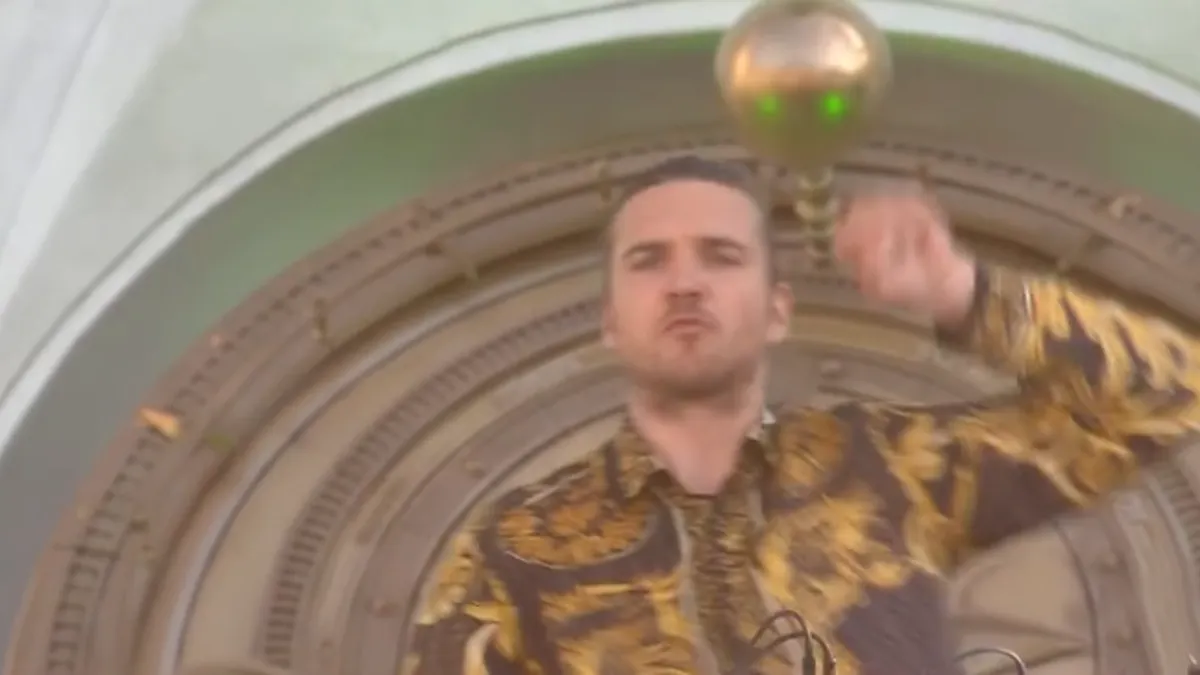
Photo Credit: Reinier Zonneveld / Instagram
DJ Reinier Zonneveld has raised over $1 million in pre-seed funding for GasLab, a genAI music app built to recognize and pay musicians for their work.
GasLab (Generative AI Solutions Lab), a generative AI music platform created by techno DJ and producer Reinier Zonneveld, has been backed by $1 million in pre-seed funding according to details shared with Digital Music News earlier this week. The startup is on a mission to keep creatives in business in the age of AI.
According to the company, GasLab was built to recognize and pay musicians for their work, and trained using fully licensed data with complete attribution back to the original musicians for all generated songs.
Investors in this round include Eric Demuth, co-founder and executive chairman of Bitpanda, and Bas Beerens, founder of WeTransfer and serial entrepreneur, alongside other European entrepreneurs. The investment round will support GasLab through its next phase on its journey to become the leading global genAI platform for music that is transparent and fairly attributed, with an attribution engine that could also serve other genAI platforms.
GasLab boasts a complete end-to-end system for AI-generated music. Artists and labels who allow their music to be used in training its AI model will be able to see exactly how their work helped shape each generated track and will be paid for it. The system’s proprietary technology attributes each AI generation, making the system seemingly transparent and fair. Creators will instantly see which tracks and artists shaped the song that they generated.
Zonneveld is inviting those interested in creating music on GasLab to join the guest list for private testing invites, ahead of a later public launch. Each musician, label, or other musical rights holder who is interested in knowing more can contact the team for additional information.
Zonneveld, who was trained as a classical pianist from the age of three before teaching himself electronic production, launched the Filth on Acid label in 2017. He holds the world record for the longest electronic music live set and has consistently been ranked in the top 30 DJs in the world over the past five years.
Together with his longtime friend and business partner Cas Luuring, Zonneveld began working with machine learning eight years ago. That led to the creation of his own AI model, R2, which he trained on his own catalog and which he plays back to back against at festivals. Zonneveld and Luuring, together with former VC partner and Uber general manager Thijs Emondts, form the core team behind the company.
“My academic background in economics and mathematics fueled a curiosity for what algorithms could bring to music,” said Zonneveld. “But first and foremost, I am a musician, and I believe it must always pay to be an artist. The current state of generative AI has a major flaw: it takes from artists but gives nothing back. This is a problem that has to be solved if we want there to be any semblance of a creative industry in the future. So, I set out to solve it. And that’s how we came up with GasLab.”
Users can create AI music on GasLab using only training data from willing artists and labels. GasLab’s proprietary attribution model, the Digital Notary, compares each generated output with the participating catalog and creates an attribution record that logs the participating music and rights holders who contributed to the result, on both a master and a publishing level. Every track receives a permanent ID and a watermark linked to its record, and GasLab assigns every artist who is attributed an economic right to it, so if an AI-generated track blows up, original artists will share in its success.
The Digital Notary underpins how GasLab shares revenue with contributing artists and rights holders. When GasLab earns from subscriptions or releases, the record provides the basis for sharing that revenue with the contributors whose music shaped each piece of generated output.
Zonneveld is scheduled to speak at Amsterdam Dance Event (ADE) on Thursday, October 22, and Friday, October 23. He will also be performing an eight-hour live set on Sunday, October 25. During the conference, a poster campaign across the city featuring a QR code will lead to a sneak-peek GasLab experience, where visitors can generate a track from a prompt and see the participating artists attributed to it.




Leave a Reply