
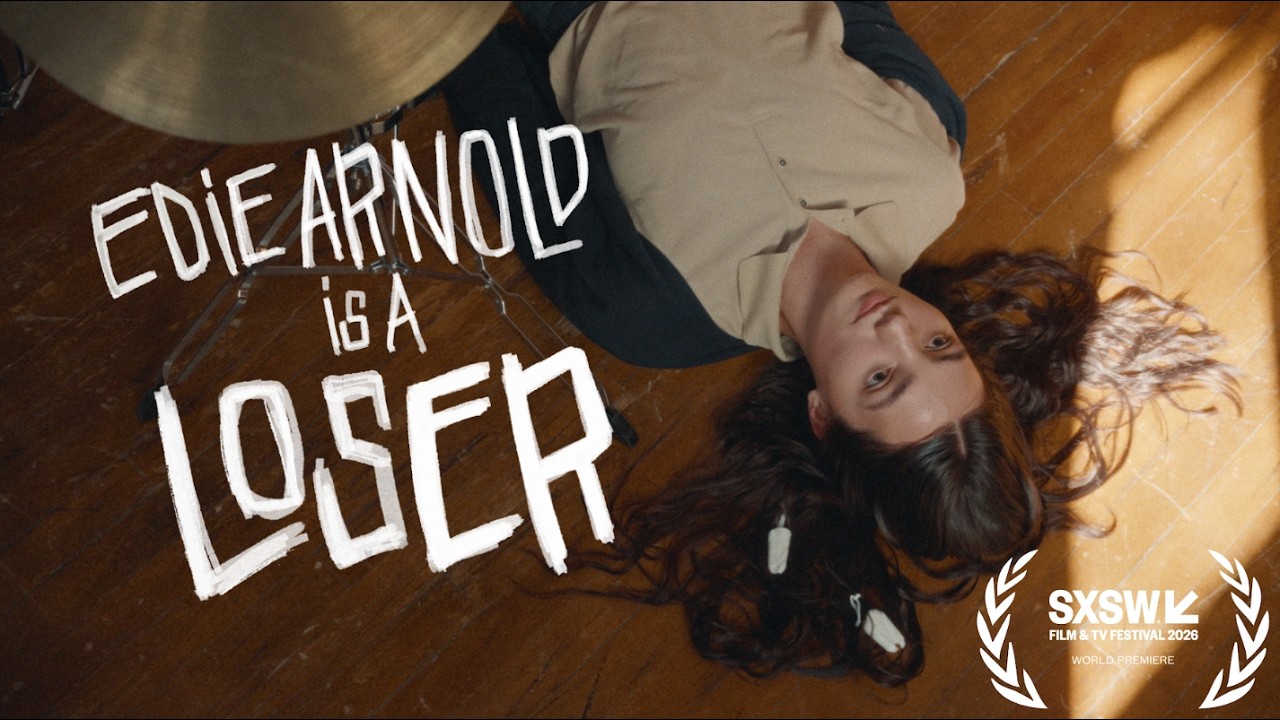
Catholic school, punk drums, The NunDead — and the loudest coming-of-age debut at SXSW
Edie Arnold is invisible, relegated to drum duty in a school choir she hates. One drunk drummer at a punk show later, she’s accidentally on stage — and accidentally discovering that she’s brilliant. Her band The NunDead is born, the nuns are pissed, the popular girls are threatened, and the altar boy is complicated. Being a loser has never felt so much like winning.
Why It Is Trending: SXSW’s Most Infectiously Charming Debut Finds Its Crowd Immediately
Edie Arnold Is a Loser premiered at SXSW 2026 on March 13 — the festival’s first day — and immediately became one of the talking points of the festival. Screen Anarchy called it contagiously charming and super energetic. Cinapse called it a scrappy coming-of-age anthem. Beyond the Cinerama Dome called it an underdog winner. Writer-director Megan Rico drew directly from her own experience attending an all-girls Catholic school in Miami — and co-director Kade Atwood from his own outsider adolescence finding community in theatre. Lead actor Adi Madden Cabrera had no musical background and learned drums from scratch, starting with Rock Band and building through lessons — an origin story the film itself mirrors for Edie. The 73-minute runtime flies.
Elements Driving the Trend: The film’s visual language is immediately recognisable — animated rotoscope flourishes, comic-book sound effects, snappy Edgar Wright-style editing, and opening credits scrawled on desktops and backpacks. Comparisons to Booksmart, Scott Pilgrim, and Juno are universal across reviews — and the film earns them without becoming derivative, adding a Catholic school specificity and a feminist warmth that gives the genre a fresh register. The friendship between Edie and Frances — crucially, a friendship that never breaks — is the film’s most refreshing structural choice. It is, as Beyond the Cinerama Dome noted, a Catholic, punk rock love letter to the fellow weirdos who make life less lonely.
Virality: The SXSW world premiere response was immediate and enthusiastic — the film generates exactly the kind of infectious social media word-of-mouth that festival audiences produce for films they want to exist in the world. Collider covered the trailer exclusively before the premiere.
Critics Reception: Unanimously warm. Screen Anarchy: contagiously charming. Mama’s Geeky: infectious energy, Scott Pilgrim vibes, standout Cabrera performance. Cinapse: a charming, high-energy coming-of-age crowd-pleaser. That Hashtag Show: one of my favourite films to come out of SXSW. Eye for Film: amiable, great tunes, larger-than-life personalities.
Awards and Recognitions: 2 nominations total. World premiere SXSW 2026, March 13, 2026. Salt Lake City, Utah production, Infigo Films.
Edie Arnold Is a Loser is the kind of SXSW film that SXSW was built to discover — scrappy, funny, formally inventive, and built from genuine personal conviction. Its audience will find it quickly and recommend it loudly. The film’s greatest asset is its refusal to be cynical about being a loser — and that refusal is exactly what its audience needs.
What Movie Trend Is Followed: The Female Coming-of-Age Punk Comedy Finds Its Catholic School Setting
The female friendship coming-of-age comedy with a punk rock soundtrack occupies a specific and beloved genre space — from Juno to Booksmart to School of Rock — and Edie Arnold Is a Loser plants its flag precisely in that tradition while adding the Catholic school specificity that Megan Rico’s autobiographical source gives it. Rico was careful about the religious dimension: “This isn’t an anti-religion movie — it’s more about pushing back against the status quo of the place you’re raised in. We wanted to be a little bratty, a little rude, but not disrespectful.” That balance is the film’s most delicate and most successful creative achievement. The punk is the vehicle; the friendship is the destination.
Trend Drivers: Two Directors, One School, One Very Personal Script Rico’s Miami Catholic school autobiography and Atwood’s theatre-kid outsider experience converge in a film that feels lived-in rather than observed. The decision to keep Edie and Frances’s friendship intact throughout — no friendship-destroying popularity arc — gives the film a formal distinction from most high school comedies in its genre. Cabrera’s performance is the film’s anchor — ordinary enough for teenagers to recognise themselves and specific enough to be interesting as a character. The Edgar Wright visual playbook — executed on an indie budget in Salt Lake City — demonstrates that formal ambition is not a budget question.
The film’s central argument — that punk rock is for everybody, that being a loser is a choice you can be proud of — is delivered through three-chord specificity rather than inspirational poster generality.
What Is Influencing Trend: The female-led coming-of-age comedy is experiencing sustained commercial and critical interest — from Booksmart to Lady Bird to Bottoms — with audiences consistently responding to films that centre female friendship as the primary emotional relationship rather than romance. SXSW has a consistent track record of launching exactly this kind of smart, funny, formally inventive debut that finds its streaming audience well after its festival run. The Catholic school setting gives the film a visual and institutional specificity — nuns, altar boys, choir, confessional — that distinguishes it from the secular high school comedy.
The punk music genre provides the film’s energy, its comedy, and its central metaphor simultaneously — a convergence that the Juno/School of Rock lineage has proven commercially reliable.
Macro Trends Influencing: The coming-of-age comedy for teenagers and young adults remains one of streaming’s most commercially reliable categories — and SXSW debuts with strong word-of-mouth consistently find distribution and streaming audiences. Female friendship as the primary relationship in teen cinema — not as subplot to romance — is gaining cultural momentum. The indie film’s formal playfulness — animation, comic-book graphics, sound design as comedy — is experiencing a revival driven by audiences who grew up with Edgar Wright and Scott Pilgrim.
The 73-minute runtime is itself a commercial asset — a film that respects its audience’s time and delivers without overstaying its welcome.
Consumer Trends Influencing: The teenage and young adult audience for coming-of-age comedy is one of streaming’s most engaged demographics — and SXSW word-of-mouth consistently converts festival enthusiasm into streaming viewership. The punk aesthetic gives the film cross-genre discovery appeal — music fans, comedy fans, and film fans all have reasons to find it. Cabrera’s authentic drumming journey — from Rock Band to film set — gives the film a social media narrative that converts behind-the-scenes discovery into audience interest.
The film’s 73-minute runtime positions it perfectly for streaming — short enough for a spontaneous evening watch, satisfying enough to recommend immediately afterward.
Audience Analysis: Catholic School Survivors, Punk Music Fans, Coming-of-Age Comedy Devotees, and Anyone Who Was a Loser in High School The core audience is 15–35 — teenagers who recognise Edie’s specific Catholic school alienation, young adults who remember the feeling of finding music as a language for emotions they couldn’t otherwise articulate, and the broader coming-of-age comedy audience that responded to Booksmart and Lady Bird. The film is specifically for, as Atwood said, the weird kids — the outcast kids who felt different and found community. Its Booksmart comparison positions it for the audience already primed to love exactly this kind of film. The SXSW premiere audience’s enthusiastic response confirms the film’s appeal translates immediately from festival to general audience.
The film’s most emotionally resonant quality — its conviction that being a loser is the beginning of something, not the end — speaks directly to every teenager who has ever felt invisible in an institution that was supposed to contain them.
Final Verdict: Edie Arnold Is a Loser Is One of SXSW 2026’s Best Debuts — Funny, Formally Inventive, and Built From Genuine Love for the Weirdos It Celebrates
Atwood and Rico deliver a debut feature that knows exactly what it wants to be and achieves it with infectious energy, formal playfulness, and a lead performance that grounds the comedy in genuine emotional truth. At 73 minutes, it is the perfectly sized film for its energy — never running out of steam, never overstaying its welcome, and leaving its audience wanting more in the best possible way. It plays like a 3-chord power ballad about youth, identity, and punk rock rebellion — and, like all the best punk, it’s actually about love.
Audience Relevance: For Every Teenager Who Found Their Voice in a Room That Told Them to Be Quiet Edie’s journey — from invisible choir drummer to accidental punk icon — is one of cinema’s most reliable emotional templates, and the film earns every beat of it through specificity rather than generality. The Catholic school setting gives the rebellion its exact institutional target. The friendship gives it its emotional reason.
The film’s most important achievement is making being a loser look like the only logical choice for someone with any genuine spirit.
What Is the Message: Your People Are Out There — and They’re Probably Already in the Band Rico and Atwood’s film argues, with considerable warmth and noise, that belonging is not about fitting in but about finding the specific people who match your specific weirdness. The NunDead are not popular; they are necessary — to each other, to every other turd in the school, and to the film’s audience who recognise themselves in them. Punk rock, the film insists, has always made room for everybody.
Relevance to Audience: A Film That Speaks Directly to Its Audience Without Condescending to It The animated flourishes, comic-book sound effects, and Edgar Wright editing don’t aestheticise adolescence from a distance — they capture how it actually feels from the inside, when everything is vivid and nothing is proportionate and a single punk show can change the entire direction of your life. Rico’s autobiographical foundation gives the film’s visual excess an emotional grounding that prevents it from becoming pure style. The film’s refusal to let Edie and Frances’s friendship fracture is its most generous and most honest choice.
Social Relevance: Catholic School Girls Starting a Punk Band Called The NunDead Is a Specifically American Comedy The song lyric “Cannibalize your lord and savior. Eat me! Eat me! EAT ME!” is the film’s funniest and most culturally specific moment — irreverent about the institution without being contemptuous of faith itself. Rico’s own Catholic school background gives the comedy its authority; she knows exactly what she’s poking. The nuns, the altar boy, the popular girls, the choir — all of it lands because it is observed rather than imagined.
Performance: Cabrera Anchors Everything, Tuckett Steals Scenes, Rodriguez Provides the Emotional Counterweight Cabrera’s Edie is the film’s beating heart — awkward, funny, and genuinely moving in her journey from invisible to necessary. Tuckett’s Frances risks overwhelming the film with her 110% commitment to chaos and frequently succeeds — a character who needs its own film. Cherish Rodriguez as Edie’s mother provides the film’s emotional stakes, the relationship that gives Edie’s rebellion its specific cost. Lucas Van Orden’s altar boy is exactly as funny as described. Luseane Pasa’s Sister Sheena is the film’s most fully-realised authority figure.
Legacy: A Future Cult Classic Built for the Streaming Generation Edie Arnold Is a Loser will be discovered on streaming, recommended in group chats, rewatched at sleepovers, and quoted by teenagers for years. Its 73-minute runtime is ideal for repeat viewing. Its energy is immune to diminishing returns. The IMDb reviewer who called it a destined-to-be cult classic is not wrong — this is exactly the kind of film that builds its audience slowly, loyally, and permanently.
Success: SXSW World Premiere, 2 Nominations, Universal Festival Acclaim 2 nominations total. World premiere SXSW 2026, March 13, 2026. Salt Lake City production, Infigo Films. IMDb 7.9 from early viewers. Universal warm critical consensus across SXSW coverage.
The film’s commercial future will be built through streaming — where its audience lives, watches, and recommends — rather than theatrical. That is exactly the right home for it.
Edie Arnold Is a Loser is the most joyful film at SXSW 2026 — a punk love letter to everyone who felt wrong in the right way, made by filmmakers who remember exactly what that felt like.
Industry Insights: Atwood and Rico’s debut demonstrates that formally ambitious coming-of-age comedy — animation flourishes, Edgar Wright editing, punk soundtrack — can be executed on an indie budget in Salt Lake City with autobiographical conviction as its primary asset. SXSW remains the ideal launchpad for exactly this kind of charming, personality-driven debut. Audience Insights: The coming-of-age comedy audience is one of streaming’s most reliable and most word-of-mouth-driven demographics — and Edie Arnold Is a Loser’s 73-minute runtime, universal high school alienation theme, and punk energy make it perfectly positioned for the recommendation culture that builds cult films. Social Insights: A film that celebrates being a loser — specifically a Catholic school loser who starts a punk band called The NunDead — is both genre-specific and universally legible: the experience of feeling wrong in an institution that demands conformity is one of the most shared adolescent experiences across cultural contexts. Cultural Insights: Edie Arnold Is a Loser positions itself in the Juno/Booksmart/Scott Pilgrim lineage while adding the Catholic school specificity and female friendship centrality that makes it its own distinct object — a coming-of-age film built by women who lived it, for the teenagers currently living it.
Edie Arnold Is a Loser proves that punk rock was right all along: being a loser is just another word for being free.
Summary: One Drum Kit, One Catholic School, One Very Loud Revelation
-
Movie themes: Female friendship as primary loyalty, punk rebellion as self-discovery, institutional conformity versus individual expression, Catholic school alienation, and the specific joy of finding your people by making noise.
-
Movie director: Megan Rico and Kade Atwood — debut feature built from Rico’s Miami Catholic school autobiography and Atwood’s theatre-kid outsider experience — deliver a formally playful, emotionally warm debut that earns every SXSW comparison to Juno, Booksmart, and Scott Pilgrim.
-
Top casting: Cabrera anchors with genuine emotional grounding. Tuckett steals scenes with chaotic commitment. Rodriguez gives the film its emotional stakes. Van Orden’s altar boy delivers exactly what the film promises. Pasa’s Sister Sheena is the authority figure the film deserves.
-
Awards and recognition: 2 nominations total. World premiere SXSW 2026, March 13, 2026. Infigo Films, Salt Lake City production.
-
Why to watch: One of SXSW 2026’s most joyful discoveries — a 73-minute punk coming-of-age comedy built from genuine autobiographical warmth, formally inventive direction, and a lead performance that makes being a loser look like the most radical choice available. Perfect for streaming.
-
Key success factors: Rico’s autobiographical foundation plus Atwood’s formal playfulness plus Cabrera’s grounded lead performance plus the Edgar Wright visual energy plus the 73-minute perfect runtime — a combination that delivers exactly what it promises and nothing less.
-
Where to watch: SXSW world premiere March 13, 2026. Distribution and streaming release TBC.






Leave a Reply