
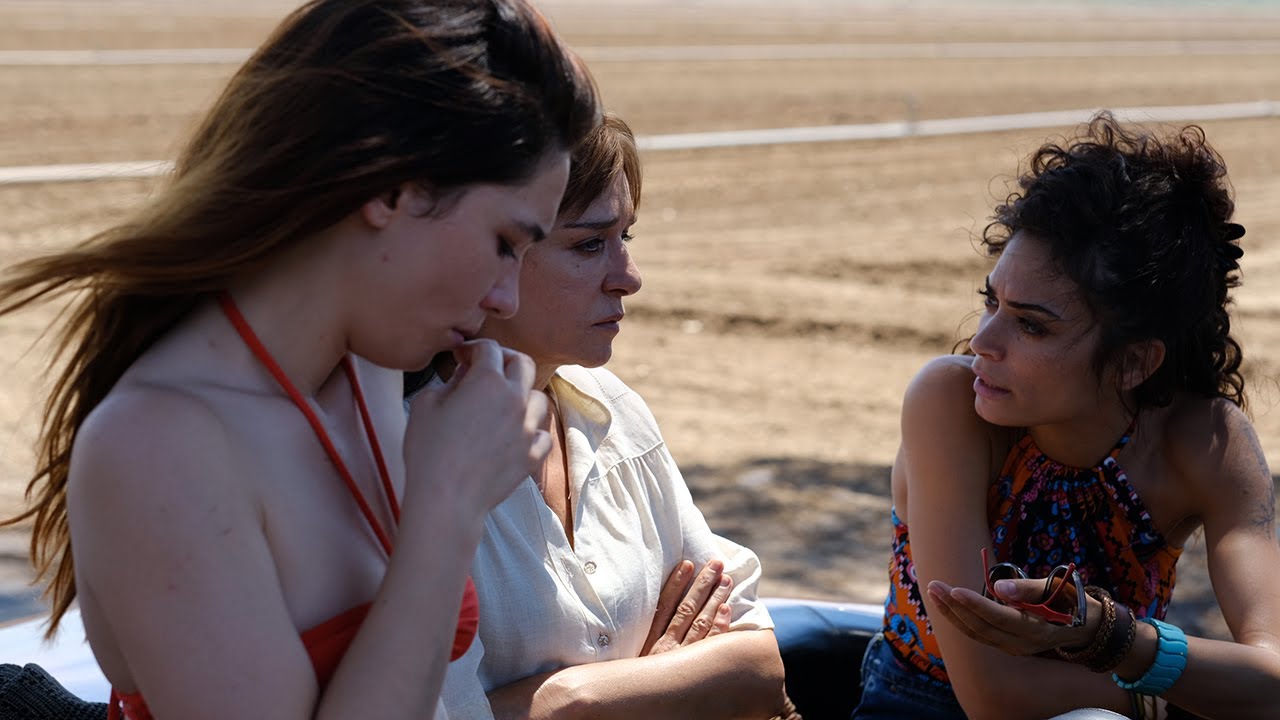
A Powerful Italian Drama About Freedom, Female Solidarity, and Finding Life Beyond Prison Walls
Prison films often focus on confinement, punishment, or survival. Fuori takes a remarkably different approach, asking whether true freedom exists outside prison at all. Inspired by the life and writings of celebrated Italian author Goliarda Sapienza, Mario Martone’s deeply human drama follows the writer after an unexpected imprisonment that transforms her understanding of friendship, identity, and society. Rather than depicting incarceration as an ending, the film presents it as the beginning of profound personal change.
Combining biography with emotional drama, Fuori explores the extraordinary bonds formed between women living on the margins of society. Through Valeria Golino’s understated performance and Martone’s elegant direction, the film becomes both an intimate character study and a meditation on freedom, belonging, and the unconventional relationships that shape a person’s life long after prison walls are left behind.
Quick Facts: An Intimate Italian Drama About Freedom, Friendship, and Personal Reinvention
|
Freedom, female friendship, imprisonment, personal transformation, literature, social identity |
|
|
Ippolita Di Majo, Mario Martone, based on the writings of Goliarda Sapienza |
|
|
Cannes Film Festival 2025 – In Competition (Palme d’Or nominee) |
|
|
4 wins & 20 nominations. Cannes Film Festival 2025 – Palme d’Or Nominee; David di Donatello Awards 2026: Winner – Best Supporting Actress (Matilda De Angelis); Nominations – Best Film, Best Director, Best Actress (Valeria Golino), Best Adapted Screenplay; Silver Ribbon Awards 2025: Winner – Best Actress (Valeria Golino), Winner – Best Supporting Actress (Matilda De Angelis & Elodie); Nominations – Best Film, Best Director, Best Screenplay; Kineo Awards 2025: Winner – Best Supporting Actor (Corrado Fortuna); additional nominations at the Seville European Film Festival and Aegean Film Festival. |
➡️ Key Takeaway: Fuori transforms a prison memoir into a moving reflection on freedom, female solidarity, and the unexpected relationships that redefine a person’s life.
Should You Watch It?: An Emotionally Rich Character Study That Redefines the Prison Drama
If you appreciate intimate European dramas driven by exceptional performances and thoughtful character development, Fuori is one of Italy’s most rewarding films of 2025. Mario Martone avoids the conventions of the traditional prison drama, choosing instead to focus on the emotional transformation of Goliarda Sapienza and the lasting friendships she forms with women society has forgotten. The result is a film that is less concerned with imprisonment itself than with the emotional freedom discovered through genuine human connection.
Valeria Golino delivers one of the finest performances of her career, portraying Sapienza with remarkable subtlety and emotional intelligence. Supported by outstanding work from Matilda De Angelis and Elodie, the film creates a deeply authentic portrait of women navigating shame, resilience, and hope. While its reflective pacing favors contemplation over dramatic spectacle, viewers drawn to literary adaptations and sophisticated character studies will find Fuori both moving and unforgettable.
➡️ Key Takeaway: Fuori is a beautifully acted and emotionally intelligent drama that offers a fresh perspective on freedom by revealing how life’s deepest connections are often found in the most unexpected places.
Why Everyone Is Talking About It?: A Cannes Contender That Celebrates the Power of Female Solidarity
Fuori has emerged as one of Italy’s most acclaimed films of 2025, earning international attention following its competition premiere at the Cannes Film Festival. The film has been praised for bringing the remarkable life of Goliarda Sapienza to a wider audience while avoiding the conventions of the traditional literary biopic. Instead of celebrating artistic achievement alone, Mario Martone focuses on the transformative relationships that shaped Sapienza’s life, creating a portrait that feels deeply human and emotionally authentic.
The film has also generated widespread recognition during awards season, with Valeria Golino receiving major acting honors and Matilda De Angelis winning both the David di Donatello and Silver Ribbon awards for her supporting performance. Critics have highlighted the film’s compassionate storytelling, elegant cinematography, and nuanced exploration of women’s friendship, reinforcing Italy’s continued strength in producing sophisticated character-driven cinema.
➡️ Key Takeaway: Fuori has become one of the year’s standout European dramas by transforming a prison memoir into a universally resonant story about freedom, friendship, and the extraordinary strength of women supporting one another.
Movie Trend: Prison Stories Are Becoming Human-Centered Explorations of Identity and Belonging
Contemporary prison dramas are increasingly moving away from narratives centered on violence, escape, or institutional critique. Instead, filmmakers are using incarceration as a setting to examine personal transformation, emotional resilience, and the unexpected relationships that emerge when social barriers disappear. Fuori exemplifies this evolution by treating prison not simply as a place of confinement but as a space where genuine human connection becomes possible.
Mario Martone also contributes to another growing movement within European cinema: biographical films that prioritize emotional truth over chronological storytelling. Rather than presenting Goliarda Sapienza’s literary achievements through a conventional rise-to-success narrative, Fuori focuses on a defining emotional chapter in her life, revealing how lived experience shaped both her identity and her writing. The result is a biography that feels intimate rather than monumental.
➡️ Key Takeaway: Fuori reflects the growing trend of prison and biographical dramas that explore emotional liberation instead of physical confinement.
Audience Profile: For Viewers Who Appreciate Literary Biographies and Thoughtful European Cinema
|
Fans of European drama, literary adaptations, and character-driven biographies |
|
|
Festival audiences, arthouse cinema enthusiasts, readers of Goliarda Sapienza, viewers interested in women’s stories |
|
|
Readers, cinephiles, cultural enthusiasts, festival-goers, admirers of European auteur cinema |
|
|
Independent films, award-season dramas, biographies, literary adaptations, international cinema |
Fuori is particularly suited to audiences who enjoy films that prioritize emotional depth over dramatic spectacle. Rather than relying on major plot twists, the film unfolds through conversations, memories, and subtle performances that gradually reveal the complexity of its characters. Viewers who appreciate directors such as Nanni Moretti, Alice Rohrwacher, Hirokazu Kore-eda, or the Dardenne brothers will likely respond to its quiet observational style.
The film also appeals to readers and literary audiences interested in Goliarda Sapienza’s work, offering insight into the personal experiences that inspired some of her most significant writing. At the same time, no prior knowledge of Sapienza is necessary, as Martone constructs an accessible and emotionally engaging portrait that stands on its own.
➡️ Key Takeaway: Fuori is ideal for audiences seeking intelligent European cinema that combines literary sensitivity with deeply human storytelling.
What This Movie Means for the Industry: Italian Cinema Continues Its International Renaissance
Fuori reinforces Italy’s strong presence within contemporary European cinema by demonstrating that intimate, culturally specific stories can achieve broad international recognition. Its selection for the Cannes Film Festival competition highlights the continued global appreciation for Italian auteur filmmaking, particularly works that combine literary heritage with modern cinematic storytelling.
The film also reflects a broader industry shift toward female-centered narratives inspired by real lives. Rather than presenting historical figures through conventional heroic biographies, Fuori focuses on emotional experience, friendship, and personal growth. This approach aligns with the increasing demand for nuanced stories about women whose lives challenge social expectations while remaining grounded in authenticity.
Perhaps most significantly, Fuori illustrates how literary adaptation continues to evolve. Instead of adapting an author’s most famous novel, Mario Martone builds the film around the experiences that inspired Goliarda Sapienza’s writing, creating a work that functions simultaneously as biography, memoir, and character study. This layered storytelling demonstrates how contemporary adaptations can deepen appreciation for an author’s legacy while reaching entirely new audiences.
➡️ Key Takeaway: Fuori showcases how modern Italian cinema is combining literary history, female-driven storytelling, and auteur filmmaking to create internationally relevant films that resonate far beyond their cultural origins.
Creative Analysis: A Poetic Reflection on Freedom, Memory, and the Women Who Change Our Lives
Rather than presenting Goliarda Sapienza’s life as a conventional literary biography, Fuori concentrates on a brief but transformative chapter that reshaped her understanding of freedom and human connection. Mario Martone constructs the film around memories, emotional encounters, and fleeting moments of intimacy, allowing audiences to experience the world through Sapienza’s evolving perspective rather than through a chronological account of her achievements.
The result is a film that feels remarkably literary without becoming overly academic. Every conversation, glance, and silence contributes to a portrait of a woman discovering that genuine freedom is not determined by physical space but by the authenticity of the relationships she builds. This emotional subtlety makes Fuori one of the most introspective Italian dramas of recent years.
➡️ Key Takeaway: Fuori succeeds by replacing traditional biography with an emotionally immersive portrait of personal transformation.
Storytelling: A Memory-Driven Narrative That Blends Past and Present
Mario Martone structures Fuori through a fluid movement between prison memories and life after release. Rather than presenting events in strict chronological order, the film mirrors the way memories continue to shape a person’s present, allowing audiences to gradually understand how imprisonment became a defining emotional experience rather than simply an episode in Sapienza’s life.
This fragmented structure emphasizes emotional continuity over narrative suspense. The friendships formed behind bars continue to influence Sapienza long after her release, reinforcing the film’s central idea that certain relationships transcend time and circumstance. Instead of asking what happened next, the story asks how experience permanently alters the way a person understands freedom.
➡️ Key Takeaway: The screenplay transforms memory into the film’s narrative engine, illustrating how the past continually reshapes the present.
Direction: Mario Martone Creates an Intimate Portrait of Emotional Freedom
Mario Martone directs with remarkable restraint, trusting performances and atmosphere rather than dramatic exposition. His understated approach allows ordinary interactions to carry extraordinary emotional weight, creating a film that feels observational rather than manipulative. Every scene unfolds with patience, inviting viewers to inhabit Sapienza’s emotional world instead of simply observing it.
His decision to avoid sensationalizing prison life is particularly effective. Rather than emphasizing violence or institutional hardship, Martone focuses on everyday routines, conversations, and unexpected moments of tenderness. This humanistic perspective transforms prison into a complex emotional landscape where compassion and solidarity emerge despite difficult circumstances.
➡️ Key Takeaway: Martone’s quiet, compassionate direction allows emotional truth to emerge naturally through observation rather than dramatic spectacle.
Performances: Valeria Golino Anchors an Exceptional Female Ensemble
Valeria Golino delivers one of the strongest performances of her career, portraying Goliarda Sapienza with extraordinary subtlety. Rather than imitating a famous literary figure, she captures Sapienza’s intellectual curiosity, emotional vulnerability, and quiet resilience. Much of the performance is conveyed through silence and observation, allowing audiences to experience the character’s inner transformation without excessive dialogue.
Matilda De Angelis provides an equally compelling supporting performance, bringing warmth, unpredictability, and emotional depth to her role. Elodie and the broader ensemble contribute richly textured performances that avoid stereotypes, presenting every woman as an individual shaped by unique experiences rather than by imprisonment alone. Together, they create a rare sense of authentic community rarely seen in prison dramas.
➡️ Key Takeaway: The exceptional ensemble transforms Fuori into a deeply authentic portrait of female friendship and shared humanity.
Cinematography & Visual Style: Rome Becomes a Landscape Between Confinement and Freedom
Cinematographer Paolo Carnera captures Rome with an understated naturalism that avoids postcard imagery in favor of quieter neighborhoods, sunlit streets, and lived-in interiors. The visual style reflects the emotional journey of its protagonist, presenting both prison and the city outside with the same observational sensitivity.
Light plays an especially important role throughout the film. Warm summer sunlight contrasts with enclosed prison spaces, yet Martone deliberately avoids presenting one environment as emotionally superior to the other. Instead, the cinematography suggests that freedom depends less on physical surroundings than on the relationships people build within them.
➡️ Key Takeaway: The film’s elegant visual style reinforces its central theme that emotional freedom can exist even within physical confinement.
Themes & Messages: Freedom Exists Where Genuine Human Connection Is Found
At its core, Fuori challenges conventional definitions of freedom. While prison represents physical confinement, the film suggests that many people remain emotionally imprisoned by social expectations, prejudice, and isolation even after walking free. Through Sapienza’s friendships with fellow inmates, the story argues that authentic relationships possess the power to liberate individuals from these invisible constraints.
The film also celebrates female solidarity without idealizing it. The women support one another despite their differences, creating bonds built on honesty rather than social status or respectability. In doing so, Fuori presents friendship as a transformative force capable of reshaping identity and restoring dignity.
➡️ Key Takeaway: Fuori argues that true freedom is measured not by where we live but by the authenticity of the relationships we choose.
What Makes This Movie Different?: A Prison Film That Finds Liberation Through Compassion
Unlike most prison dramas, Fuori does not define its characters by crime, punishment, or redemption. Instead, it explores incarceration as an unexpected space of emotional awakening where women discover acceptance, solidarity, and self-understanding. This perspective transforms familiar genre conventions into something remarkably fresh and deeply human.
By combining literary biography, social observation, and intimate character study, Mario Martone creates a film that resists easy categorization. Fuori is simultaneously a portrait of a celebrated writer, a meditation on friendship, and a reflection on the meaning of freedom itself. Its emotional honesty and quiet confidence make it one of the most distinctive Italian films of 2025.
➡️ Key Takeaway: Fuori redefines both the prison drama and the literary biopic by revealing that life’s greatest freedom is often discovered through compassion, friendship, and shared experience.
If You Liked Fuori (2025) by Mario Martone: Recent Films About Women’s Lives, Memory, and Emotional Freedom
If Fuori captivated you with its intimate storytelling, literary foundations, and exploration of female solidarity, these recent films offer similarly thoughtful portraits of women navigating identity, freedom, and personal transformation. Each combines emotional realism with exceptional performances while examining how memory and relationships shape our understanding of ourselves.
The Last Showgirl (2025) by Gia Coppola
Pamela Anderson delivers a career-defining performance as a veteran Las Vegas performer confronting aging, identity, and the end of an era. Like Fuori, the film is less interested in external events than in the emotional reinvention of a woman whose sense of self is challenged by changing circumstances. Both films celebrate resilience while finding dignity in vulnerability.
➡️ Where to Watch: Currently streaming on Hulu. Also available to rent or purchase on Apple TV, Prime Video, and Fandango at Home.
My Favourite Cake (2024) by Maryam Moghaddam & Behtash Sanaeeha
This acclaimed Iranian drama follows a widowed woman who unexpectedly rediscovers companionship later in life. Like Fuori, it quietly challenges social conventions while focusing on emotional authenticity rather than dramatic conflict. Both films reveal how human connection becomes an act of personal liberation in societies shaped by expectation and tradition.
➡️ Where to Watch: Available to rent or purchase on Apple TV and Prime Video.
There’s Still Tomorrow (2024) by Paola Cortellesi
One of Italy’s most celebrated recent films, There’s Still Tomorrow explores the life of a woman seeking independence within post-war Rome. Although stylistically different, it shares Fuori‘s interest in female empowerment, social expectations, and the quiet courage required to redefine one’s future. Both films demonstrate the enduring strength of Italian cinema in telling deeply human stories centered on women.
➡️ Where to Watch: Available to rent or purchase on Apple TV and Prime Video.
➡️ Key Takeaway: These films demonstrate how contemporary international cinema is increasingly telling stories of women whose emotional journeys become powerful reflections on identity, freedom, and resilience.
Final Verdict: A Quietly Powerful Portrait of Freedom Found Through Human Connection
Fuori is far more than a conventional literary biography or prison drama. Mario Martone transforms a brief episode in Goliarda Sapienza’s life into a profound meditation on freedom, memory, and the transformative power of friendship. By focusing on emotional experience rather than historical milestones, the film captures the essence of a remarkable writer while offering audiences a deeply universal story about belonging and self-discovery.
Valeria Golino delivers one of the finest performances of her career, supported by an outstanding ensemble led by Matilda De Angelis and Elodie. Their natural chemistry gives the film extraordinary emotional authenticity, while Martone’s restrained direction and Paolo Carnera’s elegant cinematography create an atmosphere of quiet intimacy that lingers long after the final scene.
Rather than asking audiences to admire its protagonist from a distance, Fuori invites them to experience the world through her eyes. It reminds us that freedom is rarely defined by physical circumstances alone and that the most meaningful relationships often emerge in the least expected places. As both an intimate character study and a celebration of female solidarity, it stands among the strongest Italian films of 2025.
➡️ Final Verdict: 4.5/5 — A beautifully acted, emotionally rich Italian drama that transforms a prison memoir into a moving reflection on friendship, identity, and the enduring meaning of freedom.





Leave a Reply