
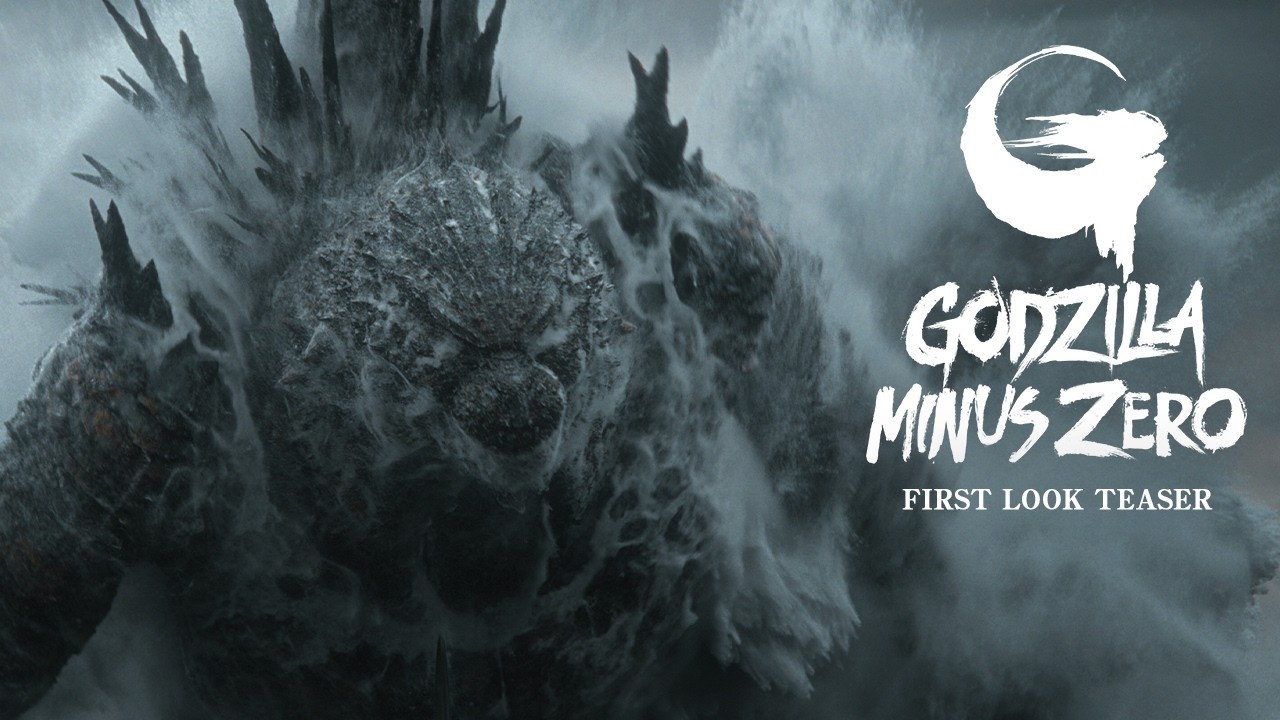
The Oscar-Winning Kaiju Sequel Filmed in IMAX — Japan’s Most Famous Monster Comes for New York
Japan Survived Minus One
Two years after Kōichi Shikishima seemingly destroyed Godzilla in postwar Japan, a piece of the monster’s flesh was shown regenerating as it sank to the ocean floor. Minus Zero picks up that thread — the Shikishima family returns, Japan faces a deeper despair than before, and Godzilla reaches New York City in the closing moments of the teaser trailer. Yamazaki at CinemaCon: “The journey from Minus to Zero will not be an easy one.” The first Japanese live-action film to receive the Filmed for IMAX label. The 39th film in the Godzilla franchise. Japan November 3, US November 6, 2026. GKIDS North American distribution.
Why It Is Trending: The Sequel to the First Japanese Film to Win an Oscar — Now Filmed in IMAX and Taking Godzilla to New York
Godzilla Minus One (2023) earned $115M+ worldwide on a sub-$15M budget, won the Oscar for Best Visual Effects — the first Japanese-language film to do so — and became one of the highest-grossing Japanese films of all time. Yamazaki confirmed the sequel at CinemaCon April 14, 2026, presenting a teaser trailer and behind-the-scenes footage to exhibitors. The behind-the-scenes reel showed elaborate practical sets — bomber jets, decimated cities, a miniature Godzilla model — alongside IMAX cameras and greenscreen production at scale. Principal photography ran August to December 2025 in Japan, New Zealand, and Norway. Toho and Robot Communications co-produce. Industry sources told The Hollywood Reporter the film is “positioned not just as a sequel but as a statement piece.”
Elements Driving the Trend: IMAX First, New York Setting, and a Deeper Despair Than Minus One
-
Godzilla Minus Zero is the first Japanese live-action film to be filmed with IMAX cameras — a formal escalation that signals Yamazaki is treating the sequel as a global theatrical event, not a domestic kaiju film with international distribution.
-
The New York setting — Godzilla approaching the Statue of Liberty in the teaser’s closing shot — expands the franchise’s geographical scope from postwar Japan to the American mainland for the first time in this timeline.
-
Yamazaki’s CinemaCon statement — “an even deeper despair will descend upon Japan and the Shikishima family” — positions the sequel within the same emotional register as Minus One rather than pivoting to spectacle-first blockbuster mode.
-
The American soldiers’ line in the teaser — “If their operation fails, maybe we’ll finally get to use it” — implies a nuclear or superweapon dimension that escalates both the geopolitical and the monster stakes simultaneously.
Virality: The Statue of Liberty Shot and the Oscar Legacy That Makes This the Most Anticipated Kaiju Film of the Decade
-
The Statue of Liberty closing shot is the teaser’s most viral single image — Godzilla in New York is an instantly legible global statement that travels without context or subtitle.
-
The Oscar win gives Godzilla Minus Zero a cultural legitimacy that no previous sequel in any kaiju franchise has inherited — the audience for this film includes people who don’t normally watch monster movies.
Critics Reception: Pre-Release — CinemaCon Exhibitor Reactions Enthusiastic; No Critical Reviews Available
-
CinemaCon exhibitor response universally enthusiastic. Variety, Deadline, The Hollywood Reporter, The Wrap, Gizmodo, Nerdist all covered the presentation with strong positive framing.
-
No critical reviews available. US theatrical November 6, 2026.
Awards and Recognitions: Pre-Release — Oscar Legacy From Minus One; No Current Nominations
-
Godzilla Minus One: Oscar Best Visual Effects 2024 (first Japanese-language film). Godzilla Minus Zero: pre-release, no nominations. US theatrical November 6, 2026. IMAX release. GKIDS North American distribution.
Director and Cast: Yamazaki Returns With the Full Minus One Team — and a Larger Budget
-
Takashi Yamazaki — writer, director, VFX supervisor — returns with Shirogumi handling visual effects, the same team that won the Oscar. Yamazaki told CinemaCon he is “pouring all of our technology into this new story.”
-
Ryūnosuke Kamiki (Kōichi Shikishima) and Minami Hamabe (Noriko Ōishi) return as the central couple. Miou Tanaka joins as Captain Tatsuo Hotta. The Shikishima family remains the film’s emotional core.
-
Budget is confirmed larger than Minus One’s sub-$15M — an escalation that the IMAX production and international locations (New Zealand, Norway) make visible in the behind-the-scenes footage.
The Oscar legacy, the IMAX first, the New York escalation, and the Shikishima family’s continued emotional centrality give Minus Zero the most complete commercial and critical positioning of any film in the 72-year Godzilla franchise history. The teaser’s Statue of Liberty shot is the single most effective piece of franchise marketing of the pre-Thanksgiving 2026 season.
What Movie Trend Is Followed: The Prestige Kaiju Film Expands From National Trauma to Global Threat — Without Abandoning the Human Story That Made Minus One Work
Godzilla Minus Zero follows the specific tradition established by Minus One — the kaiju film as serious emotional drama rather than spectacle vehicle — and extends it with an international scale that the first film’s confined postwar Japan setting couldn’t accommodate. The film belongs to the tradition of prestige monster cinema that uses the kaiju as metaphor for collective trauma: Minus One used Godzilla as a WWII reckoning; Minus Zero appears to use him as a Cold War and nuclear anxiety reckoning. The escalation to New York doesn’t abandon the human drama — it expands its geopolitical frame.
Trend Drivers: Emotional Continuity, IMAX Scale, and the Oscar Mandate to Treat the Genre Seriously
-
The Shikishima family’s continued centrality signals that Yamazaki is not trading the emotional intimacy of Minus One for blockbuster spectacle — the human stakes remain the film’s primary architecture.
-
The IMAX format mandates a visual ambition that distinguishes the film from every previous entry in the Toho franchise — this is the first Godzilla film designed from the ground up for the largest possible theatrical screen.
-
The Oscar win established Yamazaki’s VFX team as the most credible in the kaiju genre — and the Minus Zero production is positioning itself to demonstrate that the win was a floor, not a ceiling.
-
The New York setting introduces an American institutional dimension — the soldiers’ superweapon line — that gives the sequel a political layer the Japan-confined first film didn’t need.
The prestige kaiju film has one confirmed model — Minus One — and one confirmed director capable of making it. Minus Zero is the test of whether that model scales.
What Is Influencing Trend: The Oscar Legacy and the Toho-Legendary Agreement
-
Godzilla Minus One’s Oscar win established Japanese kaiju cinema as a serious awards-season contender — an unprecedented repositioning of the genre’s cultural status.
-
The Toho-Legendary agreement — prohibiting competing Godzilla films in the same calendar year — gives Minus Zero the 2026 theatrical window without MonsterVerse competition. Godzilla x Kong: Supernova moves to 2027.
-
GKIDS’ North American distribution gives the film the arthouse theatrical infrastructure that TOHO International used to build Minus One’s US footprint — the same distribution strategy that enabled the Oscar campaign.
Macro Trends Influencing: Prestige Monster Cinema and the IMAX Theatrical Mandate
-
The prestige monster film — Pacific Rim, Monsters, Minus One — has established that kaiju cinema can carry dramatic weight when the human story is the primary concern.
-
IMAX’s expansion into non-Hollywood productions gives Japanese cinema a theatrical format that its domestic industry has never previously accessed.
-
The pre-Thanksgiving release window is the most commercially optimal position for a prestige tentpole without superhero competition — the same window that Oppenheimer and Interstellar used.
Consumer Trends Influencing: The Minus One Audience and the IMAX Premium Experience
-
Minus One built an audience that crossed the kaiju fanbase into the arthouse demographic — Minus Zero inherits that expanded audience plus the Oscar awareness that followed.
-
The IMAX format converts casual viewers into premium ticket buyers — and Yamazaki’s explicit statement that “Godzilla becomes Godzilla when experienced in a theater” is a direct pitch to that demographic.
-
The Shikishima family’s return gives the film a built-in emotional investment from Minus One viewers that no amount of marketing can manufacture.
Audience Analysis: Minus One Fans, IMAX Event Cinema Audiences, and the Oscar-Aware General Viewer
The core audience is 15–55 — Minus One fans who invested in the Shikishima family emotionally, IMAX event cinema audiences who attend prestige theatrical experiences regardless of genre, and the Oscar-aware general viewer who came to Minus One through awards coverage and will return for the sequel. The New York setting gives the film US cultural identification that the Japan-confined first film required more marketing to achieve. The kaiju fanbase is pre-converted; everyone else needs the Oscar story and the Statue of Liberty shot.
Minus Zero inherits the most commercially powerful legacy in kaiju cinema history and expands its geographical and formal scope without abandoning the emotional architecture that made that legacy possible. The IMAX first is the film’s most significant formal statement. The Statue of Liberty shot is its most effective commercial one.
Final Verdict: The Most Anticipated Japanese Film of 2026, Positioned to Be the Definitive Statement of What Prestige Kaiju Cinema Can Become at Global Scale
Pre-release only — no critical reviews available. Based on CinemaCon presentation, production data, and trailer: Yamazaki is delivering a film that treats the IMAX format as a creative mandate rather than a commercial upgrade, that keeps the Shikishima family’s emotional continuity as the sequel’s spine, and that escalates the geographical scope to New York without abandoning the human drama register that made Minus One work. Whether the deeper despair he promises delivers the same emotional impact as postwar Japan’s specific trauma is the question November reviews will answer.
Audience Relevance: For Minus One Fans Who Came for the Story and the Monster Equally
The sequel’s explicit emotional continuity — the same family, a deeper despair, the same director — is the strongest possible signal to Minus One’s audience that the sequel is not a commercial pivot. The IMAX upgrade and New York setting give new audiences a theatrical mandate that the first film’s more modest production couldn’t make.
What Is the Message: When Faced With Overwhelming and Inescapable Force, How Do People Fight Back?
Yamazaki’s own CinemaCon framing is the film’s complete thematic statement. Minus One asked how survivors rebuild after collective trauma. Minus Zero asks how people fight back when the trauma returns — deeper, larger, and now global. The journey from minus to zero is the arc of recovery against a force that won’t allow it.
Relevance to Audience: The First Japanese IMAX Film Is Also the Most Emotionally Continuous Kaiju Sequel Ever Made
The IMAX format and the emotional continuity are the film’s two most commercially powerful assets — one speaks to the event cinema audience, the other to the Minus One fanbase. Their combination positions Minus Zero as both a premium theatrical experience and a genuine emotional sequel rather than a franchise extension.
Social Relevance: A Japanese Film About Collective Trauma Arriving on the 72nd Anniversary of the Original Godzilla
Yamazaki confirmed the US release date of November 6 — three days after Japan’s November 3 date, which is Godzilla Day and the 72nd anniversary of the original 1954 film. That timing is not coincidental. The sequel’s positioning within the Godzilla franchise’s historical arc gives it a cultural resonance that franchise sequels rarely carry.
Performance: Pre-Release — Kamiki and Hamabe Return; Behind-the-Scenes Footage Confirms Production Scale
CinemaCon behind-the-scenes footage confirmed practical sets at scale — bomber jets, decimated cities, miniature Godzilla models — alongside IMAX cameras and greenscreen production in Japan, New Zealand, and Norway. Yamazaki’s VFX team at Shirogumi returns. No performance reviews available. Full assessment November 2026.
Legacy: The Film That Will Determine Whether Prestige Kaiju Cinema Can Scale From National Trauma to Global Threat
If Minus Zero delivers on its emotional and formal promises, it will be remembered as the film that established prestige kaiju cinema as a permanent global theatrical format — not a one-time Oscar anomaly. If it prioritises spectacle over story, it will be remembered as the sequel that missed the specific thing that made Minus One matter. November reviews will deliver that verdict.
Success: Pre-Release — IMAX Release, GKIDS Distribution, November 6, 2026
-
Pre-release. Japan November 3, US November 6, 2026. IMAX release — first Japanese live-action film Filmed for IMAX.
-
GKIDS North American distribution. Toho/Robot Communications production. Budget: larger than Minus One’s sub-$15M.
The Oscar legacy, the IMAX first, and the Statue of Liberty shot give the film its three most commercially powerful pre-release assets. The Shikishima family’s return gives it the one that matters most.
Godzilla Minus Zero is the sequel that has to prove the Oscar wasn’t a miracle — it was a method. November 6 is when we find out.
Insights: The most commercially positioned Japanese film of 2026 — inheriting an Oscar legacy, the first IMAX filming label in Japanese cinema, and a human story that the entire Minus One audience is already emotionally invested in. Industry Insight: Yamazaki’s decision to film in IMAX is the single most significant formal statement in Japanese cinema’s relationship with global theatrical infrastructure — a format claim that positions Toho as a major international theatrical player rather than a niche arthouse distributor. Audience Insight: Minus One built an audience that crossed the kaiju fanbase into the arthouse demographic and the Oscar-aware general viewer — Minus Zero inherits all three simultaneously, which is a commercial combination that Japanese cinema has never previously possessed. Social Insight: A sequel to a film that used Godzilla as a WWII trauma metaphor, now taking that monster to New York, is making an implicit argument about the globalisation of that trauma — and the Statue of Liberty shot is the most compressed available statement of that argument. Cultural Insight: Godzilla Minus Zero positions Japanese monster cinema as a serious IMAX-worthy global theatrical format — and if it delivers on the emotional and formal promises of CinemaCon, it will be remembered as the film that made that positioning permanent.
The journey from Minus to Zero will not be an easy one. The journey from Oscar anomaly to established prestige franchise is the one the film is really making.
Summary: The Shikishima Family, An Even Deeper Despair, and Godzilla Standing Next to the Statue of Liberty
-
Movie themes: Collective trauma and its return, the human cost of facing overwhelming force, recovery as an ongoing process rather than a completed arc, the globalisation of Japanese postwar anxiety, and the specific question of how people fight back when the thing they survived comes back larger.
-
Movie director: Takashi Yamazaki — writer, director, VFX supervisor, Oscar winner — returns with the same team, a larger budget, IMAX cameras, and the explicit mandate to deliver a deeper despair than Minus One while preserving its emotional integrity.
-
Top casting: Kamiki’s Shikishima and Hamabe’s Noriko return as the emotional centre. Miou Tanaka joins as Captain Hotta. Full cast details limited at time of writing.
-
Awards and recognition: Pre-release. Oscar Best Visual Effects legacy from Godzilla Minus One (2024). No current nominations. Japan November 3, US November 6, 2026.
-
Why to watch: The sequel to the first Japanese-language Oscar winner for Best Visual Effects — now filmed in IMAX, taking Godzilla to New York, and promising an even deeper emotional despair than the film that made the entire world care about a postwar Japanese family and their giant monster.
-
Key success factors: Oscar legacy plus IMAX first plus Shikishima family emotional continuity plus New York geographical escalation plus Yamazaki/Shirogumi VFX team returning plus GKIDS distribution infrastructure plus Toho-Legendary agreement clearing the 2026 kaiju window — a combination that gives a Japanese monster movie the most complete global theatrical positioning in the franchise’s 72-year history.
-
Where to watch: IMAX and theatrical worldwide. Japan November 3, 2026. US November 6, 2026 via GKIDS.





Leave a Reply